
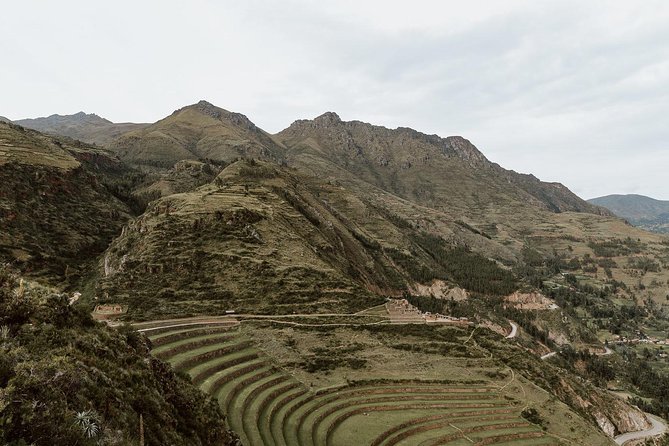
Reviewed · SACRED VALLEY DAY TRIPS FROM CUSCO
Complete Sacred Valley Tour (Full Day)
The best thing about this full-day Sacred Valley tour is its broad sweep. In one long outing, you visit Chinchero, Moray, Ollantaytambo, and Pisac, with a buffet lunch in Urubamba between the major sights. It gives you a useful first look at the valley without arranging several separate day trips.
I like the small-group format, advertised at up to 12 people, and the chance to see both archaeological sites and living Andean towns. I also like the guide-led approach, especially if you get Willy, whose storytelling connects Inca spirituality, science, old traditions, and modern life. The drawback is the length: about 13 hours, with an early start and plenty of time on the road.
Key points at a glance
- Chinchero begins the day with living Andean traditions: See adobe homes, cobbled lanes, an Inca site, and a colonial temple, with a possible wool-dyeing demonstration.
- Moray offers a compact but unusual Inca site: Its circular agricultural terraces make the engineering easy to understand in person.
- Ollantaytambo is the architectural highlight: Walk through an old Inca town with narrow stone streets, flowing water, a ceremonial center, and a fortress.
- Pisac combines shopping with archaeology: You get time at the artisan market before visiting the ruins.
- Urubamba lunch is included: The buffet includes a vegan option, making the midday stop simple for different diets.
- Budget for separate entrance fees: The partial tourist ticket costs 70 soles, while a full ticket covering the sites costs 130 soles for 10 days.
Four Sacred Valley stops in one demanding day
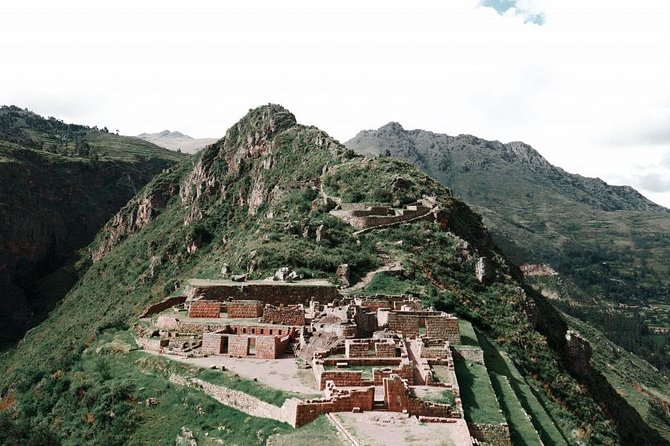
The route is designed for people who want the main Sacred Valley sights without spending several days changing hotels or booking separate transport. You leave Cusco in the morning, move from town to archaeological site, stop for lunch, and return around 6:30 or 7:00 p.m.
That pace is efficient, but it is not leisurely. Each listed stop receives about 45 minutes to one hour. You will see a lot, yet you should not expect long wandering time at every site. This tour works best when your priority is range and convenience rather than a slow, deeply focused visit to one place.
The tour begins with hotel pickup in Cusco at about 6:00 a.m., although the stated meeting time is 7:00 a.m. That mismatch matters. Confirm your exact pickup time before the morning of the tour, especially if your accommodation is in Cusco’s historic center or elsewhere in the city.
More Sacred Valley Days from Cusco:
- From Cusco: Sacred Valley & Maras Salt Mines Tour with Lunch
★ 4.8 · 2,227 reviews - Cusco: Sacred Valley, Pisac, Ollantaytambo, Salt Mines Moray
★ 4.6 · 1,058 reviews - Sacred Valley: Chinchero, Moray, Ollantaytambo & Pisac+Lunch
★ 4.8 · 501 reviews
Chinchero: Inca stonework beside a colonial church
After roughly an hour in the tourist van, you reach Chinchero. The town brings together several layers of Peruvian life: adobe houses, narrow cobbled streets, people in traditional dress, Inca construction, and a colonial temple.
This is a good first stop because it gives you more than a ruin. You can see how local traditions continue in a lived-in village rather than only at an isolated archaeological site. If the demonstration is offered, you may watch wool being washed and dyed with native plants and minerals. That small craft lesson helps explain the work behind the colorful textiles sold in the region.
The archaeological complex and colonial temple require a ticket, which is not included in the tour price. The stop lasts about an hour, so you will need to listen carefully to the guide and keep an eye on the group’s meeting time.
The setting also gives you early views toward the Sacred Valley. Chinchero is not simply a photo stop. It introduces the way Andean culture, Catholic buildings, Inca foundations, farming, and local crafts occupy the same space.
Moray: An Inca laboratory for crops
The next stop is Moray, reached after continuing through the highlands. You spend about 45 minutes here, looking at the famous circular terraces used for agricultural experiments and seed cultivation.
Moray is a place where a guide can make a short visit worthwhile. From above, the terraces appear carefully arranged in broad rings descending into the earth. The explanation of the drainage system is especially useful. Water had to be managed during the rainy season, and the design helped prevent flooding at the bottom of the terraces.
You should not expect a large complex with many rooms or long paths. Moray is more about grasping one striking idea: the Incas shaped land and water systems to support agriculture in difficult conditions. The stop is brief, so it suits a full-day route, but anyone wanting detailed time for photography or close study may find the schedule tight.
Admission is not included. Add the required tourist ticket to your budget rather than treating the advertised price as the final cost.
Ollantaytambo: The day’s strongest architectural stop
Ollantaytambo is likely to be the most memorable part of the route for many people. The town still follows an old Inca plan, with narrow stone streets running beside flowing streams. As you walk, the water gives the place a physical sense of design that is hard to get from photographs.
The lower town is important because it is not only a ceremonial site preserved behind barriers. It remains a town with traditional urban patterns. You can look at the stonework, lanes, and channels while imagining how the city was organized during Inca times.
Above the town is the ceremonial center, associated with water worship, along with a large fortress that guarded access into the lower part of the valley. The scale of the upper site makes clear why Ollantaytambo mattered. You see stone construction, defensive planning, religious purpose, and a powerful position above the town in one stop.
The planned visit is about one hour. That is enough for an introduction, but not enough to examine every part of the complex at a slow pace. If Ollantaytambo is the place you most want to study, a separate visit may suit you better. On this tour, the advantage is that you get a strong overview while still reaching three other major sites.
The listed admission here is free, but the tour information also says the partial tourist ticket is not included. Since ticket rules can depend on the sites covered and the current ticket arrangement, ask the provider exactly which admission you need before booking.
A few more Cusco days worth weighing up
- From Cusco: Full-Day Group Tour of Machu Picchu
★ 4.7 · 1,767 reviews - Machu Picchu: Full-Day Tour from Cusco with Optional Lunch
★ 4.6 · 927 reviews - Full-Day Excursion to Sacred Valley, Pisac and Ollantaytambo from Cusco
★ 4.5 · 174 reviews - Food and Culture Full day Tour in the Sacred Valley
★ 5.0 · 144 reviews
Urubamba lunch keeps the middle of the day simple
Lunch is served as a buffet in Urubamba, a practical midpoint in a long day of sightseeing. Transport and the meal are included, and a vegan option is available.
A buffet works well here because you do not need to spend part of the day choosing a restaurant or waiting for individual orders. You can eat according to your appetite and get back on the road with the group. Still, the tour information does not give a detailed menu, so you should not book it expecting a specific regional dish.
Urubamba is also a useful pause between the morning sites and Pisac. By this stage, you will have been up since early morning and spent time walking at altitude. Keep lunch sensible if you know you are affected by high elevations, and use the break to reset before the final stops.
Pisac: Market time followed by hillside ruins
The final major area is Pisac, where the tour combines a village market with an archaeological visit. You first get free time at the artisan market, where you can browse handicrafts and souvenirs and interact with local townspeople.
This is the most commercial part of the day, but it has a clear purpose. If you want textiles or small gifts, Pisac gives you a chance to shop without using your evening in Cusco. You can compare items, ask about prices, and decide what you actually want instead of buying at the first stop.
The schedule then takes you to the Pisac ruins. That order is sensible: market time allows you to move at your own pace, while the ruin visit brings the group back together for interpretation. The total stop is listed as about one hour, so you will have to choose between browsing and extended time at the archaeological site.
As with Chinchero and Moray, admission is not clearly included in the tour price. The stated partial tourist ticket costs 70 soles per person, while a full ticket costs 130 soles and is valid for 10 days at the covered sites. Ask before departure which ticket applies to this particular route.
A guide can change the quality of the day
The route covers familiar Sacred Valley sights, but the guide determines how well the pieces fit together. The tour includes bilingual guiding in Spanish and English.
Willy receives especially strong praise for his ability to explain more than dates and construction methods. His approach brings together Inca stories, spirituality, science, and present-day life. That kind of interpretation can turn Moray from a set of circles into an explanation of farming and water control. It can also help you see Chinchero as a living community rather than a quick stop for photographs.
The supplied information does not promise that Willy will lead every departure, so you should not assume he is guaranteed. Still, the specific praise gives you a useful standard: a good guide should explain the purpose behind the places, not simply point out the next wall or viewpoint.
If you care most about cultural context, listen actively and ask questions during the stops. A guide who links the sites together will make the long day feel more coherent.
What the $38 price really covers
At $38 per person, the tour is priced as a budget-friendly way to cover a large area. You receive transport, a bilingual guide, and buffet lunch. For someone who wants to avoid negotiating separate rides between four destinations, that is useful value.
The price is not all-inclusive in the strict sense. Archaeological admissions are separate, and the partial tourist ticket is listed at 70 soles per person. A full ticket covering the sites for 10 days is listed at 130 soles. There is also a separate 10-sol entrance fee for the Maras salt mines, although Maras is not included among the four stops described here. Confirm whether Maras is part of your booked route before paying that fee.
The difference between a small advertised group of up to 12 people and the additional information stating a maximum of 15 is worth clarifying. Either way, this is intended to be a shared group tour, not a private outing. A smaller group usually makes it easier to hear the guide and move through narrow streets, while a larger group can slow meeting points and departures.
The long day, early start, and practical trade-offs
You should plan for approximately 13 hours from pickup to return. The day begins around 6:00 or 7:00 a.m. and ends around 6:30 or 7:00 p.m. That makes this a poor match for anyone who wants a gentle first day in Cusco.
The benefit is coverage. You reach four important areas in a single outing and do not need to arrange a second day for Pisac or Ollantaytambo. The cost is time on the road and short visits at each site.
Comfortable all-inclusive transport is included, but the supplied details do not identify the vehicle model or exact road schedule. You will spend a substantial part of the day in the tourist van, so think of the ride as part of the experience rather than dead time between attractions.
The activity says most people can participate. It does not provide a detailed accessibility description, so contact the provider if you need specific information about vehicle access, walking surfaces, stairs, or assistance at the archaeological sites.
Who should book this Sacred Valley route?
I would choose this tour if you have only one free day for the valley and want a broad introduction. It fits first-time visitors who value transport, a guide, lunch, and a fixed plan more than extended independent time.
It also suits people who want a mix of culture and ruins. Chinchero gives you crafts and village life, Moray shows agricultural engineering, Ollantaytambo offers town planning and fortifications, and Pisac adds a market and another archaeological site.
You may want another plan if you dislike early mornings, long van rides, or fixed group schedules. You may also prefer a slower private tour if Ollantaytambo or Pisac is a major personal interest. Four sites in one day means no single place receives the time it would get on a dedicated visit.
The tour has free cancellation up to 24 hours before the start time. Changes or cancellations made within 24 hours are not accepted for a refund, and the cutoff follows local time.
Should you book it?
Book this Sacred Valley tour if you want the most efficient low-cost introduction from Cusco. The combination of Chinchero’s traditions, Moray’s terraces, Ollantaytambo’s remarkable stone town, Pisac’s market, and a buffet lunch covers the region’s main themes in one day.
Before paying, confirm the pickup time, group-size limit, exact entrance-ticket requirements, and whether Willy is scheduled to guide your departure. If those details work for you, the tour offers solid value and an unusually wide look at the valley. If you want quiet, unhurried visits, choose a slower itinerary instead.
FAQ
What time does the tour start?
Hotel pickup is described as taking place at 6:00 a.m., while the meeting-point information gives a 7:00 a.m. start. Confirm the exact pickup time with the provider before the tour.
How long does the tour last?
The experience lasts approximately 13 hours. Return to Cusco is expected around 6:30 to 7:00 p.m.
What places does the tour visit?
The route includes Chinchero, Moray, Ollantaytambo, and Pisac. Pisac includes time at the artisan market and a visit to the ruins.
Is lunch included?
Yes. A buffet lunch in Urubamba is included, with a vegan option available.
Are entrance tickets included?
No. The partial tourist ticket is listed at 70 soles per person, and a full ticket for the covered sites is listed at 130 soles for 10 days. The listed entrance fee for the Maras salt mines is 10 soles per person.
How large is the group?
The highlights describe a small group of no more than 12 people. The additional information gives a maximum of 15 people, so confirm the expected group size when booking.
Is the tour offered in English?
Yes. A bilingual guide in Spanish and English is included.
Just added around Cusco
- Zipline over the Sacred Valley Trip★ 5.0 · 11 reviews
- Valle Sur Cusco | half day★ 4.3 · 3 reviews
- Visit Pisac from Cusco: Private Transport★ 4.6 · 9 reviews
- Transfer from Cusco to Ollantaytambo★ 5.0 · 30 reviews
- Exclusive Huayna Picchu Tour in 1 Day from Cusco★ 5.0 · 31 reviews
- Trek to Humantay Lake from Cusco★ 4.9 · 8 reviews
- Private Tour Sacred Valley, Chinchero, Maras Moray, Ollantaytambo★ 5.0 · 29 reviews
- 5 Day – Salkantay trek to Machu Picchu – Group Service★ 4.5 · 27 reviews
Sacred Valley Day Trips from Cusco, compared.
Sacred Valley & Maras Salt Mines Tour with Lunch
Read our review →
Sacred Valley, Pisac, Ollantaytambo, Salt Mines Moray
Read our review →

2-Day Trip to the Sacred Valley and Machu Picchu
Read our review →
Sacred Valley Pisaq,Ollantaytambo,Chinchero with Lunch
Read our review →
Full-Day Excursion to Sacred Valley, Pisac and Ollantaytambo from Cusco
Read our review →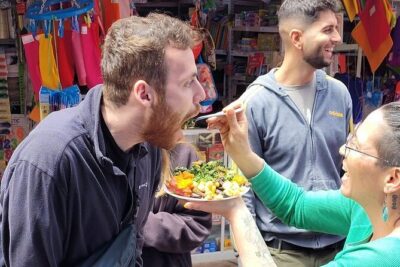
Food and Culture Full day Tour in the Sacred Valley
Read our review →Browse the lists this tour appears in