
Reviewed · MACHU PICCHU TOURS FROM CUSCO
Machu Picchu: Chinchero, Maras, Moray & Machu Picchu 2 days
Machu Picchu is the star, but this two-day route from Cusco gives you a good look at the Sacred Valley before you reach the citadel. You’ll see Chinchero’s market and church, Moray’s strange circular terraces, the salt ponds of Maras, and Ollantaytambo’s massive stonework before taking the train to Aguas Calientes.
I like two things here: the route packs in several major Inca sites without making you change hotels, and the early start gets you to Machu Picchu before the day is at full strength. Guides such as Nathalie, Adolfo, and Efrain are praised for clear explanations and a comfortable pace. The drawback is a long, busy first day, and the return journey can include a bus change at Ollantaytambo.
Key points at a glance
- Chinchero begins the day with culture and craft: Visit the archaeological site, colonial church, and local handicraft market.
- Moray’s circular terraces are the visual surprise: The unusual rings make this one of the most memorable stops in the Sacred Valley.
- Maras shows a working salt tradition: Local families still extract salt from hundreds of small ponds.
- Ollantaytambo adds a powerful final ruin: Its terraces and fortress sit above one of Peru’s best-preserved Inca towns.
- Machu Picchu gets a full guided visit: You have about three hours with your guide, followed by free time inside the citadel.
- The $680 price covers the costly pieces: Transport, entrance fees, meals listed in the program, lodging, buses, and Expedition trains are included.
Why this two-day route works
This is a fast way to connect several major sights without arranging each ticket, transfer, and meal yourself. You leave your Cusco hotel at about 8:00 AM, travel through the Upper Urubamba Valley, sleep in Aguas Calientes, and reach Machu Picchu early the next morning.
That order matters. Trying to visit Machu Picchu from Cusco in a single day can mean a very early start and a long return. Here, you spend the night at the foot of the mountain, so the second day is focused on the citadel rather than on racing to catch the first train.
The group is limited to 16 people. That is small enough for a guide to answer questions and keep an eye on the group at busy stops, but it is not a private tour by default. On one departure with only a few bookings, the service became private, but you should treat that as a possibility rather than a promise.
The route is active without being a trek. You will walk through ruins, markets, terraces, train stations, and Machu Picchu pathways. The activity is not suitable for people with mobility impairments, and it is not designed for anyone over 95. Bring your passport, since it is required for the trip.
More Chinchero and Weaving Visits from Aguas Calientes:
- From Cusco: Moray, Maras Salt Mines & Chinchero Weavers Tour
★ 4.8 · 1,925 reviews - Cusco:Chinchero,Moray & Salt Mines drop-off in Ollantaytambo
★ 4.8 · 793 reviews - Sacred Valley: Chinchero, Moray, Ollantaytambo & Pisac+Lunch
★ 4.8 · 501 reviews
Chinchero, where weaving and Inca stonework meet
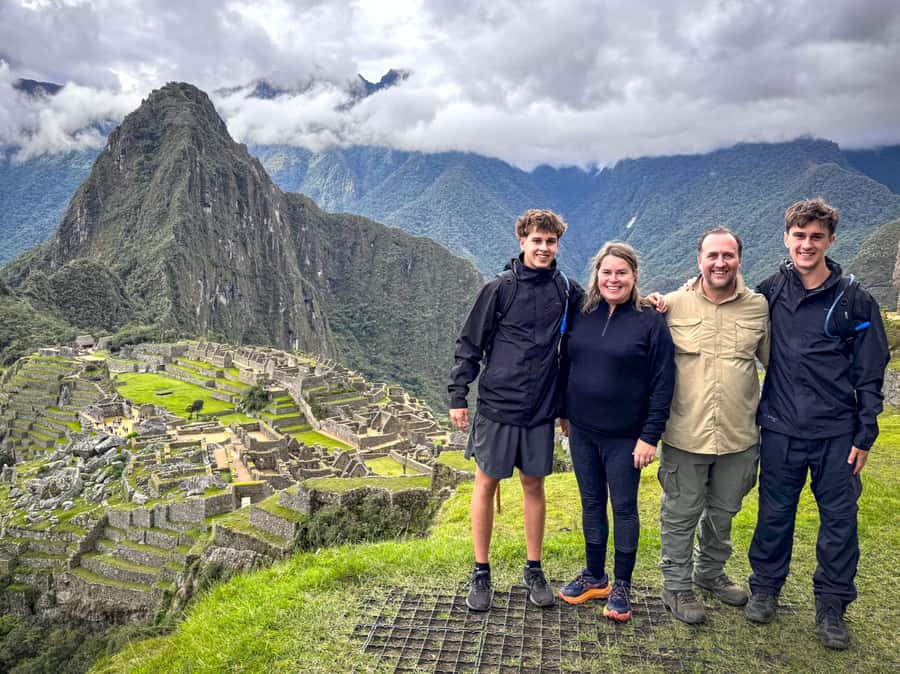
Your first stop is Chinchero, a town known for its Inca remains, colonial church, and handicraft market. It is a useful introduction to the trip because it puts living Andean culture beside the remains of the Inca past.
The archaeological site gives you a chance to see the scale and precision of Inca construction before the larger monuments later in the day. The colonial church adds another layer, showing how Spanish religious buildings were placed in areas important to earlier Andean communities.
You will also have time at the market. This is the right place to look at textiles and local handicrafts, though you should remember that shopping is part of the stop, not the main reason to book the tour. If you want time to compare many stalls at a slow pace, the fixed schedule may feel brief.
Your guide helps connect the stones, church, and market rather than treating them as separate photo stops. That is one reason the guide matters on this route. Nathalie is described as passionate and able to explain the sites without rushing the group. Adolfo is also praised for being friendly and helpful, while Efrain is noted for answering questions carefully.
Moray and the strange geometry of the terraces
After Chinchero, expect about an hour on the road to Moray. The drive gives you a break from walking, but this is still a full day, so bring water and wear shoes you can use comfortably on uneven ground.
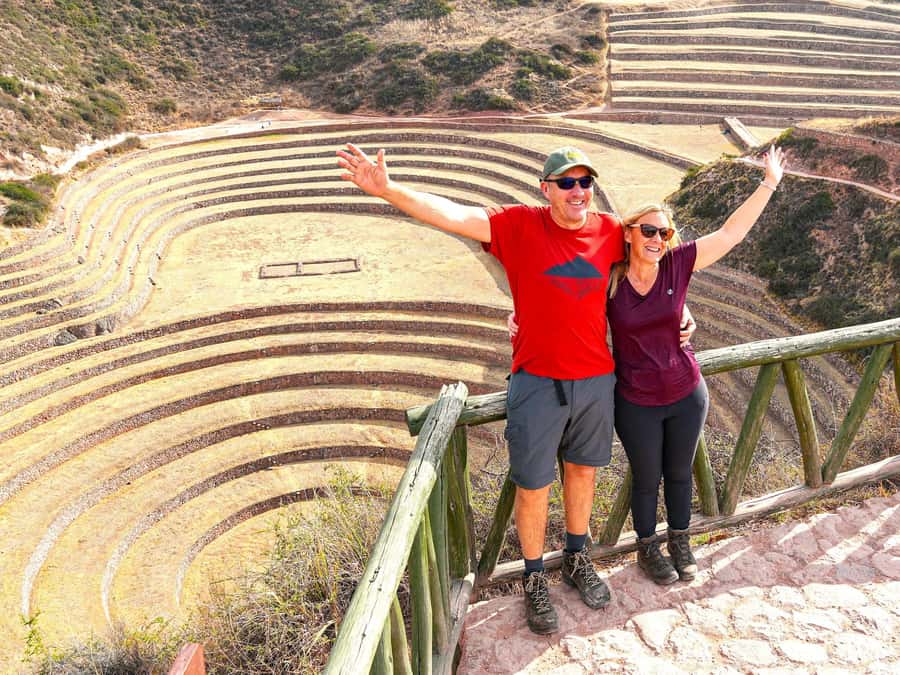
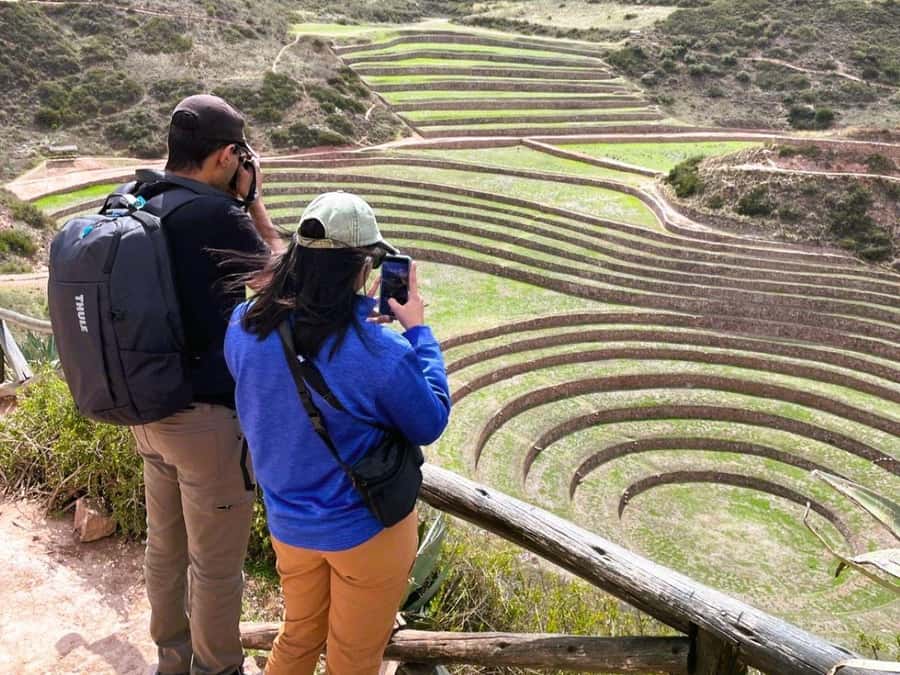
Moray is famous for its huge circular agricultural terraces. From above, the rings look almost too tidy to be farmland. Their exact purpose is often discussed in connection with Inca agricultural experiments, but the important point for you is visual: the terraces create a powerful sense of depth and order.
This stop is especially good for people who enjoy seeing how the Incas shaped difficult terrain for practical use. It is not a palace or fortress. Instead, you are looking at an agricultural site whose form is as striking as its function.
Your guide can give the site meaning that a quick photograph cannot. Ask questions about how the terraces were built and why their design differs from the stepped fields you will see at other points in the valley. The stop is not huge, but it earns its place because it breaks up the sequence of temples and fortresses with something more unusual.
Maras and the white salt ponds
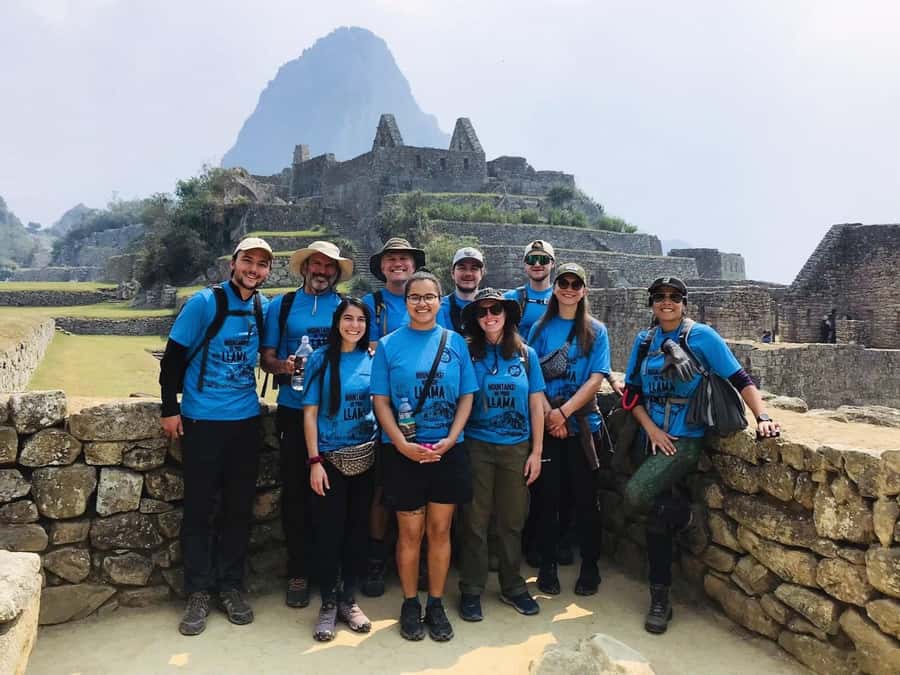
The route then heads toward Maras, a town associated with the Salineras salt mines. Lunch is scheduled at a local restaurant in the area, with mountain views, and a buffet lunch in Urubamba is included in the program. Dinner is also included later in Ollantaytambo.
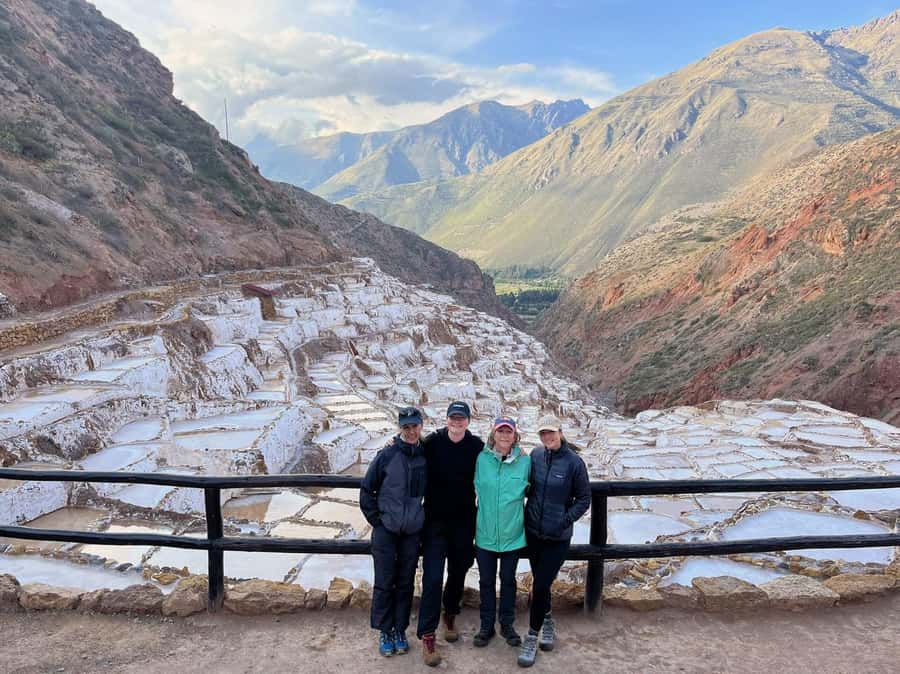
The salt ponds are one of the most distinctive sights on the route. Small pools spread across the hillside, each fed by salty water. Local residents have extracted salt here since Inca times, and the site remains connected to working community life rather than being only an archaeological display.
This is a good place to slow down and look closely. The ponds form a patchwork of pale surfaces, with color and texture changing according to the water and the stage of salt collection. Your guide can explain how the system works and why the site has continued to matter.
The practical point is that Maras is not a polished museum. Conditions can be simple, and you will be walking around an active salt-producing area. Keep your passport and belongings secure, follow instructions, and do not expect a long, leisurely stop if the day is running to schedule.
More Maras and Moray Circuits from Aguas Calientes:
- From Cusco: Sacred Valley & Maras Salt Mines Tour with Lunch
★ 4.8 · 2,227 reviews - Cusco: Sacred Valley, Pisac, Ollantaytambo, Salt Mines Moray
★ 4.6 · 1,058 reviews - Sacred Valley: Maras & Moray by Quad Bike from Cusco
★ 4.6 · 418 reviews - From Cusco: Quad bike tour Moray and Salt Mines
★ 4.7 · 314 reviews
Ollantaytambo’s terraces and fortress
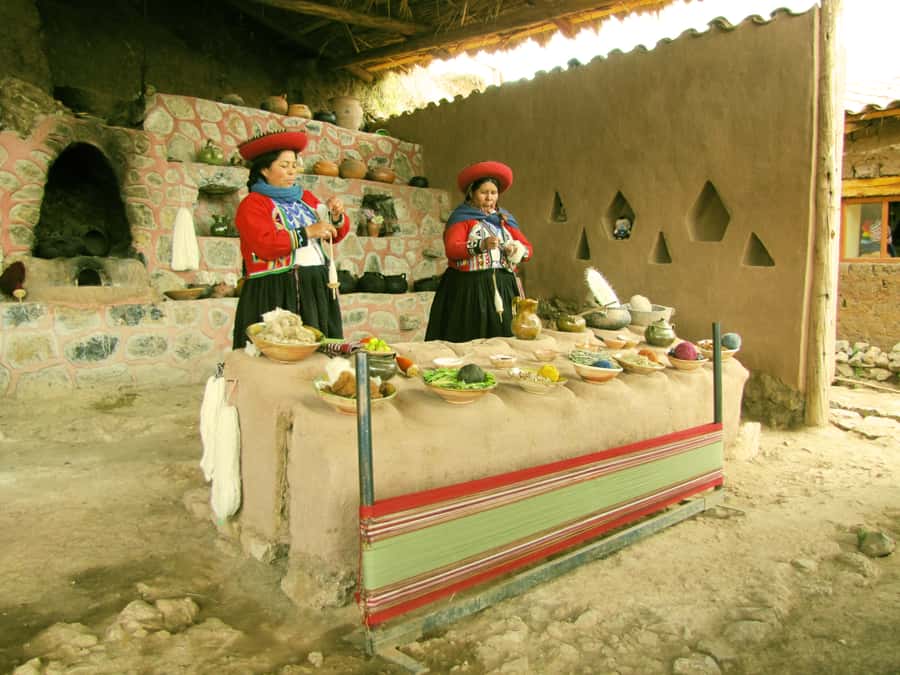
Ollantaytambo is more than a quick ruin stop. It is a historic town with a major Inca archaeological site, and it gives you a sense of how the settlement, farmland, and defensive structures worked together.
The ruins rise up the hillside in broad stone terraces. The scale is impressive, especially after Moray and Maras, because the site feels more monumental and fortified. Your guide leads you through the archaeological area and explains the major structures as you climb and look across the town.
You will have dinner at a local restaurant before continuing to the train. That timing is useful because it lets you eat before the evening journey, but the day has already included several stops and a substantial amount of walking. If you are sensitive to late evenings, keep your expectations realistic.
Ollantaytambo is also an important transport point. The Expedition train takes you to Aguas Calientes, the town below Machu Picchu, where you spend the night in a three-star hotel. The train is part of the value of this package, since train tickets and the hotel can add a large amount to the cost when booked separately.
Aguas Calientes and the early start
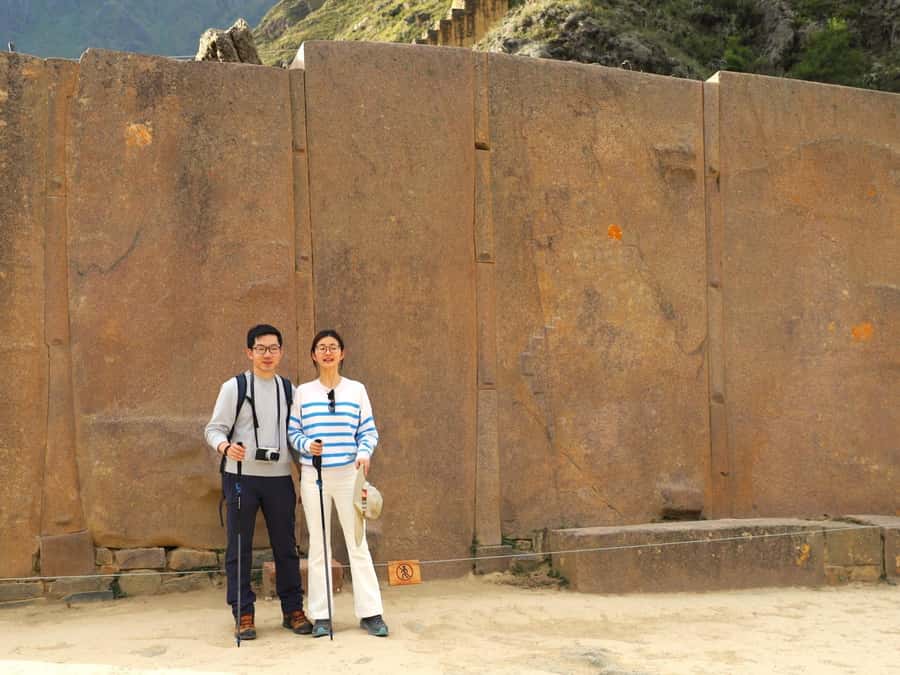
The overnight stay makes the next morning easier than a same-day Cusco trip. You have breakfast at the hotel, then take the first buses up to Machu Picchu.
The early departure is one of the strongest parts of the plan. Machu Picchu can feel much more manageable before the day reaches its busiest point, and early light can make the mountain setting especially appealing. The schedule still depends on transport and entry arrangements, so the tour does not guarantee an empty site.
A three-star hotel is included in Aguas Calientes. That tells you what to expect: a practical overnight base rather than a luxury stay. You are paying for location and convenience, not for a resort experience.
Meals included in the program are buffet lunch in Urubamba, dinner in Ollantaytambo, breakfast at the hotel, and lunch on the second day in Aguas Calientes. Other meals are not included. If you prefer snacks between stops, buy them in advance when you have the chance.
Three hours inside Machu Picchu
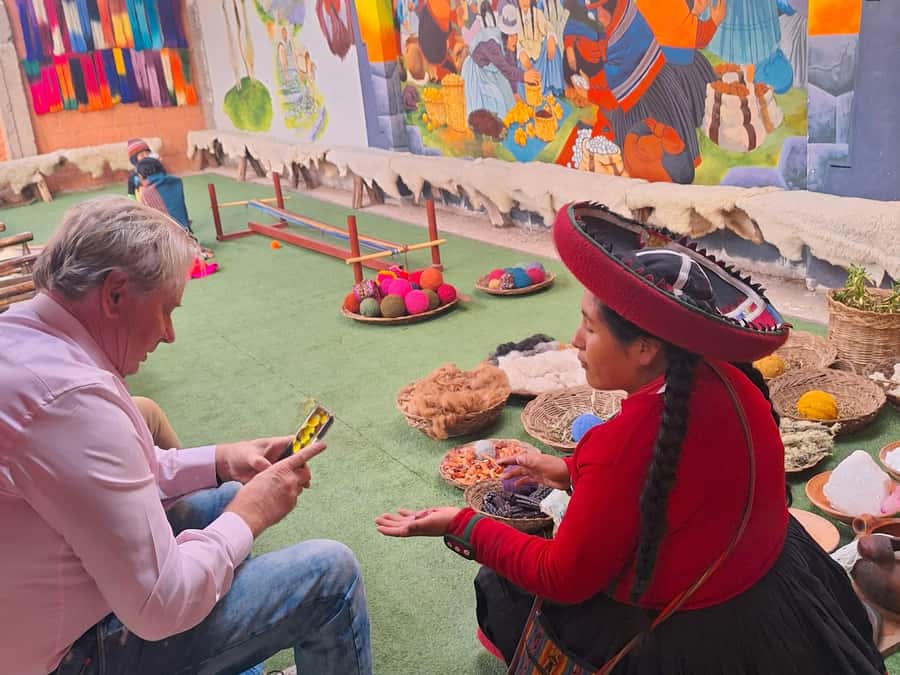
At Machu Picchu, your guide leads a tour of the main temples, palaces, and plazas. The guided portion lasts about three hours, which gives you enough time for context and orientation without turning the whole visit into a lecture.
I like this balance. The guide helps you understand what you are seeing, then you have free time to look around on your own. Without that introduction, it is easy to remember only the famous terraces and overlook. With a guide, you can give the plazas, religious buildings, and stonework a clearer place in the larger site.
You should not expect to add Huayna Picchu or Machu Picchu Mountain to this package. Those are separate hikes and are not included. If one of those climbs is central to your Peru plans, check availability and entry arrangements before booking this tour.
Machu Picchu requires steady walking and attention to the route. It is not suitable for people with mobility impairments, and the early start after a long first day may be tiring. Still, the structure works well if your priority is to see the principal areas with a guide and then have some personal time.
After the visit, you take the bus back to Aguas Calientes for lunch. Then you return by Expedition train toward Cusco. Depending on the transport arrangement, the final leg may include changing to a bus at Ollantaytambo rather than staying on the train all the way to your hotel. That change can make the return feel longer, especially after two full days.
The expected arrival at your Cusco hotel is around 7:30 PM. Door-to-door service is included, and the driver should meet you at your hotel lobby with a sign showing your last name. Wait about 10 minutes before the scheduled pickup time.
What the $680 price really covers
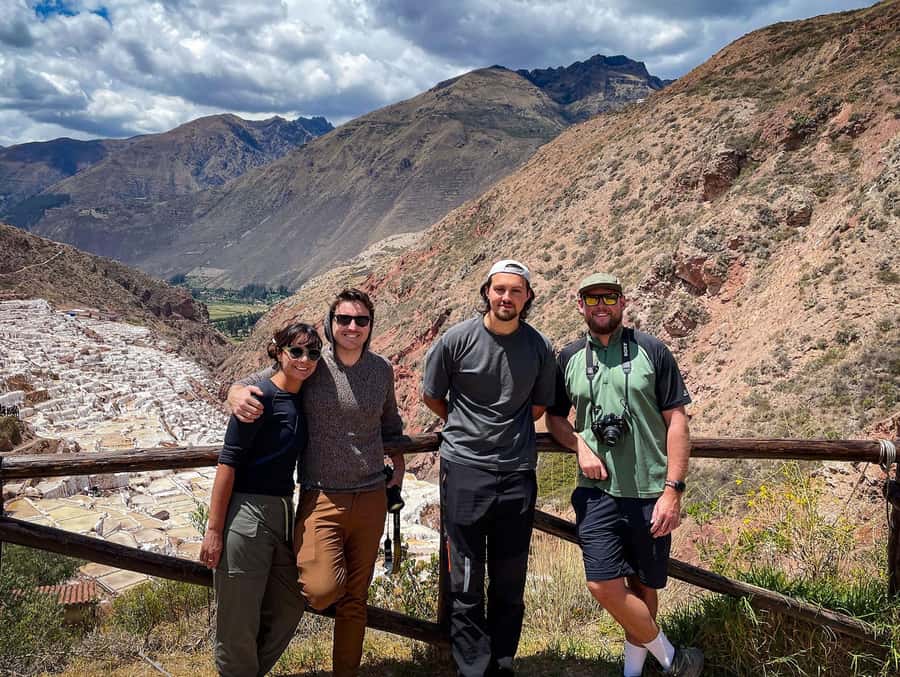
At $680 per person, this is not a budget excursion. The price makes more sense when you count the separate costs bundled together:
- Cusco hotel pickup and return
- Transport throughout the route
- Entrance fees for Chinchero, Moray, Maras, Ollantaytambo, and Machu Picchu
- Round-trip buses between Aguas Calientes and Machu Picchu
- One night in a three-star hotel
- Expedition train tickets
- Day one lunch and dinner
- Expert guidance
- Taxes and reservation charges
The biggest value comes from removing the complicated pieces. Machu Picchu entry, bus tickets, train seats, and hotel rooms all need to line up. This package handles those connections and adds the Sacred Valley stops.
The price is less attractive if you are traveling on a tight budget, already have lodging and train tickets, or prefer to move independently. You are also paying for a fixed schedule, included meals, and group transport. That is a fair trade for many visitors, but not for everyone.
The activity is non-refundable, so only book once your dates are firm. Travel insurance is not included. The tour is offered in English or Spanish, and temperature checks and mask requirements may apply according to the operating rules in effect for the trip.
Who should book this experience
I would choose this tour if you have only two days for the Cusco region and want the major sights arranged in one package. It suits first-time visitors who want a guide, do not want to solve the train and bus connections themselves, and prefer a small group to a large coach.
It is also a strong choice if Machu Picchu is your main goal but you want more than a quick visit from Cusco. Chinchero, Moray, Maras, and Ollantaytambo give you a wider view of Inca agriculture, engineering, religion, trade, and settlement.
I would hesitate if you need a slow pace, have difficulty walking, want a private vehicle throughout, or plan to add one of the extra mountain hikes. The first day is packed, and the return to Cusco can feel tiring. You should also confirm how the final train and bus connections will work before paying.
Final verdict: a well-organized, full-value two-day plan
Book this tour if you want efficient coverage of the Sacred Valley and Machu Picchu, with most expenses handled upfront. The guides are a major part of the experience, and the combination of clear explanations, manageable group size, and an early Machu Picchu visit gives the itinerary real strength.
Skip it if you want complete flexibility or a quiet, unhurried schedule. At $680, you should value convenience, included transport, and the careful timing more than low cost. For many visitors with limited time, that is exactly what makes this route worthwhile.
FAQ
How long is the tour?
The tour lasts two days and one night. You leave Cusco on day one and return to your Cusco hotel at about 7:30 PM on day two.
What time does pickup begin?
Hotel pickup in Cusco is scheduled for about 8:00 AM on the first day. You should wait in the hotel lobby 10 minutes before the scheduled pickup.
Which places are visited on the first day?
The first day includes Chinchero, Moray, the Salineras of Maras, and Ollantaytambo. You then take the Expedition train to Aguas Calientes.
Where do you stay overnight?
You stay for one night at a three-star hotel in Aguas Calientes.
Is Machu Picchu entrance included?
Yes. The Machu Picchu entrance ticket and round-trip bus service between Aguas Calientes and Machu Picchu are included.
Are meals included?
Day one includes buffet lunch in Urubamba and dinner in Ollantaytambo. Breakfast at the hotel and lunch in Aguas Calientes are also part of the stated program. Meals not mentioned are not included.
Does the tour include Huayna Picchu or Machu Picchu Mountain?
No. Huayna Picchu and Machu Picchu Mountain require extra tickets and are not included.
What languages are available for the guide?
The live guide service is available in English and Spanish.
More 2-Day Experiences in Aguas Calientes
- Machupicchu tour by tourist train in 2 days
★ 4.5 · 7 reviews - Inca Trail 2 days to Machu Picchu
★ 5.0 · 5 reviews - Machu Picchu 2 Days / 1 Night (By Bus)
★ 3.7 · 4 reviews - From Cusco: Machu Picchu by Car 2D/1N
★ 3.5 · 3 reviews
More Machu Picchu Days from Aguas Calientes
- From Aguas Calientes: Machu Picchu guided tour with tickets
★ 4.9 · 72 reviews - From Cusco: Machu Picchu 2 days
★ 3.6 · 29 reviews - Cusco: Machu Picchu Day Trip with Train + Entrance ticket
★ 4.5 · 17 reviews - Rainbow Mountain tour and Machu Picchu tour by train
★ 4.8 · 13 reviews
Just added around Aguas Calientes
- TOUR TO MACHU PICCHU FULL DAY BY TRAIN – The Best Adventure★ 3.2 · 4 reviews
- Salkantay Trek to Machu Picchu 5 Days with Sky Lodge Domes★ 5.0 · 5 reviews
- Rainbow Mountain tour and Machu Picchu tour by train★ 4.8 · 13 reviews
- Machupicchu tour by tourist train in 2 days★ 4.5 · 7 reviews
- From Cusco: Train Ride and Guided Tour of Machu Picchu★ 5.0 · 6 reviews
- Machu Picchu: Private Tour Guide Service for up to 15 people★ 4.5 · 3 reviews
- Machu Picchu 2 Days / 1 Night (By Bus)★ 3.7 · 4 reviews
- Machu Picchu Entry Ticket and Bus from Aguas Calientes★ 3.8 · 8 reviews
Machu Picchu Tours from Cusco, compared.
4-Day Inca Trail to Machu Picchu with Accommodation
Read our review →
2-Day Trip to the Sacred Valley and Machu Picchu
Read our review →

The First Class Machu Picchu Train by Inca Rail
Read our review →Browse the lists this tour appears in