
Reviewed · INCA TRAIL TREKS TO MACHU PICCHU
4 Day Inca Trail Trek to Machu Picchu Multi day tour
The best part of this four-day Inca Trail trek is the way Machu Picchu becomes the reward for several hard days on foot. You cross high mountain passes, cloud forest, stone stairways, and old Inca sites before reaching the Sun Gate above the citadel. I especially like the small group limit of 16 and the support of porters, a chef, and a guide.
I also like that the $930 price includes the Inca Trail permit, Machu Picchu entry, camping gear, meals, return transport, and a personal duffel allowance of up to 7 kilograms. The main drawback is simple: this is a demanding high-altitude hike, not a gentle sightseeing trip. Dead Woman’s Pass reaches 4,215 meters, and you need strong physical fitness.
Key points at a glance
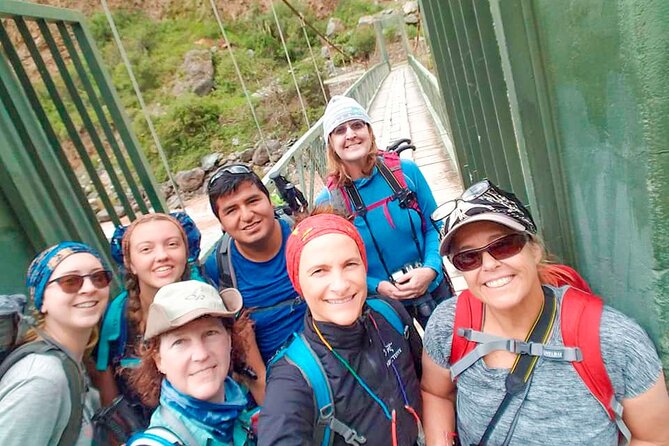
- 42 kilometers of classic Inca Trail: Follow the historic route from Km 82 through mountain passes, cloud forest, and subtropical vegetation.
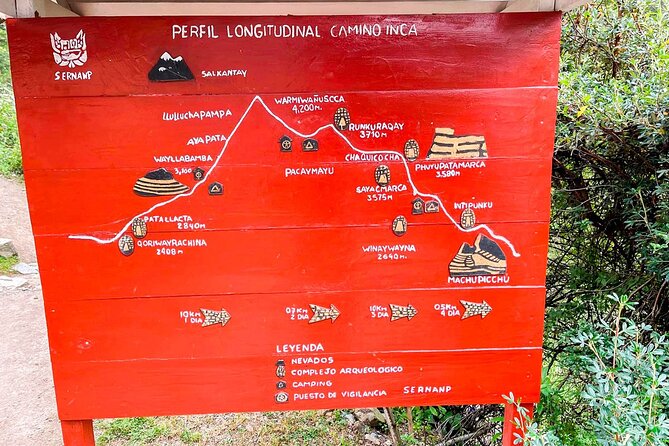
- Dead Woman’s Pass is the big test: The trail reaches 4,215 meters on day two, followed by a steep descent into the Pacaymayo Valley.
- Three nights of supported camping: Porters carry food and equipment, while a trekking chef prepares breakfast, lunch, and dinner.
- A long list of Inca sites: See Llactapata, Runkurakay, Sayacmarca, Phuyupatamarca, and Wiñay Wayna along the route.
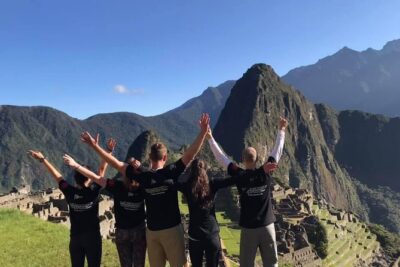
- Sun Gate arrival: On day four, you enter Machu Picchu on foot through Inti Punku before touring the citadel.
- Small-group value: Groups can reach 16 people, with guides such as Nico, César, Plinio, Josias, and others assigned according to the departure.
Why this four-day route is worth the effort
Machu Picchu is impressive from any approach, but arriving through the Sun Gate gives the site a sense of place. You have spent days walking an ancient road through the Andes, passing terraces and ruins that cannot be reached by the regular train route. The final view is not just a photo stop. It is the payoff for the climb.
The route covers about 26 miles, or 42 kilometers, over four days. That distance alone is manageable for many fit hikers, but the altitude and steep stone steps make it tougher than the number suggests. You will climb high, descend sharply, and repeat the pattern.
I would choose this trip if you want the full Inca Trail experience rather than the quickest way to Machu Picchu. You sleep in tents, eat in a camp dining area, and walk for several hours each day. In exchange, the company handles the heavy equipment, meals, permits, and much of the transport planning.
The support system is a major part of the value. You carry your daypack, while a personal super porter carries up to 7 kilograms of personal belongings in your duffel. Other porters transport the kitchen, food, tents, tables, chairs, and cooking equipment. That allows you to hike with less weight, though you still need to be ready for steep and uneven ground.
The food is another strong point. Breakfast, lunch, and dinner are included for the three nights on the trail. The trekking chefs receive especially strong praise for producing plentiful meals in camp, including baked treats on some departures. Do not expect restaurant service, but you can expect food to be an important part of the camp routine.
More Inca Trail Departures from Cusco:
- Cusco: 4-Day Inca Trail to Machu Picchu with Accommodation
★ 4.8 · 432 reviews - Cusco: Machu Picchu 2-Day Inca Trail with Panoramic Train
★ 4.9 · 260 reviews - From Cusco: 2-Day Inca Trail to Machu Picchu
★ 4.2 · 244 reviews
Day one, Km 82 to the first camp
Your day begins early, with pickup in Cusco at about 4:30 a.m. The drive heads through the Urubamba Valley toward Km 82, the standard starting point for the Inca Trail. This early departure makes for a long day, but it gets you onto the trail with time to walk at a measured pace.
After crossing the Vilcanota River, you begin along the old Inca route. The first day covers about 12 kilometers, or 7.5 miles, and is described as moderate compared with the days ahead. The trail follows the river for much of the route, with mountain views and valleys opening around you.
You pass through Huayllabamba and may have the chance to interact with local people. This gives the first day a more lived-in feel than a pure wilderness walk. The route is not only about distant ruins and grand views. It also passes through working communities and the highland environment that still supports daily life.
The first day is useful for finding your pace. You will learn how quickly the group walks, how much water you need, and how your legs respond to the altitude. I recommend keeping your daypack light and saving energy. The route gets much harder on day two.
Camping equipment is provided, including a two-person setup using a four-person Eureka tent. That extra space gives you more room for bags and makes the tent less cramped than a standard fully occupied shelter. A dining tent, kitchen tent, toilet tent, tables, chairs, and sleeping roll mattress are also included.
Day two, Dead Woman’s Pass at 4,215 meters
Day two is the physical heart of the trek. You wake early, eat breakfast, and begin the long climb toward Warmiwañusca, better known as Dead Woman’s Pass. At 4,215 meters, or 13,828 feet, it is the highest point on the route.
The climb can feel slow and demanding. The grade, altitude, and stone steps work together, so you should expect frequent pauses. The reward is the view across the surrounding mountains and valleys, but the real achievement is reaching the pass at all.
After a short rest, you descend into the Pacaymayo Valley. This descent is not an easy finish. Long downhill sections can be hard on knees and thighs, especially after the climb. Good footwear and trekking poles are useful here, though poles cost an additional $20 if rented through the tour.
The scenery shifts as you go. High-altitude grasslands give way to cloud forest, with orchids and bromeliads along the trail. This change is one of the pleasures of the Inca Trail. You are not simply walking toward a single monument. The plants, air, and views alter as the route rises and falls.
You camp in the Pacaymayo Valley. Water is supplied at the campsite by the chef, which removes one common worry on a multi-day hike. Still, you should bring a refillable bottle or hydration system, since the supplied water needs to fit your personal drinking routine.
This is the day when fitness matters most. The tour requires a strong physical fitness level, and that warning deserves attention. You do not need to be an elite athlete, but you should prepare for several hours of uphill and downhill walking at altitude.
Day three, three ruins and a cloud forest
Day three is shorter in stated walking time, about six hours, but it remains a full hiking day. The trail climbs again toward Runkurakay Pass at 3,970 meters, or 13,022 feet. Compared with Dead Woman’s Pass, it is lower, but your legs are already carrying two days of effort.
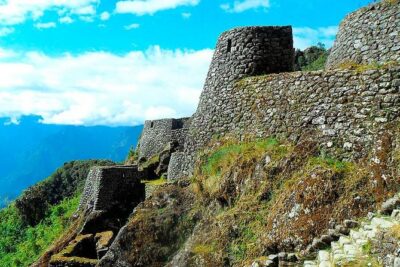
Runkurakay is a notable archaeological site with a distinctive rounded form. The route then descends toward Sayacmarca, located at about 3,624 meters. The ruins sit above the trail and make a good place to pause, listen to the guide, and understand how the Incas used steep terrain to build and protect their settlements.
The trail continues through cloud forest, passing smaller ruins along the way. It then reaches Phuyupatamarca, the third high point, at about 3,670 meters. The name is often translated as City Above the Clouds, an apt description when mist gathers around the stonework and mountain slopes.
The final descent leads to Wiñay Wayna, one of the most memorable sites on the trek. Its terraces and ritual baths are arranged dramatically on a steep mountainside. The site also marks a major change in the trip. You are now much closer to Machu Picchu, and the vegetation feels more subtropical.
The campsite sits at about 2,650 meters. That lower elevation may feel easier on your breathing than the high passes, though the day’s stairs still take a toll. Wiñay Wayna is also a strong reason to choose the complete trail instead of a short access route. You see several important sites before Machu Picchu, not only the final citadel.
Your guide adds real value here. Guides named in the supplied material include Nico Raul, César Pérez, César Coavoy, Plinio, Josias, Yijo, and Pepe, though the assigned guide depends on the departure. Their role is more than keeping the group on the path. They explain the ruins, set the pace, answer questions, and help the group handle changes in weather or energy.
More Machu Picchu Days from Cusco:
- From Cusco: Full-Day Group Tour of Machu Picchu
★ 4.7 · 1,767 reviews - Machu Picchu Day Trip from Cusco
★ 4.5 · 1,644 reviews - Machu Picchu: Full-Day Tour from Cusco with Optional Lunch
★ 4.6 · 927 reviews - From Cusco: 2-Day Trip to the Sacred Valley and Machu Picchu
★ 4.6 · 265 reviews
Day four, the Sun Gate and Machu Picchu
Day four begins early. After breakfast, you walk to the checkpoint for the final stretch of the Inca Trail. The route leads to Inti Punku, the Sun Gate, where Machu Picchu first appears across the mountains.
This arrival is one of the strongest arguments for doing the trail. You see the citadel from above before entering it, with the surrounding peaks framing the ruins. The exact conditions can vary, and clouds may affect the view, but the approach still feels different from arriving by bus.
From the Sun Gate, you continue to Machu Picchu for a guided tour of the archaeological site. The tour includes the entrance fee and a guide, so you are not left to wander without context. The citadel was brought to international attention after Hiram Bingham’s 1911 expedition, but the stonework, terraces, and setting are much older than that modern rediscovery.
The fourth day lasts about six hours, including the route and visit. After the site visit, you take the shuttle bus down to Aguas Calientes. Lunch there is not included, so budget separately for your final meal.
The return uses a tourist train to Ollantaytambo, followed by a tourist bus to Cusco. That transport is included, which matters because arranging the return on your own after a strenuous hike can be awkward. The day is long, but you finish with the hard walking behind you.
Camping, food, and the porter system
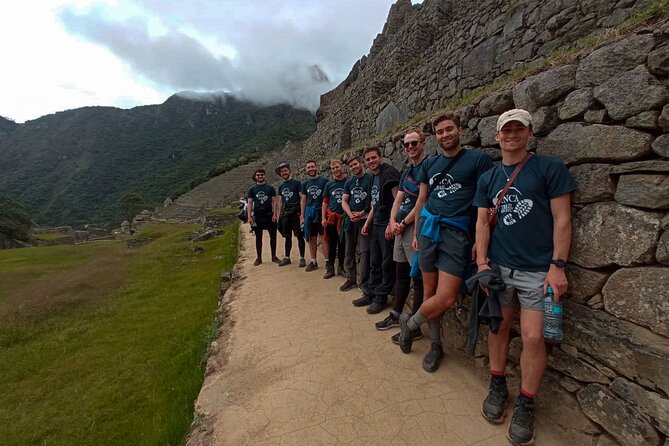
This is supported camping rather than a minimalist backpacking trip. You sleep in tents, but porters carry the group equipment and food. The kitchen and dining tents give you a place to eat away from the sleeping area, and a separate toilet tent is provided.
The included mattress is a comfort sleeping roll mattress. A more substantial inflatable rest mattress costs another $20, and a sleeping bag costs $25. You should check your own cold-weather needs before departure, since nights at altitude can be chilly even when daytime walking feels warm.
Three breakfasts, three lunches, and three dinners are included. The first breakfast and final lunch in Aguas Calientes are not included. Water is provided at every campsite by the chef, which is helpful, but personal hydration supplies remain your responsibility.
The cooking team receives some of the strongest praise connected with this trek. Meals are described as plentiful and surprisingly ambitious for a mountain camp, with some departures even producing cake. That does not erase the basic realities of camping, but it makes the end of each hiking day more pleasant.
The porter system also deserves attention. Carrying food, tents, cooking equipment, and dining gear over the trail is hard work. This package includes a personal porter allowance of up to 7 kilograms, plus additional porters for shared supplies. Pack only what you need, and remember that porter support does not mean your daypack will be weightless.
What the $930 price really includes
At $930 per person, this is not a low-cost hike. The price makes more sense when you add up the included pieces: the Inca Trail permit, Machu Picchu admission, transportation from Cusco to Km 82, three nights of camping, guides, chef, porters, meals, equipment, shuttle bus, train, bus back to Cusco, taxes, and an emergency oxygen bottle.
You also receive a rain poncho, first-aid kit, water at campsites, and a commemorative T-shirt. The company offers the chance to sponsor the planting of native trees, adding an environmental option to the trip.
Several expenses remain outside the price. You pay extra for a sleeping bag, hiking poles, and an inflatable mattress. Tips, souvenirs, travel insurance, the first breakfast, and the final lunch are also separate.
For me, the strongest value comes from the permits and logistics. The Inca Trail has controlled access, and the permit is a vital part of the trip. The included train and bus connections also save you from sorting out a complicated return after visiting Machu Picchu.
Who should choose this trek?
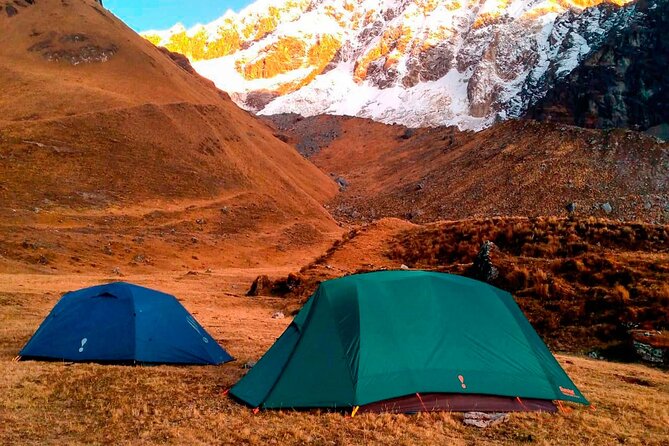
Choose it if you want a physically demanding route, historic sites along the way, and a full approach to Machu Picchu. It suits hikers who are comfortable walking for six to eight hours, carrying a daypack, sleeping in tents, and coping with fast changes in altitude and weather.
It can also suit older hikers who train carefully. People in their 60s and 70s have completed this route, but the examples connected with this tour emphasize preparation, pacing, and guide support. Age alone is not the deciding factor. Fitness, altitude response, and willingness to walk steep steps matter more.
I would not choose it if your priority is comfort, free time, or a simple visit to Machu Picchu. The start time is 4:30 a.m., the second day is hard, and the cancellation policy is strict: the experience is non-refundable and cannot be changed after booking.
The maximum group size of 16 is a sensible compromise. You get company on the trail without the feel of a huge procession. Guides such as Nico, César, and Plinio are praised for adjusting pace, encouraging tired hikers, explaining Inca history, and helping when weather changes plans.
Practical preparation before you go
Spend time walking hills and stairs before arriving in Peru. The trail includes long climbs, steep descents, and repeated stone steps. Build endurance rather than relying only on short, flat walks.
Allow time in Cusco before the trek if your wider itinerary permits. The tour begins with an early transfer and immediately moves into high country. The supplied information does not specify an acclimatization schedule, so you should plan your own carefully and discuss altitude concerns with a medical professional.
Pack for wet and changing conditions. A rain poncho is supplied, but you still need suitable clothing, footwear, and a small daypack. Keep your important personal items secure and within the 7-kilogram duffel allowance if you plan to use the personal porter service.
Bring money for the excluded items and tips. A sleeping bag, poles, inflatable mattress, meals in Aguas Calientes, souvenirs, and gratuities can add to the advertised cost. Travel insurance is not included and is worth arranging for a multi-day high-altitude trip.
Should you book the four-day Inca Trail?
You should book this trek if you want Machu Picchu to be the final chapter of a real mountain journey. The combination of Dead Woman’s Pass, cloud forest, Wiñay Wayna, porters, camp cooking, and the Sun Gate arrival gives you far more than a direct visit to the ruins.
You should pause if you are not ready for steep hiking or basic camping. At $930, the trip is a substantial purchase, and the non-refundable policy means you should confirm your fitness, travel insurance, equipment needs, and availability before paying.
For a fit hiker who values history, scenery, and strong logistical support, this is a well-rounded way to reach Machu Picchu. The hard work is not hidden, but the included permits, meals, porters, guide, and return transport make the price easier to justify.
FAQ
How long is the Inca Trail trek?
The trek lasts approximately four days and covers about 42 kilometers, or 26 miles.
What time does the tour begin?
Pickup begins at approximately 4:30 a.m. on the first day.
How high is Dead Woman’s Pass?
Warmiwañusca, known as Dead Woman’s Pass, reaches 4,215 meters, or 13,828 feet.
How many nights do you camp?
The tour includes three nights of camping, with tents, dining equipment, a kitchen tent, and a toilet tent provided.
Are meals included?
Three breakfasts, three lunches, and three dinners are included during the trek. Your first breakfast and final lunch in Aguas Calientes are not included.
Is the return transport included?
Yes. The package includes the shuttle bus from Machu Picchu to Aguas Calientes, a tourist train from Aguas Calientes to Ollantaytambo, and a tourist bus from Ollantaytambo to Cusco.
More Hiking & Trekking in Cusco
- From Cusco: 7 Lakes Ausangate Trek with Breakfast and Lunch
★ 4.8 · 360 reviews - Cusco: Rainbow Mountain Tour and Red Valley Hike (Optional)
★ 4.7 · 149 reviews - Cusco: Full-Day Rainbow Mountain & Red Valley Trekking Tour
★ 4.5 · 121 reviews - Salkantay Trek Challenge – 3 Days / 2 Nights
★ 5.0 · 101 reviews
More 4-Day Experiences in Cusco
- 4 Day Tour to the Manu National Park
★ 5.0 · 81 reviews - Choquequirao Trek 4 days and 3 nights
★ 5.0 · 81 reviews - Cusco Sacred Valley and Machupicchu 4 Days
★ 5.0 · 80 reviews - Ancascocha Trek To Machu Picchu 4 Days And 3 Nights
★ 5.0 · 77 reviews
Just added around Cusco
- Zipline over the Sacred Valley Trip★ 5.0 · 11 reviews
- Valle Sur Cusco | half day★ 4.3 · 3 reviews
- Visit Pisac from Cusco: Private Transport★ 4.6 · 9 reviews
- Transfer from Cusco to Ollantaytambo★ 5.0 · 30 reviews
- Exclusive Huayna Picchu Tour in 1 Day from Cusco★ 5.0 · 31 reviews
- Trek to Humantay Lake from Cusco★ 4.9 · 8 reviews
- Private Tour Sacred Valley, Chinchero, Maras Moray, Ollantaytambo★ 5.0 · 29 reviews
- 5 Day – Salkantay trek to Machu Picchu – Group Service★ 4.5 · 27 reviews
Inca Trail Treks to Machu Picchu, compared.
4-Day Inca Trail to Machu Picchu with Accommodation
Read our review →
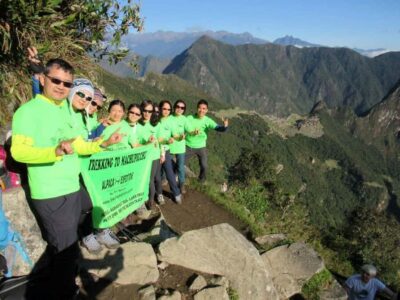
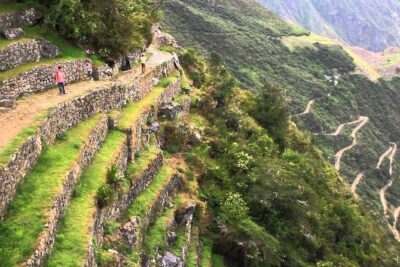
Short Inca trail to MachuPicchu || 2days – 1nigth ||
Read our review →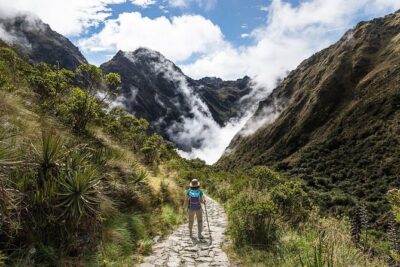
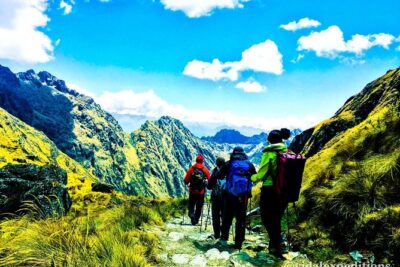
4 Day Inca Trail To Machu Picchu – Private Service
Read our review →Browse the lists this tour appears in