
Reviewed · MARAS SALT MINES & MORAY TOURS
From Ollantaytambo: Moray, Maras, and Chinchero Guided Tour
Moray is the star of this day out: its great circular terraces look almost too neat to be farm fields, yet the Incas used them to test crops in different microclimates. Add the still-working salt pools at Maras and Chinchero’s textile traditions, and you get a useful slice of Sacred Valley culture in one outing.
I like the three-part mix. Moray gives you archaeology, Maras shows a working local trade, and Chinchero adds living craft rather than another stone site. I also like the convenience of pickup in Ollantaytambo and return transportation, especially if you are using the town as your base.
The weak point is communication before departure. One booking went badly because the operator did not show at the confirmed time, while another pickup was only sorted out by WhatsApp shortly before the start. Confirm the meeting point and pickup time yourself, and do not rely on silence to mean everything is arranged.
Key points at a glance
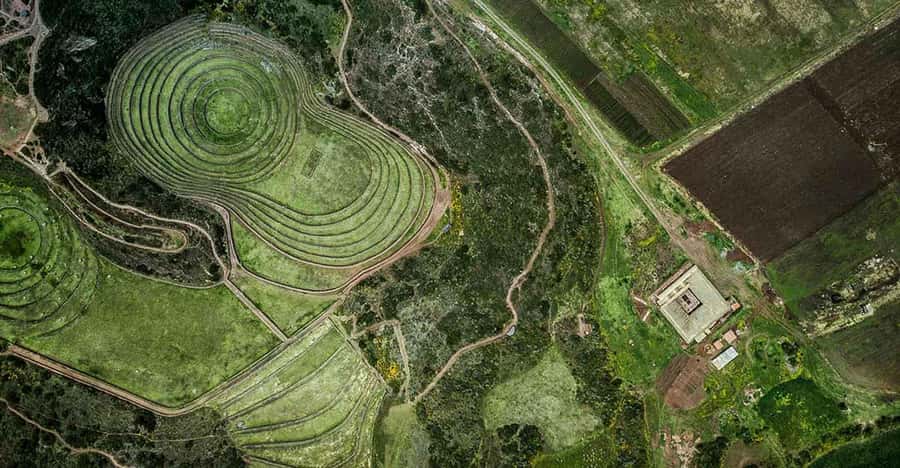
- Moray’s circular terraces: See the Inca agricultural site built around several descending rings and learn how the terraces created different growing conditions.
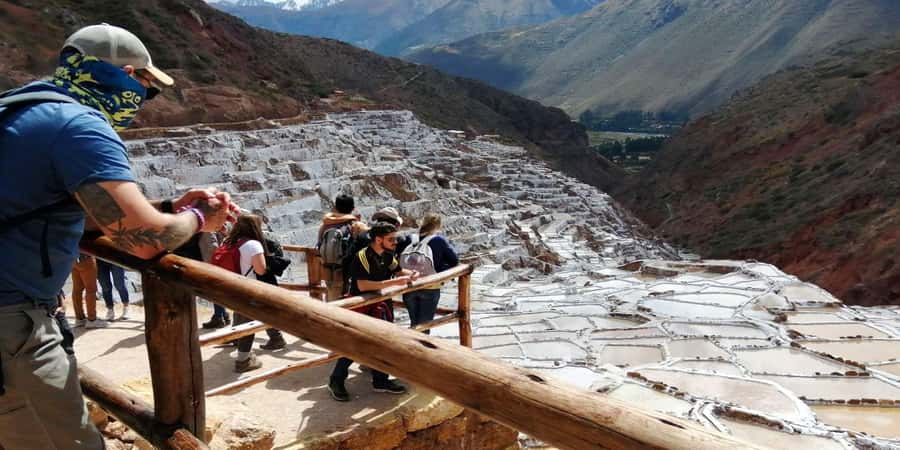
- Maras salt pools: Look over about 2,000 small pools, many still worked by local families using traditional extraction methods.
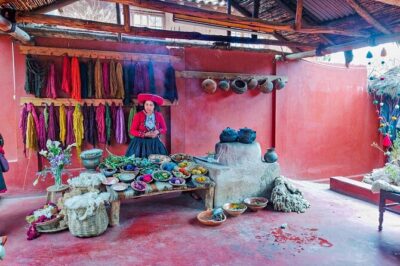
- Chinchero textiles: Watch wool and cotton become yarn, then see how natural pigments are used for dyeing.
- Good route from Ollantaytambo: The trip links three different kinds of attractions without requiring you to arrange separate transport.
- Strong guide potential: Juan Carlos has been praised for clear English, useful explanations, and taking photos. Yasmina and Yesica also received especially warm comments.
- Extra entrance costs: The $80 price does not include the tourist ticket or the Maras salt mine entrance.
Why this route works from Ollantaytambo
Many Sacred Valley outings focus on grand ruins and overlook the practical side of Andean life. This trip takes a different path. You see how the Incas managed food production, how families still collect salt, and how textile skills remain part of local culture.
The route is especially handy if you are staying in Ollantaytambo. You meet there, ride in tourist transport, and return to town after the final stop. That saves you the trouble of finding a taxi for three separate places, and it keeps the day focused on the sites rather than on transport planning.
The tour lasts one day, though the exact starting time depends on availability. One recent outing returned to Ollantaytambo at about 3:30 p.m., with lunch after the sightseeing stops at around 1:30 p.m. Treat that as a useful guide rather than a fixed timetable. Your actual return can depend on road conditions, time at each stop, and the pace of the group.
The route also gives you attractive views across the Sacred Valley between stops. Bring a camera, but keep your attention on the changing views from the road too. The movement between sites is part of the appeal here.
More Chinchero and Weaving Visits from Cusco:
- From Cusco: Moray, Maras Salt Mines & Chinchero Weavers Tour
★ 4.8 · 1,925 reviews - Cusco:Chinchero,Moray & Salt Mines drop-off in Ollantaytambo
★ 4.8 · 793 reviews - Sacred Valley: Chinchero, Moray, Ollantaytambo & Pisac+Lunch
★ 4.8 · 501 reviews
Moray and the Inca science of farming
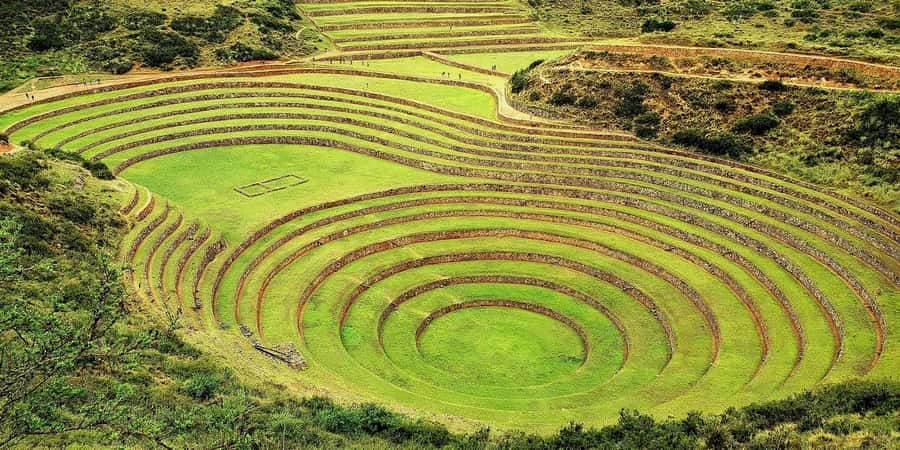
Moray is not a typical ruin with a palace, temple, or fortress. Its great feature is a set of circular terraces dropping into the earth like an enormous green amphitheater.
Your guide explains how the terraces produced different temperatures and growing conditions at different levels. That is why Moray is often described as an agricultural laboratory. The Incas could study how crops responded to altitude, sunlight, and moisture, then use that knowledge across their farming lands.
The site also shows careful water management. Irrigation helped move water through the terraces, allowing the land to support controlled cultivation. You will get more from the stop if you listen for this practical detail instead of treating the circles as a purely visual oddity.
I find Moray most rewarding when the guide connects the design to daily food production. The Incas were not simply building impressive shapes. They were solving a basic problem: how to grow crops in a high mountain setting with shifting conditions.
Wear shoes with a good grip. The supplied advice calls for comfortable footwear, and that matters at an archaeological site with uneven ground and walking between viewing areas. A sun hat, sunscreen, and water are also sensible, since the site is open and exposed.
The main limitation is that Moray is a visual site first. If you want restored rooms, detailed carvings, or a long sequence of buildings to enter, this stop may feel brief. Its value comes from understanding the design and the farming system behind it.
Maras, where salt still comes from the hillside
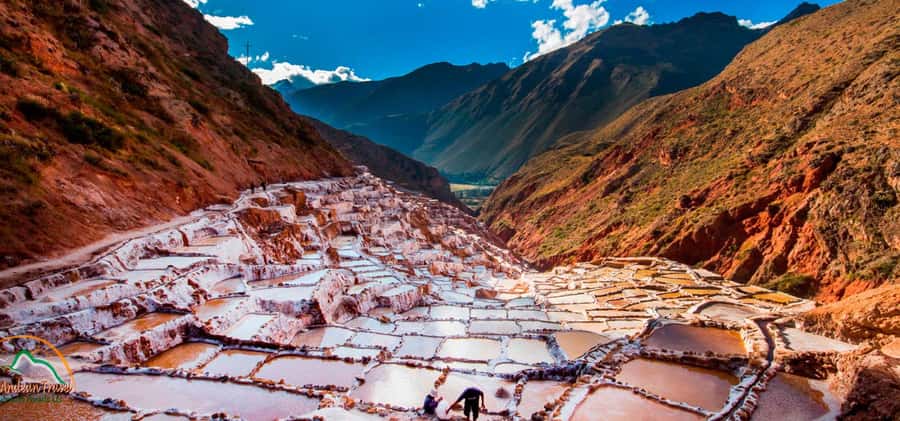
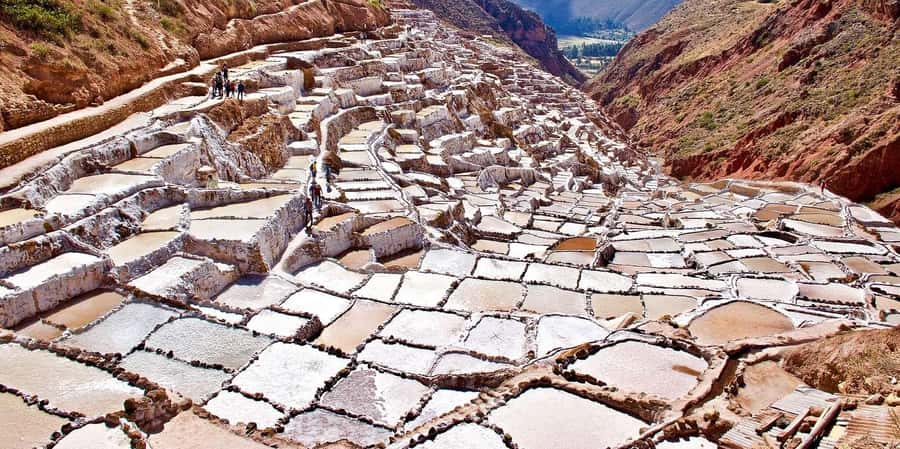
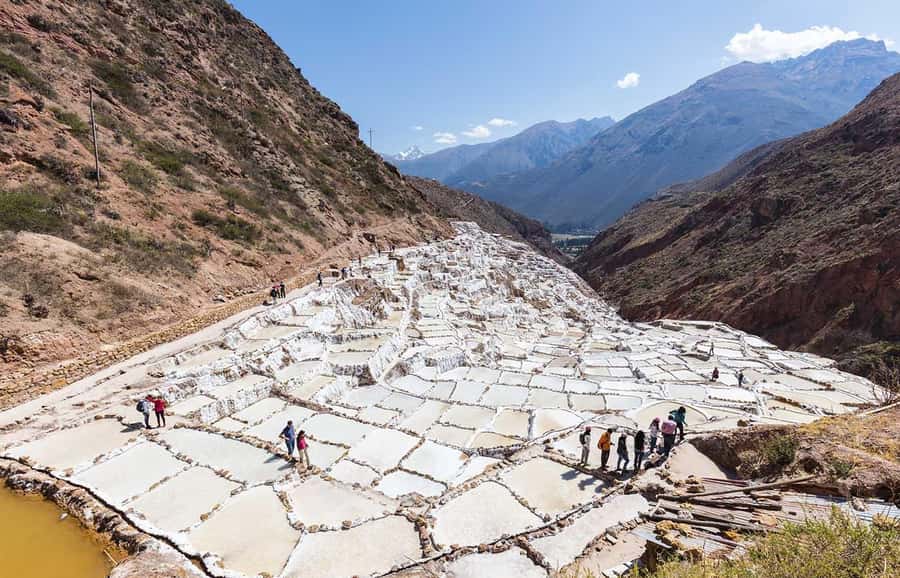
Maras changes the mood completely. Instead of looking at an abandoned Inca site, you see a working network of about 2,000 salt pools spread across the hillside.
Each pool collects salty water, which evaporates and leaves salt behind. Local families still use the pools and traditional methods to extract the salt. That continuing work gives the stop a direct connection to present-day life in the region.
Look closely at the colors and shapes as you walk or view the pools. The terraces form a dense patchwork, with salt levels and evaporation changing the appearance of individual pools. The site is not just an old industrial relic. It remains part of a local family economy.
Your guide will explain the background of the mines and how the traditional process works. This is where a good guide makes a real difference. A short stop can otherwise become a quick photo opportunity, but the explanation helps you understand why the pools are arranged as they are and why the site continues to matter.
Maras has a separate entrance fee of 20 soles. That cost is not included in the $80 tour price. Build it into your budget before booking, especially if you are trying to keep the day inexpensive.
The site may also involve uneven walking and exposed paths. The activity is not suitable for wheelchair users, so anyone with mobility concerns should consider that carefully before reserving. Comfortable shoes remain the best choice for everyone.
Chinchero and the work behind Andean textiles
Chinchero provides the cultural finish to the route. At the textile interpretation center, you learn how wool and cotton are turned into yarn and how natural pigments are used to dye it.
This is a useful stop because it focuses on process. You are not only looking at finished cloth. You see the steps that require skill, time, and knowledge of local materials. The natural dyeing portion is particularly helpful for understanding how color enters traditional textile work.
The center also gives the guide a chance to explain the place of weaving in the region. Chinchero is known for its textile traditions, and this visit adds a human element after the larger-scale archaeology at Moray and Maras.
Do not expect the same kind of open archaeological space as Moray. Chinchero is about technique and continuity. If you enjoy seeing how objects are made, you may find this the most personal part of the day. If you prefer ruins and dramatic stonework, it may feel less striking at first.
The order of the stops means you finish with something grounded in everyday work. That is a good choice for this route. The day moves from ancient agricultural planning to an active salt industry and then to textile production that still uses traditional methods.
More Ollantaytambo Visits from Cusco:
- Cusco: Sacred Valley, Pisac, Ollantaytambo, Salt Mines Moray
★ 4.6 · 1,058 reviews - Pisac Indian Market and Ollantaytambo Fortress with Lunch
★ 4.5 · 395 reviews - Cusco:Sacred Valley Pisaq,Ollantaytambo,Chinchero with Lunch
★ 4.8 · 183 reviews - Full-Day Excursion to Sacred Valley, Pisac and Ollantaytambo from Cusco
★ 4.5 · 174 reviews
What the $80 price really covers
The tour costs $80 per person. That includes pickup at the stated meeting point in Ollantaytambo, tourist transportation, and a professional guide. For a full day linking three separate places, that can be fair value, particularly if you are traveling without a car or do not want to negotiate several local rides.
The price does not include the tourist ticket. The stated rates are 40 soles for nationals and 70 soles for foreign visitors. It also excludes the 20-sol entrance to the Salineras.
That means you should calculate the total before comparing this tour with a cheaper-looking option. The advertised price is for the transport and guiding, not every admission charge. One useful tip is to have the Cusco Tourist Ticket ready if it applies to your visit. A recent participant used it for two locations during the route.
The value depends heavily on the guide. Juan Carlos received especially strong praise for his English, clear explanations, willingness to answer questions, and help taking photos. Yasmina was also credited with saving an otherwise troubled experience, and Yesica was described warmly as a great guide.
Those names do not guarantee your assigned guide, but they show what to look for: clear communication, site context, and practical help. The tour is much better when the guide explains why each place matters instead of simply escorting you from one stop to the next.
Timing, meals, and what to carry
The day can finish in mid-afternoon rather than late evening. One outing returned at about 3:30 p.m., after lunch around 1:30 p.m. Since meal arrangements are not listed as included, carry snacks for the gaps between stops.
Bring water, sunscreen, a sun hat, comfortable shoes, and a camera. These are simple items, but you will use all of them. The route combines open archaeological areas, hillside salt pools, and walking around a textile center, so comfort matters more than dressing up.
A full day in the highlands can feel tiring even when the schedule is not packed. Drink water and keep some food with you. You may also want a light layer, though the provided information does not specify the weather or temperature for your date.
The tour is offered in English and Spanish. If you need English guiding, confirm that your booking includes it. Guides such as Juan Carlos have handled English well, but guide assignments can vary.
Communication is the main risk
The most serious issue is not the scenery or the route. It is the pickup communication.
One booking involved a long wait after the operator failed to appear at the confirmed meeting point and time. The travelers eventually took the tour on the following day, but the experience also included confusion about what was included and poor responses from the operator. A different outing had no useful details until the morning of departure, when the guide contacted the group through WhatsApp shortly before the start.
That does not mean every departure will go wrong. Several outings were described as great or excellent, and the guide quality was a strong positive. Still, I would take a few basic precautions:
- Confirm the exact meeting point in Ollantaytambo.
- Ask for the pickup time the night before.
- Keep the operator’s WhatsApp contact available.
- Arrive early, around 20 minutes before the stated start.
- Confirm which entrance fees you must pay separately.
This is particularly important if you have a train, flight, or another fixed booking later that day. The tour normally returns to Ollantaytambo, but you should not schedule a tight connection based on an estimated return time.
Free cancellation up to 24 hours before departure and reserve-now, pay-later booking can help if your plans are still changing. Those terms are useful, but they do not replace confirming the pickup details.
Who will get the most from this day
I would choose this tour if you are staying in Ollantaytambo and want three varied stops without arranging your own vehicle. It suits you especially well if you like archaeology but also want to see working traditions rather than only ancient monuments.
It is a good match for people who enjoy guided explanation. Moray and Maras are more meaningful when you understand how the terraces, water, and salt collection work. Chinchero rewards curiosity about materials and craft.
The tour may be less suitable if you need wheelchair access, want a private and highly flexible schedule, or dislike paying entrance fees separately. It may also frustrate you if you need precise communication before departure and are not willing to follow up.
This is not a long trek, but you should still expect walking on uneven ground and time outdoors. Comfortable shoes are more important than stylish ones.
Should you book the Moray, Maras, and Chinchero tour?
I would book it for the route and the convenience, but I would confirm the logistics before committing to the day. The combination is strong: Moray explains Inca farming, Maras connects history with a working local industry, and Chinchero shows how textile skills are practiced and passed on.
At $80, the tour offers reasonable value if you want transport and guiding from Ollantaytambo. Add the 70-sol foreign visitor tourist ticket or 40-sol national ticket, plus 20 soles for the salt pools, and judge the full cost rather than the headline price.
The deciding factor is communication. If the operator confirms your meeting point and time, this can be an efficient, varied day with an excellent guide. If replies remain unclear, keep pressing for confirmation or consider a different arrangement. The sights are worth seeing, but a beautiful itinerary still needs a reliable pickup.
FAQ
Where does the tour begin?
The tour includes pickup at a meeting point in Ollantaytambo. Confirm the exact location and time before departure.
Where does the tour finish?
The tour returns you to Ollantaytambo after visiting Moray, Maras, and Chinchero.
What languages are available?
The tour is offered with a live guide in English or Spanish.
Are entrance fees included in the $80 price?
No. The tourist ticket costs 40 soles for nationals and 70 soles for foreign visitors. Entrance to the Salineras costs an additional 20 soles.
Is lunch included?
Lunch is not listed among the inclusions. Carry snacks, since one outing reached lunch at about 1:30 p.m.
What should I bring?
Bring comfortable shoes, a sun hat, sunscreen, water, and a camera.
Is the tour suitable for wheelchair users?
No. The activity is listed as unsuitable for wheelchair users.
More Maras and Moray Circuits from Cusco
- From Cusco: Sacred Valley & Maras Salt Mines Tour with Lunch
★ 4.8 · 2,227 reviews - Sacred Valley: Maras & Moray by Quad Bike from Cusco
★ 4.6 · 418 reviews - From Cusco: Quad bike tour Moray and Salt Mines
★ 4.7 · 314 reviews - From Cusco: Moray, Maras Salt Mines & Chinchero Weavers Half-Day
★ 5.0 · 126 reviews
Just added around Cusco
- Zipline over the Sacred Valley Trip★ 5.0 · 11 reviews
- Valle Sur Cusco | half day★ 4.3 · 3 reviews
- Visit Pisac from Cusco: Private Transport★ 4.6 · 9 reviews
- Transfer from Cusco to Ollantaytambo★ 5.0 · 30 reviews
- Exclusive Huayna Picchu Tour in 1 Day from Cusco★ 5.0 · 31 reviews
- Trek to Humantay Lake from Cusco★ 4.9 · 8 reviews
- 5 Day – Salkantay trek to Machu Picchu – Group Service★ 4.5 · 27 reviews
- 2 Day – Short Inca Trail to Machu Picchu – Group Service★ 5.0 · 30 reviews
Maras Salt Mines & Moray Tours, compared.
Sacred Valley & Maras Salt Mines Tour with Lunch
Read our review →
Moray, Maras Salt Mines & Chinchero Weavers Tour
Read our review →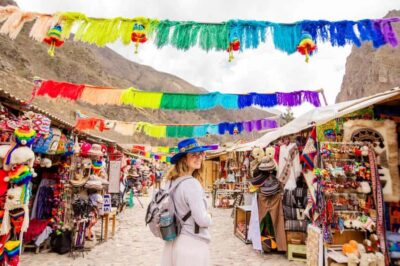
Sacred Valley, Pisac, Ollantaytambo, Salt Mines Moray
Read our review →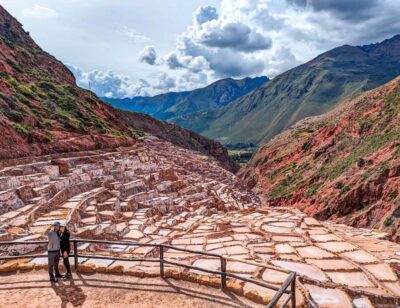
Chinchero,Moray & Salt Mines drop-off in Ollantaytambo
Read our review →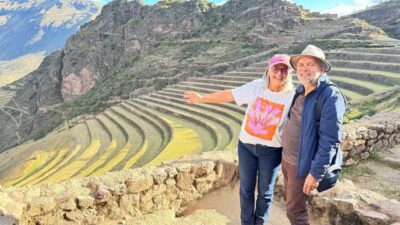

Moray, Maras Salt Mines & Chinchero Weavers Half-Day
Read our review →Browse the lists this tour appears in