
Reviewed · MARAS SALT MINES & MORAY TOURS
From Ollantaytambo:Private tour to Maras and Moray half day
Moray’s great bowl of circular agricultural terraces and Maras’s bright salt pools make a fine pairing: one shows how the Incas tested crops, the other shows how people still collect salt from a mountainside spring. The contrast is the point. You get two very different Sacred Valley sights in one private outing.
I like the private vehicle and flexible photo stops, especially if you want more space than a large coach provides. I also like having a bilingual guide who can explain how Inca farming worked, with guides such as Roberto and Yesica associated with this experience. The main caution is timing: the details call it a two-hour activity, but the stated pickup is 8 a.m. and return is about 2 p.m., so plan for roughly six hours.
Key points to know
- Moray comes first: See broad, circular terraces built as an agricultural testing site.
- Maras is still a working place: Saltwater flows into hundreds of small pools on the hillside.
- Private touring matters: You travel with your own group and can ask questions in English or Spanish.
- Pickup is from Ollantaytambo: Wait in your hotel lobby, with contact from the guide about 15 minutes before collection.
- Entry fees are extra: Maras costs 10 soles, while Moray requires the relevant Boleto Turistico.
- The schedule needs checking: The tour page lists two hours, yet the planned outing runs from about 8 a.m. to 2 p.m.
Why Moray and Maras work so well together
If you have only half a day in the Sacred Valley, this route gives you two strong sights without asking you to commit to a full-day circuit. Moray is about farming and planning. Maras is about salt, water, labor, and a living local practice.
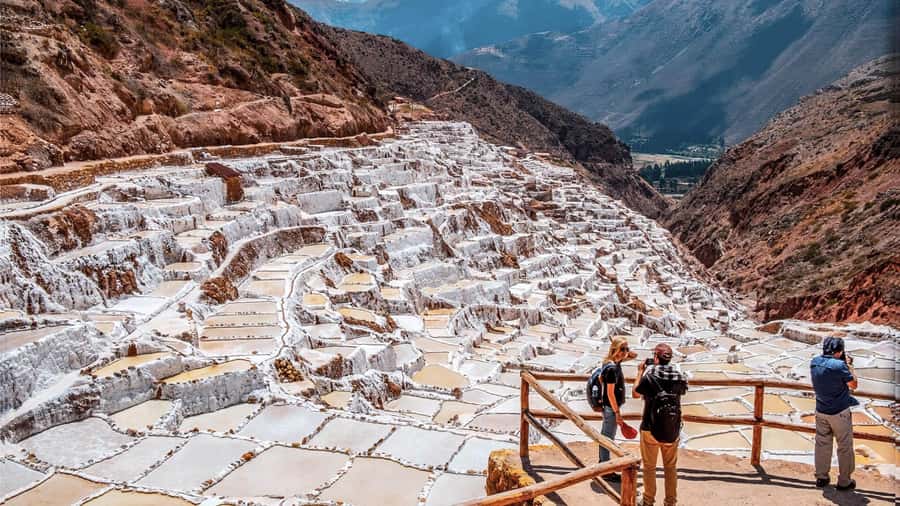
The two sites also photograph very differently. Moray gives you huge, rounded terraces dropping into a bowl. Maras gives you a textured hillside covered with pale salt pans. Bring your camera, but also give yourself time to look beyond the postcard view. The guide’s explanation adds purpose to both stops.
This is a private tour, so you are not tied to the pace of a large group. That matters at a site such as Moray, where you may want a few quiet minutes to take in the shape of the terraces. It also helps at Maras, where rain or bright sun can change how the salt pools look from one angle to the next.
More Ollantaytambo Visits from Cusco:
- Cusco: Sacred Valley, Pisac, Ollantaytambo, Salt Mines Moray
★ 4.6 · 1,058 reviews - Cusco:Chinchero,Moray & Salt Mines drop-off in Ollantaytambo
★ 4.8 · 793 reviews - Sacred Valley: Chinchero, Moray, Ollantaytambo & Pisac+Lunch
★ 4.8 · 501 reviews
Starting in Ollantaytambo at 8 a.m.
The outing begins with pickup at your Ollantaytambo hotel at 8 a.m. The guide is expected to call or write about 15 minutes before pickup, and you should wait around 10 minutes in the hotel lobby.
That small bit of planning is worth taking seriously. Keep your phone close, confirm that the guide has your hotel details, and be ready before the scheduled time. One piece of feedback points to some company disorganization, so a little patience and clear communication may help the morning run smoothly.
Your transport is included both ways, along with the guide. Because this is a private group, the arrangement is best for couples, families, or friends who want the outing to fit their own questions and photo stops. The information does not specify the vehicle type, so I would not assume anything about extra luggage space or special transport needs.
The tour is offered in English or Spanish. That gives you a useful choice: ask for the language in which you can best follow a detailed explanation of farming, salt production, and Inca-era techniques.
Moray’s circular terraces and Inca farming
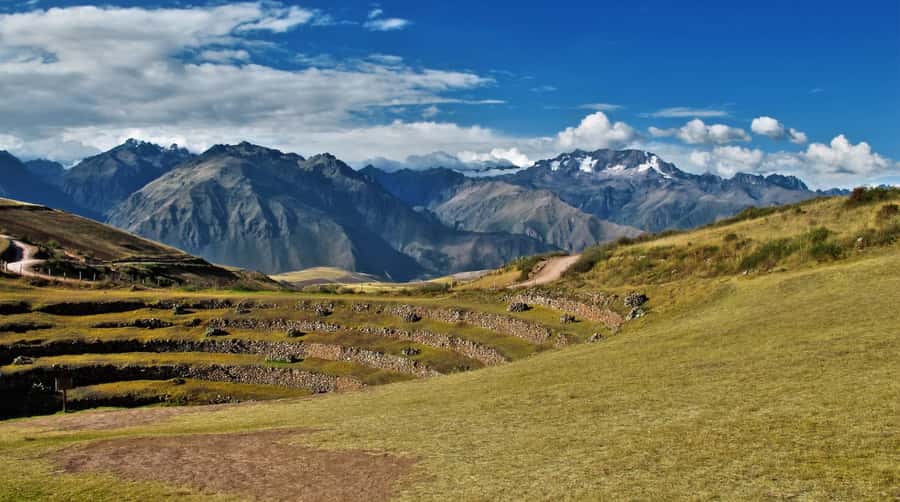
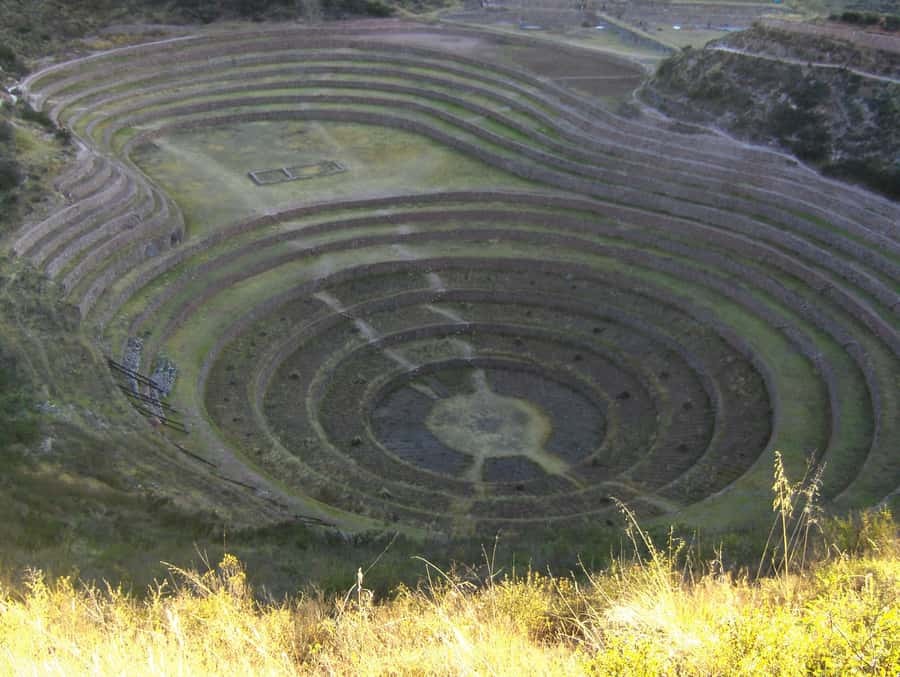
Moray is the first named stop. Here, you see a series of agricultural terraces arranged in broad circles, sinking into the ground like a giant stepped amphitheater.
The important idea is not simply that the terraces look unusual. They show careful agricultural management during the Inca period. The site is described as an agricultural laboratory, with terraces used for experimental purposes. Your guide can help connect the visible structure to the way crops and growing conditions were studied.
Look for the change in temperature and exposure as the terraces descend. Even without turning the stop into a technical lecture, the shape encourages you to think about how the Incas managed different growing conditions in one carefully built place.
Moray is also the more spacious and visually dramatic of the two stops. It rewards a slow look from above and a series of photos showing the full curve of the terraces. Your guide may point out the best viewpoints and help take pictures, a detail that can be genuinely useful when you are traveling as a couple and want a photo of everyone together.
The physical demands are moderate but real. Comfortable shoes are recommended, and the tour is not suitable for wheelchair users or people with vertigo. The circular drop and uneven surfaces may be uncomfortable if heights make you uneasy. Pregnant women are also advised not to book this activity.
Maras salt mines on the hillside
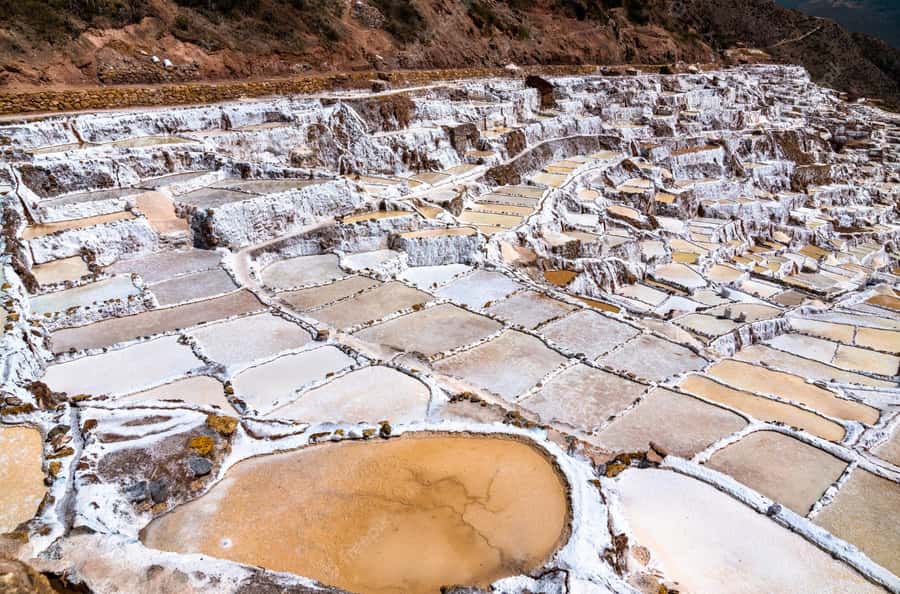
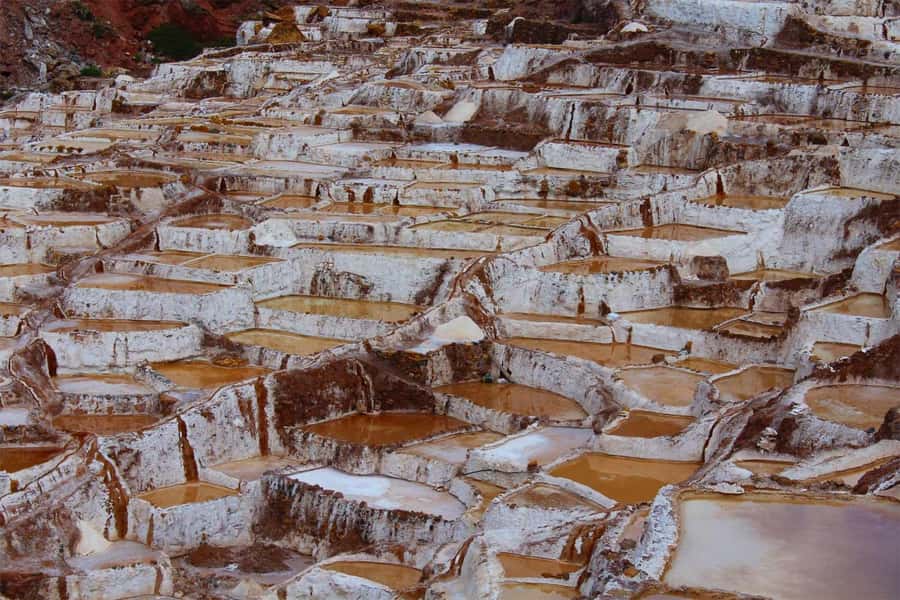
After Moray, the tour continues to the Salineras de Maras. The salt mines have been exploited since the Inca period and use a natural saltwater spring flowing down the hillside.
The sight is easy to understand once you see it: many small pools catch the water, and salt forms as the water evaporates. The result is a striking patchwork of pale basins spread across the slope. The exact appearance can vary with weather and conditions, so do not expect every pool to look equally bright on the day you visit.
Maras adds a human and working dimension to the route. Moray is a planned agricultural site from the past. Maras shows a salt-producing system connected to the same broad period and still treated as a place of work. That connection makes the stop more than a quick photo break.
The hillside setting calls for sensible footwear. Take shoes with a firm grip, and keep sunglasses, a sun hat, and sunscreen handy. Rain is also possible. One guide, Roberto, handled a wet visit by keeping the group engaged and finding good places for photographs, but you should still bring clothing that can handle a change in weather.
The entrance fee for Maras is not included and is listed as 10 soles. You can buy it on-site. Since the salt pools are on a slope, this stop may be less comfortable for anyone with vertigo or limited mobility.
More Maras and Moray Circuits from Cusco:
- From Cusco: Sacred Valley & Maras Salt Mines Tour with Lunch
★ 4.8 · 2,227 reviews - From Cusco: Moray, Maras Salt Mines & Chinchero Weavers Tour
★ 4.8 · 1,925 reviews - Sacred Valley: Maras & Moray by Quad Bike from Cusco
★ 4.6 · 418 reviews - From Cusco: Quad bike tour Moray and Salt Mines
★ 4.7 · 314 reviews
A private guide can shape the whole morning
The guide is the main variable in an experience like this. The route itself is compact, but the value comes from understanding what you are looking at rather than simply arriving, taking a picture, and leaving.
A strong guide will explain the agricultural purpose of Moray, put the salt spring at Maras into context, and answer questions without rushing you. Feedback about Roberto describes him as especially good at explaining Inca history, keeping the group entertained during rain, and finding useful photo spots. Yesica is also associated with a particularly helpful guiding experience. You may not receive either guide, so treat those names as useful possibilities rather than a guarantee.
The bilingual format is helpful if you want to ask questions in either English or Spanish. It may also suit you if you are practicing Spanish and want a patient guide who can switch languages when a historical explanation becomes more complicated.
A private tour does not automatically mean perfect organization. The company has received criticism for being somewhat disorganized, so confirm the pickup details and keep some flexibility in your morning. Once the guide arrives, the private format should give you a more personal experience than a fixed large-group excursion.
What the $76 price really includes
At $76 per person, this is not the cheapest way to see Moray and Maras. The price makes more sense if you value a private group, hotel pickup in Ollantaytambo, round-trip transport, and a bilingual guide.
You are paying for convenience as much as admission to the sights. You do not need to arrange a taxi, work out the order of the stops, or find your way back to Ollantaytambo. For a small group, that can be worthwhile, especially if everyone prefers a private schedule.
Still, budget for the extras. Maras costs 10 soles, and Moray requires the Boleto Turistico. Meals are not included, so bring food or arrange your own breakfast and lunch. The information does not specify whether drinks or snacks are provided, so do not count on them.
The value is strongest for people who want explanation and transport without joining a large group. If you are comfortable arranging your own ride and only want a quick visit, the price may feel high. If you want a guide to explain the farming system and salt production, the private setup is easier to justify.
The six-hour schedule needs clarification
The stated duration is two hours, but the planned timing says pickup at 8 a.m. and arrival back in Ollantaytambo at approximately 2 p.m. That is a major difference, not a minor scheduling detail.
I would plan your day around the longer window unless the provider confirms otherwise. A six-hour outing allows for driving, both visits, photos, and the return journey. It also gives you a sensible cushion if weather or pickup timing causes delays.
The return to Ollantaytambo is useful if you have an afternoon train, another tour, or a planned meal there. But do not schedule something immediately afterward based only on the two-hour figure. Ask for the confirmed start and end times when you check availability.
The tour offers free cancellation up to 24 hours before departure and allows you to reserve while paying later. Those terms are useful if your Sacred Valley plans are still changing, but the most important practical step is confirming the actual duration.
Prepare for sun, altitude, and uneven ground
The recommended packing list is simple: passport or ID card, comfortable shoes, sunglasses, sun hat, sunscreen, and comfortable clothing. Take it seriously. The route includes open areas with little protection from strong sun, and the salt pools can be especially bright.
Coca tea before the tour is suggested as a way to help with altitude sickness. It is not a substitute for paying attention to how you feel, but it is a familiar local preparation and may be worth trying if you already tolerate it.
Bring clothing that can handle both sun and rain. The stop at Maras can be wet, as one outing with Roberto demonstrated, and the guide may still continue the visit in changing conditions. The tour does not mention rain gear being supplied.
Pets, alcohol, drugs, and explosive substances are not allowed. The activity is not suitable for pregnant women, wheelchair users, or people with vertigo. Those limits are especially relevant at Maras, where the hillside position and uneven access may make the visit difficult.
Who will get the most from this tour
I would recommend this outing to someone staying in Ollantaytambo who wants to see two important Sacred Valley sites without joining a large group. It is a good fit for photographers, history-minded visitors, families who want a guide’s help, and anyone who prefers door-to-door transport.
It is also a sensible choice if you want to practice Spanish while keeping English support available. The guide can give you more context than a self-guided visit, and the private format makes it easier to stop for questions.
I would be more cautious if you have vertigo, mobility limitations, or a very tight afternoon schedule. The salt mines are on a hillside, the access may be uneven, and the timing needs confirmation. People who want a completely relaxed, weather-proof outing should also remember that Maras is exposed and rain can occur.
Should you book the Maras and Moray tour?
Book it if you want private transport, a bilingual guide, and two very different Sacred Valley sights in one outing from Ollantaytambo. The best parts are the strong visual contrast between Moray and Maras, the chance to learn about Inca farming, and the personal help with photos and questions.
Before paying, confirm the actual duration, the pickup time, the Moray ticket required, and whether your group can expect an English or Spanish guide. Budget separately for both entrance fees and meals.
This is a good-value choice for a small group that values convenience and explanation. It is less convincing for a traveler who only wants the lowest-cost transport or who cannot manage a hillside site. At a rating of 4.6 from seven pieces of feedback, the experience appears dependable overall, with the guide making the biggest difference.
FAQ
Where does the tour begin?
Pickup is included from your hotel in Ollantaytambo. The guide should call or write about 15 minutes before pickup, and you should wait around 10 minutes in the hotel lobby.
What sites does the tour visit?
The route visits Moray, an agricultural terrace site used for experimental purposes, and the Salineras de Maras, a hillside salt mine supplied by a saltwater spring.
How long does the tour last?
The information is inconsistent. It lists a two-hour duration, but the planned schedule begins at 8 a.m. and returns to Ollantaytambo at about 2 p.m. Confirm the exact timing before booking.
Are entrance fees included?
No. The Maras entrance fee is listed as 10 soles, and Moray requires the Boleto Turistico. Both can be purchased on-site according to the activity information.
Is transportation included?
Yes. Hotel pickup in Ollantaytambo and round-trip transportation are included.
What languages are available?
The live guide is available in English or Spanish.
Just added around Cusco
- Zipline over the Sacred Valley Trip★ 5.0 · 11 reviews
- Valle Sur Cusco | half day★ 4.3 · 3 reviews
- Visit Pisac from Cusco: Private Transport★ 4.6 · 9 reviews
- Transfer from Cusco to Ollantaytambo★ 5.0 · 30 reviews
- Exclusive Huayna Picchu Tour in 1 Day from Cusco★ 5.0 · 31 reviews
- Trek to Humantay Lake from Cusco★ 4.9 · 8 reviews
- Private Tour Sacred Valley, Chinchero, Maras Moray, Ollantaytambo★ 5.0 · 29 reviews
- 5 Day – Salkantay trek to Machu Picchu – Group Service★ 4.5 · 27 reviews
Maras Salt Mines & Moray Tours, compared.
Sacred Valley & Maras Salt Mines Tour with Lunch
Read our review →
Moray, Maras Salt Mines & Chinchero Weavers Tour
Read our review →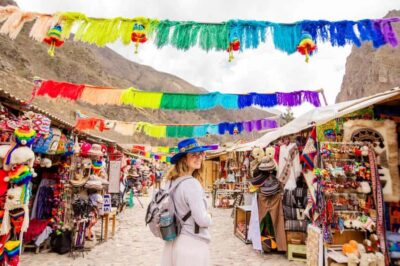
Sacred Valley, Pisac, Ollantaytambo, Salt Mines Moray
Read our review →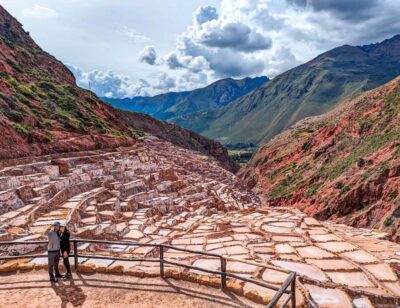
Chinchero,Moray & Salt Mines drop-off in Ollantaytambo
Read our review →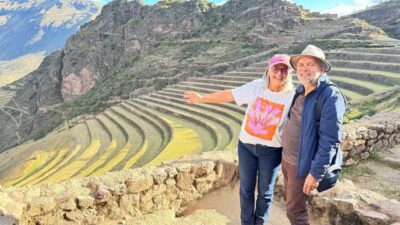

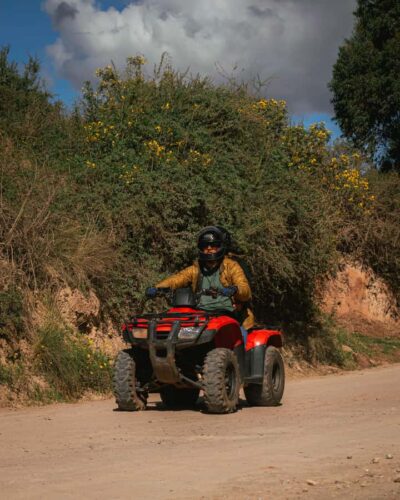
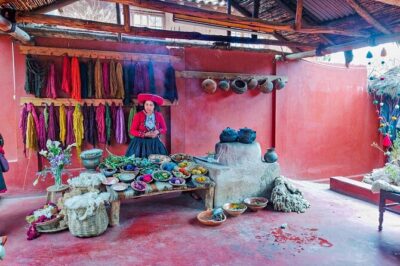
Moray, Maras Salt Mines & Chinchero Weavers Half-Day
Read our review →Browse the lists this tour appears in