
Reviewed · CUSCO COOKING CLASSES
Private Andean Cooking Class, Pachamanca
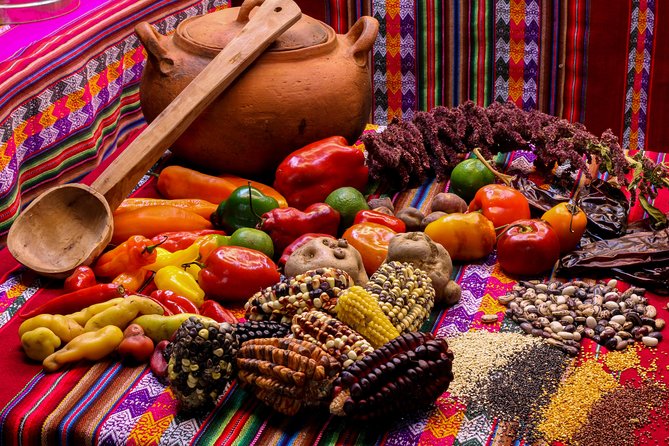
The most unusual part of this Cusco cooking class is its focus on Pachamanca-style Andean cooking, where ingredients meet clay pots, ancestral techniques, corn, peppers, grains, and chicha. You’ll prepare food rather than sit through a demonstration, and chefs such as Alejandro, Fernando, Jose, and Christina have led sessions in both English and Spanish.
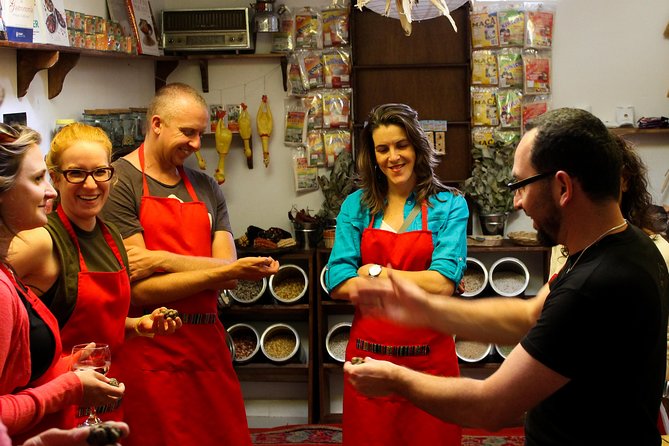
I like the way the class connects food with Andean agriculture, especially through the private market and tasting of local ingredients. I also like the generous format: you get a professional chef, drinks, an appetizer, a main course, and roughly three hours of hands-on instruction.
The main thing to keep in mind is that the exact dishes and chef may vary. The planned experience centers on tamales, uchucuta, chicha, and clay-pot cooking, while past classes have also included ceviche, lomo saltado, alpaca, pisco sours, and Chilcanos. Ask what your session will cover if a particular dish matters to you.
Key points to know before booking
- Andean focus: Prepare corn-based tamales, uchucuta pepper sauce, and ingredients cooked in clay pots.
- Private instruction: Only your group participates, with a professional chef leading the class.
- Good food education: Learn about Andean grains, superfoods, fruits, peppers, potatoes, meats, and local cooking traditions.
- Drinks included: Taste chicha and, depending on the class format, make cocktails with Peruvian pisco.
- Family-friendly setup: Children can be included, with mocktails and cooking help available when arranged with the chef.
- Useful timing: The class begins at 9:00 am at C. Palacio 135 and ends at the same meeting point after about three hours.
Why this class adds something different to Cusco
Cusco can fill your days with ruins, mountain trips, and long drives. A cooking class gives you a slower morning with a clear purpose: learn what goes into Peruvian food, work with it yourself, and sit down to eat what you prepared.
This class leans toward the Andes rather than presenting only the familiar coastal dishes found on many Peruvian menus. Corn, peppers, grains, potatoes, herbs, meats, and fermented drinks all help explain how people have cooked in this region for generations.
I find that useful because Peruvian food can look simple on the plate while carrying a lot of local detail. A pepper is not just heat. A grain is not just a side dish. Chicha is not simply a drink. The class gives you a chance to connect those ingredients to daily life and older Andean customs.
The setting is private, so you are not folded into a large group moving at someone else’s pace. That matters if you want to ask questions, need help with a technique, or are traveling with children or older family members.
More Cooking Classes in Cusco:
- Cusco: Peruvian Cooking Class, Cocktails & Local Market Tour
★ 4.9 · 512 reviews - Cooking class and market tour with a local chef
★ 5.0 · 186 reviews - Vegan Peruvian Cooking Class Cocktails and Local Market in Cusco
★ 5.0 · 46 reviews
Starting with marinades and local flavor
The class begins with marination. You’ll learn how meat and other ingredients are prepared in a special sauce before cooking, with the goal of building flavor before heat is added.
This first stage is practical. You can see how Peruvian cooking often builds a dish from a few strong ingredients rather than relying on complicated equipment. It also gives you a useful foundation if you want to recreate the food at home.
The chefs have different personalities and teaching styles. Alejandro has been praised for explaining Peruvian culinary traditions while coaching people through the cooking. Fernando has worked especially well with families, adjusting the session for children and preparing mocktails for them.
If you are new to cooking, that personal guidance should make the class approachable. If you already cook, you may get more from asking about substitutions, spice levels, and the role of each ingredient.
Making Andean tamales with corn
The tamale section is one of the most strongly Andean parts of the experience. You’ll work with corn and learn a traditional preparation tied to the land and food customs of the region.
Tamales are useful teaching tools because they involve several steps, not just one recipe. You get to see how a basic crop can become a complete dish through grinding or preparation, seasoning, wrapping, and cooking.
The information provided does not specify the exact filling or wrapping method used in every class, so you should not expect one fixed recipe every time. Still, the purpose is clear: this is not simply a quick appetizer. It is a lesson in an older food tradition.
This section should suit anyone who likes food with a story behind it. It may be less appealing if you want a fast, restaurant-style demonstration with little participation. The class asks you to pay attention and work through the process.
The private market and Andean ingredients
Next comes a private market where you’ll examine Andean products, including ancient grains and foods often described as superfoods. You’ll learn how they fit into local diets and the culture of the Andes.
This is one of the best parts for curious eaters because it gives context to ingredients you might otherwise pass over in a shop or restaurant. Past sessions have included tastings of fruits, vegetables, condiments, potatoes, peppers, herbs, and grains.
The fruit tasting is especially useful at the start of a trip. It gives you a wider sense of Peru’s produce and helps you recognize flavors later in markets and restaurants. You may also hear about the health value of local grains and other crops.
I would not treat the private market as a replacement for Cusco’s public markets. It is part of the class, not a separate market tour, and the available information does not promise a long walk through several neighborhoods. Its value is the guided explanation and the chance to handle and taste ingredients in a cooking setting.
A few more Cusco days worth weighing up
- Cusco Cooking Class by ChocoMuseo in Cusco
★ 5.0 · 29 reviews - Cusco: Peruvian Cooking Class & Market Tour
★ 4.9 · 19 reviews - Cusco: 3-Hour Peruvian Cooking Class
★ 4.7 · 16 reviews
Mixing uchucuta, an Inca-era pepper sauce
Uchucuta is a spicy sauce associated with Inca-era cooking. During the class, you’ll prepare it using traditional methods passed down through generations.
This is a small preparation with a large payoff. Sauces often explain why a Peruvian meal tastes distinct, and uchucuta gives you a direct lesson in peppers, texture, and balance. If you do not enjoy very hot food, tell the chef early. The class can discuss food preferences, but the provided details do not promise that every sauce can be made mild.
The sauce also pairs well with the broader Andean theme. Instead of treating local peppers as a decorative garnish, the class shows how they help define a meal.
I like this kind of teaching because you can take the technique home without needing specialist equipment. You may not find every Peruvian pepper where you live, but the method gives you a starting point for adapting the sauce to ingredients available in your own kitchen.
Tasting chicha and making pisco drinks
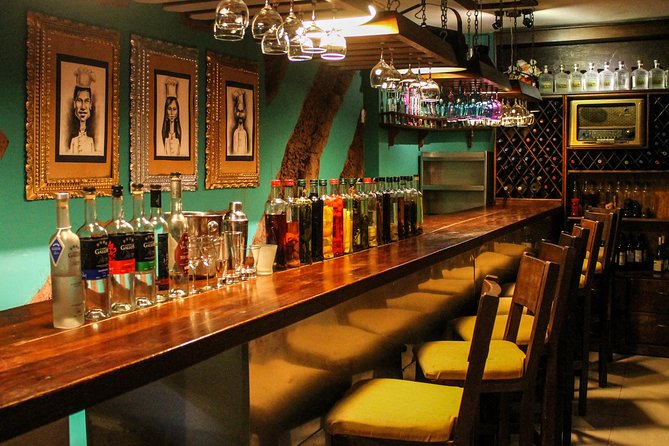
Chicha is described as the drink of the Incas, made through ancestral fermentation. The class includes a tasting so you can consider both its flavor and its place in Andean culture.
The supplied information does not state the exact type of chicha served, so I would avoid expecting one particular style. The point is to introduce the drink and explain its connection to the region.
Cocktails are also part of the wider class format. Past sessions have included pisco tastings, pisco sours, and Chilcanos. These drinks add a lighter, social part to the cooking lesson, though the precise cocktail menu may depend on the chef and session.
Families should ask about this when booking. Fernando has offered mocktails for children, but that should be requested rather than assumed. The included beverages are a strong value for adults, especially if you enjoy learning how a local spirit is used rather than simply ordering a finished drink.
Clay pots and the final meal
The final tasting centers on ingredients cooked in clay pots. This brings the separate parts of the class together: the marinade, tamale preparation, pepper sauce, local produce, and Andean cooking methods.
Cooking in clay pots is not just a visual flourish. It fits the class’s focus on older techniques and ingredients tied to the land. The information does not specify every cooking time or pot style, so expect an educational session rather than a strict culinary school course with a fixed technical syllabus.
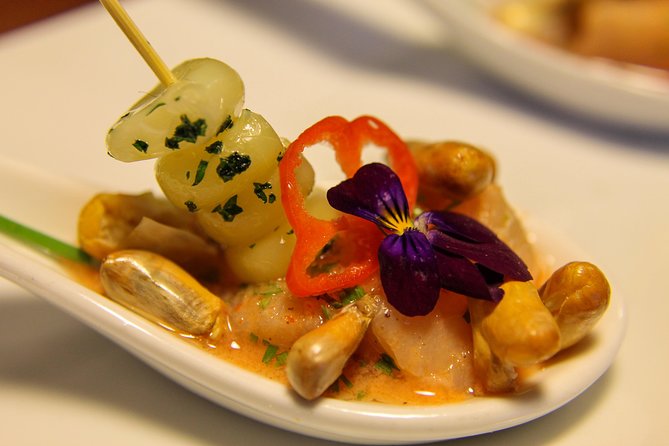
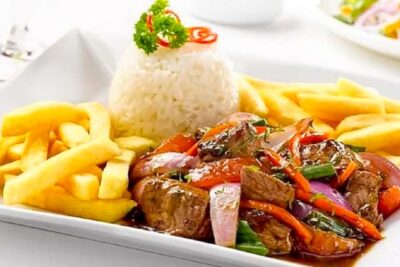
Lunch includes one appetizer and one main course, along with beverages and bottled water. Depending on the class format, your meal may resemble the ceviche and lomo saltado prepared in past sessions, or it may follow the advertised Andean menu more closely.
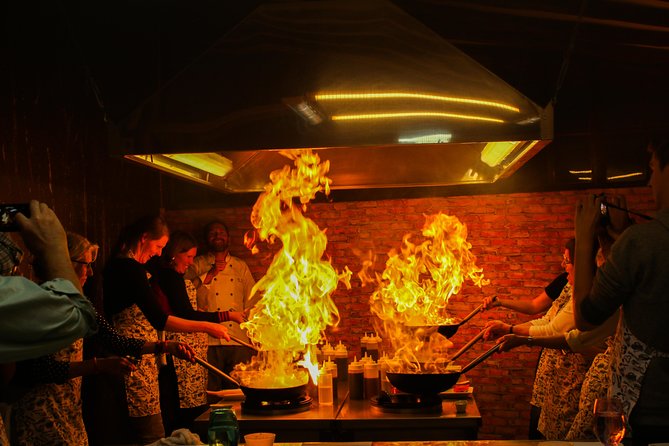
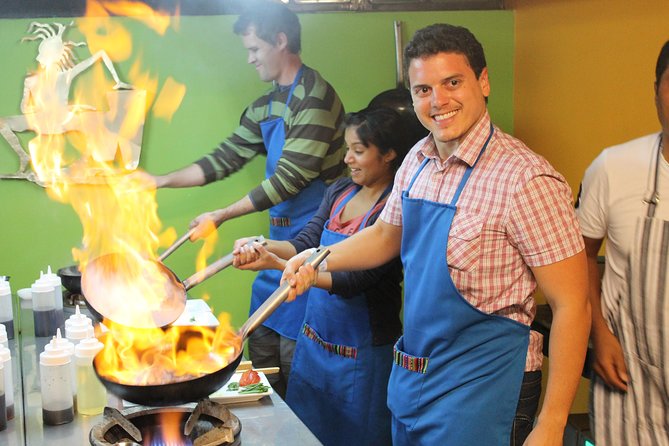
Ceviche has been a highlight in some sessions, with chefs coaching participants through the preparation and adjusting ingredients for individual food preferences. Lomo saltado has also appeared, sometimes made with alpaca and finished with a dramatic wok flambé. Those dishes are not listed as guaranteed for every booking, so ask ahead if you want ceviche, lomo saltado, or alpaca specifically.
What the chefs add to the experience
The cooking class is only as good as the person guiding it. Here, the named chefs associated with past sessions include Alejandro, Fernando, Jose, and Christina.
Alejandro has taught the history and development of Peruvian cooking while covering meats, vegetables, grains, herbs, and their health uses. His style appears suited to people who want both food preparation and cultural background.
Fernando is a good name to keep in mind if you are traveling with children. He has used children’s music, prepared mocktails, and helped younger cooks take part without turning the class into a lecture.
Jose has been described as friendly and funny, while Jose Luis and Christina have hosted sessions together. Christina has also provided recipes afterward and encouraged follow-up questions, which is useful if you want to repeat the dishes at home.
Because the chef is not fixed in the details provided, request your preferred language and mention any special needs at booking. The class operates in English or Spanish depending on your request.
Is $150 per person a fair price?
At $150 per person, this is not a budget lunch. The price makes more sense if you value private instruction rather than simply paying for a meal.
You receive about three hours with a professional chef, food preparation, ingredient tastings, beverages, bottled water, one appetizer, and one main course. Only your group participates, which can make the experience more relaxed and more useful than a large shared class.
The value is strongest for couples, families, or small groups who want personal attention. It is also a sensible choice for a day between major Cusco excursions, when you want an activity that feels substantial but does not require another long journey.
The price is harder to justify if you mainly want to eat Peruvian food. Cusco has less expensive restaurants and markets. Book this for the instruction, the ingredient education, the private format, and the chance to cook, not just for the final plate.
Who should book this Cusco cooking class?
I would recommend it to first-time visitors who want a clearer sense of Peruvian food. It also suits home cooks who like collecting recipes and techniques, couples looking for a hands-on activity, and families who want something that can include grandparents and children.
It is a particularly good fit if your itinerary is heavy on ruins and outdoor trips. Three hours in a kitchen gives you a change of pace without abandoning the local culture.
Vegetarians can take part, but you must request the vegetarian option when booking. The same applies to specific dietary requirements. Since meat dishes such as lomo saltado and alpaca may appear in some sessions, do not wait until the class begins to explain what you cannot eat.
You must provide your original passport at the start for tax purposes. The activity begins at 9:00 am at C. Palacio 135 in Cusco and ends back at that meeting point.
Practical details that matter
The class is private, and confirmation is provided at booking. Ask for English or Spanish instruction, state dietary needs, and clarify the expected menu if you have your heart set on a particular dish or drink.
Free cancellation is available if you cancel at least 24 hours before the start time. Cancellations or changes made later are not refunded or accepted, and the cut-off uses local Cusco time.
The experience requires a minimum number of participants. If that minimum is not met and the class is canceled, you will be offered another date or experience, or a full refund.
Should you book it?
Book this class if you want to do more than sample Peruvian food. The best reasons are the private format, the Andean ingredients, the tamale and uchucuta work, the chicha tasting, and the chance to leave with techniques you can use at home.
I would be cautious if you need a guaranteed menu. Past sessions have ranged from ceviche and pisco drinks to lomo saltado and alpaca, while the planned format emphasizes Andean tamales and clay-pot cooking. Confirm the dishes and chef when you book.
For most people, this is a worthwhile splurge between Cusco’s bigger adventures. You get food, instruction, culture, and a proper lunch in one focused morning.
FAQ
Where does the cooking class begin?
It begins at C. Palacio 135, Cusco 08002, Peru.
What time does the class start?
The stated start time is 9:00 am.
How long does the experience last?
The class lasts approximately three hours.
Does the class end at the meeting point?
Yes. The activity ends back at the starting meeting point.
Is this a private cooking class?
Yes. Only your group participates in the activity.
Is the class available in English?
Yes. The class can operate in English or Spanish depending on your request.
Is a vegetarian option available?
Yes. You must advise the provider when booking if you require vegetarian food.
What food and drinks are included?
The experience includes beverages, bottled water, one appetizer, and one main course. The class also includes food preparation and tasting.
Do I need to bring my passport?
Yes. You must provide your original passport at the beginning of the course for tax purposes.
More Workshops in Cusco
- The First Class Machu Picchu Train by Inca Rail
★ 4.0 · 182 reviews - The Textile Workshop Experience in Cusco Region
★ 5.0 · 118 reviews - Sacred Valley Textile Workshop – Dyeing & Weaving in Cusco
★ 5.0 · 92 reviews - Chocolate Workshop in Cusco with Premium Organic Cacao
★ 5.0 · 75 reviews
Just added around Cusco
- Zipline over the Sacred Valley Trip★ 5.0 · 11 reviews
- Valle Sur Cusco | half day★ 4.3 · 3 reviews
- Visit Pisac from Cusco: Private Transport★ 4.6 · 9 reviews
- Transfer from Cusco to Ollantaytambo★ 5.0 · 30 reviews
- Exclusive Huayna Picchu Tour in 1 Day from Cusco★ 5.0 · 31 reviews
- Trek to Humantay Lake from Cusco★ 4.9 · 8 reviews
- Private Tour Sacred Valley, Chinchero, Maras Moray, Ollantaytambo★ 5.0 · 29 reviews
- 5 Day – Salkantay trek to Machu Picchu – Group Service★ 4.5 · 27 reviews
Cusco Cooking Classes, compared.
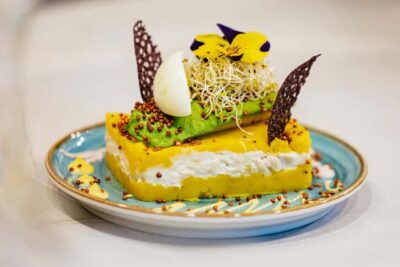
Peruvian Cooking Class, Cocktails & Local Market Tour
Read our review →
Cooking class and market tour with a local chef
Read our review →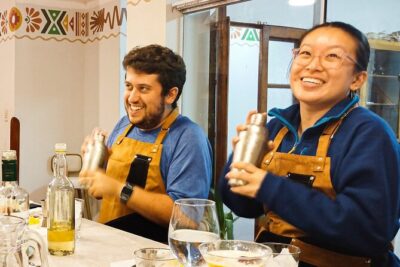
Vegan Peruvian Cooking Class Cocktails and Local Market in Cusco
Read our review →
Browse the lists this tour appears in