
Reviewed · CUSCO
07 Day Andean Experience Through the Living Culture of the Incas
Machu Picchu is the headline, but the real strength of this seven-day trip is how it puts the famous citadel into context. You’ll see the engineering at Sacsayhuaman, the agricultural experiments at Moray, and living Andean traditions in Ollantaytambo and Pisac. I especially like the included train, bus, entrance fees, and airport transfers, which remove much of the usual planning work.
I also like the first day set aside for altitude adjustment and the chance to visit local artisans rather than seeing only major ruins. Guides named Jonathan, Yeni, Percy, Herlin, Saul, and others have been praised for clear explanations, patience, photographs, and practical help. The main caution is the pace: long days, early starts, and elevations up to about 11,482 feet require steady legs and sensible acclimatization.
Key points at a glance
- High-altitude start in Cusco: You arrive at roughly 11,000 feet, with the first day reserved for rest and adjustment.
- Machu Picchu by included train and bus: The package covers the train, round-trip buses, entrance, and a guided visit.
- More than a ruins checklist: Moray, Maras, Pisac, and Ollantaytambo add farming, salt production, markets, and living traditions.
- A private trip for your own group: Only your group participates, with an English-speaking guide throughout the journey.
- Six nights in three-star hotels: Accommodation is based on double occupancy, with six breakfasts included.
- A full but flexible Cusco day: Day five can be used for rest or optional activities such as Rainbow Mountain, horseback riding, or an ATV outing.
What this seven-day Andean journey really offers
At $1,299 per person, this is a packaged cultural tour rather than a bare-bones Machu Picchu transfer. You pay for six nights of three-star lodging, transportation, admission fees, an English-speaking guide, the Machu Picchu train, round-trip buses, and airport transfers.
That matters in Peru. Train times, entry rules, buses, high-altitude roads, and separate archaeological sites can turn a simple plan into a stack of moving parts. Here, the main arrangements are handled for you. The tradeoff is a fairly fixed schedule and less freedom to linger wherever you please.
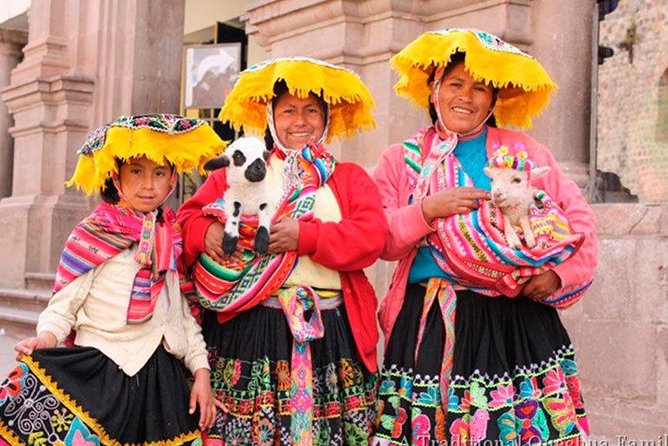
You’ll visit famous places, but the program does not treat the Andes as a parade of photo stops. Ollantaytambo is still a town where Inca traditions continue. Pisac combines an archaeological site with a market and local crafts. Maras remains tied to family salt production. Those details give the trip a human scale.
The tour is private, meaning only your group participates. That can make a real difference. You can ask questions without competing with a large crowd, and the guide can respond to the needs of your party. The specific guide is not guaranteed in the details provided, but Jonathan, Yeni, Percy, Herlin, Saul, Julio, Ronald, and others have led departures.
Other days out of Cusco people book alongside this one:
- Cusco: Humantay Lake Tour with Breakfast and Buffet Lunch
★ 4.9 · 2,976 reviews - From Cusco: Sacred Valley & Maras Salt Mines Tour with Lunch
★ 4.8 · 2,227 reviews - From Cusco: Moray, Maras Salt Mines & Chinchero Weavers Tour
★ 4.8 · 1,925 reviews
Day one: landing in Cusco at 11,000 feet
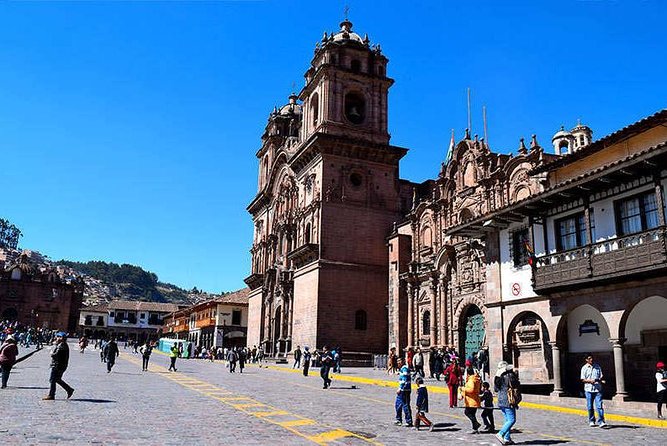
Your first day begins with an airport pickup at Alejandro Velasco Astete Airport. A member of Inkayni Peru Tours takes you to your accommodation in Cusco, which sits at about 3,400 meters, or roughly 11,000 feet.
The sensible part of the plan is that the day is mainly for rest and acclimatization. Do not treat arrival day as a chance to cram in museums, shopping, and a major hike. Cusco’s altitude can affect even fit people, and a quiet first afternoon gives you a better chance of enjoying the days ahead.
An orientation meeting is planned for about 5:00 PM. You’ll meet the group, hear about the upcoming route, and get a clearer idea of transport and timing. I would use the afternoon for water, a light meal, and a slow walk only if you feel well.
Day two: Sacsayhuaman, four Cusco ruins, and Ollantaytambo
The second day begins with Sacsayhuaman, high above Cusco at about 3,700 meters. Its huge fitted stones are the main attraction. Some weigh more than 100 tons, and the tight joints show the precision of Inca stonework. The Spanish reused much of the original site, but the remaining walls still give you a strong sense of the scale of the construction.
Qenko, Tambomachay, and Puca Pucara follow. These sites are smaller, yet they help fill out the picture. Qenko is associated with sacred ritual spaces, Tambomachay with ceremonial water, and Puca Pucara with guarding and movement through the area.
This is a useful morning because you see several types of Inca site rather than only one grand fortress. It is also a demanding start. Cusco’s elevation is no joke, and walking over uneven stone while listening to a long explanation can be tiring.
Later, the route continues to Ollantaytambo at about 2,792 meters. The lower elevation is welcome, and the town itself is part of the appeal. Its cobbled streets and Inca foundations are not just a backdrop for a ruin. They show how an old Andean settlement remains part of daily life.
Day three: Machu Picchu, the trip’s great payoff
Day three starts early with breakfast and a morning bus to Machu Picchu. The package includes the train to the area, round-trip buses, entrance, and a guided tour of the citadel.
Inside, your guide explains the temples, ceremonial spaces, terraces, and storage structures. That guidance is important. Machu Picchu can look like a spectacular arrangement of stones if you only walk around taking pictures. A good explanation helps you understand how the site was organized and why the terraces and buildings were placed as they were.
The citadel is also the busiest and most tightly managed part of this journey. Your time and route may be shaped by the entrance system, so listen carefully to your guide and keep your passport available. The provided information requires an original passport.
Huayna Picchu and Machu Picchu Mountain are not included. Either requires an extra ticket purchased in advance. If you want one of those climbs, arrange it before the trip and confirm which option fits your entry.
After the guided visit, you return to Aguas Calientes for rest and lunch, with lunch at your own expense. The day lasts about 12 hours, so do not plan a late-night celebration. Machu Picchu rewards attention, but the early start and return journey can leave you ready for bed.
The strongest guide praise attached to this experience centers on people such as Jonathan, Yeni, Herlin, Percy, and Ronald. Their reported strengths include clear history, patience, help with photographs, and careful coordination. Guide assignments can vary, but you can reasonably expect the guide to be an important part of the day.
Same altitude, a completely different day:
- From Cusco: Full-Day Group Tour of Machu Picchu
★ 4.7 · 1,767 reviews - Machu Picchu Day Trip from Cusco
★ 4.5 · 1,644 reviews - Cusco: Half-Day City Tour with Sacsayhuaman and Q’enco
★ 4.6 · 1,129 reviews - Cusco: Sacred Valley, Pisac, Ollantaytambo, Salt Mines Moray
★ 4.6 · 1,058 reviews
Day four: Moray’s circles and Maras salt pools
The next morning brings you back from Aguas Calientes to Ollantaytambo before heading into the highlands. Moray sits at about 11,482 feet, so this is another day when the altitude deserves respect.
Moray’s circular terraces form a dramatic bowl in the ground. They are often explained as an Inca agricultural testing site, where different levels created different growing conditions. You can see the practical intelligence behind the design, not just a photogenic ruin.
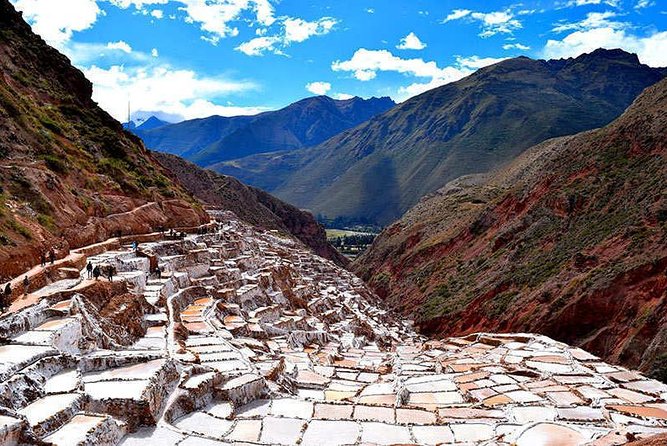
The Maras Salt Mines sit at about 11,090 feet. More than 3,000 salt pools spread across the mountainside, and local families still harvest salt there. The white pools contrast sharply with the surrounding slopes, making this one of the most distinctive stops on the route.
Maras is valuable because it connects old methods with present-day work. You are not simply looking at a monument left behind. You are seeing a production system that still supports local households.
The day lasts around eight hours. Bring water, sun protection, and a waterproof layer. The highland weather can change, and the supplied packing advice specifically calls for a waterproof jacket or rain poncho and sunscreen of at least factor 35.
Day five: a free Cusco day with optional add-ons
Day five gives you a break from the constant movement. You can walk through Cusco’s historic center, see Inca foundations beneath colonial buildings, and spend time in the plazas without racing toward the next bus.
This is one of the better design choices in the itinerary. After Machu Picchu and the high-altitude excursion to Moray and Maras, you may need a slower day. It also gives you room to choose an activity that matches your energy.
Optional choices listed by the operator include:
- Rainbow Mountain Trek to Vinicunca
- A Cusco City Tour
- Horseback riding near Sacsayhuaman
- An ATV outing to Apukunaq Tianan
These are not all the same sort of day. Rainbow Mountain adds another strenuous high-altitude outing, while a city tour may be a calmer way to fill the hours. Horseback riding and an ATV trip suit visitors who want scenery and activity without another full walking tour.
Check what is included in your booking before assuming an optional activity is covered. The core package includes admission fees for the scheduled program, but the additional day’s choices are presented separately.
Day six: Cochawasi, Pisac ruins, and the market
Day six returns to the Sacred Valley. At Cochawasi Animal Sanctuary, you can see Andean animals including pumas, condors, alpacas, and llamas.
The sanctuary adds a different note to the trip. After several days focused on stonework and archaeology, you get a closer look at the animal life associated with the Andes. It is a straightforward stop, but it helps break up the ruins-heavy schedule.
Pisac follows at about 2,972 meters. Its terraces and temples extend across the hillside, with the site traditionally described as having a condor-shaped design. The views are part of the experience, but the terraces also show how the Incas worked with steep ground to grow food.
After the ruins, you descend to Pisac Market. This is where the cultural focus becomes practical. You can browse textiles, jewelry, ceramics, and other handmade goods, and take time with local artisans.
Expect opportunities to shop, but do not feel required to buy. If you do purchase textiles or crafts, ask about the work and materials rather than rushing through the stalls. The point of this stop is not simply to collect souvenirs. It is a chance to see the skills and trade that remain part of Andean life.
Day seven: a short final look at Cusco
The final morning includes a quick historical-center tour, with an optional free walking tour available. Your airport transfer is then scheduled around your flight time.
This is not a full sightseeing day, so plan important Cusco visits earlier. It works best as a gentle farewell rather than as the moment to discover everything you missed.
Accommodation, meals, and transport
The package includes six nights in three-star hotels, based on double occupancy. That is a practical middle ground. You are not paying for luxury lodging, but you also are not left to arrange a new bed in every destination.
Six breakfasts are included. Lunch and dinner are not listed among the inclusions, so budget separately for meals. On the Machu Picchu day, lunch in Aguas Calientes is specifically not included.
Transport is one of the tour’s clearest advantages. Airport transfers, site transfers, the train to Machu Picchu, and round-trip buses up to the citadel are included. The train is listed as either Voyager or Expedition service.
You should still pack light enough to move easily between vehicles and hotels. Comfortable walking shoes, sun cream, personal medication, and rain protection are sensible basics. Bring your original passport, and bring a current university card if you hope to receive a student discount.
Pace, altitude, and who should book
This trip suits you if you want the major Inca sites arranged in one route and prefer having a guide handle the practical work. It is especially useful for first-time visitors to Peru who want Cusco, the Sacred Valley, and Machu Picchu without building the schedule from separate bookings.
It also suits families and private groups that value help with timing and transport. Several guides have been praised for taking photographs, helping with restaurant reservations, supporting solo participants, and adjusting to group needs.
The pace will not suit everyone. Days run from about five to twelve hours, and some stops sit above 11,000 feet. You need to be comfortable walking on uneven archaeological ground, managing early starts, and adapting to changing weather.
The first day’s rest is a good safeguard, but it cannot guarantee that altitude will not bother you. If you feel unwell, tell your guide rather than trying to prove a point. The mountains will still be there.
The overall feedback is very strong, with a 4.9 rating from 50 reviews and 98 percent recommendation. The praise focuses heavily on guide quality, organization, patience, cultural explanations, and help with small details. One caution is worth taking seriously: one account described inappropriate behavior from a guide that made some women uncomfortable. That appears to be an exception among the supplied comments, but it is a fair reminder to communicate clearly with the company if you have concerns.
Is $1,299 good value?
For $1,299 per person, the value depends on how much planning you want to avoid. Six nights of lodging, six breakfasts, entrance fees, private-group guiding, airport transfers, major ground transport, Machu Picchu train service, and buses add up quickly when booked separately.
You are also paying for coordination. A missed train or wrong bus connection can damage an expensive Machu Picchu visit. Having an English-speaking guide with the group throughout is useful, especially when the route changes from city streets to remote archaeological sites.
The price is less attractive if you want luxury hotels, long free periods, or complete control over meals and departure times. Three-star accommodation and a full schedule point to practical comfort, not indulgence.
The non-refundable policy is important. Once booked, the amount paid cannot be refunded or changed for any reason. I would only reserve after confirming your dates, passport details, flight timing, and any extra mountain ticket you want.
Should you book this Andean experience?
I would choose this tour if you want a well-organized first visit built around the Inca world, with Machu Picchu as the centerpiece and enough Sacred Valley stops to give it meaning. The combination of ruins, salt production, animal life, markets, and living Andean towns gives you more than a quick Cusco-to-Machu-Picchu package.
I would hesitate if you dislike early mornings, high altitudes, fixed schedules, or full sightseeing days. Also consider the non-refundable terms carefully.
For most active visitors who want strong logistics and a private group, this is a solid seven-day introduction to the Cusco region. Ask about your assigned guide, confirm the hotel locations, and decide in advance if you want Huayna Picchu or Machu Picchu Mountain. Those small checks will help you get the most from a very full week.
FAQ
How long is the Andean experience?
The tour lasts approximately seven days and includes six nights of accommodation.
Where does the tour begin?
It begins in Cusco, with pickup at Alejandro Velasco Astete Airport and transfer to your accommodation.
Is airport pickup included?
Yes. Airport pickup on arrival and an airport transfer for departure are included.
Is Machu Picchu entrance included?
Yes. The package includes entrance to Machu Picchu, the train, and round-trip buses to the citadel.
Is the Machu Picchu train included?
Yes. The train is listed as Voyager or Expedition service.
Are Huayna Picchu and Machu Picchu Mountain included?
No. An additional ticket is required for either Huayna Picchu or Machu Picchu Mountain, and it must be secured in advance.
What accommodation is included?
The tour includes six nights in three-star hotels, based on double occupancy.
What meals are included?
Six breakfasts are included. Lunches and dinners are not included, and lunch in Aguas Calientes on the Machu Picchu day is specifically at your own expense.
Just added around Cusco
- Zipline over the Sacred Valley Trip★ 5.0 · 11 reviews
- Visit Pisac from Cusco: Private Transport★ 4.6 · 9 reviews
- Valle Sur Cusco | half day★ 4.3 · 3 reviews
- Transfer from Cusco to Ollantaytambo★ 5.0 · 30 reviews
- Exclusive Huayna Picchu Tour in 1 Day from Cusco★ 5.0 · 31 reviews
- Trek to Humantay Lake from Cusco★ 4.9 · 8 reviews
- Private Tour Sacred Valley, Chinchero, Maras Moray, Ollantaytambo★ 5.0 · 29 reviews
- 5 Day – Salkantay trek to Machu Picchu – Group Service★ 4.5 · 27 reviews