
Reviewed · WALKING TOURS
Cusco: Walking Tour with a Local Guide
Cusco’s story comes into focus on foot, where an Inca wall may support a colonial church and a narrow stone lane still carries everyday local life. This 150-minute walk links the Plaza de Armas, Qoricancha, and San Blas, giving you a useful first look at the city for $15.
I like the route’s strong mix of major sights and ordinary streets. I also like that the guide explains why the Sun mattered so much to Inca culture, rather than simply pointing out old stones. The main drawback is reliability: one booking had no guide arrive and no response to messages, so I would keep the meeting instructions and a backup plan handy.
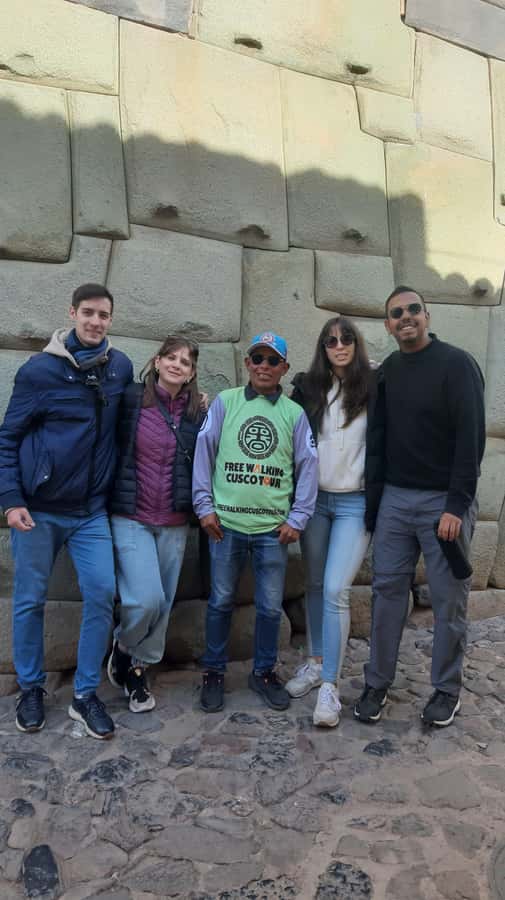
- Qoricancha puts Inca sun worship at the heart of the walk, with a close look at Inca construction and colonial layers.
- San Blas adds local texture, including artisan workshops, colonial churches, and daily life away from the main square.
- The 150-minute route covers several key areas without transport, so you get a useful sense of Cusco’s central streets.
- Enrique received specific praise for setting a comfortable pace, an important point on Cusco’s uneven, sloping streets.
- The $15 price is low for a private guided introduction, especially if you want history explained as you walk.
- The tour is not suitable for wheelchair users, and you should expect a moderate amount of walking.
Starting at Del Medio beside the Plaza de Armas
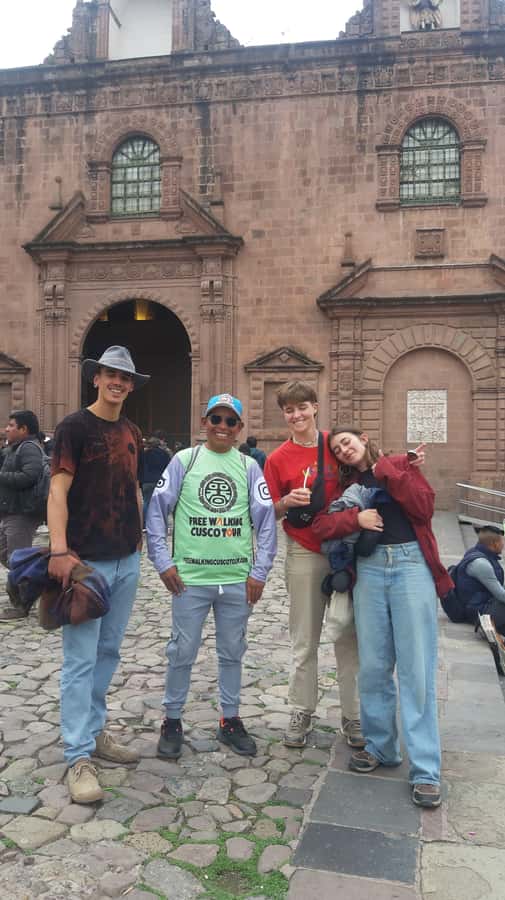
You meet between Calle del Medio and Cusco’s Plaza de Armas. Look for the guide wearing a green T-shirt. The meeting coordinates are -13.5170627, -71.9795113, which is useful if your phone map places you on the wrong side of the square.
This is a practical starting point because the Plaza de Armas is the city’s main reference point. You begin close to the action, with no pickup service and no time spent collecting people from hotels. You need to make your own way there, so allow enough time to find Calle del Medio and identify the green shirt.
The walk is offered in English or Spanish. If you want the fullest explanation of local terms, legends, and place names, choose the language in which you can ask easy follow-up questions. The tour is described as private, giving the experience a more personal feel than a large group walk.
The tour lasts 150 minutes, or two and a half hours. That is long enough to connect the major sights, but not so long that the history becomes a blur. You should still expect a fair amount of standing and walking. Comfortable shoes, water, a hat, and sunscreen are sensible choices in Cusco.
Reading Cusco in the Plaza de Armas
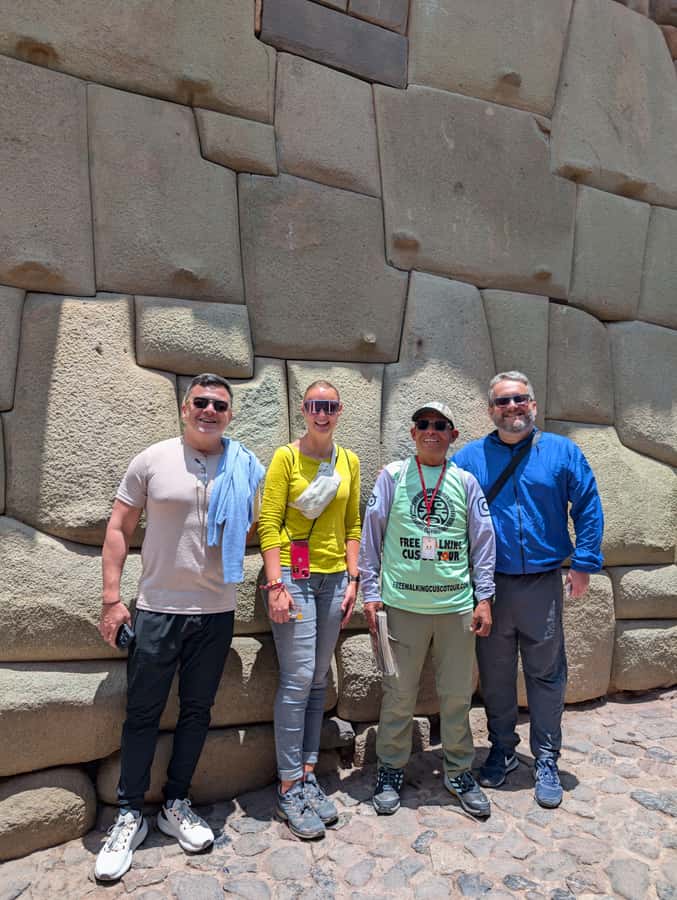
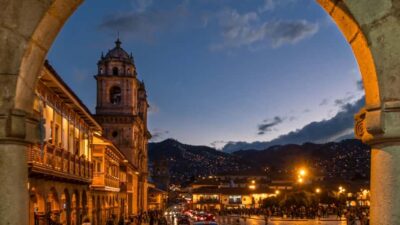
The Plaza de Armas is more than a photo stop. It gives your guide a place to explain how Cusco changed from an Inca capital into a colonial city. You’ll hear about the plaza’s colonial buildings and the Inca legends tied to the city.
This opening section matters because it gives you a frame for everything that follows. Without some context, Cusco’s stonework can look like a collection of impressive walls. With a guide, you can begin to see the relationship between Inca foundations, colonial buildings, religious power, and the city’s present-day life.
The square is also a good place to settle into the pace. Enrique, one of the named guides associated with this walk, was specifically praised for keeping the pace comfortable. That detail matters in Cusco, where an easy distance on a map can feel more demanding once you are walking uphill or stopping often to listen.
Do not expect a long museum visit here. The emphasis is on the city around you, with the guide using the buildings, streets, and legends as teaching tools. You get a broad introduction rather than a detailed examination of every structure.
A few more Cusco days worth weighing up
- Cusco: Historic Walking Tour with Pisco Sour and Music Show
★ 4.6 · 65 reviews - Walking Culinary Experience
★ 5.0 · 41 reviews - Cusco: Walking Tour Cusco
★ 3.4 · 6 reviews
Loreto Street and the meeting of two building traditions
From the main square, the route continues to Loreto Street. This is one of the most interesting parts of the walk for anyone who wants to see how colonial architecture sits beside older Inca construction.
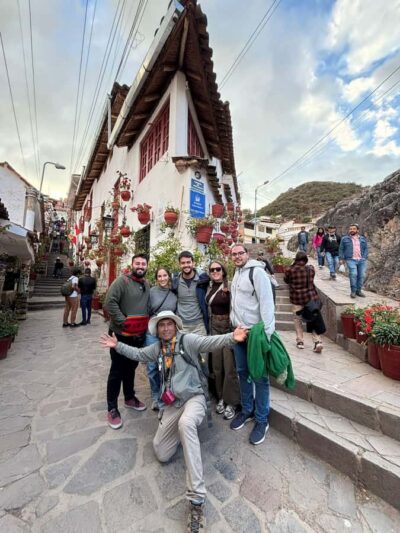
You’ll pass narrow streets, local shops, and artisan workshops. The appeal is not only visual. These streets let you see Cusco as a lived-in city, rather than a series of isolated monuments arranged for visitors.
A guide can point out details that are easy to miss while you hurry between attractions. You might notice the way stone walls shape the street, how colonial buildings rise above older foundations, or how small workshops fit into historic surroundings. The supplied information does not promise demonstrations or purchases, so think of the workshops as part of the street scene, with time to look rather than a guaranteed craft activity.
This is also where the walking format earns its keep. A bus or taxi can move you quickly, but it cannot show you the small shifts in street width, building style, and daily activity from one block to the next. You travel at walking speed, with room to stop and ask questions.
Qoricancha and the Inca importance of the Sun
Qoricancha, also called the Temple of the Sun, is the historical centerpiece of the route. Here, the guide explains the importance of the Sun in Inca culture and draws your attention to Inca building methods.
This stop adds depth to the earlier discussion in the plaza. You move from general stories about Cusco to a place directly connected with religious belief and imperial power. The Sun was central to Inca culture, and Qoricancha gives the guide a strong setting for explaining that idea.
You will also see Inca architecture at close range. Pay attention to the precision of the stonework and the contrast between the older construction and later colonial use. The walk is designed to help you understand those layers, not simply photograph them.
The activity includes skip-the-ticket-line access, which can save time at a busy attraction. The provided details do not state whether admission to every site is included in the $15 price, so check the booking conditions before you pay. The experience clearly includes a professional guide, but food, drinks, pickup, and drop-off are not included.
Flash photography is not allowed. That rule is worth remembering before you reach the site, especially if you tend to use your phone or camera without checking local instructions. Take a small amount of gear and keep your attention on the guide and the stonework.
Cusicancha and the layers beneath colonial Cusco
The route then goes to the Inka Palace Cusicancha, described as an Inca palace and temple that is now a church. This is another stop where the city’s layers become clear.
You are not looking at a single period of history. Inca political and religious spaces were later altered by colonial institutions, and the present-day building reflects that change. A guide can connect the structure to the larger story introduced at Qoricancha.
For you, the value is in comparison. Qoricancha focuses strongly on the Sun and Inca religious ideas, while Cusicancha shows how an Inca palace and temple became part of a later Christian city. Seeing both on the same walk helps you understand Cusco’s development without needing a full day of lectures.
The exact amount of interior access is not specified, so expect the guide to explain the site and its architecture rather than assume a particular church service, museum visit, or extended indoor tour. This is a walking tour first, not a full archaeological excursion.
Same altitude, a completely different day:
- Cusco: Humantay Lake Tour with Breakfast and Buffet Lunch
★ 4.9 · 2,976 reviews - From Cusco: Sacred Valley & Maras Salt Mines Tour with Lunch
★ 4.8 · 2,227 reviews - From Cusco: Moray, Maras Salt Mines & Chinchero Weavers Tour
★ 4.8 · 1,925 reviews - From Cusco: Full-Day Group Tour of Machu Picchu
★ 4.7 · 1,767 reviews
Inka Roca Street and everyday movement
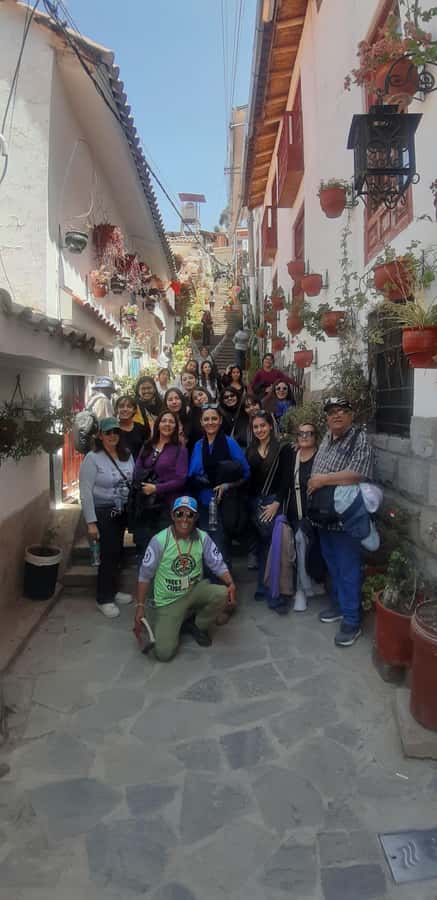
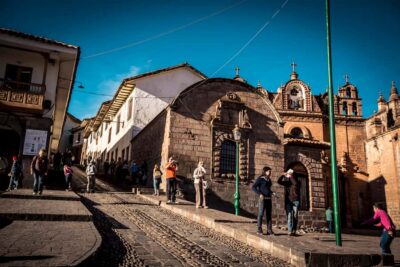
Inka Roca Street brings you back into the texture of the city. The route follows a narrow cobblestone street lined with colonial houses, where you can see local life continuing around the old architecture.
This section is useful because it keeps the tour from becoming a parade of famous monuments. You get a chance to see the streets as routes used by people who live and work in Cusco. The guide explains the setting while you walk, linking the physical street to the history of the city.
Cobblestones are part of the charm and part of the challenge. Wear shoes with a firm grip and good support. The tour calls for a moderate level of fitness, and the combination of walking, uneven paving, and Cusco’s slopes may be tiring if you are not used to it.
The route also contains stairs or changes in level, according to the accessibility warning that the tour is not suitable for people with mobility impairments or wheelchair users. If you need a step-free route or have trouble walking for two and a half hours, this is not the right choice.
San Blas workshops and the final view
The final neighborhood is San Blas, known here for artisan workshops, colonial churches, and the daily life of Cusqueños. The walk ends at the Mirador de San Blas.
San Blas gives the tour a different mood from the main square. You see a neighborhood setting, with workshops and local activity woven into the streets. The guide can help you understand how the area fits into Cusco’s social and architectural character.
The viewpoint is a sensible finish because it gives you a clear endpoint after the uphill streets. The supplied details do not promise a particular panorama or a long stop, so treat it as the end of the walking route rather than a separate sightseeing session.
You may want to plan your next move before the tour ends. There is no drop-off service, and the experience finishes at the Mirador de San Blas rather than returning you to the Plaza de Armas. That is convenient if you want to continue exploring San Blas, but less convenient if you need to get back to your hotel immediately.
What $15 buys you in Cusco
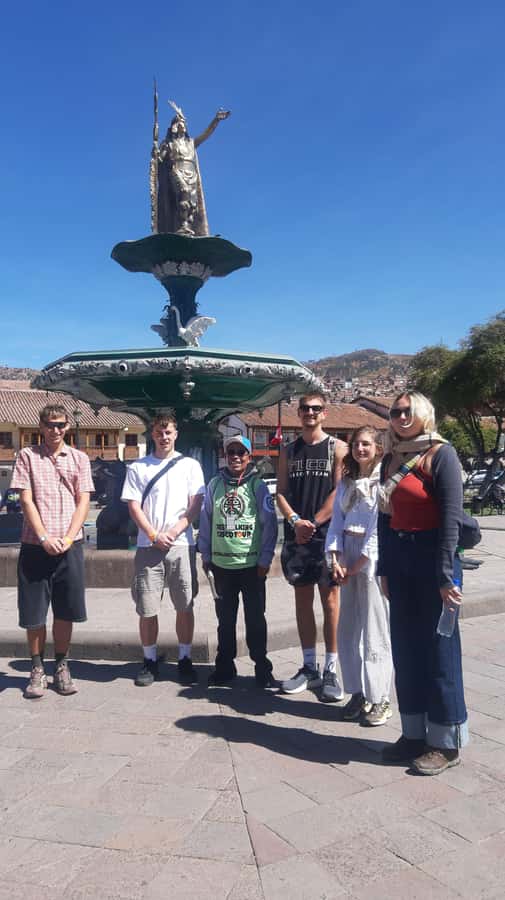
At $15 per person, this is priced as an affordable introduction to central Cusco. The value comes from the guide, the route, and the explanations connecting the sights. If you visited the same streets without context, you could still admire the stonework, but you would miss much of the meaning behind Qoricancha, Cusicancha, and the colonial buildings.
The experience includes a professional guide and the walking tour itself. Food and drinks are not included, and there is no pickup or drop-off. Bring water instead of counting on a refreshment stop.
The low price also means you should keep your expectations in proportion. This is not a full-day archaeological tour, a food tour, or a transport-assisted visit to sites outside central Cusco. It is a focused city walk covering the main square, historic streets, Qoricancha, Cusicancha, Inka Roca Street, and San Blas.
A 4.3 rating from five recorded ratings suggests a generally positive experience, but the small number of ratings makes the score less conclusive than a large booking history. The strongest praise goes to the guiding and pacing. Lynn specifically found Enrique’s pace right for the group and noted that the guide reached sights they would not have found alone. That is exactly where a local walk can repay its modest cost.
There is also one serious service concern. Kane reported that no guide arrived and that messages received no response. I would not ignore that problem. Confirm the meeting details, arrive at the stated place, and keep the provider’s contact information available. If the guide does not appear, the plaza is a practical place to find another walking group, but that is a backup rather than a substitute for dependable service.
Who will enjoy this walk most
I would choose this tour if you are visiting Cusco for the first time and want a short orientation before exploring on your own. The route covers enough major sights to give you a working map of the center, while the San Blas finish points you toward a neighborhood worth further attention.
It suits people who prefer history explained in plain language while they walk. You do not need specialist knowledge of Inca culture, colonial architecture, or local legends. The guide supplies the framework and gives you places to connect those subjects.
It also suits independent visitors who want local direction without paying for a full-day private tour. You can use the walk to decide which streets, churches, workshops, or historical sites deserve a longer visit later.
I would be cautious if you have limited mobility, dislike cobblestones, or struggle with moderate walking. The tour is not wheelchair accessible and is not suitable for people with mobility impairments. It may also be a poor fit if you want a long indoor visit at each site, since the experience is built around moving through the city.
Bring comfortable shoes, a hat, sunscreen, and water. Smoking and flash photography are not allowed. Free cancellation is available up to 24 hours before the tour, and you can reserve now and pay later, which gives you some flexibility while finalizing a Cusco schedule.
Should you book the Cusco walking tour?
I would book it for the price, the compact route, and the chance to connect Inca and colonial Cusco with a local guide. The best reasons are the Qoricancha explanation, the passage through Loreto Street and Inka Roca Street, and the San Blas finish. Enrique’s reported pacing is another encouraging detail for anyone worried about walking too fast.
I would not book it without checking the meeting details if you need perfect reliability. The no-show report is the one major warning, and the tour does not include transport or a return to the starting point.
For a first look at central Cusco, this is a sensible, low-cost choice. Go prepared for uneven streets, bring water and sun protection, and treat the walk as an orientation to build on, not as the final word on the city.
FAQ
Where does the Cusco walking tour meet?
The meeting point is between Calle del Medio and the Plaza de Armas. Look for the guide wearing a green T-shirt. The coordinates are -13.5170627, -71.9795113.
How long does the walking tour last?
The tour lasts 150 minutes, or two and a half hours.
Which languages are available?
The live guide is available in English or Spanish.
What places does the tour visit?
The route includes the Plaza de Armas, Loreto Street, Qoricancha, the Inka Palace Cusicancha, Inka Roca Street, San Blas, and the Mirador de San Blas.
What should I bring?
Bring comfortable shoes, a hat, sunscreen, and water. Smoking and flash photography are not allowed.
Is the tour wheelchair accessible?
No. The tour is not wheelchair accessible and is not suitable for people with mobility impairments. A moderate level of fitness is required.
Just added around Cusco
- Zipline over the Sacred Valley Trip★ 5.0 · 11 reviews
- Valle Sur Cusco | half day★ 4.3 · 3 reviews
- Visit Pisac from Cusco: Private Transport★ 4.6 · 9 reviews
- Transfer from Cusco to Ollantaytambo★ 5.0 · 30 reviews
- Exclusive Huayna Picchu Tour in 1 Day from Cusco★ 5.0 · 31 reviews
- Trek to Humantay Lake from Cusco★ 4.9 · 8 reviews
- 5 Day – Salkantay trek to Machu Picchu – Group Service★ 4.5 · 27 reviews
- 2 Day – Short Inca Trail to Machu Picchu – Group Service★ 5.0 · 30 reviews
Walking Tours, compared.
Historic Walking Tour with Pisco Sour and Music Show
Read our review →
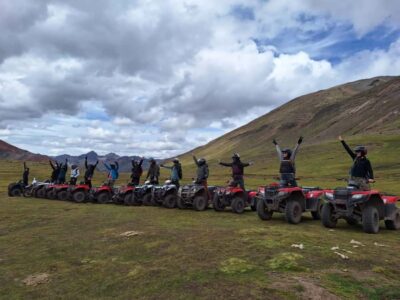
Rainbow Mountain In Quad Bikes /walk 5 minutes/+meals
Read our review →Browse the lists this tour appears in