
Reviewed · CUSCO ROCK CLIMBING & VIA FERRATA
From Cusco: Balcony of the Devil Rock Climbing
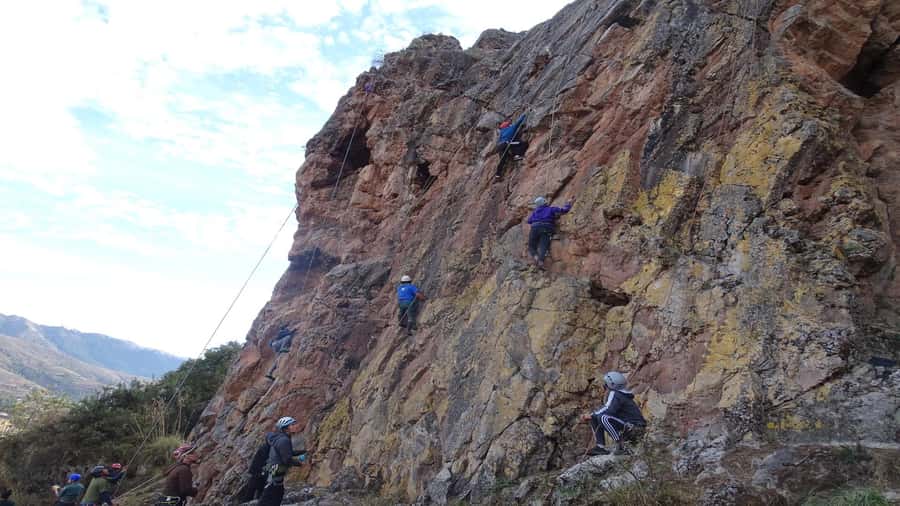
Devil’s Balcony gives you a real rock-climbing challenge without taking a full day away from Cusco. You climb three routes on pale limestone near Sacsayhuaman, then look out across the Andes from 3,750 meters. The setting is the star: mountain air, open views, and the Saphy River below make this more than an indoor climbing lesson.
I like the short travel time and the clear three-level format. I also like that equipment, an English or Spanish instructor, and transport from central Cusco are included. The main drawback is value: at $59, you may feel the session is brief if you spend much of it repeating the same wall, as one participant described doing three climbs up and down.
Key points at a glance
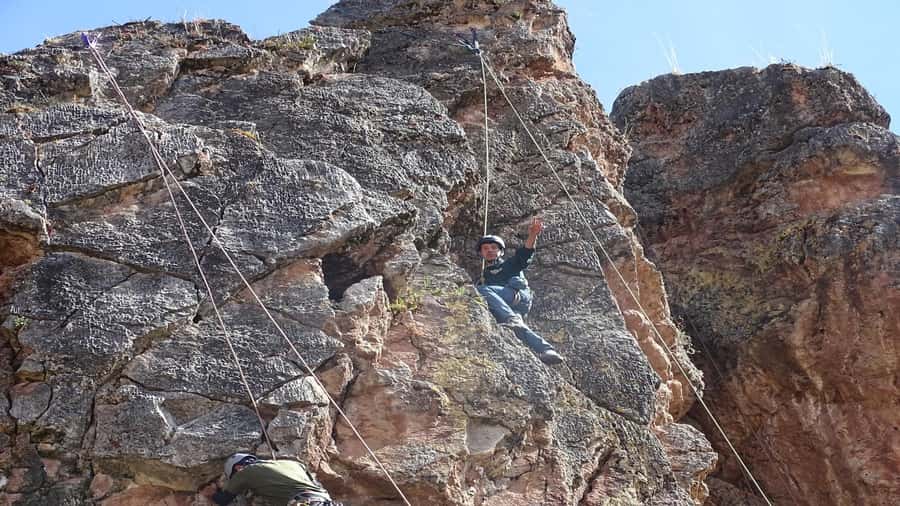
- Three limestone routes: You get several chances to test your grip, balance, and strength rather than one single climb.
- 3,750-meter setting: Devil’s Balcony sits near Sacsayhuaman, with the Saphy River and Andes views adding plenty of atmosphere.
- Only 30 minutes from central Cusco: The outing fits neatly into a morning or afternoon.
- A 20-minute equipment briefing: You receive instruction before climbing, with gear supplied.
- Good for casual climbers: The routes were manageable for one casual climber, and Brayan was praised for steady belaying and company.
- Clear limits apply: The activity is not suitable for children under 13, pregnant women, people with heart problems or vertigo, or anyone over 65.
Leaving Plaza Regocijo for the climbing site
The meeting point is Plaza Regocijo, a few steps from Cusco’s Plaza de Armas. That makes the start easy to reach if you are staying in the historic center, and the pickup avoids sending you across the wider city before the activity begins.
From the plaza, allow about 30 minutes by vehicle to reach the climbing area. This is a useful time saving. You get an outdoor climbing experience near Cusco without committing to a full-day excursion or a long transfer into the countryside.
The ride takes you toward the area around Sacsayhuaman, one of Cusco’s major archaeological zones. The climbing site itself is Devil’s Balcony, a natural rock formation near the archaeological park. At 3,750 meters above sea level, the altitude matters. Even a short walk or moderate climb can feel more demanding here than it would at a lower elevation.
I would schedule this after you have spent at least some time adjusting to Cusco, especially if you are sensitive to altitude. The activity is only four hours, but the height is not a small detail. Bring water, take the briefing seriously, and do not treat the short duration as proof that it will feel easy.
More Climbing and Via Ferrata in Cusco:
- Rock Climbing full day
★ 5.0 · 47 reviews - Qampa Climbing 2 Days in Ausangate
★ 5.0 · 27 reviews - From Cusco: Via Ferrata and Sky Lodge Zipline
★ 5.0 · 16 reviews
The 10-minute walk to Devil’s Balcony
After the vehicle drops you near the site, you walk for about 10 minutes to reach the rock wall. That is a short approach, but you should still wear proper sports clothing and comfortable shoes suitable for walking over uneven ground.
Devil’s Balcony is set beside the Saphy River, with the limestone wall rising above the surrounding area. The natural setting gives the activity a stronger sense of place than a standard climbing gym. You are not simply working through colored holds under a roof. You are climbing outdoors near Cusco, with the Andes opening out around you.
The views are part of the reward, especially once you reach the top of the wall. The scenery may be harder to appreciate while you are concentrating on handholds and foot placement, so plan to pause and look around before or after each climb.
The altitude can also affect how you approach the wall. If you are new to climbing, you may notice that breathing and recovery take more attention. If you already climb indoors, the main adjustment may be the combination of height, outdoor rock, and thin mountain air.
A 20-minute briefing before the first climb
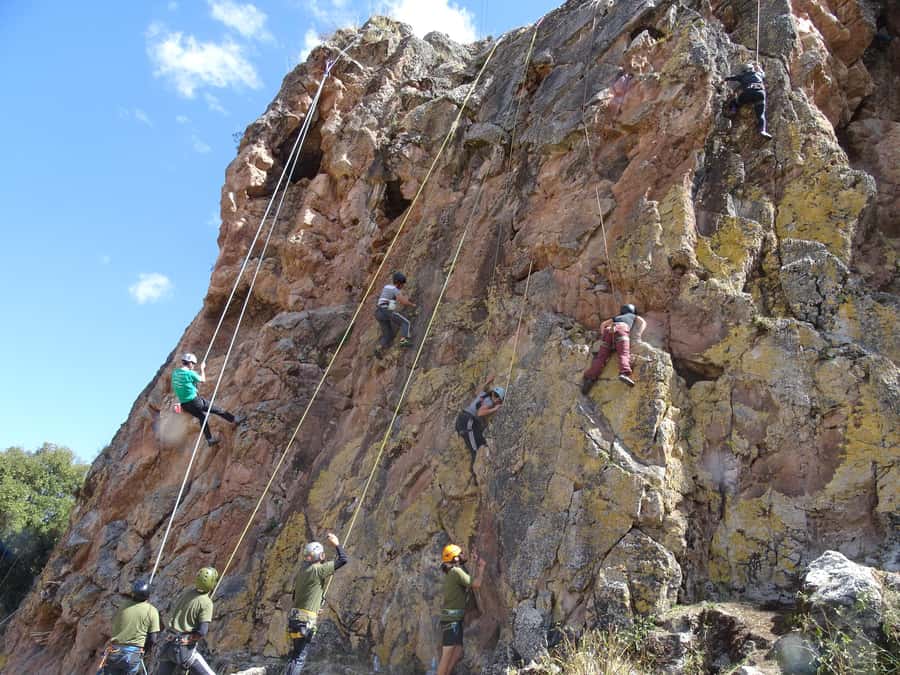
Before you climb, the instructor spends about 20 minutes explaining how to handle the equipment. This is not wasted time. A good briefing gives you a chance to understand the harness, rope system, and basic climbing procedure before your feet leave the ground.
The instructors speak Spanish and English. That makes the activity practical for international visitors, though the exact guide depends on the day. Brayan was specifically praised for careful belaying, a secure-feeling rope setup, and friendly company during the outing. Those details matter because the belayer controls an important part of your safety while you climb.
You should use this briefing to ask questions. If you are uncertain about how the rope works, how to signal the instructor, or how the descent will happen, ask before starting. You are not expected to arrive as an expert, but you are expected to listen closely and follow instructions.
The supplied equipment also improves the value of the outing. You do not need to arrange climbing gear separately, and the operator handles the basic technical setup. You still need to bring your own sun protection and sportswear.
Three routes, three chances to find your level
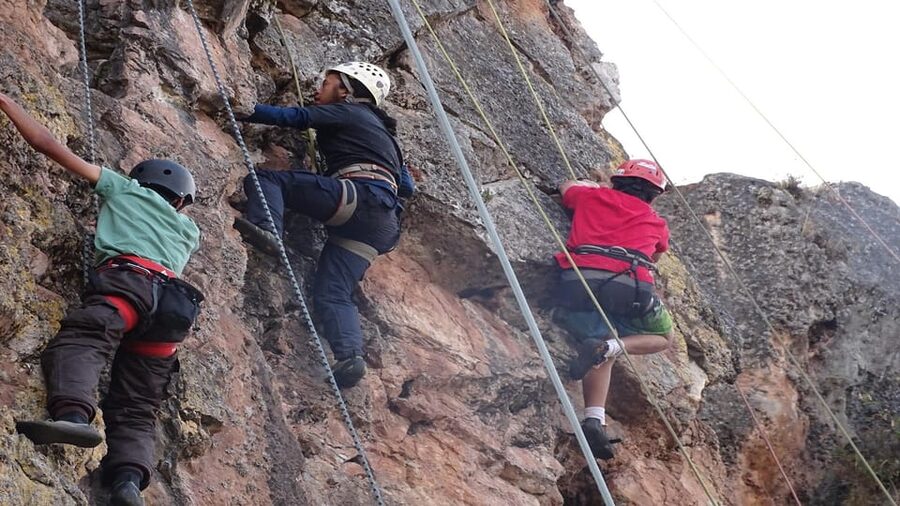
The climbing session offers three levels. That structure gives beginners a gentler entry point while allowing more experienced participants to test themselves on a harder route.
The route grades are not specified, so you should not expect a formal grading system or a detailed technical lesson in climbing theory. Think of the three options as practical stages of difficulty. Your instructor can help direct you to an appropriate starting point.
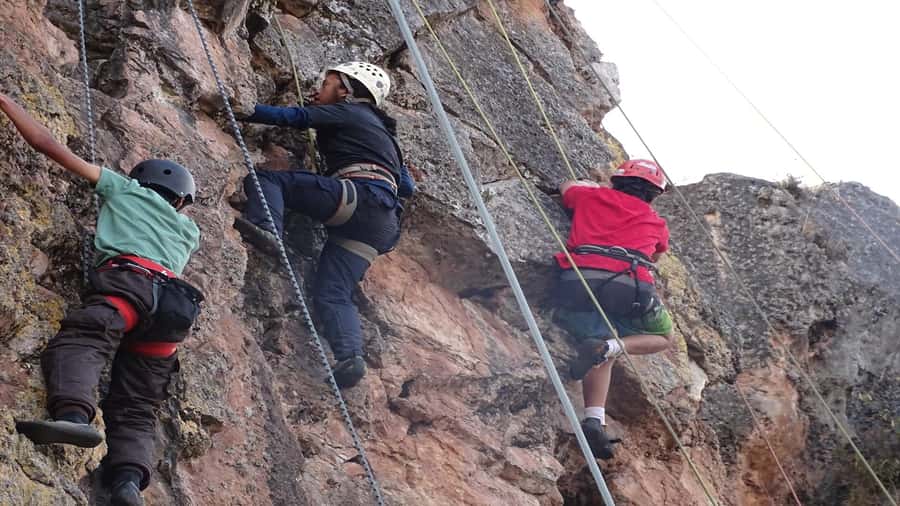
The main physical demands are grip, balance, leg strength, and the ability to stay calm while moving upward. The wall is limestone, so the experience feels different from climbing on smooth indoor holds. You need to pay attention to where your hands and feet go, then trust the rope and the belayer as you move.
One casual climber found all three routes doable and fun. That is encouraging if you have little outdoor experience but are reasonably active. It does not mean the activity will feel effortless. At high altitude, even a manageable wall can leave you breathing hard.
You may climb each route more than once, depending on the timing and how the session is organized. That repetition is useful if you want to improve your technique or try a higher level. It is also the point most likely to affect your sense of value. One participant felt the price was high for going up and down the wall three times. If you want a long, varied climbing day, this four-hour experience may feel limited.
For a first outdoor climbing session, the repeated routes can be a benefit. You get a second chance after learning how the rock feels, and you can compare your performance on different levels. For an experienced climber seeking technical variety, the outing may seem more basic.
Same altitude, a completely different day:
- Cusco: Humantay Lake Tour with Breakfast and Buffet Lunch
★ 4.9 · 2,976 reviews - From Cusco: Sacred Valley & Maras Salt Mines Tour with Lunch
★ 4.8 · 2,227 reviews - From Cusco: Moray, Maras Salt Mines & Chinchero Weavers Tour
★ 4.8 · 1,925 reviews - From Cusco: Full-Day Group Tour of Machu Picchu
★ 4.7 · 1,767 reviews
Reaching the top and taking in the Andes
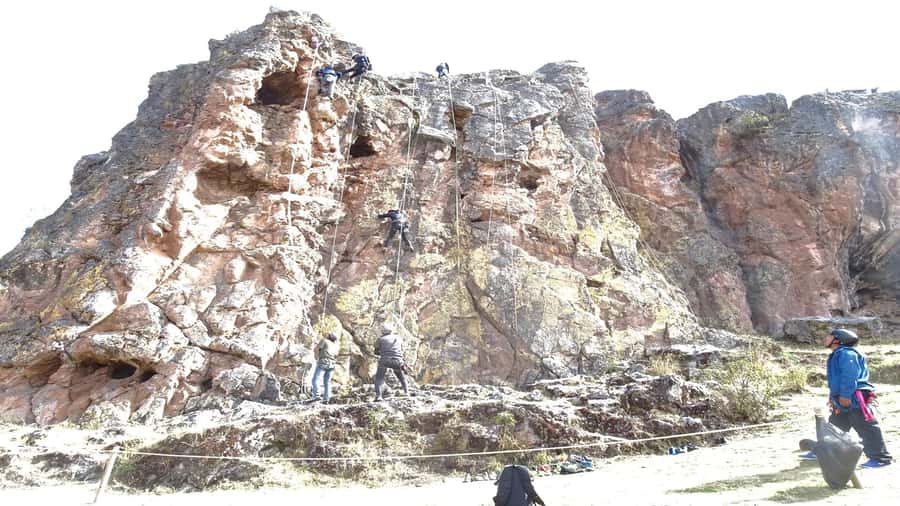
The stated reward is reaching the top of the wall and looking across the Andes. That payoff gives the activity a clear goal. You are not climbing only to complete an exercise. You have a mountain setting to enjoy once you are above the rock face.
At Devil’s Balcony, the Saphy River forms part of the backdrop, while the high-altitude surroundings give you broad views near Cusco. The scenery is likely to be most memorable for people who have already visited the city’s streets and archaeological sites and now want a more active way to see the region.
You should not expect a long sightseeing stop with a formal explanation of every nearby feature. The focus is climbing. Still, the setting adds a strong local character to a short adventure. The combination of limestone, river, Sacsayhuaman, and high Andean views makes the outing feel tied to Cusco rather than interchangeable with a climbing session elsewhere.
The phrase breathtaking can be taken literally here for two reasons: the views and the altitude. If you have vertigo, this is not the right activity. The height of the wall and the open setting can make the experience uncomfortable, even with a secure rope system.
How much value do you get for $59?
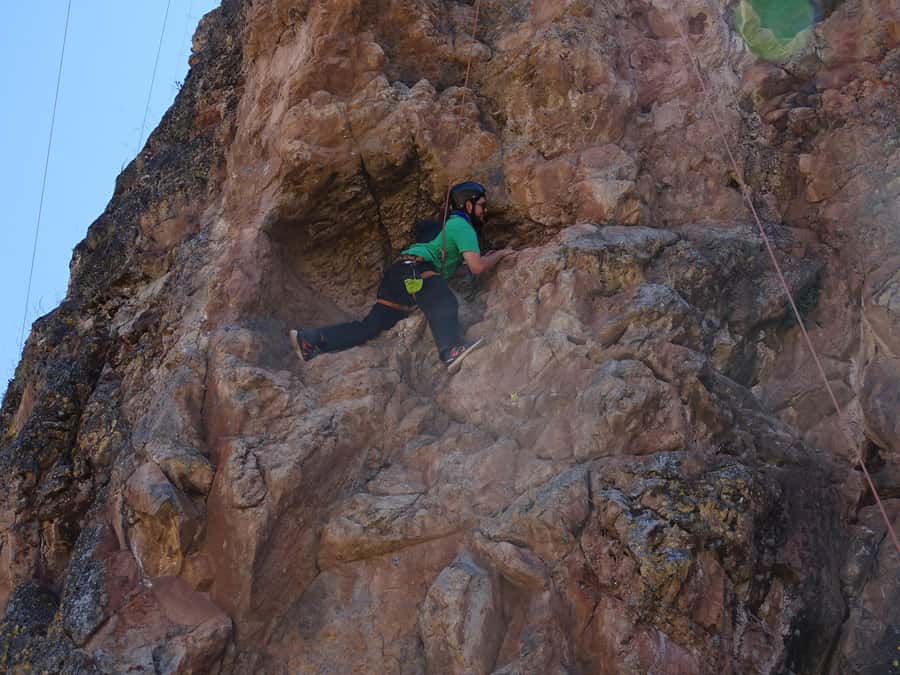
The $59 price includes round-trip transport from the city center, an English or Spanish guide, and climbing equipment. Those inclusions make the price easier to justify than a fee that covers only access to the rock.
You are also paying for a four-hour block, the transfer to and from the site, the equipment setup, and supervision. If you are visiting Cusco without climbing gear, the convenience has real value. You can meet in the center, ride to the rock, receive instruction, and return to Plaza Regocijo without arranging separate transport.
The value becomes less clear if your expectations are based on the length of the climbing itself. A four-hour tour includes transportation, the 10-minute approach walk, and the 20-minute briefing. The actual time on the wall is only part of the session, and one participant felt that three trips up and down did not fully match the cost.
I would call it a fair-to-good buy for a first outdoor climbing experience, especially if you value convenience and scenery. I would be more cautious if you already climb regularly and want many routes, advanced instruction, or a full day of technical practice.
Food and drinks are not included. Bring what you need for the four-hour outing, particularly water and a small snack if appropriate. Do not count on a meal being provided at the climbing site.
What to wear and carry at 3,750 meters
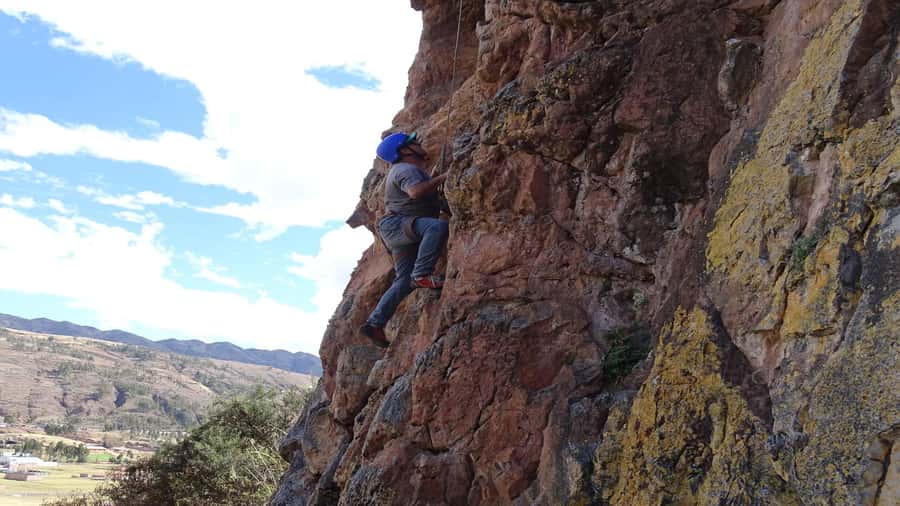
The required packing list is simple, but each item has a job:
- Sunglasses for strong mountain light
- A sun hat for protection during the approach and while waiting
- Sunscreen for exposed skin
- Insect repellent
- Sportswear that allows free movement
Wear clothing that lets you lift your legs and reach overhead without restriction. Rock climbing is easier when your clothes do not pull across your shoulders or catch around your harness.
Sun protection matters even if the air feels cool. Cusco’s altitude can make the sun intense, and you may spend time standing outdoors between climbs. Insect repellent is also requested, so pack it even though this is a short outing.
The maximum permitted weight is 95 kilos per person. This is an important booking check, not a minor footnote. If you are close to the limit, confirm your eligibility before paying.
Who should book this Cusco climbing trip?
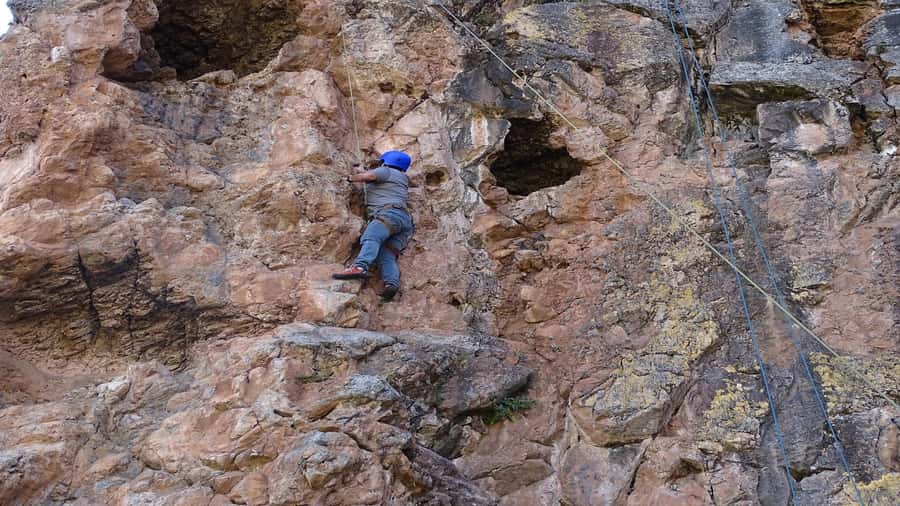
This activity suits you best if you want an active half-day near Cusco, enjoy outdoor challenges, and do not need a full technical climbing course. It is also a sensible choice for a group of friends. The climbing itself is individual, but waiting turns and encouraging one another can make the repeated routes more enjoyable.
Casual climbers are likely to appreciate the three-route format. You can start with a manageable wall and decide how far to push yourself. Beginners may also like the supplied gear and the pre-climb briefing, though you should be comfortable with heights and ready to follow instructions.
The activity is not suitable for children under 13, pregnant women, people with heart problems, people with vertigo, or people over 65. The 95-kilo weight limit also applies. These restrictions reflect the physical and safety demands of climbing at altitude.
I would skip it if you want a relaxed sightseeing tour, dislike heights, or are still struggling with Cusco’s altitude. I would also think twice if you expect a large number of distinct routes or extended climbing time. The experience is short and focused, not an all-day climbing expedition.
Booking flexibility and timing
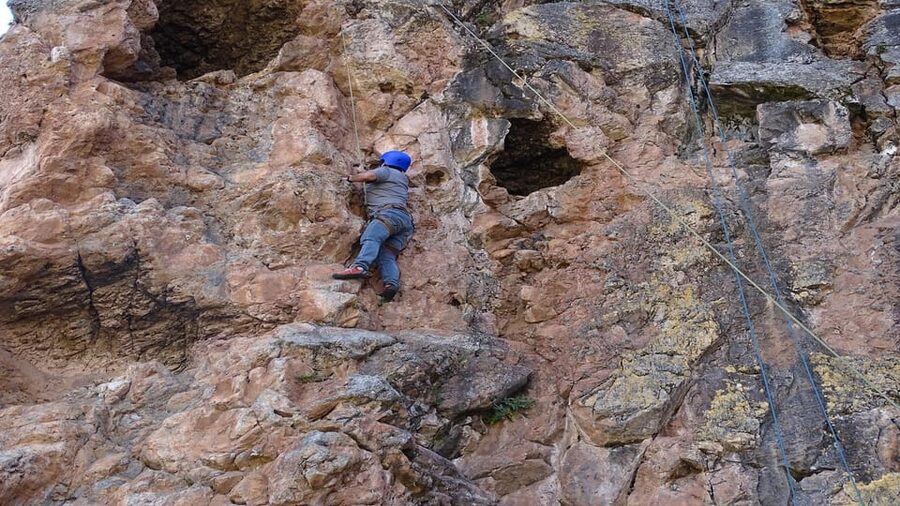
The duration is four hours, but the available starting time depends on the date. Check the schedule before planning other activities around it. Because the meeting point is central and the trip includes a return to Plaza Regocijo, it can fit into a morning or afternoon plan if the start time works.
You can cancel up to 24 hours in advance for a full refund. The reserve-now, pay-later option also keeps your plans flexible, which is useful in Cusco when altitude, weather, or a changing itinerary can affect your energy.
The activity received an overall rating of 4.7 from four ratings. That is a small sample, so I would treat it as a useful signal rather than a guarantee. The strongest practical praise centers on the secure belaying, easy pickup and drop-off coordination, and routes that worked well for a casual climber.
Should you book Devil’s Balcony?
Book it if you want a compact outdoor adventure with mountain views, central transport, supplied equipment, and three levels of climbing. The site near Sacsayhuaman gives the session a memorable Cusco setting, while Brayan’s careful belaying shows the kind of attentive support you should value in an activity like this.
Think carefully about the price if you want extensive climbing time. The outing may feel expensive if your main goal is repeated wall practice rather than the full experience of transport, instruction, scenery, and a high-altitude rock setting.
For a fit visitor who is comfortable with heights and has had time to adjust to Cusco, I would consider this a worthwhile half-day. For anyone with vertigo, heart concerns, pregnancy, or little tolerance for altitude, choose a gentler way to enjoy the area.
FAQ
Where does the climbing tour start?
It starts at Plaza Regocijo in central Cusco, a short distance from the Plaza de Armas.
How long does the experience last?
The full activity lasts four hours, including transportation, the walk to Devil’s Balcony, the equipment briefing, and climbing.
How long is the ride from Cusco to the site?
The journey from Plaza Regocijo to the adventure area takes about 30 minutes.
How long is the walk to Devil’s Balcony?
The walk from the drop-off point to Devil’s Balcony takes about 10 minutes.
What languages does the instructor speak?
Instruction is available in Spanish and English.
Is climbing equipment included?
Yes. Climbing equipment and round-trip transportation from the city center are included. Food and drinks are not included.
Who cannot take part in the activity?
The activity is not suitable for children under 13, pregnant women, people with heart problems, people with vertigo, or people over 65. The maximum permitted weight is 95 kilos per person.
Just added around Cusco
- Zipline over the Sacred Valley Trip★ 5.0 · 11 reviews
- Valle Sur Cusco | half day★ 4.3 · 3 reviews
- Visit Pisac from Cusco: Private Transport★ 4.6 · 9 reviews
- Exclusive Huayna Picchu Tour in 1 Day from Cusco★ 5.0 · 31 reviews
- Trek to Humantay Lake from Cusco★ 4.9 · 8 reviews
- Transfer from Cusco to Ollantaytambo★ 5.0 · 30 reviews
- Private Tour Sacred Valley, Chinchero, Maras Moray, Ollantaytambo★ 5.0 · 29 reviews
- 5 Day – Salkantay trek to Machu Picchu – Group Service★ 4.5 · 27 reviews
Cusco Rock Climbing & Via Ferrata, compared.
Browse the lists this tour appears in