
Reviewed · CUSCO COOKING CLASSES
Cusco: Peruvian Cooking Class, Cocktails & Local Market Tour
San Pedro Market is the real starting point here, not just a backdrop for a cooking lesson. You’ll see the ingredients that shape Peruvian food, taste local cheese, bread, chocolate, fruit, and coffee, then use market produce in a small-group class led by Chef Jesus.
I like the clear connection between the market and the meal, and I like that you make two cocktails as well as three savory dishes. The main thing to consider is that this is a four-hour afternoon and includes a lot of food, so arrive hungry and wear comfortable shoes.
Key points to know before booking
- San Pedro Market comes first: Explore one of Cusco’s oldest markets and learn about potatoes, quinoa, cacao, fruit, cheese, bread, and other local staples.
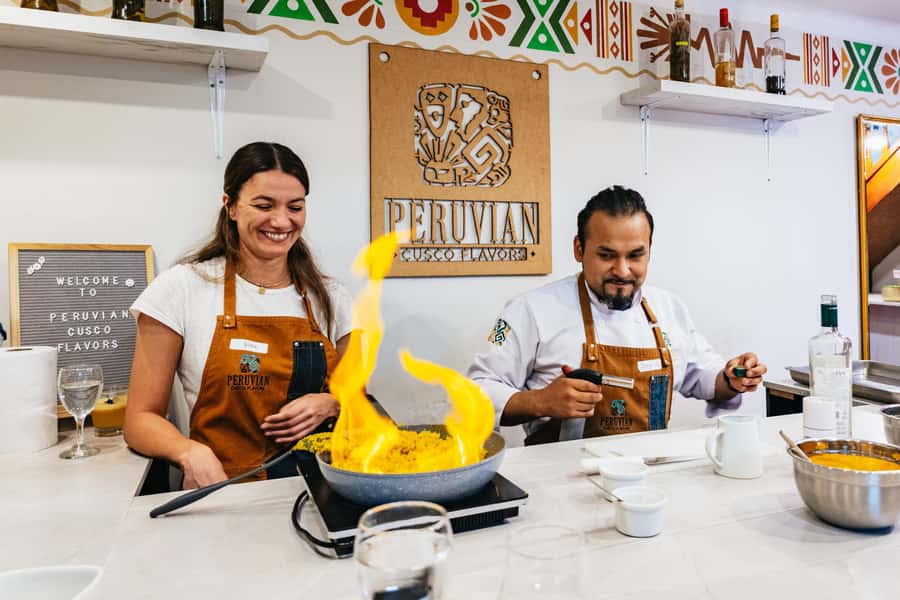
- Chef Jesus leads the class: He explains the ingredients, preparation, and background of each dish while helping you work through the recipes.
- You prepare a full Peruvian meal: Make cebiche, causa limeña, and quinoa tamal, followed by picarones with honey.
- Two cocktails are included: Prepare pisco-based drinks, with non-alcoholic versions available.
- Dietary needs can be handled: Vegetarian, vegan, and gluten-free menus are offered, though you should state your needs clearly when booking and again at the start.
- The group is limited to 10: That keeps the class more personal and gives you a better chance to get hands-on help.
Starting with Cusco’s San Pedro Market
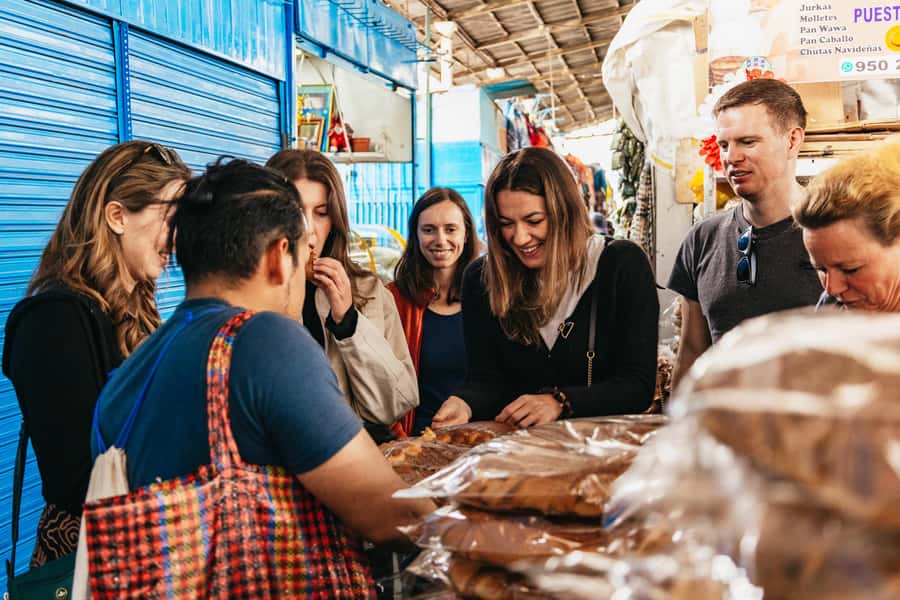
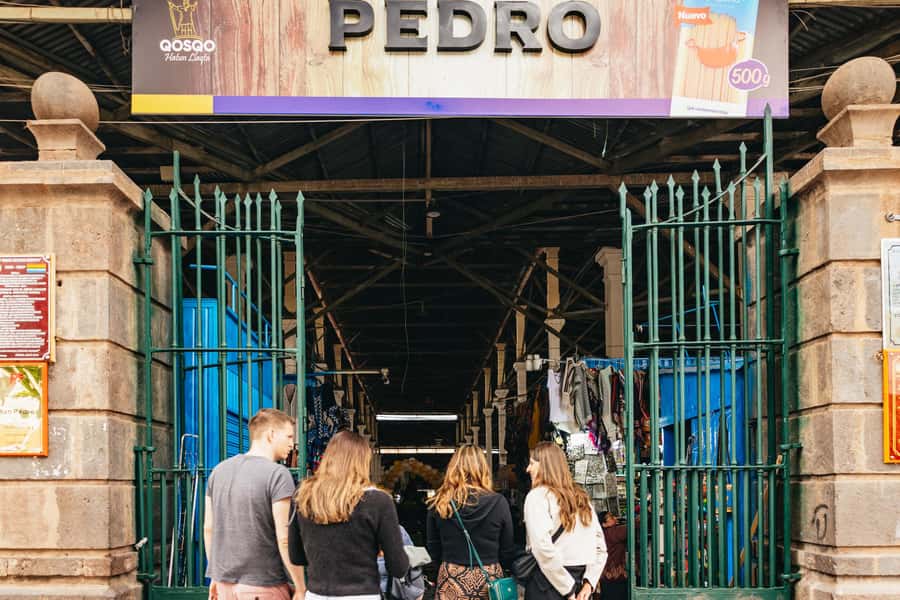
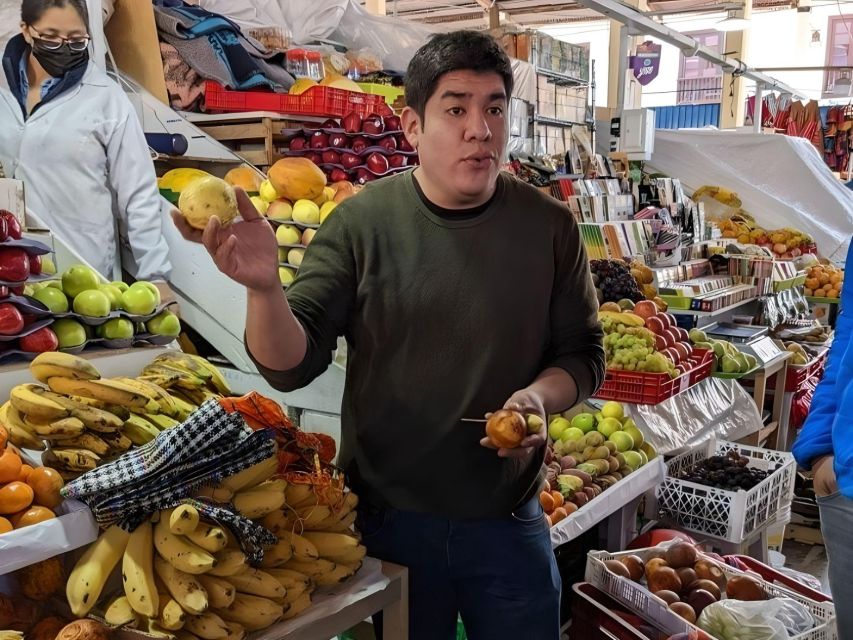
Meet at Door Number 1 of San Pedro Market. From there, your guide takes you through one of Cusco’s oldest food markets, pointing out the products that matter most in Peruvian cooking.
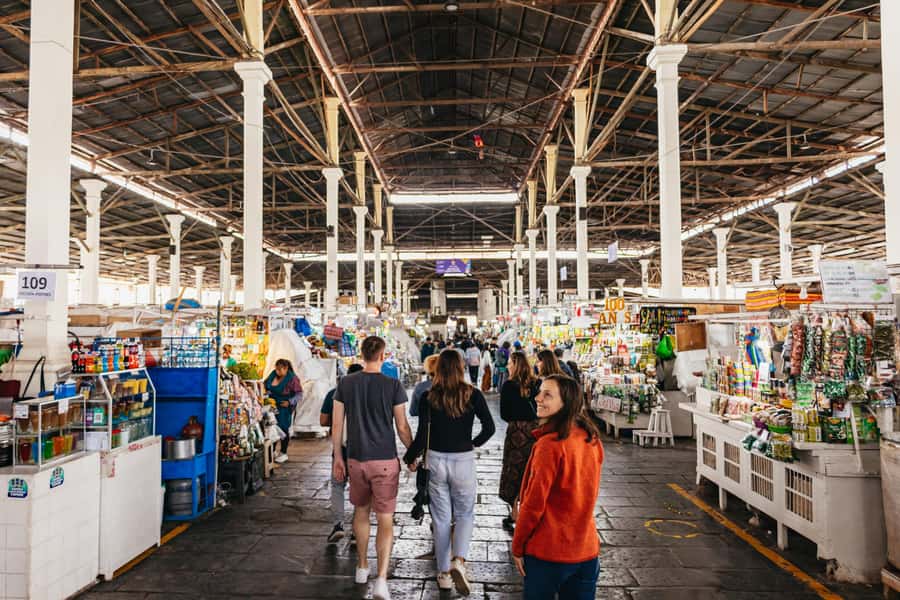
This part gives the class its sense of place. Instead of receiving a prearranged box of ingredients, you see the food in its everyday setting. You might examine different potatoes, quinoa, cacao, passion fruit, local cheese, fresh bread, chocolate, and other produce before heading to the kitchen.
The market visit also helps you understand why Peruvian cooking has so many textures and flavors. Potatoes and quinoa connect the meal to the Andes, while cacao, fruit, herbs, and pisco show the wider range of Peru’s pantry. You are not just memorizing ingredient names. You are learning how the food fits into local life.
Several parts of the market tour include tastings. Cheese, bread, chocolate, fruit, and coffee have all been part of the experience, though the exact samples can vary. That makes the first hour useful even if you already know you enjoy Peruvian food.
San Pedro Market can be a lively place, with plenty to look at and many smells competing for your attention. Stay close to the guide and keep your shoes practical. The meeting point is easy to identify, but the market itself is not a quiet museum. It is a working food market.
One useful feature is the connection between the market visit and the meal. Ingredients selected during the tour are used in the cooking session afterward. That simple link makes the class feel less like a demonstration and more like a short food journey through Cusco.
More Cooking Classes in Cusco:
- Cooking class and market tour with a local chef
★ 5.0 · 186 reviews - Private Andean Cooking Class, Pachamanca
★ 5.0 · 54 reviews - Vegan Peruvian Cooking Class Cocktails and Local Market in Cusco
★ 5.0 · 46 reviews
Walking from the market to the cooking studio
After the market, you take a short walk to a cooking studio in Cusco’s historic center. The transition matters. You leave the busy market setting and move into a modern, clean kitchen designed for teaching.
You’ll get settled, put on an apron, and meet the other people in your group. With no more than 10 participants, the class has enough room for instruction without feeling like a large demonstration. You still need to share workspaces and equipment, but the group size should allow Chef Jesus and the assistants to offer individual help.
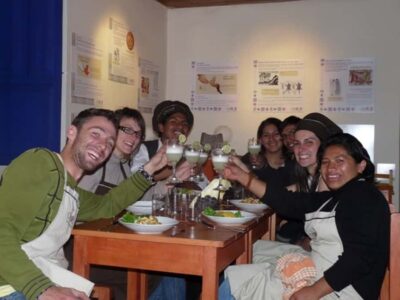
The atmosphere is social without requiring you to arrive with a group of friends. Cooking gives everyone a shared task, and the table afterward gives you time to trade stories. If you are traveling alone, this is one of the better formats for meeting people without having to force conversation.
The class is taught in English. Chef Jesus explains each recipe step by step, including the background of the dishes and the reasons certain ingredients are used. Other sessions have also been led by chefs named Jorge and Eric, so the guide assigned to your date may vary. The teaching style is built around explanation, assistance, and a relaxed pace.
Making two Peruvian cocktails
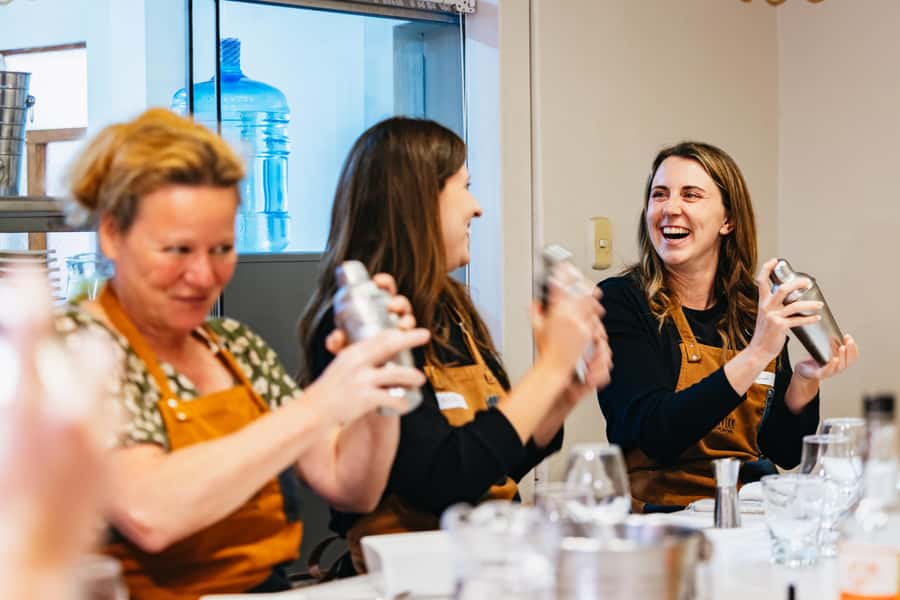
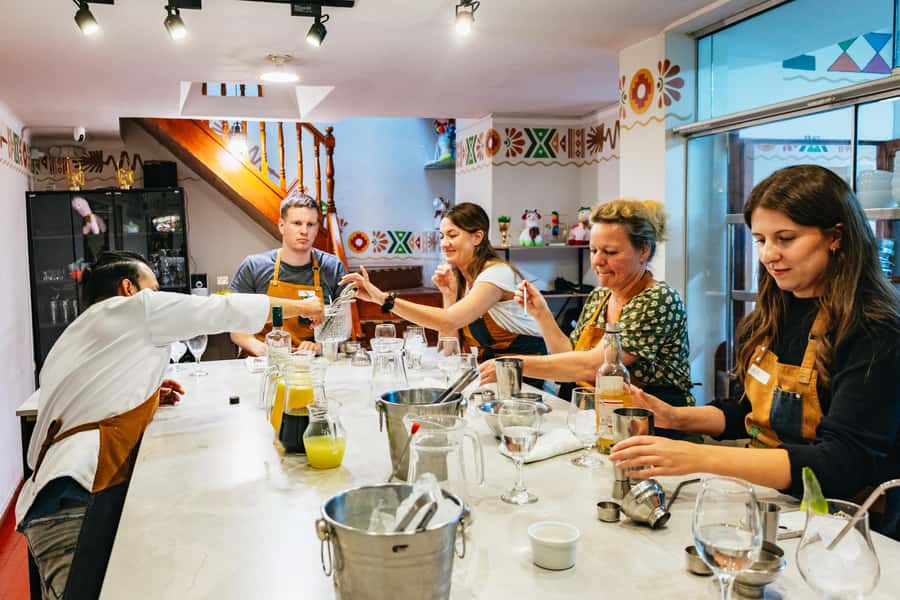
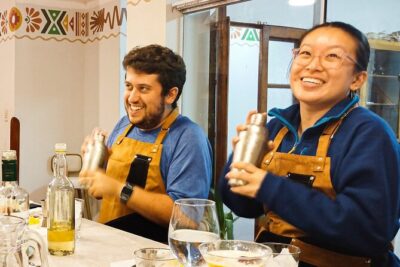
The drinks come early in the class, and you prepare two pisco cocktails. Pisco is Peru’s best-known spirit, so this is a useful introduction to an important part of the country’s food and drink culture.
You do not simply receive a drink while watching someone else cook. You take part in making the cocktails, then sip them during the class. That helps set a friendly tone, though it also adds to the amount you will eat and drink across four hours.
Non-alcoholic versions are available. That is important for anyone who does not drink, and it also makes the activity workable for people who want the cocktail-making experience without the alcohol. If you want mocktails, say so clearly at the start.
The cocktails are one of the most popular parts of the class because they break up the cooking and give you an easy first task. Still, this is not primarily a cocktail workshop. The main focus remains Peruvian food, with the drinks serving as a well-chosen addition.
Preparing cebiche, causa limeña, and quinoa tamal
The savory portion covers three classic dishes, each showing a different side of Peruvian cooking.
Cebiche brings freshness and sharp flavor to the meal. You learn how the ingredients come together and how the dish is prepared, with the chef explaining the process rather than expecting you to guess your way through it. Since cebiche depends heavily on fresh ingredients and careful preparation, the market visit gives useful context.
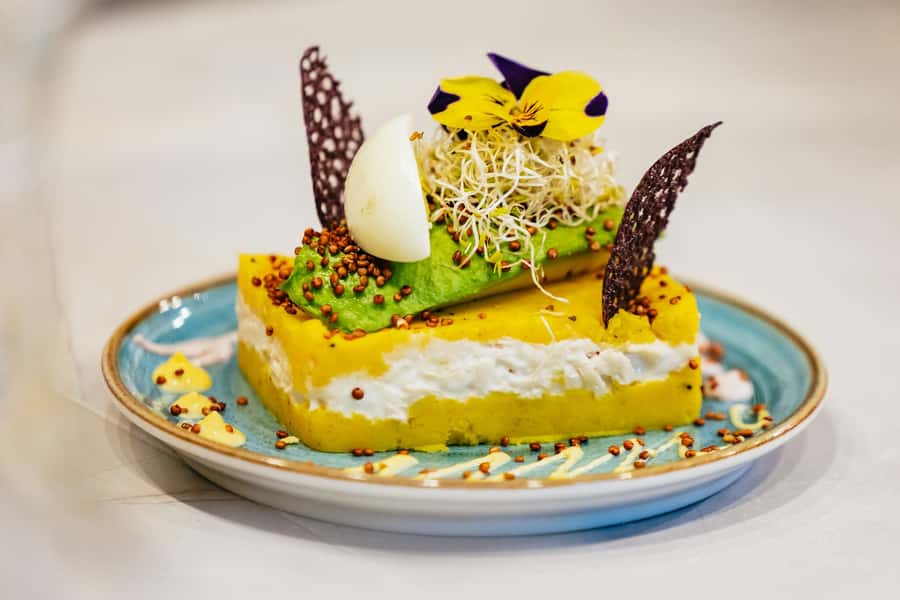
Causa limeña is built around potato and careful presentation. It is also one of the more visually appealing dishes in the class. One participant described learning how to assemble and plate the causa as a moment that made them feel like a chef, even without much cooking experience. That says something useful about the format: you get guidance through the details, not just a recipe card.
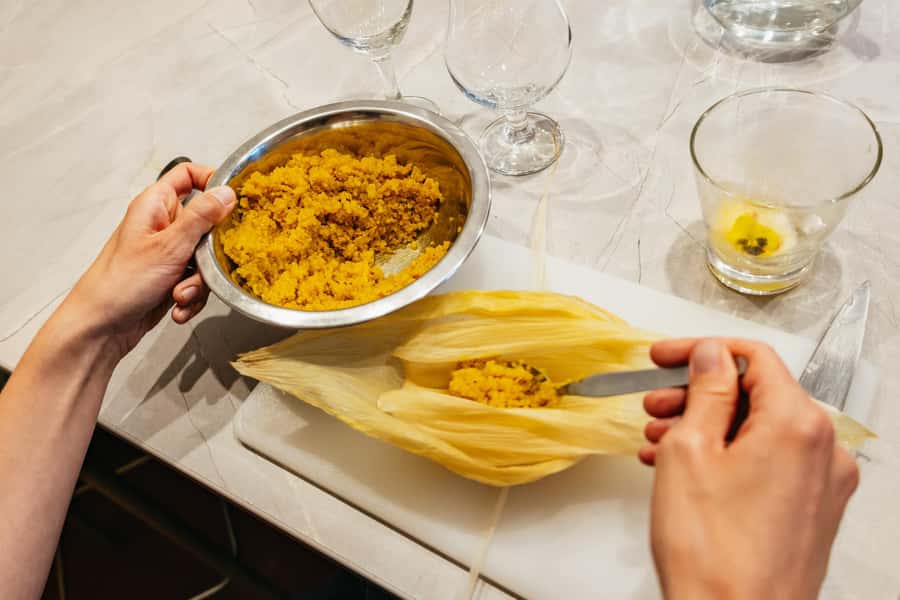
Quinoa tamal brings an Andean ingredient into the meal. Quinoa is familiar to many people around the world, but preparing it in a traditional Peruvian dish gives you a different way to understand it. The recipe also adds another texture to the meal, keeping the menu from becoming a series of similar potato or seafood dishes.
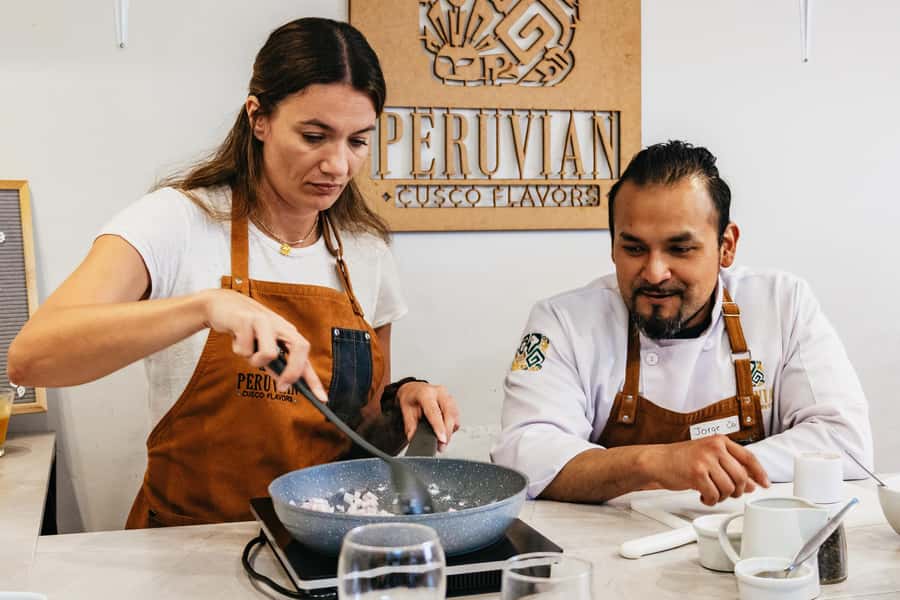
The class is hands-on, but it is worth setting your expectations correctly. This is not a professional chef’s training kitchen. Some components are prepared in advance, and parts of the work involve mixing, assembling, and plating rather than starting every element from raw ingredients. That is a benefit if you want a manageable, social lesson. It may feel limited if you want four hours of intensive knife work and technical instruction.
Chef Jesus guides the process carefully and explains the background of each dish. The strongest part of the class is the way food and culture are treated together. You learn what you are making, where the ingredients fit into Peruvian cooking, and how to present the final plate.
A few more Cusco days worth weighing up
- Cusco Cooking Class by ChocoMuseo in Cusco
★ 5.0 · 29 reviews - Cusco: Peruvian Cooking Class & Market Tour
★ 4.9 · 19 reviews - Cusco: 3-Hour Peruvian Cooking Class
★ 4.7 · 16 reviews
Finishing with picarones and honey
The meal ends with picarones served with honey. These are a sweet Peruvian treat and provide a proper finish after the savory dishes and cocktails.
Picarones are not presented as one of the three main recipes, but you do get to taste them. That distinction matters if you are booking mainly to learn dessert preparation. If your priority is to sample a wider range of Peruvian food, the extra sweet course rounds out the afternoon nicely.
The full meal is substantial. You will have two cocktails, three savory dishes, and picarones, along with tastings from the market. Take the advice to arrive hungry seriously. This is not a light snack stop.
Dietary choices and practical limitations
Vegetarian, vegan, and gluten-free options are available. The kitchen has adapted dishes for vegetarian participants, offered mocktails, and made changes for gluten-free diners. You should still give precise information when reserving and repeat it when you arrive, since one participant experienced some confusion about a gluten-free request.
The class is conducted in English only. If you need instruction in another language, this is not the right choice.
Children under 10 are not permitted. The activity works best for adults and older children who can follow kitchen instructions, taste unfamiliar ingredients, and stay engaged for a four-hour session.
Wear comfortable clothes and shoes. You begin in a market, walk to the studio, and spend time standing and working around a kitchen. Nothing here calls for formal clothing.
The activity is not designed as a strenuous tour, but Cusco’s altitude can affect your energy. Several people have found it useful during their first days in the city, since the pace is easier than a major hiking day and the cooking gives you a way to adjust while still doing something memorable. You should still judge your own comfort level, especially if you have just arrived.
Is $67 a fair price in Cusco?
The price is $67 per person for four hours. That includes the market tour, the chef, all ingredients, two cocktails, three dishes, water, and picarones.
I consider that a fair package if you value a guided market visit and a full meal, not just a cooking lesson. You are paying for the food you consume, the instruction, the market orientation, the studio, and the social setting. The combination is stronger than booking a basic class that begins in a kitchen with ingredients already laid out.
The value is especially good for people who want one activity to cover several interests at once: local food, market culture, cocktails, conversation, and practical recipes. If you are comparing it with a restaurant meal, remember that the price buys four hours of activity rather than a single sitting.
The cost may feel less attractive if you mainly want an advanced cooking course. Because some preparation is done ahead of time and some work involves assembly, serious home cooks may want more technical instruction. For most visitors, though, the balance between participation and ease is sensible.
Free cancellation up to 24 hours before the activity adds useful flexibility, and the reserve-now, pay-later option can help if your Cusco plans are still shifting.
Who will enjoy this class most?
I would recommend it to anyone who wants more context than a restaurant menu can provide. It is a good fit for first-time visitors to Peru, food lovers, couples, solo visitors, and small groups looking for an activity that is both social and practical.
It also suits people who want an approachable cooking lesson. You do not need professional skills. The chef takes you through the recipes, helps with the preparation, and shows you how to plate the food attractively.
This is a particularly good choice before the Inca Trail or another demanding excursion. You get a substantial meal and a cultural activity without committing to a full-day trip outside Cusco. It can also work well near the end of a Peru visit, since the recipes and market knowledge give you something concrete to carry home.
I would hesitate only if you dislike group activities, do not eat large meals, or want a quiet market visit. The class depends on shared work, conversation, and a steady four-hour schedule.
Should you book the San Pedro Market cooking class?
Yes, if you want a friendly introduction to Peruvian food with real market context. The best reasons to book are the San Pedro visit, Chef Jesus’s clear instruction, the two cocktails, and the chance to prepare dishes you can try again at home. Recipes are sent by email, which makes the experience more useful after your trip.
Book it early in your Cusco stay if you want food guidance while you are still getting your bearings, or near the end if you want a memorable final meal and recipes to take home. Just confirm dietary needs, bring comfortable shoes, and allow four hours for a generous amount of food.
FAQ
Where does the Cusco cooking class meet?
Meet at Door Number 1 at San Pedro Market in Cusco.
How long does the experience last?
The activity lasts four hours.
What dishes will I prepare?
You will prepare cebiche, causa limeña, and quinoa tamal. Picarones with honey are included as a tasting at the end.
How many cocktails are included?
Two cocktails are included. Non-alcoholic recipes are available.
Is the cooking class taught in English?
Yes. The available tour language is English.
Who leads the class?
Chef Jesus is identified as the chef for the experience. The teaching team may vary, and other sessions have included chefs named Jorge and Eric.
Are vegetarian options available?
Yes. Vegetarian options are available.
Can I request a vegan or gluten-free menu?
Yes. Vegan and gluten-free menus are available. State your dietary needs when booking and confirm them at the beginning of the activity.
Are children allowed to join?
Children under 10 years old are not permitted.
What should I bring?
Bring comfortable shoes and comfortable clothes.
Can I cancel the booking?
You can cancel up to 24 hours in advance for a full refund. Reserve-now, pay-later booking is also available.
More Workshops in Cusco
- The First Class Machu Picchu Train by Inca Rail
★ 4.0 · 182 reviews - The Textile Workshop Experience in Cusco Region
★ 5.0 · 118 reviews - Sacred Valley Textile Workshop – Dyeing & Weaving in Cusco
★ 5.0 · 92 reviews - Chocolate Workshop in Cusco with Premium Organic Cacao
★ 5.0 · 75 reviews
Just added around Cusco
- Zipline over the Sacred Valley Trip★ 5.0 · 11 reviews
- Valle Sur Cusco | half day★ 4.3 · 3 reviews
- Visit Pisac from Cusco: Private Transport★ 4.6 · 9 reviews
- Transfer from Cusco to Ollantaytambo★ 5.0 · 30 reviews
- Exclusive Huayna Picchu Tour in 1 Day from Cusco★ 5.0 · 31 reviews
- Trek to Humantay Lake from Cusco★ 4.9 · 8 reviews
- 5 Day – Salkantay trek to Machu Picchu – Group Service★ 4.5 · 27 reviews
- 2 Day – Short Inca Trail to Machu Picchu – Group Service★ 5.0 · 30 reviews
Cusco Cooking Classes, compared.
Cooking class and market tour with a local chef
Read our review →
Vegan Peruvian Cooking Class Cocktails and Local Market in Cusco
Read our review →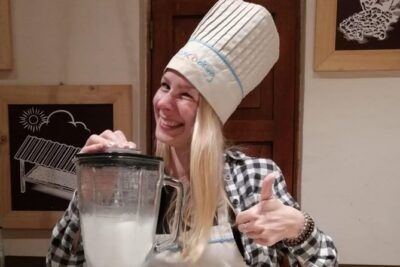
Browse the lists this tour appears in