
Reviewed · AUSANGATE 7 LAGOONS TREKS
Ausangate Trek 5 Days
Ausangate is Peru’s great high-altitude wild card: a five-day circuit of snowy peaks, colored lakes, grazing alpacas, and very few other people. You leave Cusco at 5 a.m., sleep in tents above 4,200 meters, and cross the 5,200-meter Palomani Pass, so this is a real mountain trek, not a gentle sightseeing trip.
I like the small-group format, capped at 10 people, and the way the route mixes hard walking with hot springs, local food, and a weaving demonstration. I also like that horses carry the camping gear, while cooks prepare all-inclusive meals. The main concern is altitude: the air is thin, nights can be bitterly cold, and the daily climbs demand good fitness.
Key points to know before booking
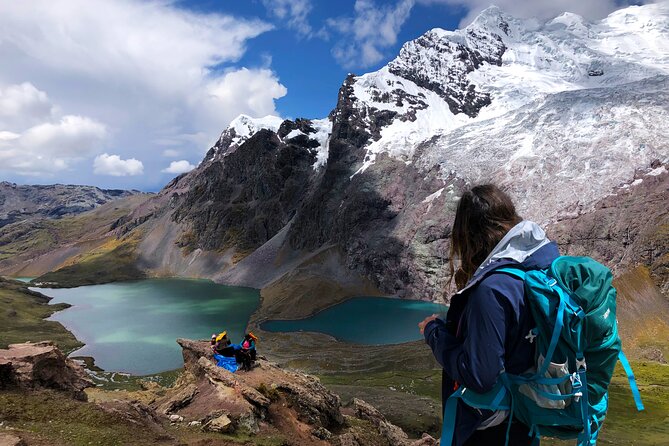
- High passes are the heart of the trek: You cross Arapa at 4,850 meters, Apacheta at about 4,980 meters, and Palomani at 5,200 meters.
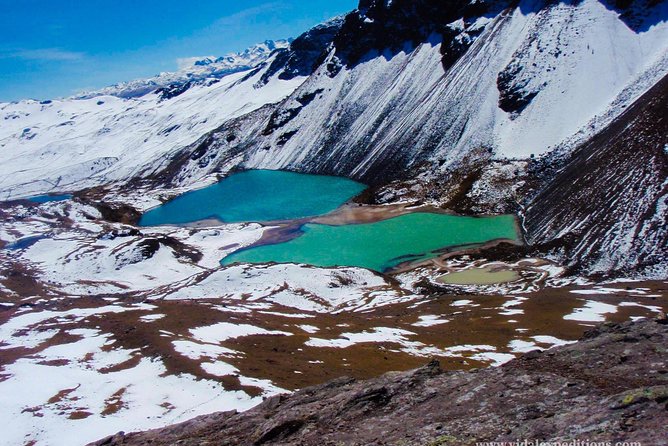
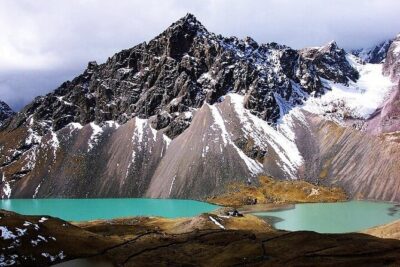
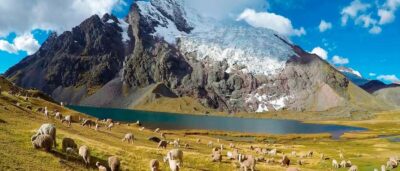
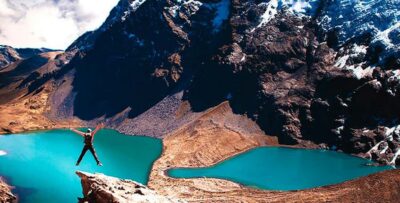
- The scenery keeps changing: Expect glaciers, turquoise lakes, green water, alpacas, broad valleys, and constant views of Ausangate.
- Hot springs soften the hard days: Upis offers a soak on the first night, and Pacchanta provides the final major reward.
- The route feels quiet: The trek reaches remote parts of Peru where you may see very few other groups.
- The service is built for comfort in the wild: Horses carry equipment, cooks provide breakfast, lunch, and dinner, and the group size is limited.
- Pack for cold, not just walking: A sleeping bag is not included, and the camps sit between roughly 4,300 and 4,630 meters.
Why Ausangate feels different from Cusco’s famous treks
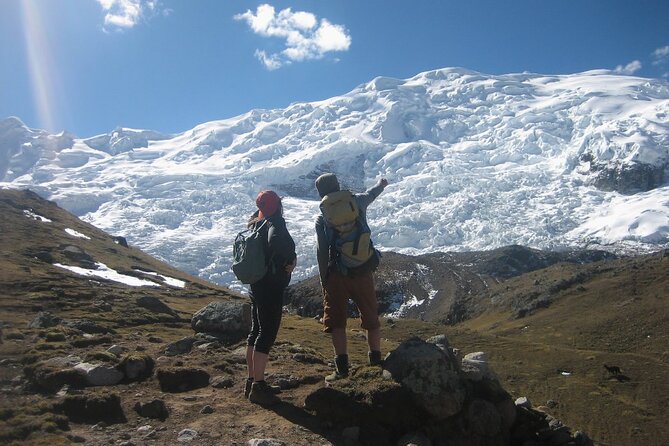
The Ausangate circuit is about the mountain itself. Ausangate is one of the major sacred peaks of the Cusco region, known locally as an Apu. You spend much of the trek looking at its glaciers and changing slopes from different sides, rather than walking toward one famous archaeological site.
That gives the route a more remote feel. You will not spend these five days moving from one crowded landmark to another. Instead, the drama comes from weather, altitude, silence, water color, and the scale of the peaks around you.
The route also connects the outdoors with living Andean culture. On the final day, a local family prepares traditional food and shows you local customs and weaving techniques. A guide may also explain the meaning of the mountain and lead a ceremony for Apu Ausangate at Palomani Pass.
This is valuable because the trip is not only about taking photographs. You get a clearer sense of how mountain communities relate to weather, animals, sacred peaks, food, and textiles.
More Ausangate and Lagoon Treks from Cusco:
- From Cusco: 7 Lakes Ausangate Trek with Breakfast and Lunch
★ 4.8 · 360 reviews - Excursion to Ausangate & 7 lakes with Coca Ceremony |Private|
★ 5.0 · 80 reviews - Full-Day Tour to Ausangate 7 Lakes
★ 5.0 · 56 reviews
Day 1: Cusco to Upis and the first hot springs
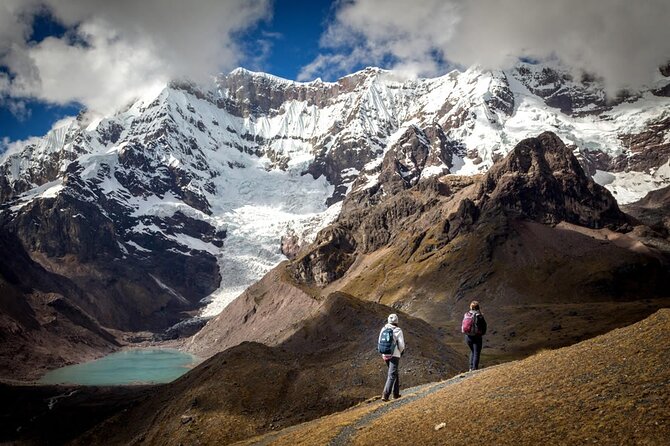
Your guide meets you in Cusco at about 5 a.m. for the drive to Tinke. The trip continues by private transport, with a stop in Tinke to buy last-minute supplies and have breakfast before heading to Rondoca, where the hike begins.
At Rondoca, you meet the cook and horse driver who support the trek. The first walking section lasts around two hours before lunch, with early views toward Ausangate. After eating, you continue to the village of Upis and your first camp.
The day covers about 8 kilometers, with three to four hours of walking and an elevation gain from roughly 3,800 to 4,200 meters. That may sound modest compared with the later stages, but the height makes even a short hike feel serious.
Upis is a smart first stop. You can soak in the hot springs while drinking coca tea, then let the warm water loosen your legs before dinner. I would treat this as an adjustment day, not a chance to rush. The camp sits at about 4,200 meters, so your body will notice the altitude after sunset.
Day 2: Three high points, two turquoise lakes, and a cold camp
Day two is the first demanding mountain day. The team wakes you with hot coca tea, followed by breakfast and a climb to Arapa Pass at 4,850 meters.
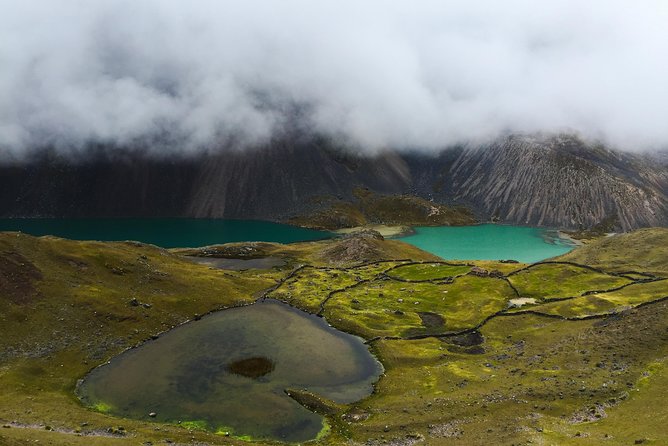
From the pass, you descend for about two and a half hours through the valley. Along the way, you pass the green Puqa Q’ocha before reaching the turquoise Jatun Puqa Q’ocha. Lunch beside the lake gives you time to rest and take in the views of Ausangate.
The day then turns upward again. You climb to Apacheta Pass at about 4,980 meters, with a blue-green lagoon below fed by snowmelt from Ausangate. After taking in the view, you descend for about an hour to Ausangate Qocha, where you camp.
The numbers tell you what to expect: about 12 kilometers, seven hours of walking, and elevations ranging from 4,200 to about 4,930 meters before the camp near 4,630 meters. This is a long, high day with repeated climbing and descending.
The reward is variety. The water changes color, the mountain keeps a new angle, and the route feels increasingly far from ordinary roads and city life. The drawback is the overnight cold. A warm sleeping bag and serious insulation matter here, and you must bring your own sleeping bag because it is not included.
Day 3: Palomani Pass at 5,200 meters
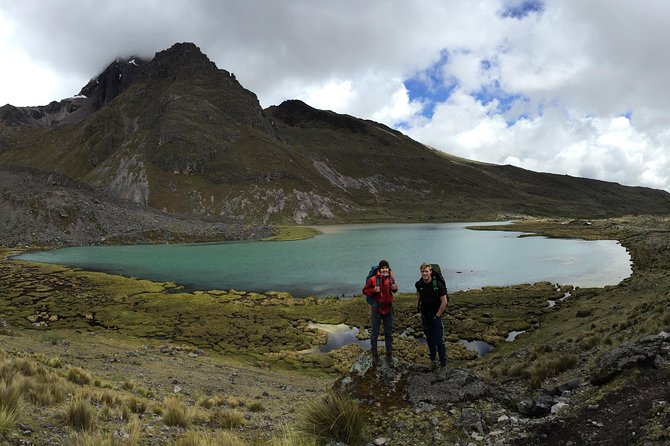
Day three reaches the trek’s highest point. After breakfast, you climb for about two hours to Palomani Pass, which rises to 5,200 meters, or roughly 17,060 feet.
At the top, the guide conducts a ceremony for Apu Ausangate. This is one of the route’s most meaningful moments because the spiritual role of the mountain is treated as part of the place, not as a side note for visitors.
The descent takes you toward Uchuy Phinaya for lunch. After eating, you continue for a couple of hours to the next camp. The total walking time is listed at six to seven hours over about 13 kilometers, with elevations moving from about 4,600 to 5,200 and then down to around 4,300 meters. The camp is at approximately 4,500 meters.
This is the day to judge your pace carefully. The climb is not especially long on paper, but the altitude makes it slow work. Stay close to your guide, keep your pace steady, and use lunch as a proper rest rather than a quick break.
Several guides associated with this trek, including Chino, Guillermo, and Urbano, have been praised for explaining local culture along the way and keeping people moving without turning the walk into a race. Your assigned guide may differ, but the guide’s role matters greatly on this route.
A few more Cusco days worth weighing up
- Small Group 5 Days Salkantay and Machu Picchu by Llactapata Tour
★ 5.0 · 88 reviews - Machu Picchu: 5-Day Salkantay Trek with Panoramic Train
★ 5.0 · 79 reviews - Classic Choquequirao Trek – 5 Days / 4 Nights
★ 5.0 · 52 reviews - Ultimate Lares Trek & Inca Trail 5 days
★ 5.0 · 47 reviews
Day 4: Alpine lakes and Pacchanta hot springs
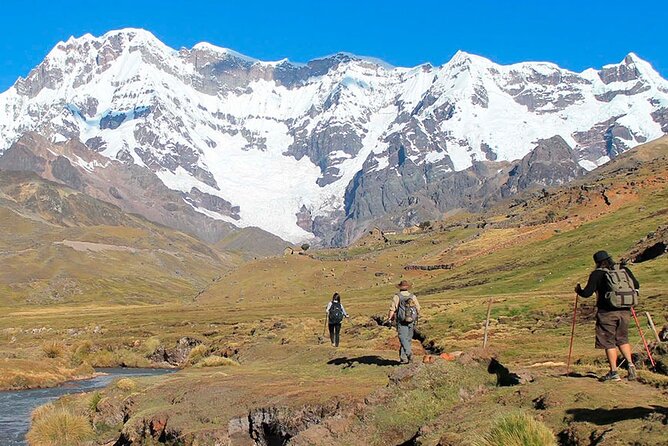
Day four is shorter than the previous high-pass days, with about six hours of walking and roughly 15 kilometers of distance. You cross one more pass and spend much of the day near deep blue lagoons and glacial lakes.
The scenery remains dominated by Ausangate, but the views shift again as you approach Pacchanta Valley. The route descends toward the hot springs, with the camp elevation listed at about 4,300 meters.
The description allows for swimming in some of the lakes if you are brave enough. I would read that as an optional extra, not a central part of the day. At these elevations, water and weather can make a quick dip uncomfortable, while Pacchanta’s hot springs offer the more reliable soak.
Pacchanta is an excellent finish to the hard walking. You can relax in warm water with Ausangate above you, which gives the final evening a clear sense of reward. It also helps explain why the trek includes several demanding days at altitude: the route ends with comfort, not another punishing climb.
Day 5: Local food, weaving, and the return to Cusco
After breakfast, the trek turns from mountains to culture. A local family demonstrates traditional customs, prepares local food, and shows you weaving techniques.
This final visit gives the route a human center. You have spent four days moving through high country, and now you get time to see how local knowledge is expressed through meals, textiles, and family traditions.
Afterward, you take a bus back to Cusco. The final day lasts about three hours, so it is far easier than the earlier hiking stages. It also means you should not expect a full fifth day on the trail. The walking circuit is completed before the cultural visit and road journey.
What the small team and camp support really add
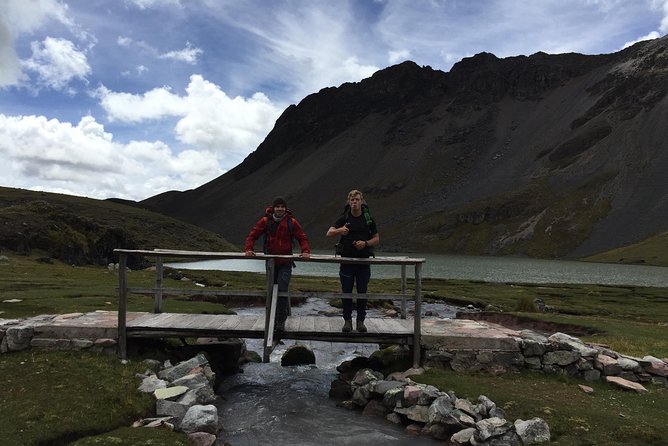
The maximum group size is 10 people, though some departures may be much smaller. One couple completed the trek with a private-feeling team, and the small setup allowed the staff to give close attention throughout the route.
That matters at altitude. A guide can monitor the group’s pace, answer questions, and explain the mountain rather than simply point out the next turn. Guides on this trek have also been praised for sharing stories about local customs, wildlife, and how Andean communities live.
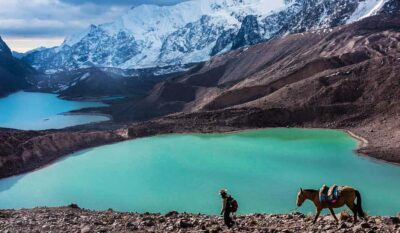
Horses carry the equipment. That makes a major difference because you do not need to haul the full camping load over four high passes. You still carry your daypack, clothing, water, and personal items, but the heaviest gear travels with the horse driver.
The cooking is another strong point. Breakfast, lunch, and dinner are included for the appropriate days, with five lunches, four dinners, and four breakfasts listed in the package. Previous departures have included cooks such as Benigno, plus assistants who prepare hot meals in camp.
Do not expect restaurant service in the mountains, but the food can be much more varied than basic trail rations. The cooking team has been praised for serving generous, fresh meals after long walking days. That is not a minor comfort when you are cold, tired, and still sleeping above 4,000 meters.
Camping equipment is included, but the sleeping bag is not. The trek also charges a 20-sol entrance fee separately. Ask for the exact camping equipment details before departure if you need to know what tent or sleeping mat is supplied.
How much value do you get for $660?
At $660 per person, the price is strong if you want a supported five-day trek rather than an independent hike. The package includes transportation at the beginning, the return bus to Cusco, camping equipment, horses for equipment, a cook and horse driver, and most meals.
You are also paying for route support in a very high and remote setting. A private vehicle gets you to Tinke and Rondoca, while the mule or horse support keeps the walking load manageable. The small-group limit adds value for people who want a more personal trip.
The cost is less attractive if you already own all your camping equipment, prefer to carry your own gear, and want to travel without a support team. In that case, you may see the organized service as more than you need. For most people attempting a five-day circuit at this altitude, though, the transport, staff, food, and equipment support justify the price.
Budget separately for the 20-sol entrance fee and a sleeping bag. The information provided does not state whether drinks beyond the listed coca tea, personal snacks, or other extras are included, so ask before you pay.
The trip is commonly booked about 17 days ahead. That gives you a useful planning target, especially if you need time to arrange Cusco accommodation and prepare cold-weather gear.
Who should book this Ausangate circuit?
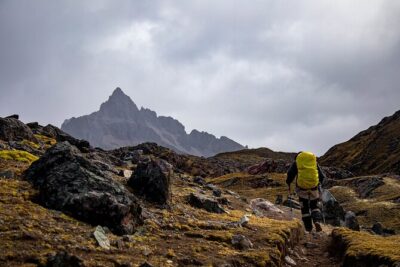
I would choose this trek if you want big mountain scenery, quiet trails, and direct contact with Andean culture. It suits people who are comfortable with six to eight hours of walking and who understand that altitude, not just distance, makes the route hard.
You do not need to be an elite mountaineer, but the tour requires a moderate fitness level. The route reaches 5,200 meters and camps above 4,200 meters, so you should take the physical demands seriously.
This is a good match for you if you value:
- High passes and remote scenery over archaeological sites
- A small group rather than a large departure
- Hot springs at the start and finish
- Local food and weaving demonstrations
- A guide who can explain culture and mountain traditions
- Support from horses, cooks, and a dedicated trek team
It is a poor match if you dislike cold camping, struggle with long uphill walks, or want a low-altitude holiday. The route is not a casual add-on from Cusco.
Practical booking and cancellation notes
The tour starts early, at 5 a.m., so plan for a very early pickup. Confirmation is provided when you book, and the group can include no more than 10 people.
You can cancel at least 24 hours before the start for a full refund. Cancellations or changes made inside 24 hours are not refunded or accepted. Bad weather or failure to reach the minimum group size can lead to a new date, an alternative experience, or a full refund.
Should you book the Ausangate Trek?
Book it if your priority is Peru’s high mountain scenery, quiet trails, and a well-supported route with real cultural contact. The mix of turquoise lakes, sacred peaks, hot springs, local food, and small-group guiding gives the five days a strong sense of place.
Before committing, be honest about the altitude. Bring the warmest mountain clothing you have, arrange a suitable sleeping bag, and expect cold camps as well as long walking days. If you can handle that, $660 is a fair price for a remote circuit with transport, horses, meals, camping support, and an experienced local team.
FAQ
How long is the Ausangate Trek?
The experience lasts approximately five days, including the return to Cusco on the final day.
Where does the trek begin?
Your guide meets you in Cusco at about 5 a.m. You travel by private transportation through Tinke to Rondoca, where the hike begins.
What is the highest point on the trek?
The highest point is Palomani Pass at 5,200 meters, or about 17,060 feet.
How many people can join the tour?
The tour has a maximum of 10 travelers.
Are meals included?
Yes. The package includes five lunches, four dinners, and four breakfasts.
Is camping equipment included?
Camping equipment and horses for carrying equipment are included. A sleeping bag is not included.
Are entrance fees included?
No. The entrance fee is listed separately at 20 soles.
Is the trek suitable for beginners?
The tour requires a moderate physical fitness level. Because the route includes several high passes and camps above 4,200 meters, you should be comfortable with long mountain walks.
Can I cancel the tour for a full refund?
Yes, if you cancel at least 24 hours before the experience start time. Poor weather or failure to meet the minimum group size may also result in a new date or a full refund.
More Hiking & Trekking in Cusco
- Cusco: Rainbow Mountain Tour and Red Valley Hike (Optional)
★ 4.7 · 149 reviews - Cusco: Full-Day Rainbow Mountain & Red Valley Trekking Tour
★ 4.5 · 121 reviews - Salkantay Trek Challenge – 3 Days / 2 Nights
★ 5.0 · 101 reviews - From Cusco: Rainbow Mountain Trek
★ 4.5 · 98 reviews
Just added around Cusco
- Zipline over the Sacred Valley Trip★ 5.0 · 11 reviews
- Valle Sur Cusco | half day★ 4.3 · 3 reviews
- Visit Pisac from Cusco: Private Transport★ 4.6 · 9 reviews
- Transfer from Cusco to Ollantaytambo★ 5.0 · 30 reviews
- Exclusive Huayna Picchu Tour in 1 Day from Cusco★ 5.0 · 31 reviews
- Trek to Humantay Lake from Cusco★ 4.9 · 8 reviews
- Private Tour Sacred Valley, Chinchero, Maras Moray, Ollantaytambo★ 5.0 · 29 reviews
- 5 Day – Salkantay trek to Machu Picchu – Group Service★ 4.5 · 27 reviews
Ausangate 7 Lagoons Treks, compared.
Excursion to Ausangate & 7 lakes with Coca Ceremony |Private|
Read our review →
Ausangate and Rainbow Mountain Trek – 3 Days / 2 Nights
Read our review →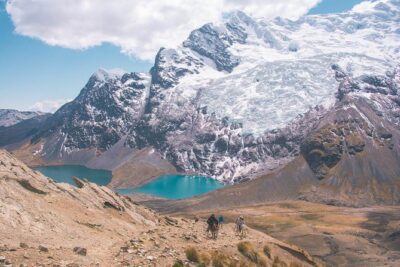
6 day Rainbow Mountain x Ausangate Trek – FlashpackerConnect
Read our review →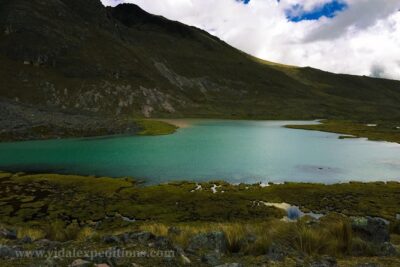
Browse the lists this tour appears in