
Reviewed · CUSCO CITY TOURS & INCA RUINS
Cusco 4-Hour Private Tour Including Sacsayhuaman and Qenqo
Cusco’s Inca sites make the most sense when you see them as parts of one larger story. On this private outing, you move from the huge fitted stones of Sacsayhuaman to the water channels of Tambomachay, then back into the city for the Plaza de Armas, Cusco Cathedral, and Qorikancha.
I like the private vehicle and flexible pace, especially if altitude is slowing you down. I also like the mix of major ruins, city sights, and local culture, plus the included snacks and hotel pickup. The catch is time: four hours covers a lot, but several stops are brief, and entrance fees add PEN 125 per person.
Key points to know before booking
- Six major sites in about four hours: The route covers Sacsayhuaman, the Plaza de Armas, Cusco Cathedral, Qorikancha, Puka Pukara, Q’enqo, and Tambomachay.
- Private means personal pacing: Only your group participates, so you can ask questions, take photos, or slow down if you are feeling the effects of altitude.
- The Inca story comes together: Fortifications, ritual spaces, sacred water, road checkpoints, and Spanish colonial buildings all appear in one compact tour.
- Entrance fees are extra: Budget PEN 70 for Sacsayhuaman, PEN 40 for Cusco Cathedral, and PEN 15 for Qorikancha.
- Guides are a major part of the experience: Alfredo, Patricia, Ruben, Soledad, Stephanie, and Victor are among the guides praised for clear explanations, friendly service, and strong local knowledge.
- An optional textile stop may be added: The visit costs nothing extra, but you should confirm how much time it will take from the archaeological sites.
Why this route works so well in Cusco
Cusco is not a place where the Inca past sits neatly apart from the Spanish city. In one block, you may see colonial arcades built over Inca foundations. A few minutes later, you are looking at stonework that still raises questions about how it was shaped and moved.
This tour gives you that contrast quickly. You begin among the great ruins above the city, then return to the central plaza and Qorikancha, the former Temple of the Sun. After that, the route heads back into the hills for four smaller Inca sites.
I would not choose this as your only archaeological outing in Peru. It is an introduction, not a full-day exploration. But it is a smart first look at Cusco, and several guides use the stops to explain ideas that will help you understand Machu Picchu, Ollantaytambo, Pisac, and other sites later in your trip.
The private format matters. You are not tied to the pace of a large group, and you can ask for a little more time at the sites that interest you most. That flexibility also helps if you are tired, adjusting to the altitude, or traveling with children.
More City and Ruins Half-Days in Cusco:
- Cusco: Half-Day City Tour with Sacsayhuaman and Q’enco
★ 4.6 · 1,129 reviews - City Tour Cusco Qoricancha Sacsayhuaman y Tambomachay
★ 4.7 · 617 reviews - Open Bus Cusco City Tour
★ 4.5 · 219 reviews
Sacsayhuaman and the stones above Cusco
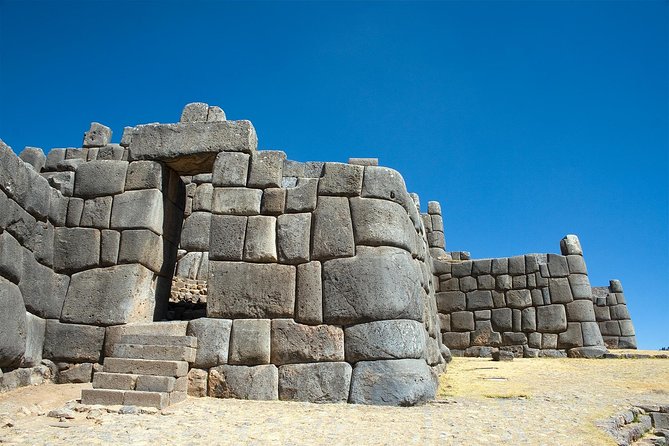
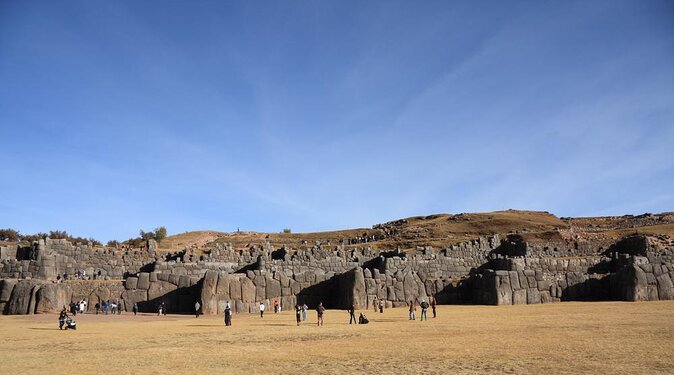
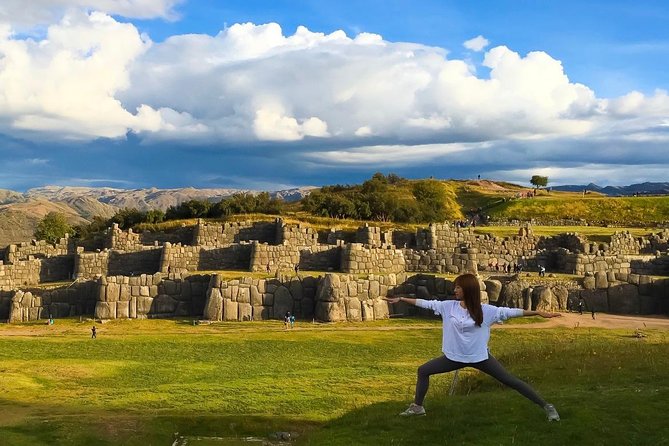
Sacsayhuaman is the dramatic opening act. The citadel sits on the northern edge of Cusco, above the city, with broad stone walls and views back toward the historic center.
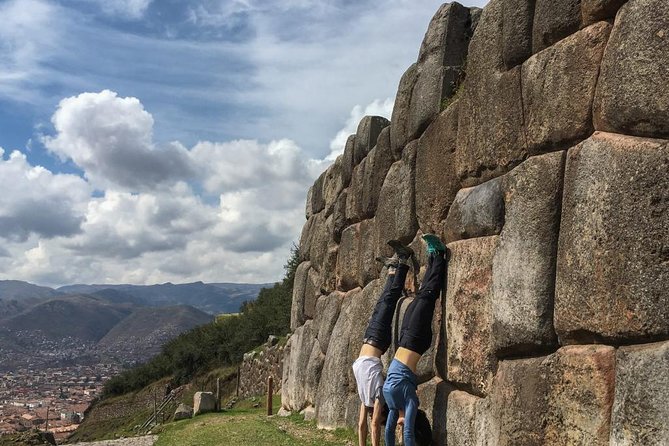
The most striking feature is the scale of the masonry. Enormous stones fit closely together without the use of mortar. The site was first developed by the Killke culture around 1100 CE, before the Inca period, and later became part of the Inca capital’s defensive and ceremonial complex.
You get about 30 minutes here, which is enough for an introduction and photos, but not enough for a slow exploration of every section. If Sacsayhuaman is your top priority, tell your guide early. A private tour gives you a better chance of using your time well, though the full route still needs to stay on schedule.
The entrance ticket is not included. It costs PEN 70 per person, so remember to carry that additional amount along with the Cathedral and Qorikancha fees.
The Plaza de Armas and Cusco Cathedral
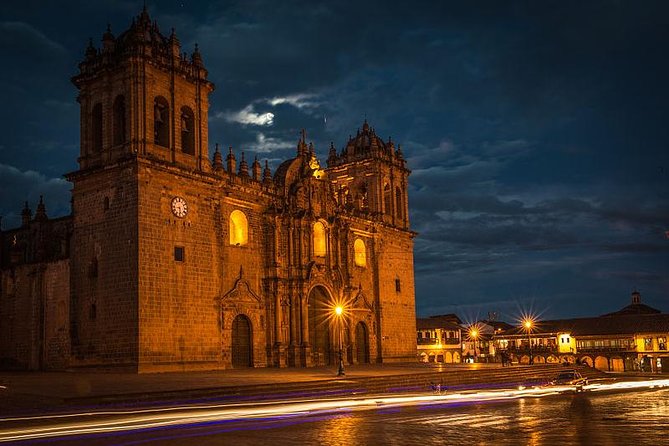
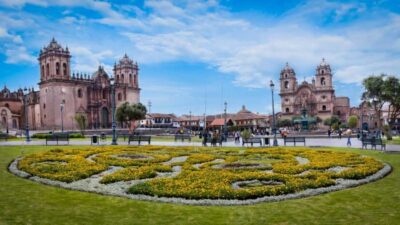
The Plaza de Armas takes only about 10 minutes on this route, but it is an important pause between the outer ruins and the city’s colonial center. The square was significant before the Spanish conquest, serving as a starting point for the development of the Inca imperial capital.
Today, the surrounding buildings show the force of Spanish rule. Arcades, churches, and colonial facades frame the plaza, while the older Inca city survives in foundations and stone walls beneath them.
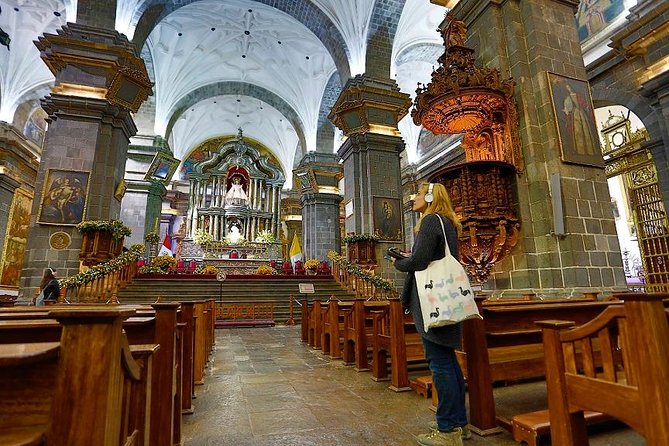
The tour includes the plaza itself, while Cusco Cathedral receives about 20 minutes. The Cathedral Basilica of the Assumption of the Virgin is the mother church of the Roman Catholic Archdiocese of Cusco, and its position directly on the square makes it easy to combine with the city stop.
The Cathedral admission fee is PEN 40 per person and is separate from the tour price. Twenty minutes is a short visit, so think of it as a focused look rather than a detailed art tour. If religious art, colonial architecture, or church interiors are high on your list, you may want to return independently.
Qorikancha, where Inca and Spanish Cusco meet
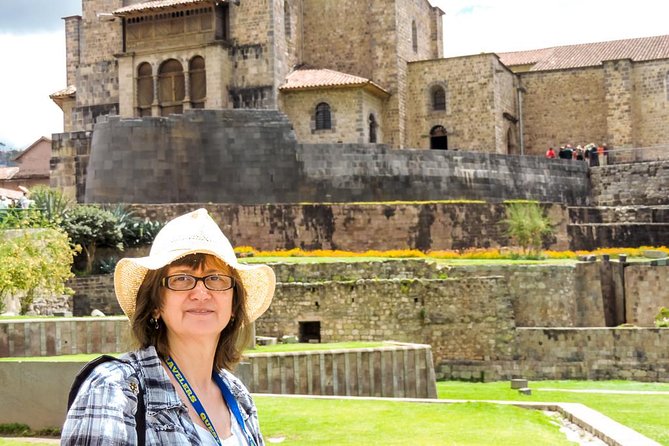
Qorikancha is one of the most useful stops for understanding Cusco’s layered past. Its original names, Intikancha and Intiwasi, refer to its role as a temple dedicated to Inti, the sun god.
Much of the original temple was dismantled after the Spanish conquest. Its stones were reused in churches and homes, and the Santo Domingo Convent was built on the site. The first Dominican convent was destroyed by the earthquake of 1650, after which the present structure was built.
That combination is what makes Qorikancha so valuable. You are not simply looking at an Inca ruin or a Spanish church. You are seeing both systems occupying the same sacred ground.
The visit is scheduled for about 20 minutes, with an entrance fee of PEN 15 per person. Your guide can help you focus on the surviving Inca stonework and explain how the Spanish structure was placed over it. Like the Cathedral, Qorikancha deserves a longer visit if you want to study every room, but it works well as part of this compact route.
A few more Cusco days worth weighing up
- City Tour in Cusco & visit Museum South American Camelid Private.
★ 5.0 · 147 reviews - Private Tour to Sacred Valley and Machu Picchu from Cusco
★ 5.0 · 133 reviews - Private Rainbow Mountain Full Day Tour from Cusco
★ 5.0 · 129 reviews - Full Day Private Guided Tour in Machu Picchu
★ 5.0 · 115 reviews
Puka Pukara and the Inca road system
Puka Pukara lies about six kilometers from Cusco. Its Quechua name means Red Fortress or Red Watchtower, and its position gives a clue to its role.
The site sat along the road toward Antisuyo, the jungle region of the Inca Empire. It functioned as a checkpoint and may also have served as a military and administrative center. You get roughly 15 minutes here, enough to see the remains and understand its place in the wider road network.
Puka Pukara is less monumental than Sacsayhuaman, but that is part of its value. It shows the practical side of Inca rule: movement, supplies, travelers, communication, and control. I appreciate that the tour includes this kind of site instead of offering only the most famous ruins.
The admission fee is not included. The schedule is tight, so listen closely to the guide’s explanation before moving on.
Q’enqo and the mystery of the carved rock
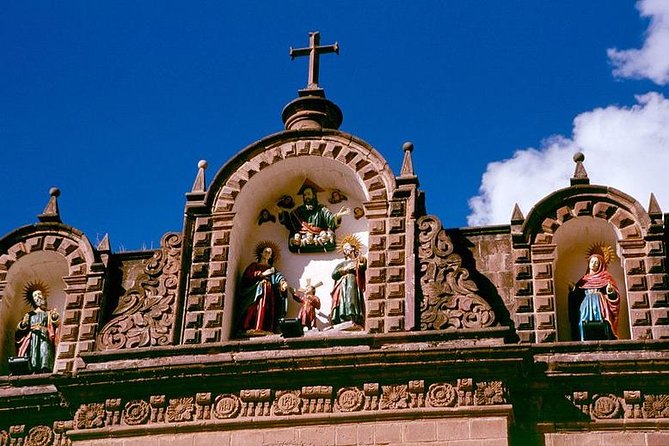
Q’enqo is a shorter, more puzzling stop. In Quechua, the name refers to a labyrinth or zigzag, describing the crooked channel cut into the rock.
The channel clearly carried some kind of liquid, but its purpose remains uncertain. Possibilities include holy water, chicha made from corn, or blood. Each idea points toward rituals connected with death, burial, or judgments about a person’s life.
You spend about 15 minutes here. That may sound brief, but Q’enqo works best as a place for questions and interpretation rather than a long walk. Ask your guide how the site fits with Inca beliefs about ritual and the afterlife.
The ground and carved rock can make this stop feel more physical than the city visits. Wear shoes that are comfortable for short walks over uneven archaeological surfaces, and do not rush if you need a moment to steady yourself.
Tambomachay and the Inca use of water
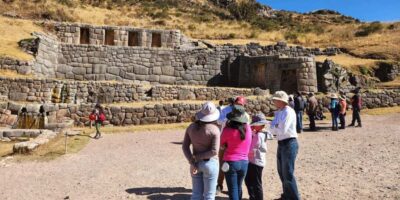
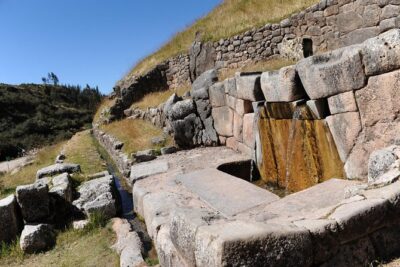
Tambomachay is known as El Baño del Inca, or the Inca’s Bath. It consists of aqueducts, canals, and waterfalls running through terraced stone.
After the massive walls of Sacsayhuaman and the ritual questions at Q’enqo, the sound and movement of water give the route a different mood. The site helps show how carefully the Inca worked with water, stone, and slope.
The scheduled visit lasts about 25 minutes. That gives you time to look at the channels, listen to the guide, and take photographs. It also makes a pleasant final archaeological stop before returning to Cusco.
Tambomachay is not a grand ruin in the same way as Sacsayhuaman. Its interest is in the engineering and the setting. If you prefer sites with clear walls and large structures, it may seem modest. If you enjoy practical details, it can be one of the most rewarding stops.
What the private vehicle adds
Transport by private vehicle is included, along with hotel pickup and drop-off. That makes a real difference because the route moves between the center of Cusco and sites outside the city.
You are not spending the four hours arranging taxis or figuring out how to connect the ruins. The driver handles the transfers while the guide provides the context. Several guides have been praised for careful driving, well-timed pickups, and a calm approach.
The tour is listed as lasting about four hours, but the stop times add up to a little over two hours. The rest goes toward driving, hotel pickup, and moving between sites. That is normal for a route that covers both city and hilltop locations, but it explains why the day feels full.
You also receive snacks. This is a small touch, yet it helps when the schedule leaves little time for a proper meal. One guide has even brought a Peruvian snack for the walk, though you should not assume every departure includes the same item.
Guides, language, and the value of personal attention
The tour is offered in English or Spanish. Guides named Alfredo, Patricia, Ruben, Soledad, Stephanie, and Victor have led departures, and the strongest experiences depend heavily on the individual guide.
Alfredo has been praised for clear English, humor, patience, and detailed explanations. Patricia has connected Inca history with present-day Cusqueña culture, while Ruben has helped explain the ingenuity of the Incas and Peru’s colonial past. Soledad has been noted for a patient style, and Victor for making the day feel personal and welcoming.
That said, one person had trouble with a guide’s English fluency. If precise English explanations are important to you, state your preference clearly when booking and confirm the language. The agency provides an English- or Spanish-speaking guide, but the exact guide is not guaranteed.
The private format lets the guide adapt the discussion. You can ask about religion, architecture, farming, road building, Spanish conquest, or modern Cusco. That personal exchange is where this tour offers more than a simple ride between ruins.
Price, extra fees, and overall value
The tour costs $87 per person. That price includes a private guide, private vehicle, hotel pickup and drop-off, and snacks, but not the three main entrance tickets.
The additional admissions total PEN 125 per person:
- Sacsayhuaman: PEN 70
- Cusco Cathedral: PEN 40
- Qorikancha: PEN 15
You should treat the full cost as the tour price plus these fees. At $87, it is not the cheapest way to see Cusco, especially for a solo traveler. For two or more people, though, private transport and a dedicated guide can make the price easier to justify.
I see the strongest value in the time saved and the personal pace. You get a lot of ground covered without arranging several separate rides. You also avoid being locked into a large group’s schedule.
The value is weaker if you want long visits at every site. In that case, book separate visits or a longer private tour. This four-hour option is best for orientation, not exhaustive study.
Who should book this Cusco tour?
I would recommend it to first-time visitors who want a clear introduction to Inca and colonial Cusco. It also suits families, couples, and solo visitors who prefer private transport and the ability to ask questions freely.
It can work well during your first days in Cusco, especially if you are still dealing with altitude. The route mixes driving and walking, and the private guide can adjust the pace more easily than a large group can.
Bring a camera, dress for the season, and wear comfortable shoes. Service animals are allowed, and the tour is described as suitable for most participants, but you should still tell the operator about any mobility or health concerns before setting out.
An optional textile-factory visit is available at no extra charge. It may appeal to you if you want to see traditional fiber work and local craft, but the tour already packs in many sites. Ask how the stop affects your time at the ruins.
Should you book it?
Book this tour if you want a strong first look at Cusco with private transport, a local guide, and a route that joins major ruins with the city’s Spanish and Inca centers.
Skip it if you want to spend an hour or more at each archaeological site, or if your main goal is a slow museum-style visit. For most people with only half a day, though, the combination of Sacsayhuaman, Q’enqo, Tambomachay, Qorikancha, the Plaza de Armas, and the Cathedral gives you a useful foundation for the rest of your Peru trip.
FAQ
How long does the private Cusco tour last?
The tour lasts approximately four hours.
Which places are included in the route?
The route visits Sacsayhuaman, the Plaza de Armas, Cusco Cathedral, Qorikancha, Puka Pukara, Q’enqo, and Tambomachay.
Are entrance tickets included?
The tour includes admission to the Plaza de Armas, but entrance fees for Sacsayhuaman, Cusco Cathedral, and Qorikancha are extra. The listed fees are PEN 70, PEN 40, and PEN 15 per person.
Is hotel transportation included?
Yes. Hotel pickup and drop-off are included, along with transport by private vehicle.
Is this a group tour?
No. This is a private activity, so only your group participates.
Can I cancel for a full refund?
Yes, if you cancel at least 24 hours before the experience starts. Cancellations made less than 24 hours in advance are not refunded. If poor weather causes the operator to cancel, you can choose another date or receive a full refund.
Just added around Cusco
- Zipline over the Sacred Valley Trip★ 5.0 · 11 reviews
- Valle Sur Cusco | half day★ 4.3 · 3 reviews
- Visit Pisac from Cusco: Private Transport★ 4.6 · 9 reviews
- Exclusive Huayna Picchu Tour in 1 Day from Cusco★ 5.0 · 31 reviews
- Trek to Humantay Lake from Cusco★ 4.9 · 8 reviews
- Transfer from Cusco to Ollantaytambo★ 5.0 · 30 reviews
- Private Tour Sacred Valley, Chinchero, Maras Moray, Ollantaytambo★ 5.0 · 29 reviews
- 5 Day – Salkantay trek to Machu Picchu – Group Service★ 4.5 · 27 reviews
Cusco City Tours & Inca Ruins, compared.
Half-Day City Tour with Sacsayhuaman and Q’enco
Read our review →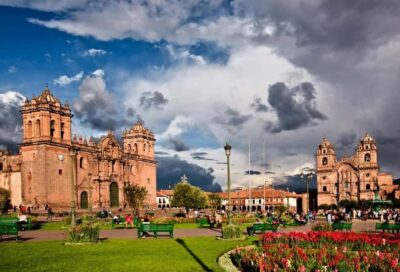
City Tour Cusco Qoricancha Sacsayhuaman y Tambomachay
Read our review →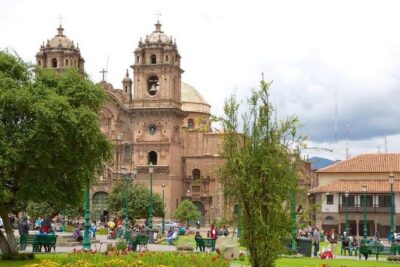
City Tour | Half-Day Tour to 4 Archaeological Sites
Read our review →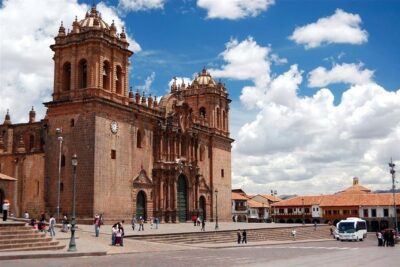
City Tour in Cusco & visit Museum South American Camelid Private.
Read our review →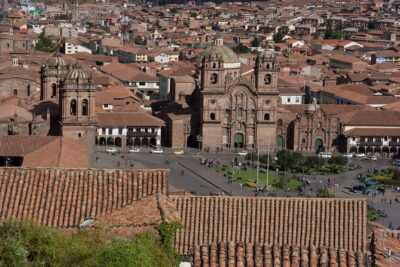
Cusco City Sightseeing, San Pedro Market, Cathedral and Qorikancha Temple
Read our review →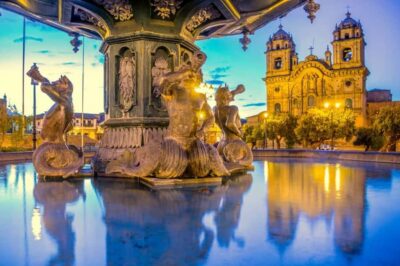
Cusco City Sightseeing and Sacsayhuaman Archeological Park Tour
Read our review →Browse the lists this tour appears in