
Reviewed · CUSCO CITY TOURS & INCA RUINS
Cusco City Sightseeing and Sacsayhuaman Archeological Park Tour
Sacsayhuaman is the star here: huge Inca stones fit so tightly that a sheet of paper can barely slip between them. From the hilltop, you also get a fine view across Cusco before moving on to Qenqo, Puca Pucara, Tambomachay, and the city center. I like the mix of ruins and colonial sights, and I like having transport for the outlying sites.
The main caution is ticketing. Some prices include admission and some do not, so read the selection closely before paying. Also allow extra time: several departures have run four to five hours, and a bilingual group may mean less English explanation than you expect.
Key points to know before booking
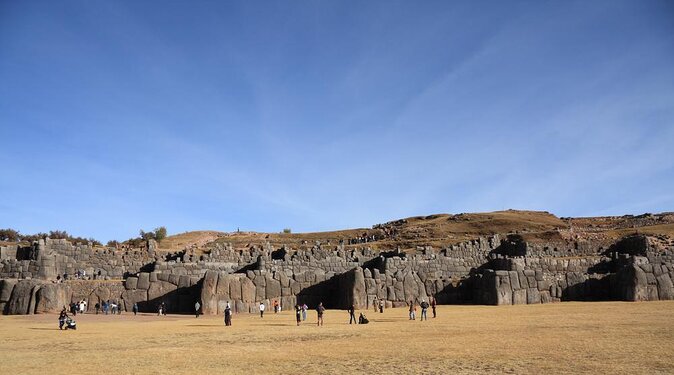
- Sacsayhuaman gives you the tour’s strongest first impression: massive stones, sweeping city views, and Inca symbols linked to the condor, puma, and snake.
- Four nearby archaeological sites fit into one outing: Qenqo, Puca Pucara, and Tambomachay add useful context to Sacsayhuaman.
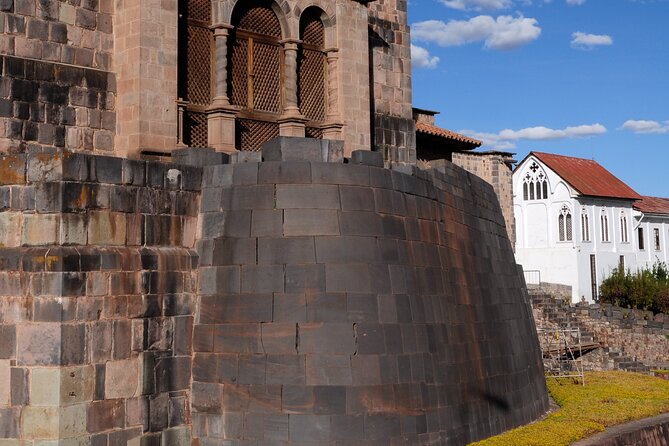
- Qorikancha connects Inca and Spanish Cusco: the Temple of the Sun now shares its site with the Santo Domingo Convent.
- The city portion is short but worthwhile: Plaza de Armas and Cusco Cathedral bring colonial art and religious history into the picture.
- The group is capped at 15 people: smaller than a big bus tour, though the bilingual format can affect pacing.
- Check the admission option twice: the lower advertised price may not include entrance fees.
Why this half-day tour works in Cusco
Cusco is easy to explore on foot in the center, but the major Inca sites above town are spread across the hills. Walking between them is not practical on a short schedule. This tour solves that problem with hotel pickup, an air-conditioned vehicle, and a guide who links the separate sites into one story.
The route also gives you a useful first look at two different Cuscos. At the ruins, you see Inca engineering, ritual spaces, defensive sites, and waterworks. In town, you see the Spanish colonial layer built over and around the Inca capital.
The tour is advertised at about three hours and 30 minutes. In practice, you should keep your afternoon flexible. Some outings have stretched to four or five hours because of pickups, ticket stops, extra sites, or a slower group. That is not necessarily bad, but it matters if you have a train, dinner booking, or another fixed appointment.
Guides make a large difference. Names praised in the supplied experiences include Alvaro Jimenez, Abraham, Adrial, Yuber, Aracely, Rommel, Clara, Julio, Niko, and Alain. The strongest guides explain the engineering and politics rather than simply naming buildings. One guide, Niko, was formerly a history professor, while another guide adjusted the discussion to a visitor’s special research interest.
More City and Ruins Half-Days in Cusco:
- Cusco: Half-Day City Tour with Sacsayhuaman and Q’enco
★ 4.6 · 1,129 reviews - City Tour Cusco Qoricancha Sacsayhuaman y Tambomachay
★ 4.7 · 617 reviews - Open Bus Cusco City Tour
★ 4.5 · 219 reviews
Sacsayhuaman and the four sites above Cusco
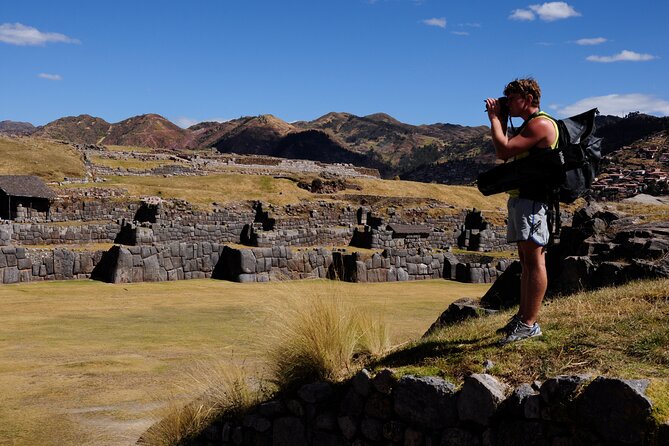
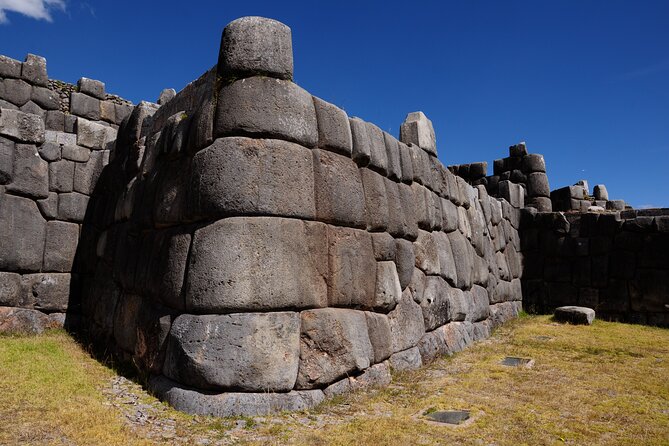
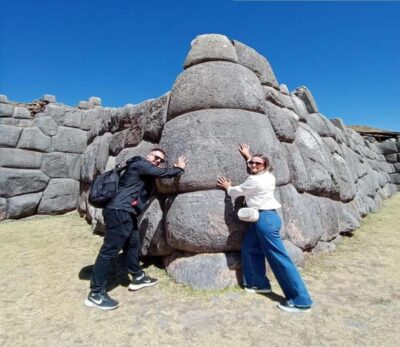
Sacsayhuaman sits on a hill north of the city. It is often called a fortress, but the site has ceremonial and political importance as well. The first thing you notice is the scale of the stonework. Some blocks reach about 13 feet, or 4 meters, in height, and their irregular edges fit together with startling precision.
This is the place to pay close attention to your guide. The stones are not just large; they are shaped, cut, and set in a way that helped the walls resist earthquakes. The supplied tour information also connects carvings and symbols to the three Inca worlds: the condor, puma, and snake. You will get more from the stop if you ask how much is established archaeology and how much is later interpretation.
The hilltop setting is one of the tour’s practical pleasures. You can look down over Cusco and understand the city’s bowl-like setting far better than you can from street level. Bring a layer, rain protection, and water. Cusco weather can change quickly, and one departure continued through heavy rain.
From Sacsayhuaman, the vehicle continues to Qenko. This is a ceremonial site associated with a carved rock, a sacred temple, and an altar. It is less monumental than Sacsayhuaman, but its enclosed spaces and carved surfaces make it useful for understanding Inca ritual.
The next stop is Puca Pucara, a smaller military and watch post. Its remains are atmospheric rather than grand. You will see why its position mattered, since it helped monitor movement through the approaches to Cusco. It is a short stop, but it adds a defensive angle to the route.
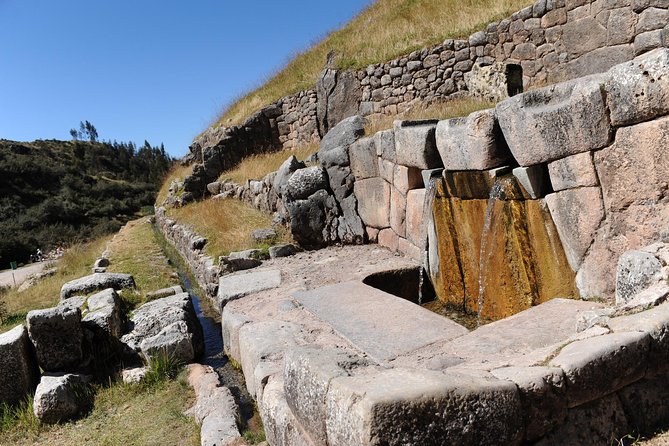
Tambomachay changes the mood again. Here, channels, aqueducts, waterfalls, and carefully placed stonework point to the Inca concern with water and ceremony. The site may also have served as a retreat or bathing place for elites, though your guide may present several possible uses. This is a good place to look at the practical details: how water is directed, how stone channels are aligned, and how the sound and movement of water shape the site.
The four stops work best together. Sacsayhuaman shows power and monumental construction. Qenko suggests ceremony. Puca Pucara adds military control. Tambomachay shows the importance of water. On your own, you could visit some of these sites, but the transport and sequence save time.
The tradeoff is that each stop receives only part of an afternoon. If you are fascinated by Inca construction and want long, quiet study time, a private guide or separate visits may suit you better. This route is designed for breadth.
Qorikancha, the Temple of the Sun
Back in the city, the tour visits Qorikancha, the Temple of the Sun. The Inca complex once held a central place in Cusco’s religious life. Spanish authorities later built the Santo Domingo Convent over the site, leaving a striking example of how colonial construction took over an important Inca foundation.
The famous story says that the temple was covered in gold, which astonished the Spanish conquerors. Treat that detail as part of the historical tradition rather than the main reason to visit. The real interest is in the surviving Inca stonework and the way the later convent occupies the same ground.
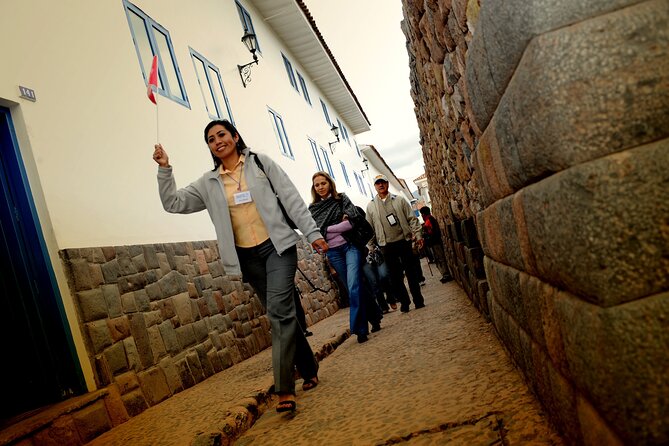
Qorikancha is especially useful after the hilltop ruins because it places Inca architecture inside the modern city. You see how the old capital was not erased completely. Instead, its foundations remain beneath later buildings and religious spaces.
The tour allows about an hour for this portion, including the broader city visit. That can be enough for a guided introduction, but not for an unhurried museum-style examination of every room. If Qorikancha is a top priority, ask your guide how much time will be spent inside compared with the surrounding streets.
Plaza de Armas and Cusco Cathedral
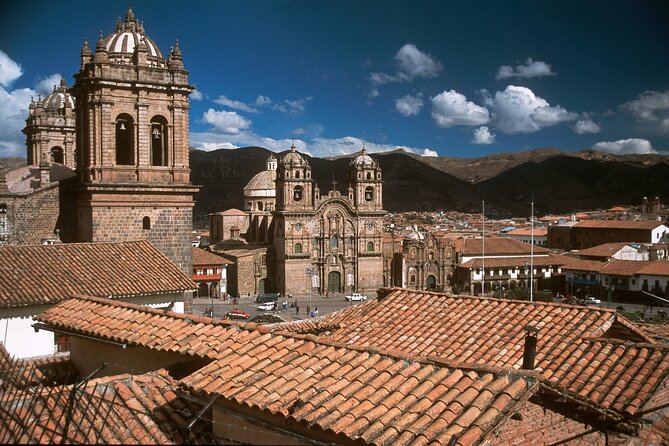
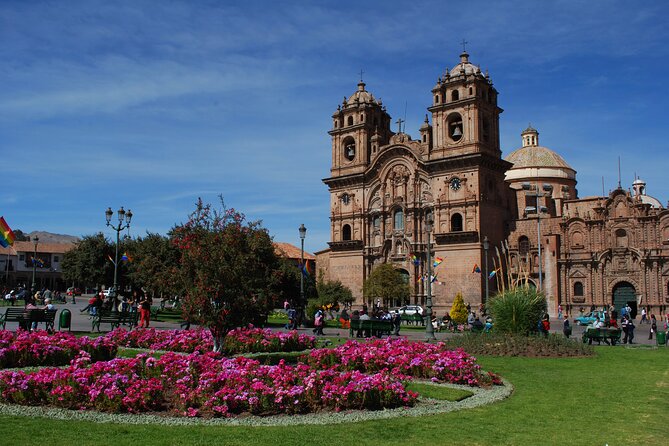
The city segment includes a walk through Plaza de Armas, Cusco’s main square. You will see Cusco Cathedral and the Church of the Society of Jesus facing the square, two reminders of the city’s Spanish colonial transformation.
Inside the cathedral, the focus is on architecture, paintings, stained glass, and religious objects. The building combines late Gothic and Baroque elements, and the scale is much grander than the short exterior visit might suggest. The artwork known as Señor de los Temblores is an important highlight. It is described as the oldest surviving painting in Cusco and has a major place in local religious life.
Photography is forbidden inside the cathedral, so do not plan on documenting the visit. Shorts are not allowed in religious sites, either. Wear trousers or another suitable covering if you want to avoid a problem at the entrance.
The cathedral stop adds real value if you want to understand the meeting of Inca and Spanish traditions. It may feel less satisfying if you booked the tour mainly for ruins. The city tour is not a long walking exploration of Cusco’s neighborhoods. It centers on the plaza and cathedral, with Qorikancha as the main Inca site in town.
A few more Cusco days worth weighing up
- Cusco: City Tour | Half-Day Tour to 4 Archaeological Sites
★ 4.6 · 206 reviews - City Tour in Cusco & visit Museum South American Camelid Private.
★ 5.0 · 147 reviews - Cusco City Sightseeing, San Pedro Market, Cathedral and Qorikancha Temple
★ 4.5 · 139 reviews - Cusco: Half-Day City Tour
★ 4.2 · 129 reviews
Guides, language, and group size
The tour uses a live bilingual guide in Spanish and English, with a maximum of 15 people. That is a reasonable group size for keeping the guide within earshot at outdoor sites. It is also small enough to feel more personal than a large coach outing.
The bilingual format deserves careful thought. English-speaking visitors have had excellent explanations from guides such as Yuber, Alvaro, Abraham, Adrial, and Niko. But one departure had a mostly Spanish-speaking group, leaving the English explanation noticeably brief. If you want a fully English tour, confirm the language arrangement before booking rather than assuming bilingual means equal time in both languages.
Guide quality can also shape the pace. The best guides bring humor, personal interest, and clear historical context. Some have handled families with young children well, while others have adapted the material to a visitor’s specific research needs. The experience is much more than a ride between ruins when your guide explains why a site was built and how it fit into the wider Inca state.
Transport and pickup details
Round-trip transport is one of the clearest reasons to choose this tour. Sacsayhuaman and the other sites sit outside the center, and a vehicle lets you cover them without arranging separate taxis or trying to build a route yourself. Air conditioning is useful when the sun is strong, though you still need protection from cold, rain, and high-altitude weather once you step outside.
Hotel pickup and drop-off are included, but vehicle access is not possible at every hotel. Some central streets restrict cars, so you may be asked to walk to a nearby meeting point. Confirm the pickup location and return plan before the day begins.
Pickup performance has not been perfectly consistent. There have been reports of missed pickups, poor communication, and return transport not being offered as expected. I would keep the operator’s contact details handy, ask your hotel desk to help if needed, and avoid scheduling an important appointment immediately after the stated end time.
A central meeting point could make the start simpler, especially in the busy streets around Plaza de Armas. Still, direct pickup is helpful when it works, particularly during your first days in Cusco.
The $79 price and admission choices
At $79 per person, this tour can be good value if your selected option includes the advertised entrances. You get transport, a guide, and several major sites in one half-day. The convenience is strongest for first-time visitors who want orientation before tackling longer trips into the Sacred Valley or toward Machu Picchu.
The price needs careful checking. There are options with tickets included and options without them. If you choose the non-ticket version, you may need to buy admission separately, including a broader Cusco tourist ticket or individual site entries. Additional costs reported for some departures range from about 140 soles to 290 soles, so do not assume the displayed base price is the final cost.
This is the single biggest booking issue. Select the ticket-included option if you want a simple day and do not already hold the necessary pass. If you already plan to buy a Cusco ticket covering several attractions, the lower-price option might make sense, but calculate the total first.
The tour also includes free cancellation up to 24 hours before the start time. Changes or cancellations inside that 24-hour window are not accepted for a refund.
Who should book this Cusco tour?
I would choose this experience if you have limited time, want a guided introduction to Inca sites, or prefer not to arrange transport above Cusco. It is also a good early-Cusco activity because it gives you names, symbols, and historical context that can make later visits to the Sacred Valley and Machu Picchu more meaningful.
Families can benefit from the variety. The vehicle breaks up the walking, the stops are fairly short, and guides have accommodated children and different interests. Solo visitors also gain from having transport and a guide without paying for a fully private outing.
I would hesitate if you want a slow archaeological study, a fully English-only tour, or a tightly timed three-and-a-half-hour experience. The route covers a lot, and the bilingual format, pickups, and ticket arrangements can stretch the schedule.
Final verdict: a useful first look at Cusco
Book this tour if you want to see Sacsayhuaman and three nearby sites, then connect them with Qorikancha and the cathedral in one organized outing. The best part is the range: monumental stonework, ritual spaces, water engineering, colonial art, and city views all appear in a single route.
Before paying, confirm three things: tickets included, English service, and your exact pickup and return point. If those details are clear and you keep your schedule flexible, the tour offers a practical introduction to Cusco at a fair price. If you want depth over coverage, spend more time at Sacsayhuaman and Qorikancha on separate visits instead.
FAQ
How long does the Cusco sightseeing and Sacsayhuaman tour last?
The stated duration is about 3 hours and 30 minutes. Some departures have lasted four to five hours, so keep extra time available after the scheduled finish.
What sites does the tour visit?
The route includes Sacsayhuaman, Qenko, Puca Pucara, Tambomachay, Qorikancha, Plaza de Armas, and Cusco Cathedral.
Are admission tickets included?
That depends on the option you select. One booking choice includes tickets, while another excludes them. Check the exact option before booking because separate admission can add a significant cost.
Is hotel pickup included?
Yes, hotel pickup and drop-off are included. Some hotels are on streets where vehicles cannot enter, so you may need to walk to a nearby pickup point.
Is the guide in English?
The guide service is bilingual in Spanish and English. The amount of English explanation may vary depending on the makeup of the group.
How many people can join the tour?
The maximum group size is 15 people.
Can I wear shorts at the religious sites?
No. Shorts are not permitted inside the religious sites included on the tour. Wear suitable clothing for Cusco Cathedral and Qorikancha.
Can I take photos inside Cusco Cathedral?
No. Photography is forbidden inside the cathedral.
Just added around Cusco
- Zipline over the Sacred Valley Trip★ 5.0 · 11 reviews
- Valle Sur Cusco | half day★ 4.3 · 3 reviews
- Visit Pisac from Cusco: Private Transport★ 4.6 · 9 reviews
- Transfer from Cusco to Ollantaytambo★ 5.0 · 30 reviews
- Exclusive Huayna Picchu Tour in 1 Day from Cusco★ 5.0 · 31 reviews
- Trek to Humantay Lake from Cusco★ 4.9 · 8 reviews
- 5 Day – Salkantay trek to Machu Picchu – Group Service★ 4.5 · 27 reviews
- 2 Day – Short Inca Trail to Machu Picchu – Group Service★ 5.0 · 30 reviews
Cusco City Tours & Inca Ruins, compared.
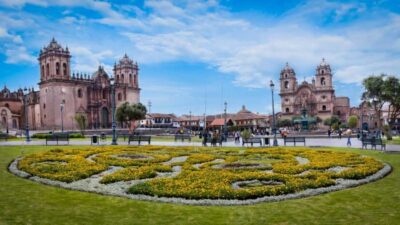
Half-Day City Tour with Sacsayhuaman and Q’enco
Read our review →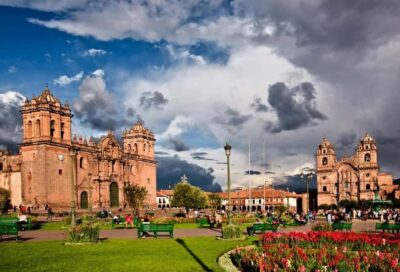
City Tour Cusco Qoricancha Sacsayhuaman y Tambomachay
Read our review →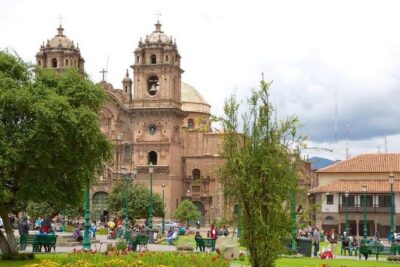
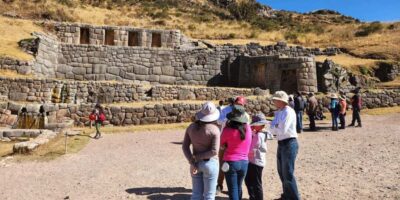
City Tour | Half-Day Tour to 4 Archaeological Sites
Read our review →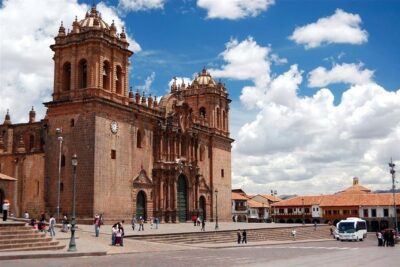
City Tour in Cusco & visit Museum South American Camelid Private.
Read our review →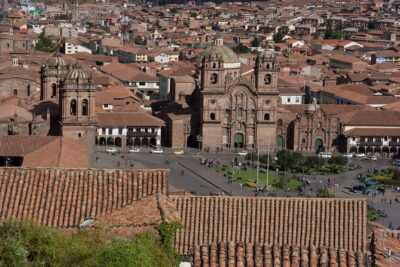
Cusco City Sightseeing, San Pedro Market, Cathedral and Qorikancha Temple
Read our review →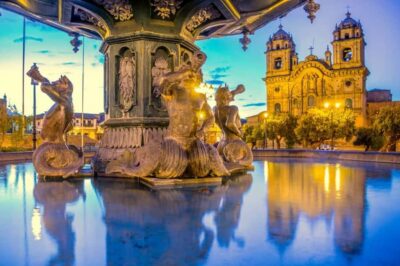
Browse the lists this tour appears in