
Reviewed · CUSCO CITY TOURS & INCA RUINS
Cusco City Sightseeing, San Pedro Market, Cathedral and Qorikancha Temple
Cusco’s best first look is not just a string of monuments. It is the contrast between a hilltop view, a working food market, Inca stonework, Spanish churches, and the city’s grand Plaza de Armas. This 3.5-hour small-group tour puts those pieces together without asking you to sort out taxis, tickets, or directions.
I like the easy mix of daily life and major sights, especially San Pedro Market and Qorikancha. I also like the human touch: guides such as Henry, José Marie, Gabriel, Marcelo, and Robin have been singled out for clear storytelling, helpful photos, and careful pacing.
The main caution is timing. Some departures have finished in about two and a half hours, while others have felt rushed by traffic or delayed pickups. The bilingual format can also mean that English explanations are shorter when most of the group speaks Spanish.
Key points at a glance
- San Pedro Market shows everyday Cusco: You see potatoes, corn, bread, cheese, groceries, handicrafts, and the city’s daily shopping routine.
- Qorikancha gives the strongest Inca context: The former Temple of the Sun is the tour’s most important archaeological stop.
- The route connects several central sights: San Cristóbal Plaza, San Blas, Hatun Rumiyoc Street, the Twelve-Angled Stone, Plaza de Armas, and the Cathedral.
- A small group keeps the outing manageable: The maximum is 15 people, though the actual group may be smaller.
- The price includes the major admissions: At $59 per person, you pay for a guide, Cathedral and Qorikancha tickets, and pickup and drop-off from select hotels.
- Plan around altitude and timing: Cusco sits high, so a leisurely pace helps, but this is still best taken after you have had time to adjust.
A useful first afternoon in Cusco
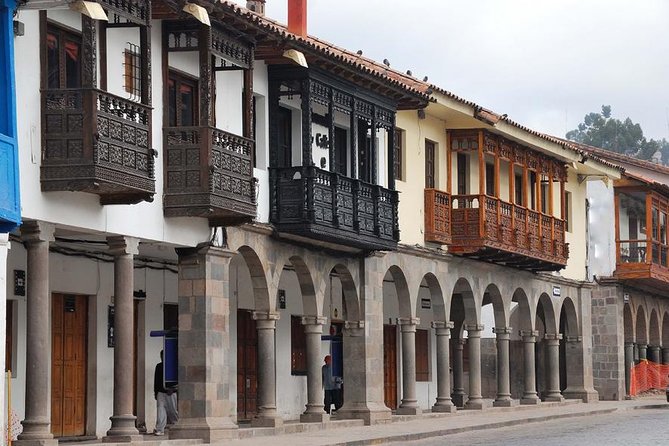
This tour works best as an introduction rather than a final, detailed study of every church and stone. In one afternoon, you get a broad sense of how Cusco works: Inca foundations beneath colonial buildings, Catholic art beside older Andean traditions, and a market where daily commerce carries on away from the postcard views.
The route begins around 2 p.m. and may include pickup at your hotel. Some old-center hotels sit on streets where vehicles cannot go, so you may need to walk a short distance to meet the driver. From there, the group moves by vehicle and on foot, depending on traffic and the stop.
That combination is useful. Cusco’s central sights are close together, but steep streets, crowds, traffic, and altitude can make a fully improvised walking tour tiring. A guide also gives you the background that a quick look at a wall or painting will not provide.
The group limit of 15 is a good middle ground. It is small enough for questions and a personal feel, but not private. On some departures, the English-speaking portion of the tour has been much smaller than the Spanish-speaking portion. If you book in English, confirm how the bilingual commentary will be handled at the beginning.
More City and Ruins Half-Days in Cusco:
- Cusco: Half-Day City Tour with Sacsayhuaman and Q’enco
★ 4.6 · 1,129 reviews - City Tour Cusco Qoricancha Sacsayhuaman y Tambomachay
★ 4.7 · 617 reviews - Open Bus Cusco City Tour
★ 4.5 · 219 reviews
San Cristóbal Plaza and the view over Cusco
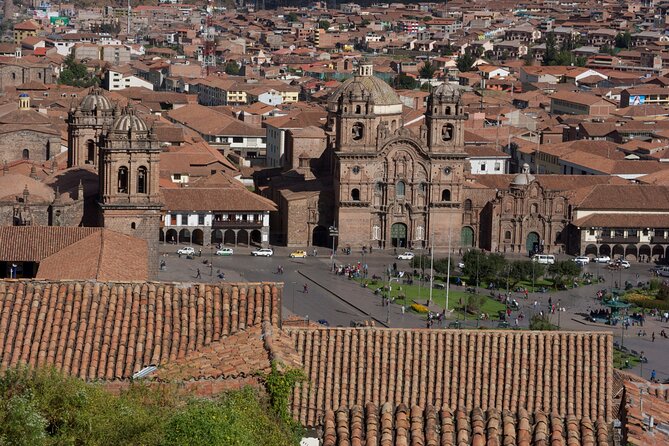
The opening view from San Cristóbal Plaza is a smart choice. From here, you can look across Cusco and understand the city’s bowl-like setting before walking into its streets. It is also a good place to get your bearings: the central square, red-tiled roofs, church towers, and surrounding hills begin to make sense from above.
Allow yourself a moment for photographs, but listen closely to the guide’s explanation. This is where the tour can establish the basic story of Cusco, from the former Inca capital to the Spanish colonial city built over much of what came before.
The plaza is also tied to the San Blas area, known for its artists and narrow streets. The church is noted for its carved woodwork, which gives you an early look at the workmanship found in Cusco’s religious buildings.
A practical point: the opening stop may be brief. This is a panoramic introduction, not a long church visit or a formal viewpoint session. If you want extensive time for photos, you may need to keep the group moving and take a few quick shots rather than settle in for half an hour.
San Pedro Market, where Cusco shops for food
San Pedro Market is the tour’s most direct connection with present-day Cusco. Instead of looking only at monuments, you see the supplies that feed the city: potatoes, corn, cheese, bread, groceries, and other regional products. Handicrafts appear here too, but the market’s value is its ordinary rhythm.
I like this stop because it puts food and culture together without requiring a special tasting program. Your guide can point out local produce, explain what you are seeing, and help you understand why the market matters. The smells and close-packed stalls make this a more immediate experience than a polished souvenir shop.
The scheduled visit is about 45 minutes. That is enough to walk through the main areas and pause at interesting stalls, but not enough for an unhurried shopping expedition. If you want to buy something, keep purchases simple and watch the time. The group will have other stops to reach.
You may also want small Peruvian coins, called soles, with you. Bathrooms in the area and elsewhere on the route may charge one or two soles, and free facilities are not always available. This is a minor detail, but it is exactly the sort of thing that makes a half-day outing easier.
The market is not a museum, and that is its strength. It can feel crowded and sensory, with little interpretation beyond what the guide provides. Go ready to look, listen, and move with the group. If you expect a formal food tour, this will feel too short. If you want a quick look at local shopping and ingredients, it earns its place.
Qorikancha, the former Temple of the Sun
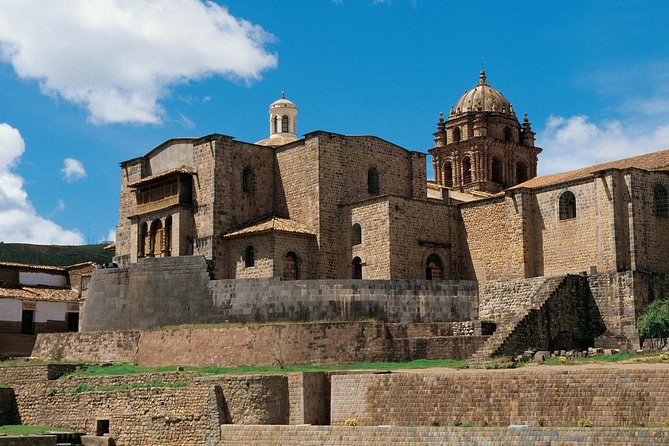
Qorikancha is the tour’s central historical stop. Before the Spanish conquest, it was known as Intikancha or Intiwasi and was dedicated to Inti, the sun. The temple was associated with the Inca capital’s religious and political power.
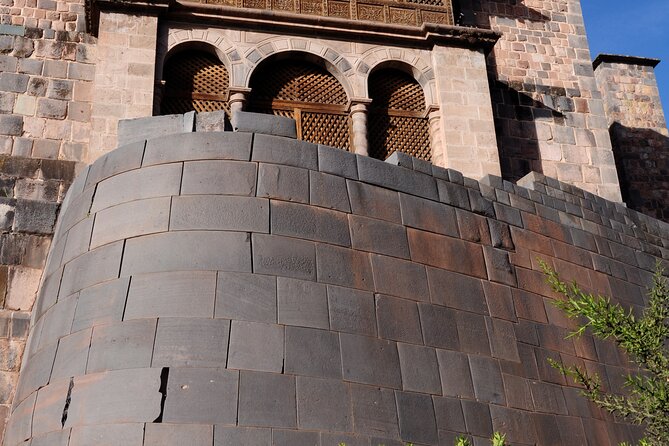
Much of the original complex was destroyed after the Spanish conquest, and its stonework became part of the foundation for the Santo Domingo church and convent. That layered construction is what makes the visit so important. You are not seeing an Inca site isolated from colonial history. You are seeing two periods physically joined together.
The surviving Inca masonry is the main attraction. Look for the careful fitting of the stones, the clean lines, and the way the older walls differ from the later construction above them. The former gold covering is gone, but the building’s importance is easier to understand when your guide explains what Qorikancha represented.
The visit is listed at about an hour, though actual time inside can vary. One review described roughly 30 minutes at the temple, which suggests that shared groups may move through this stop quickly. That may be enough for a strong overview, but not for a slow examination of every room.
For me, this is where the tour earns much of its cost. A guide can explain why the temple matters instead of leaving you to admire stones without context. If Qorikancha is your main reason for booking, ask at the start how much time the group expects to spend there.
A few more Cusco days worth weighing up
- Cusco: City Tour | Half-Day Tour to 4 Archaeological Sites
★ 4.6 · 206 reviews - City Tour in Cusco & visit Museum South American Camelid Private.
★ 5.0 · 147 reviews - Cusco: Half-Day City Tour
★ 4.2 · 129 reviews - Cusco City Sightseeing and Sacsayhuaman Archeological Park Tour
★ 4.5 · 101 reviews
San Blas, Hatun Rumiyoc, and the Twelve-Angled Stone
The route continues through San Blas, an artisans’ quarter with a church known for carved woodwork. This section is less about one grand monument and more about the character of Cusco’s central streets.
Hatun Rumiyoc Street provides one of the tour’s clearest examples of Inca stone construction. The famous Twelve-Angled Stone fits tightly into the surrounding wall, with each angle helping the stone lock into place. It is easy to walk past if you do not know where to look, which makes a guide useful here.
The nearby Inca Roca Palace now forms part of the Archbishop’s Palace. This is another example of Cusco’s layered past, where colonial buildings occupy or incorporate older Inca structures.
This walking section is short but meaningful. You get to see the stonework in the setting where it still functions as part of the city, not behind glass or separated from daily life. The drawback is that the street can be busy, and a group visit may not allow long pauses. Stay close to the guide and pay attention to where the group stops.
Cusco Cathedral and Plaza de Armas
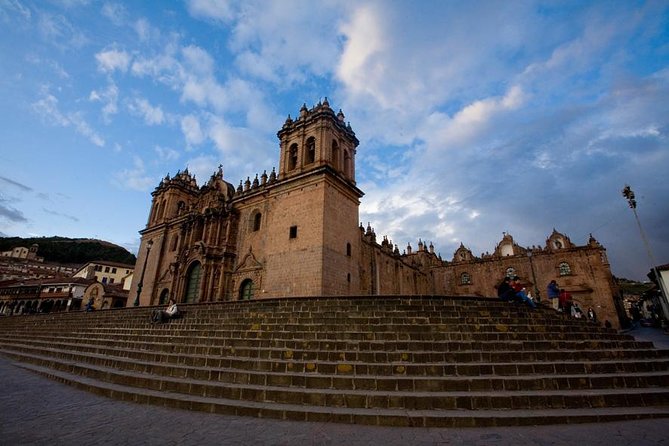
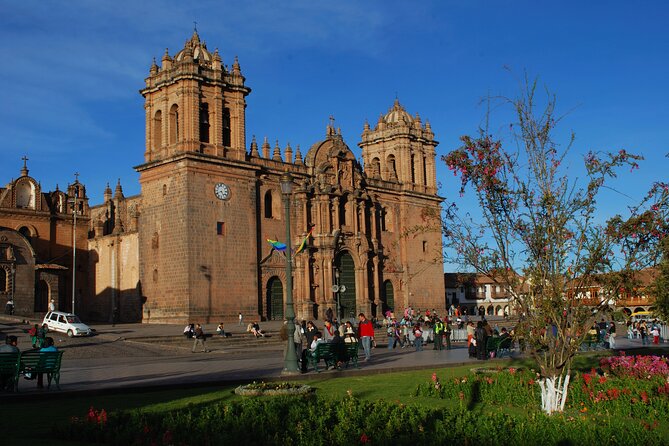
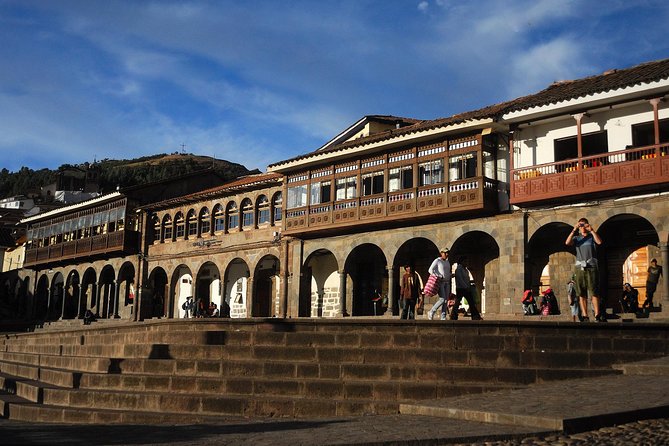
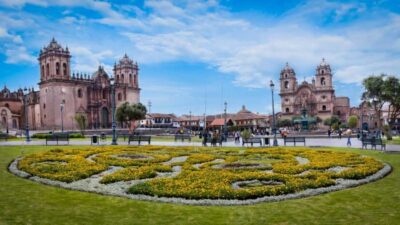
The tour finishes in Plaza de Armas, Cusco’s central square, with a visit to the Cathedral Basilica of the Assumption of the Virgin. The building was constructed between 1560 and 1654 and serves as the mother church of the Roman Catholic Archdiocese of Cusco.
Inside, the focus is on colonial paintings and carved woodwork. The Cathedral is not simply a grand church visit. It shows how Spanish Catholic art took root in the former Inca capital, and a guide can explain the local details that make the collection different from a European church.
Plan on about an hour for this part, though the pace can vary. Some visitors have felt the Cathedral portion was too quick or seemed optional, while others have considered it one of the best stops for understanding Cusco’s past. That difference may come down to the guide, the group’s timing, and how much detail you want.
The finish in Plaza de Armas is convenient. You are left in the heart of the city, close to restaurants, shops, and other central sights. You may also choose to remain in the square after the guided portion ends, rather than return immediately to your hotel.
How the timing and transport affect the experience
The stated duration is about three and a half hours, but the actual experience deserves a little flexibility. A route through Cusco depends on traffic, hotel pickups, group members, and the time spent inside each site.
Several people have praised the driver for safe, efficient movement, and one small group found that using a vehicle made the afternoon easier even though many stops are walkable. That convenience matters if you have just arrived, feel the altitude, or want to cover several sites without navigating alone.
At the same time, vehicle time can eat into the sightseeing. One poorly timed departure involved delayed pickup, a long wait, and a much shorter tour. Another outing spent too much of its three hours in traffic. These problems do not define every departure, but they are good reasons to avoid booking a tight dinner reservation immediately afterward.
The advertised start is 2 p.m. Hotel pickup is included from select hotels, but access by vehicle is not possible on every street. Confirm the exact meeting point and allow a few minutes to walk if your accommodation is in the old center.
Is $59 a fair price?
At $59 per person, this is not the cheapest way to see central Cusco. You can walk to the market, Plaza de Armas, Hatun Rumiyoc Street, and several viewpoints without paying for a guide. The value comes from having transport arranged, admissions to Qorikancha and the Cathedral included, and a single person connect the sites.
It is a fair price if you are arriving in Cusco and want the main orientation in one afternoon. It also suits solo visitors who would rather not work out the route alone. The guide’s explanations are the part you cannot duplicate simply by walking past the buildings.
The value drops if you already know Cusco, prefer slow museum visits, or dislike shared bilingual tours. A private tour would likely give you more control, but that is not what this service offers. Here, you trade some flexibility for an organized route and a moderate group size.
The strongest part of the package is the mix of admissions and local context. San Pedro Market is free to enter, and the streets cost nothing, but Qorikancha and the Cathedral tickets save you separate planning. If you visited only one or two of these places independently, the price would be harder to justify.
Who should book this Cusco city tour?
I would choose this tour for a first afternoon in Cusco, especially if you have just arrived and want a useful orientation before visiting Machu Picchu or other sites. Several people have found it a good way to get a sense of the city quickly, and the route gives you both major monuments and everyday local life.
It is also a good fit for solo visitors, couples, and anyone who wants a guide’s explanation rather than a self-guided walk. Guides named Gabriel, Marcelo, Robin, Henry, and José Marie have been praised for their history and cultural explanations, though guide quality and pacing can vary by departure.
Give yourself time to adjust to Cusco’s altitude if possible. One couple became sick during the tour and wished they had allowed a day to acclimatize first. The pace is often leisurely, but altitude can make even a gentle walk feel demanding.
This is less suitable if you want an intensive church tour, long market shopping time, or an entirely English-speaking experience guaranteed at every moment. Ask how the language split will work, and do not schedule a nonrefundable dinner immediately after the stated end time.
Should you book it?
Book it if you want a practical first look at Cusco with Qorikancha, San Pedro Market, the Cathedral, and the central streets handled in one organized afternoon. The strongest reasons are the route, the included admissions, and the chance to connect Inca and colonial history with present-day life.
Skip it if you already have a detailed plan, want to linger at each site, or cannot tolerate a bilingual group format. Before paying, confirm your hotel pickup point, the expected language balance, and the amount of time planned for Qorikancha. With those expectations set, this is a useful and reasonably priced introduction to Cusco.
FAQ
How long does the Cusco city tour last?
The tour is advertised at approximately 3 hours and 30 minutes. Actual timing can vary because of traffic, hotel pickups, and the amount of time spent at each stop.
What time does the tour start?
The stated start time is 2 p.m.
Is hotel pickup included?
Yes, pickup and drop-off are included from select hotels. Some hotels are on streets where vehicles are not permitted, so you may need to walk to a nearby meeting point.
Is the tour offered in English?
Yes. The service is bilingual in Spanish and English. The amount of English commentary can depend on the language mix within the group.
What is the maximum group size?
The tour accepts a maximum of 15 participants.
Are entrance tickets included?
Admission to Cusco Cathedral and Qorikancha Temple is included. San Pedro Market and the central streets do not require an admission ticket.
What places are visited?
The route includes San Cristóbal Plaza, San Pedro Market, Qorikancha, San Blas, Hatun Rumiyoc Street, the Twelve-Angled Stone, the former Inca Roca Palace area, Plaza de Armas, and Cusco Cathedral.
Is the tour suitable for most people?
The tour information states that most people can participate. Because Cusco is at high altitude, it is wise to allow time to adjust before taking the tour, especially if you are concerned about altitude sickness.
Can I cancel for a full refund?
Yes. You can cancel at least 24 hours before the local start time for a full refund. Cancellations and changes made less than 24 hours before the start are not accepted for a refund.
Just added around Cusco
- Zipline over the Sacred Valley Trip★ 5.0 · 11 reviews
- Valle Sur Cusco | half day★ 4.3 · 3 reviews
- Visit Pisac from Cusco: Private Transport★ 4.6 · 9 reviews
- Transfer from Cusco to Ollantaytambo★ 5.0 · 30 reviews
- Exclusive Huayna Picchu Tour in 1 Day from Cusco★ 5.0 · 31 reviews
- Trek to Humantay Lake from Cusco★ 4.9 · 8 reviews
- Private Tour Sacred Valley, Chinchero, Maras Moray, Ollantaytambo★ 5.0 · 29 reviews
- 5 Day – Salkantay trek to Machu Picchu – Group Service★ 4.5 · 27 reviews
Cusco City Tours & Inca Ruins, compared.
Half-Day City Tour with Sacsayhuaman and Q’enco
Read our review →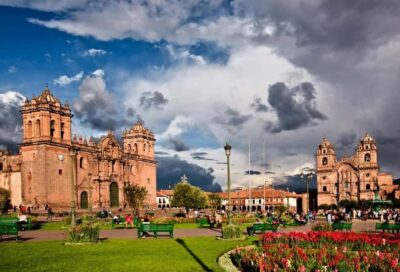
City Tour Cusco Qoricancha Sacsayhuaman y Tambomachay
Read our review →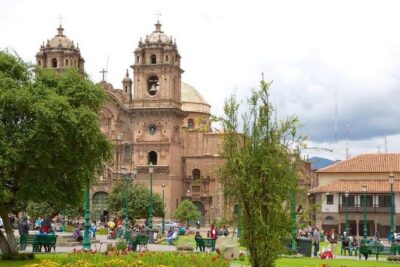
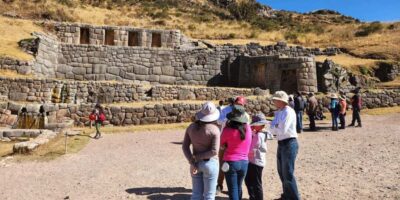
City Tour | Half-Day Tour to 4 Archaeological Sites
Read our review →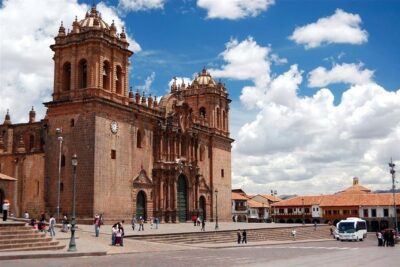
City Tour in Cusco & visit Museum South American Camelid Private.
Read our review →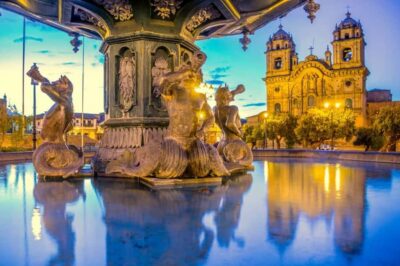
Cusco City Sightseeing and Sacsayhuaman Archeological Park Tour
Read our review →
Browse the lists this tour appears in