
Reviewed · MARAS SALT MINES & MORAY TOURS
From Cusco: Moray, Maras Salt Mines & Chinchero Weavers Half-Day
Moray’s great circular terraces and Maras’s white salt pools make this more than a quick sightseeing run from Cusco. You’ll also visit Chinchero, where Quechua weavers show how plants become vivid dyes and wool becomes cloth. The mix of archaeology, living tradition, and big mountain views gives the day real variety.
I like the strong guiding, especially from guides such as Felipe, Julio, Eddie, and Manuel, who explain both ancient farming and modern Andean life. I also like the price: at $15.20 before entrance fees, transportation and a bilingual guide make this a very useful introduction to the Sacred Valley.
The catch is the pace. The outing can last close to seven hours without a meal stop, and a full minibus may feel cramped. Chinchero also includes a sales presentation, so bring curiosity, but not the expectation of a quiet village visit.
Key points at a glance
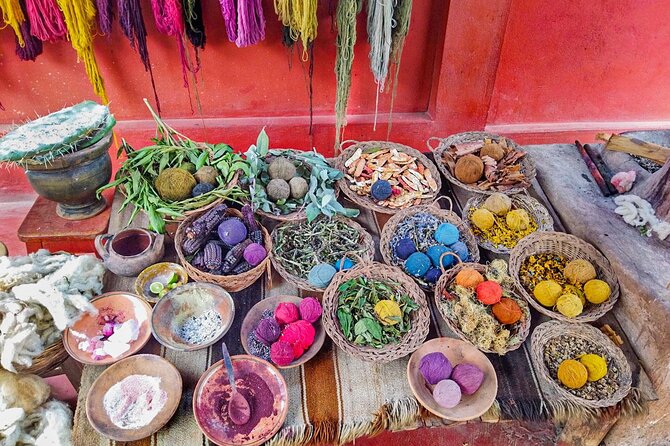
- Chinchero’s natural dyes: See how local plants produce colors for Andean textiles, with a chance to try on traditional clothing and feed llamas or alpacas when available.
- Moray’s giant farming terraces: Look into a bowl-shaped Inca site built with many levels, irrigation features, and changing growing conditions.
- Maras’s 3,000 salt pools: Watch how spring water is divided among small pools and turned into salt through evaporation.
- Strong bilingual guiding: Guides including Felipe, Julio, Eddie, and Manuel have explained the sites clearly in both English and Spanish.
- Useful half-day timing: Pickup is around 8:20 to 8:40 a.m., with a return near Cusco’s Plaza de Armas at about 3:15 p.m.
- Low base price, extra entry costs: The $15.20 fare does not include Moray at $19 or 70 soles and the salt mines at $6 or 20 soles.
Why this Cusco outing packs in so much
This is a good choice if you want to see several famous Sacred Valley sights without giving up a full evening in Cusco. The route covers Chinchero, Moray, and Maras in one outing, with road time linking the stops.
The order also helps the day feel varied. You begin with living Quechua textile work, move to an extraordinary example of Inca agriculture, and finish with the Maras salt pools. You are not looking at three similar ruins. Each stop asks you to notice a different part of Andean life.
The tour is sold as a half-day, but six to seven hours is a more honest expectation. Pickup begins between 8:20 and 8:40 a.m., and the return is around 3:15 p.m. near the Plaza de Armas. You should plan lunch for after the tour, or carry food if you do not want to wait.
The small-group limit is listed as 16 people, though one outing was described as closer to 20. That means the actual vehicle and group size may vary. A smaller group makes stops easier, but you should still expect shared-van timing and the usual need to return promptly after each visit.
More Chinchero and Weaving Visits from Cusco:
- From Cusco: Moray, Maras Salt Mines & Chinchero Weavers Tour
★ 4.8 · 1,925 reviews - Cusco:Chinchero,Moray & Salt Mines drop-off in Ollantaytambo
★ 4.8 · 793 reviews - Sacred Valley: Chinchero, Moray, Ollantaytambo & Pisac+Lunch
★ 4.8 · 501 reviews
Chinchero: Quechua weaving before the ruins
Chinchero sits at about 3,762 meters, higher than both Moray and the salt mines. The altitude matters. Even though you are not hiking for hours, you may feel the thin air, especially if you have only just arrived in Cusco.
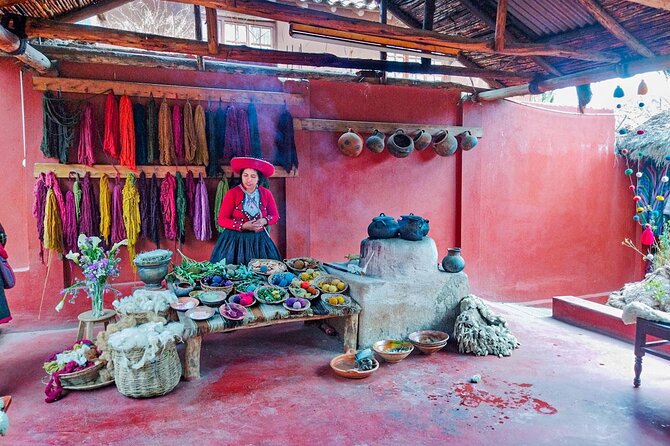
The visit focuses on part of the town and an Andean textile center rather than a full tour of Chinchero. At the center, local weavers demonstrate how wool is prepared and how natural colors come from plants. The best part is seeing the process rather than simply looking at finished scarves and blankets.
Guides explain the meaning of the work and the continued use of Quechua traditions. Some outings also include llamas and alpacas, traditional clothing for photographs, and a taste of a local drink or coca leaves. These details depend on the day, but they add a human side to the stop.
Allow your guide to explain the dyes before you decide how much time to spend browsing. The presentation can last about 15 minutes, followed by a sales opportunity. The goods may include handmade items with a mix of alpaca and acrylic, and the sellers have been described as clear about that distinction.
I see this stop as a useful introduction to Andean textile work, not as an independent market visit. If you want a long, unhurried look at Chinchero’s streets and market, this schedule will feel too narrow. If you want to understand how color and cloth are made, it earns its place.
Moray’s circular terraces and Inca farming experiment
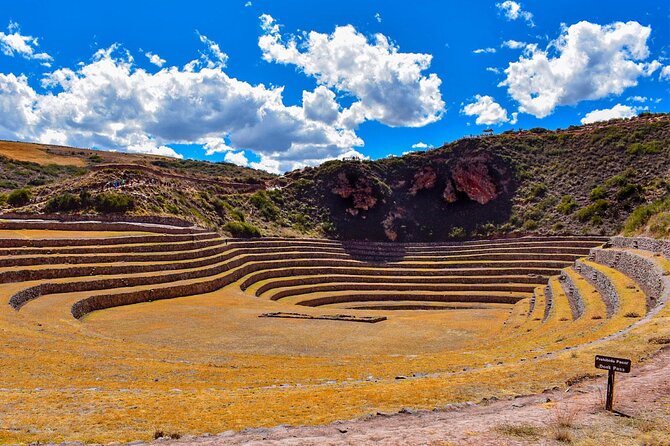
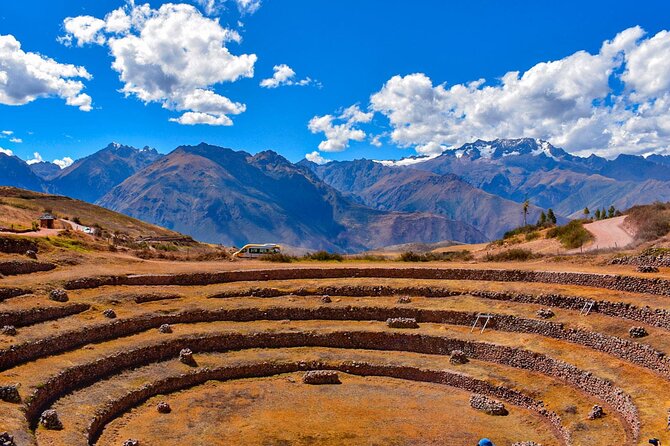
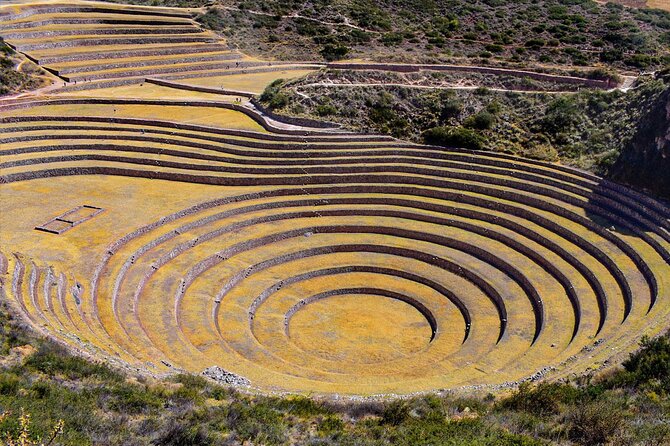
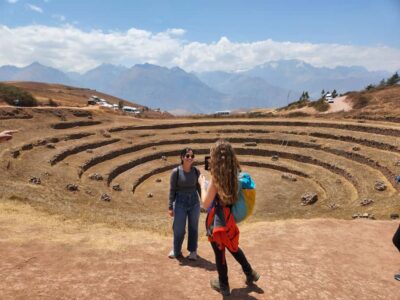
At roughly 3,450 meters, Moray sits lower than Chinchero but remains high by any ordinary standard. The site is made of large circular terraces cut into a natural bowl. Each level differs in height and exposure, creating a series of growing conditions.
The usual explanation is that the Incas used Moray to study which crops grew best in different conditions. Its terraces and irrigation system show careful planning. The site also suggests how Andean farmers worked with altitude instead of treating it only as a problem.
You will have about an hour here. That is enough to view the main terraces, hear the explanation, and take photographs, but not enough for a slow exploration of every angle. The setting includes broad mountain views, and the terraces look especially striking from above.
Moray is a site where a good guide makes a real difference. Without context, you see impressive rings in the ground. With a clear explanation, you begin to understand how the Incas managed food production across difficult elevations.
The entry fee is not part of the tour price. The stated cost is $19 or 70 soles. Carry the correct amount in either currency if possible, and remember that this is one of two extra admission charges during the day.
Maras salt pools: a working site, not just a photo stop
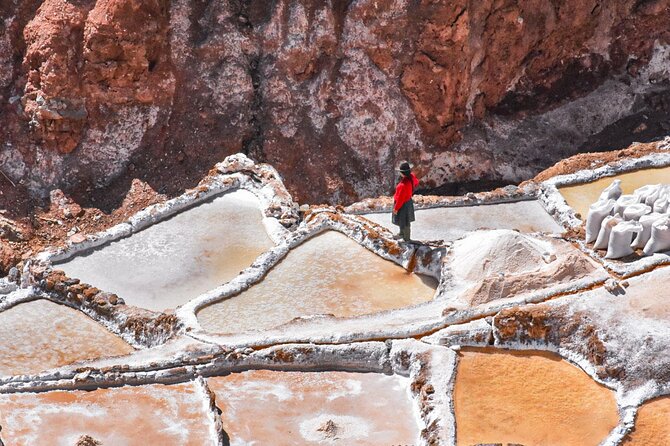
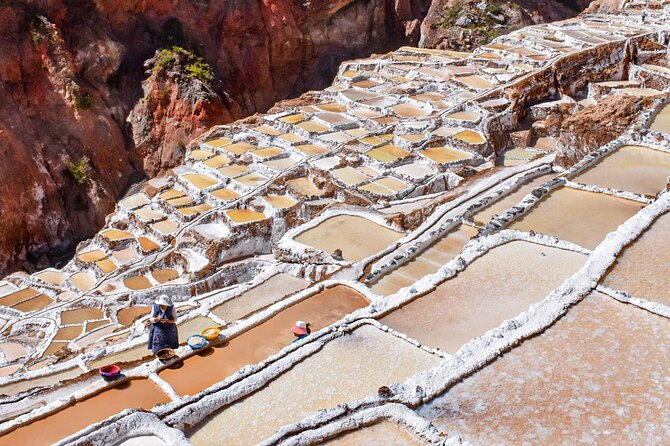
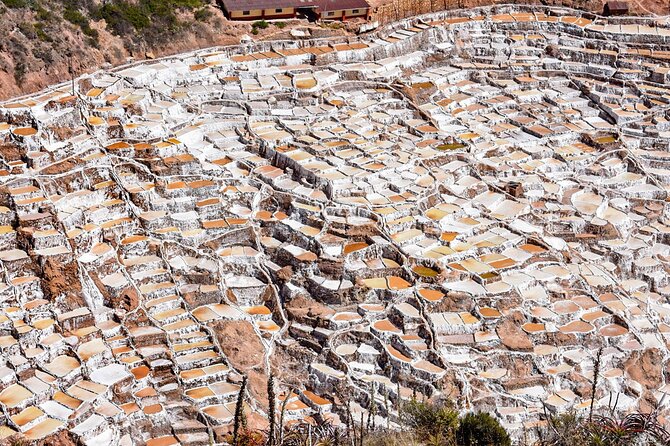
The Maras salt mines are the most visually unusual part of the outing. Thousands of small pools cover the slope, each one fed by salty spring water. During the dry season, workers fill the pools about every three days, allowing water to evaporate and leave salt behind.
The operation began before the Inca period and continues today. The salt is ground, treated with iodine, packaged, and sold in regional markets. That ongoing work gives the site more weight than a simple old ruin. You are seeing a local production system still tied to daily life.
The view changes as you approach the pools. From a distance, the terraces can look like a pale mosaic spread across the hillside. Up close, you can see the walls separating one pool from another and the channels carrying the mineral water.
You get about an hour at Maras. That is enough to take in the main viewpoint and listen to the explanation, but the visit is not a long walk through every pool. Conditions can vary, and the tour requires good weather. If rain cancels the outing, the operator offers another date or a full refund.
The entrance fee is listed separately at $6 or 20 soles. Add it to the Moray fee when judging the total cost. At the base price of $15.20, the tour is inexpensive, but your real day cost is higher once admissions and food are included.
More Maras and Moray Circuits from Cusco:
- From Cusco: Sacred Valley & Maras Salt Mines Tour with Lunch
★ 4.8 · 2,227 reviews - Cusco: Sacred Valley, Pisac, Ollantaytambo, Salt Mines Moray
★ 4.6 · 1,058 reviews - Sacred Valley: Maras & Moray by Quad Bike from Cusco
★ 4.6 · 418 reviews - From Cusco: Quad bike tour Moray and Salt Mines
★ 4.7 · 314 reviews
The ride, timing, and practical comfort
Pickup takes place at your hotel between 8:20 and 8:40 a.m. Transportation is included, as is a bilingual guide. Hotel drop-off is not included, but the group returns to an area near Cusco’s Plaza de Armas at around 3:15 p.m.
That final location works well if you want to eat in the center after the outing. It may be less convenient if your hotel is far from the plaza or if you are carrying heavy luggage. The information provided does not promise airport transfer or a private vehicle, so arrange those separately.
The road sections offer views of the high Andes and villages around the Sacred Valley. Several hours are spent in the vehicle, though the route is broken up by the three main stops. You should expect a shared minibus rather than a luxury coach. One outing had an uncomfortable, crowded vehicle, while another had a comfortable bus.
Bring water, a snack, and something for lunch if you do not want to wait until the return. One person found the full day difficult because there was no meal break. The schedule is better for people who can manage a late lunch than for anyone who needs regular food stops.
Wear shoes you can walk in comfortably. The information does not specify trail conditions, but all three stops involve moving around outdoor sites at high altitude. The tour is open to most people, yet altitude, sun, and the lack of a meal stop can make the day tiring.
What the guides add to the day
The strongest part of this experience is the explanation between stops and at the sites. Guides such as Felipe have been praised for telling engaging stories, explaining local customs, and sharing practical context about modern Peru. Julio has handled English and Spanish clearly, while Manuel has been noted for moving comfortably between both languages.
A good guide connects the places. At Chinchero, you learn about dyes and Quechua textile work. At Moray, the focus shifts to crops, terraces, and Inca planning. At Maras, the guide explains how a pre-Inca salt system remains in use.
The guide can also help with small matters that make a shared tour easier. Felipe has helped with photographs at viewpoints, and the team has handled unexpected lateness and changes with flexibility on some outings. That does not guarantee every request can be accommodated, but it suggests that direct communication is worthwhile.
The bilingual format may mean the guide repeats some explanations in two languages. This can lengthen certain stops, but it also makes the tour workable for mixed-language groups. If you need a fully private pace or extended time at one site, this shared excursion is not the right format.
Is $15.20 good value?
Yes, provided you calculate the whole cost. The base fare covers hotel pickup, transportation, and a bilingual guide for a route that would be awkward to arrange by local transport in one morning. At $15.20, it is a strong deal for an introduction to the area.
The two entrance fees add about $25, using the listed dollar prices. Food, drinks, tips, and the return from the Plaza de Armas are also separate. The total is still reasonable for the number of major sights included, but the advertised price is not your final spend.
Value also depends on what you want. You are paying for range and convenience, not a slow, private visit. If you want a full Chinchero market experience, a long walk at Maras, or extra time at Moray, a private outing may suit you better.
For a first look at the Sacred Valley, the package makes sense. You get history, craft, scenery, and a working local industry in one day. The low fare is especially helpful if you are saving money for longer trips from Cusco.
Who should book this tour?
I would choose it if you want a practical first introduction to the Sacred Valley and have only one free day or half-day. It suits solo visitors, couples, and friends who are happy to follow a group timetable.
It also works well before an evening flight. The return is around 3:15 p.m., and one person specifically found the timing useful for catching a later flight. You should still allow plenty of airport time and confirm your own transport plans.
This is less suitable if you need a relaxed meal schedule, dislike sales-oriented textile stops, or struggle with high altitude. It is also not ideal if you want hotel drop-off or a private vehicle.
Book at least a day ahead if your plans are fixed, although the average booking lead time is much longer. Free cancellation is available until 24 hours before the start time. Changes or cancellations inside that window are not accepted, and poor weather can lead to a new date or a full refund.
Should you book it?
Book this tour if you want three very different Andean experiences at a low starting price: Quechua weaving in Chinchero, Inca agriculture at Moray, and salt production at Maras. The guides add useful context, and the route returns to Cusco early enough for lunch and an afternoon plan.
Skip it if you want a quiet, flexible day or need guaranteed comfort in the vehicle. For everyone else, bring water, snacks, entry money, and patience with the schedule. The salt pools and Moray terraces are the main rewards, while Chinchero gives the day its living local connection.
FAQ
How long does the tour last?
The experience takes approximately six to seven hours. Pickup is between 8:20 and 8:40 a.m., with a return near Cusco’s Plaza de Armas at about 3:15 p.m.
What places does the tour visit?
The route includes Chinchero, Moray, and the Maras salt mines. It begins and ends in Cusco.
Is transportation included?
Yes. Hotel pickup and transportation during the outing are included. Hotel drop-off is not included.
Are entrance fees included?
No. Moray costs $19 or 70 soles, and the Maras salt mines cost $6 or 20 soles, according to the stated fees.
Is a guide included?
Yes. A bilingual tour guide is included. Guides named in the experience information include Felipe, Julio, Eddie, and Manuel.
Is food provided?
No. Breakfast and lunch are not included. The schedule may not include a meal stop, so bringing water and snacks is a practical idea.
How many people can join the tour?
The listed maximum is 16 people. The actual group may vary, as one outing was described as having about 20 people.
Can I cancel for a full refund?
Yes, if you cancel at least 24 hours before the experience start time. Cancellations or changes made less than 24 hours in advance are not refunded or accepted. If poor weather causes cancellation, you are offered another date or a full refund.
More Half-Day in Cusco
- Cusco: Half-Day City Tour with Sacsayhuaman and Q’enco
★ 4.6 · 1,129 reviews - Cusco: City Tour | Half-Day Tour to 4 Archaeological Sites
★ 4.6 · 206 reviews - Cusco: Half-Day City Tour
★ 4.2 · 129 reviews - Cusco: Half-Day Horseback Riding at Devil’s Balcony
★ 4.9 · 89 reviews
Just added around Cusco
- Zipline over the Sacred Valley Trip★ 5.0 · 11 reviews
- Valle Sur Cusco | half day★ 4.3 · 3 reviews
- Visit Pisac from Cusco: Private Transport★ 4.6 · 9 reviews
- Transfer from Cusco to Ollantaytambo★ 5.0 · 30 reviews
- Exclusive Huayna Picchu Tour in 1 Day from Cusco★ 5.0 · 31 reviews
- Trek to Humantay Lake from Cusco★ 4.9 · 8 reviews
- Private Tour Sacred Valley, Chinchero, Maras Moray, Ollantaytambo★ 5.0 · 29 reviews
- 5 Day – Salkantay trek to Machu Picchu – Group Service★ 4.5 · 27 reviews
Maras Salt Mines & Moray Tours, compared.
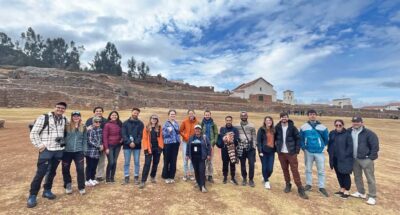
Sacred Valley & Maras Salt Mines Tour with Lunch
Read our review →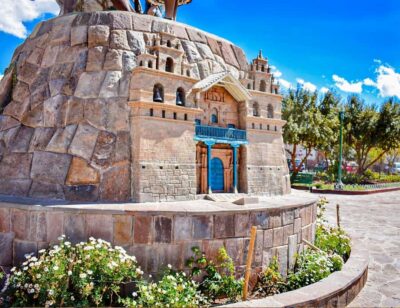
Moray, Maras Salt Mines & Chinchero Weavers Tour
Read our review →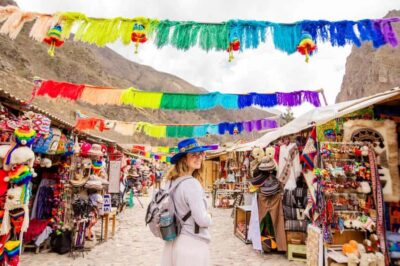
Sacred Valley, Pisac, Ollantaytambo, Salt Mines Moray
Read our review →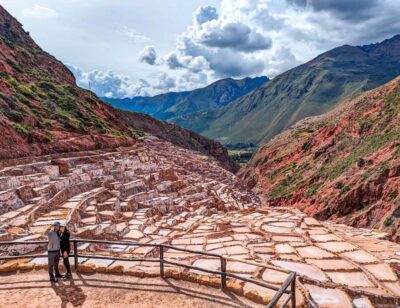
Chinchero,Moray & Salt Mines drop-off in Ollantaytambo
Read our review →

Browse the lists this tour appears in