
Reviewed · CUSCO CITY TOURS & INCA RUINS
Cusco: City and Nearby Ruins 5-Hour Guided Tour
Cusco’s greatest hits come together quickly here, from the gold-lined Coricancha site and colonial Cathedral to the giant stones of Sacsayhuaman. I like the mix of city sights and hilltop ruins, and I like that transport handles the outlying sites instead of leaving you to arrange several taxis.
I also like the chance to visit Qenqo, a stranger and less obvious Inca site with carved stone and underground passages. The main caution is time: a shopping stop has sometimes taken about 45 minutes, leaving the final ruins in fading light. Ask about this before setting out.
Key points at a glance
- Five afternoon hours cover six major sights: Coricancha, the Plaza de Armas and Cathedral, Sacsayhuaman, Qenqo, Tambomachay, and Puka Pukara.
- Sacsayhuaman is the visual knockout: Its huge fitted stones weigh as much as 180 tons.
- Qenqo offers a different kind of visit: You enter carved stone spaces and subterranean passages linked with Inca funerary practices.
- The price is low for guided transport: At $22 per person, you get a guide and vehicle, but entrance fees are extra.
- Small groups can make the history easier to follow: English and Spanish tours are offered, with private options available.
- Watch the clock around shopping stops: A textile visit may cut into time at the last ruins.
Why this five-hour route works
Cusco is not a city you understand from one viewpoint. Its streets and squares show the Spanish colonial layer, while the foundations, stonework, and nearby ruins reveal the Inca city beneath it.
This tour gives you both in one afternoon. You begin in downtown Cusco, where two sights are close enough to reach on foot. Then a small vehicle takes you north of the city for three major archaeological sites. That arrangement saves energy and makes sense for a first look at the area.
At $22 per person, the value is strong if the vehicle is shared with a small group and you want a guide to connect the sites. The catch is that entrance fees are not included, so your actual cost will be higher. Tickets can be bought locally during the tour, and one useful tip is to carry enough money for those admissions rather than assuming the advertised price covers everything.
The tour lasts five hours and begins in the early afternoon. That timing works well for a city-and-ruins outing, though the final stops can lose daylight if the schedule slips. Pick-up is provided from accommodation in downtown Cusco, and the tour returns you to the downtown area.
More City and Ruins Half-Days in Cusco:
- Cusco: Half-Day City Tour with Sacsayhuaman and Q’enco
★ 4.6 · 1,129 reviews - City Tour Cusco Qoricancha Sacsayhuaman y Tambomachay
★ 4.7 · 617 reviews - Open Bus Cusco City Tour
★ 4.5 · 219 reviews
Coricancha, where Inca worship met Spanish stone
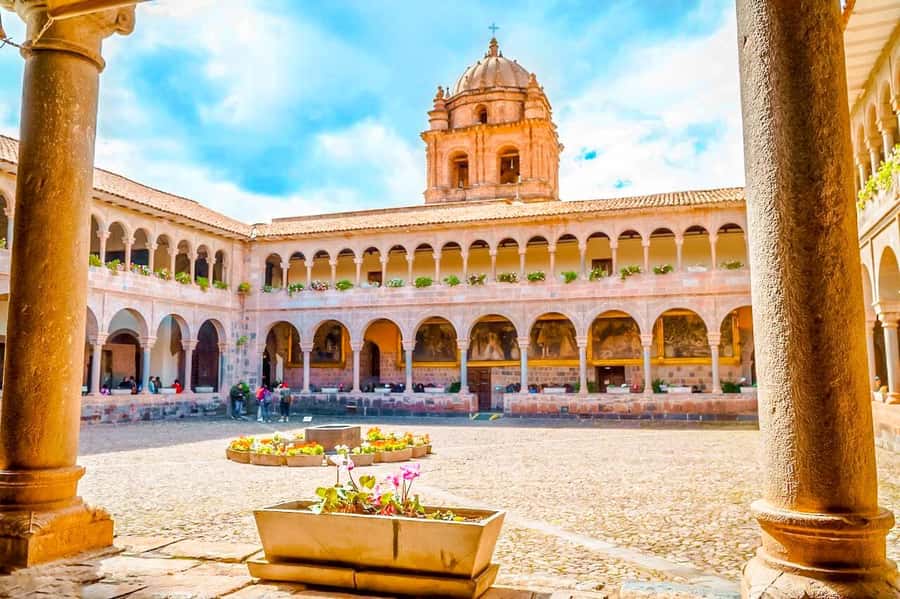
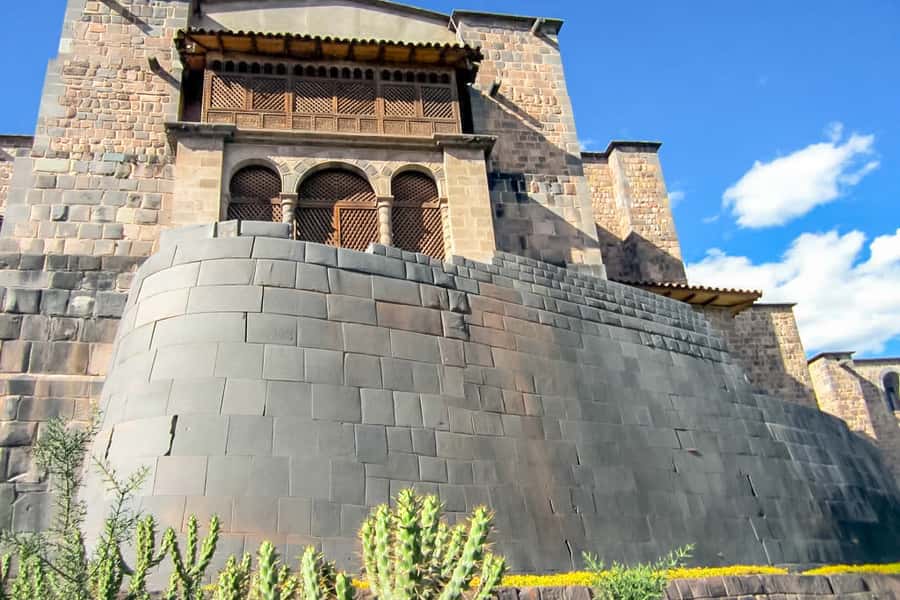
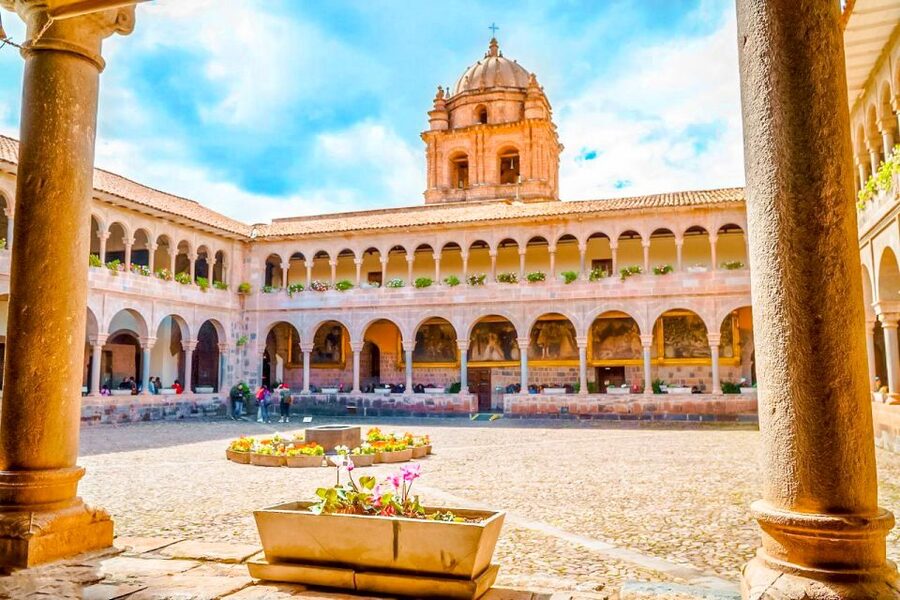
The first stop is Coricancha, the former Sun Temple and one of Cusco’s most important ceremonial sites. The name is often translated as golden enclosure, a reminder of the wealth once associated with the temple.
You come here for the stonework first. The Inca walls were cut and fitted with remarkable precision, leaving tight joints between the blocks. Spanish buildings were later placed over the Inca foundations, creating the layered view that defines much of central Cusco.
A guide adds value here because the stones alone do not explain what you are seeing. You need help reading the change from Inca ceremonial center to Spanish religious complex. The tour’s bilingual format is useful, but confirm your language at the start. One person on a mixed-language outing found that explanations were not always translated into English, so an English-speaking guide should be requested clearly when booking and again at pick-up.
Coricancha is also a good place to begin because it introduces the central idea of the whole afternoon: Cusco was rebuilt, not erased. Spanish colonial buildings sit directly on the remains of the Inca capital.
The Plaza de Armas and Cusco Cathedral
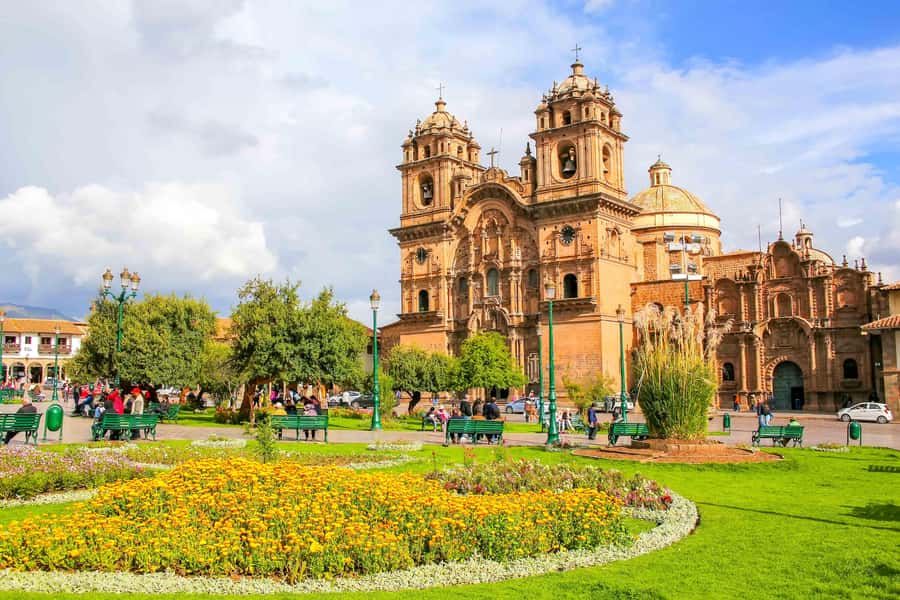
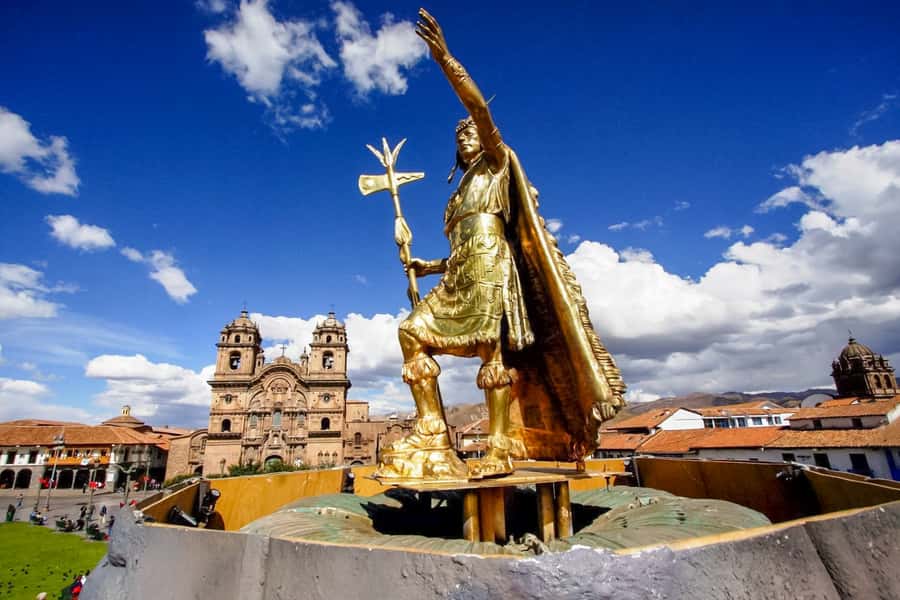
From Coricancha, you continue to the Plaza de Armas, Cusco’s main square. This is the city’s grand public center, framed by colonial buildings and the Cathedral.
The Cathedral visit is included on the afternoon route described here. A note attached to the tour says the Cathedral is not included on the morning version, so check that you have booked the afternoon departure if this interior matters to you.
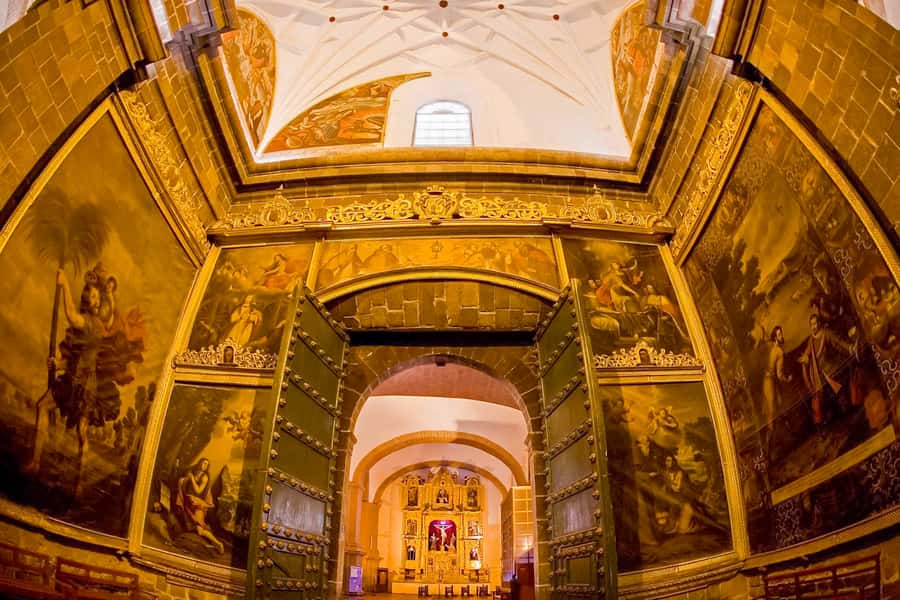
Inside, your guide explains how the Cathedral was built over earlier Inca structures. That detail gives the visit more weight than a quick look at another colonial church. You are seeing how Spanish power was placed directly on top of the older city.
The Cathedral is one of the stronger parts of the town portion of the tour. A German participant described it as particularly impressive, and that makes sense: after Coricancha, the interior creates a clear comparison between Inca ceremonial architecture and Spanish Catholic design.
This part of the outing is mainly on foot. Wear shoes that are comfortable for walking and expect the pace to be fairly brisk. The complete route packs several stops into five hours, so you will not have unlimited time to linger in the square or study every detail inside the Cathedral.
Sacsayhuaman and the giant fitted stones
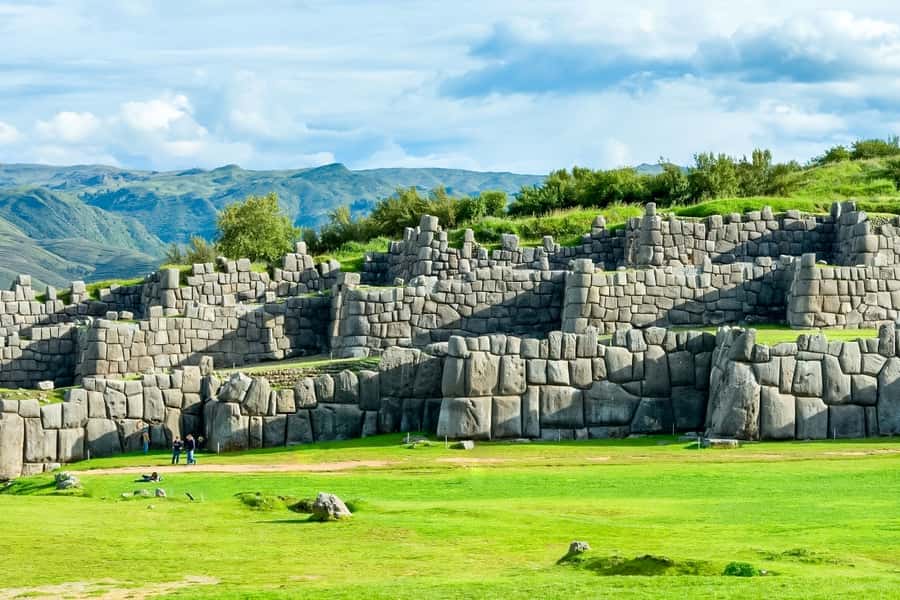
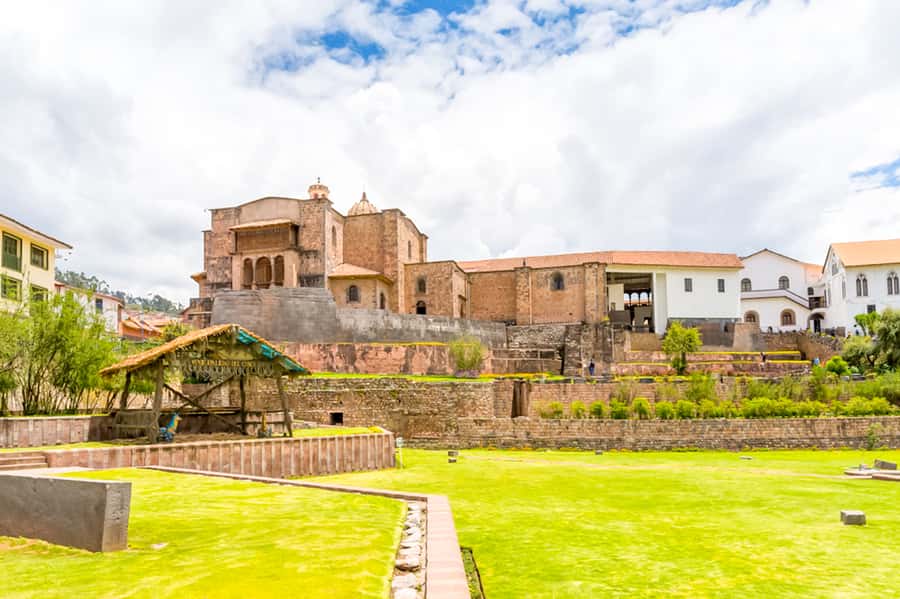
After the downtown sights, your vehicle heads to the northern outskirts of Cusco and the Sacsayhuaman complex. This is the stop most likely to make you pause and wonder how the walls were built.
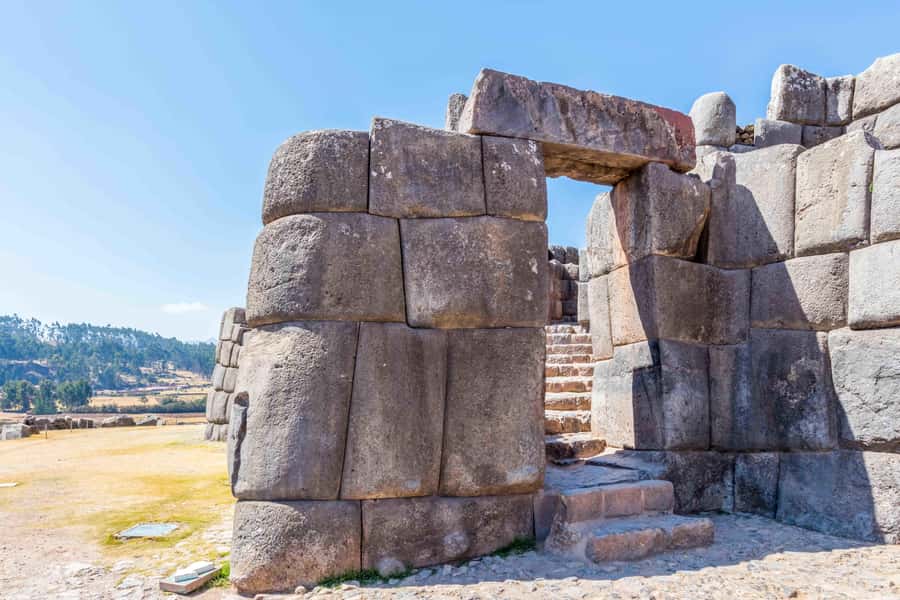
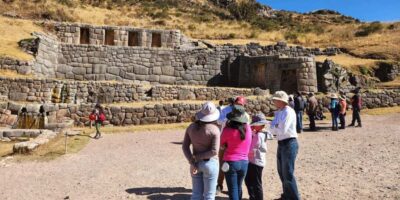
The stones are enormous, with some weighing up to 180 tons. Yet they were fitted with such care that the joints are remarkably tight. The openings in the walls give you a close look at the construction, while the scale becomes clearer as you move around the site.
A guide is especially helpful here. Without context, you may see only massive blocks and broad walls. With an explanation of their role and construction, the place becomes a lesson in Inca engineering and power.
Sacsayhuaman is also where the tour begins to feel different from a city walk. You are outside Cusco’s compact center, looking across a much wider setting and seeing how the Inca capital extended into the hills.
The stop does require walking over archaeological ground, and the schedule may keep you moving. If Sacsayhuaman is your main reason for booking, ask how much time is planned there. The itinerary includes several sites, so this is not a slow, half-day visit devoted only to the complex.
A few more Cusco days worth weighing up
- Machu Picchu: Inca Trail 2-Day Overnight Guided Tour
★ 4.9 · 203 reviews - Full Day Private Guided Tour in Machu Picchu
★ 5.0 · 115 reviews - Machu Picchu: Group Guided Tour
★ 4.7 · 102 reviews - Cusco: Historical Guided City Tour with 4 Inca Ruins
★ 4.5 · 99 reviews
Qenqo, a carved site with a darker purpose
Qenqo means zigzag, and the site is known for its unusual carved stone and subterranean passages. It is less immediately grand than Sacsayhuaman, but it may be the most intriguing stop for you if you enjoy places that raise questions.
The interior includes carefully carved stone spaces below ground. The site is linked with the mummification of the dead, though the exact purpose of every feature is not certain. That uncertainty is part of the appeal. You are not simply looking at a wall and being told one fixed story. You are seeing a ritual place whose use must be understood through its design and wider Inca practices.
Qenqo rewards close attention. Look at the channels, carved surfaces, and the way the passage changes the feel of the visit. It is a compact site, but it offers a different experience from the open walls at Sacsayhuaman.
The drawback is that the tour’s pace can feel tight here. One Italian participant found the schedule rushed and wanted more explanation. If you want long archaeological discussions or time to examine every carving, a private version may suit you better than a shared outing.
Tambomachay and the water ritual
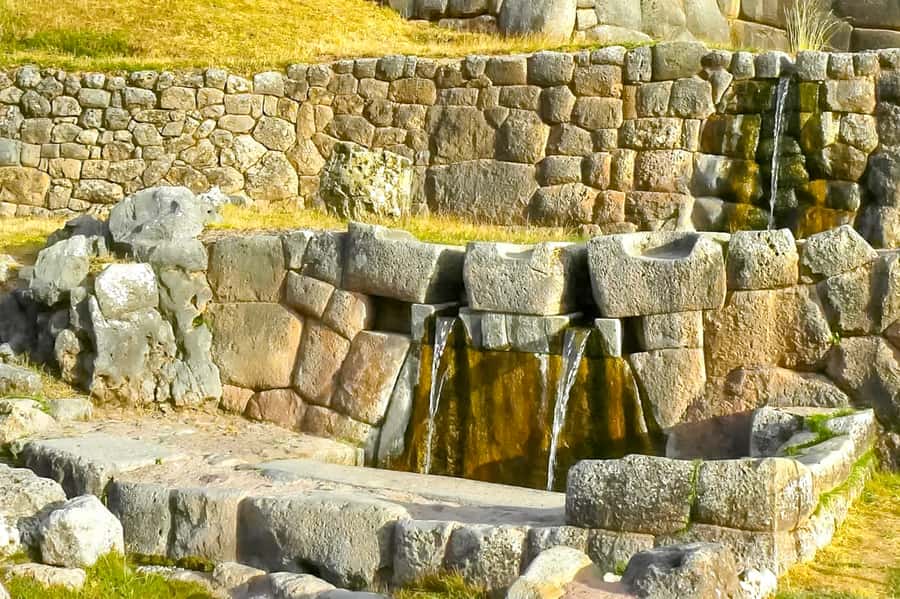
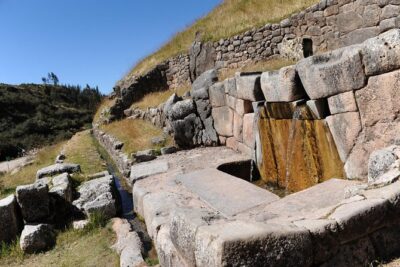
The route continues to Tambomachay, known for its Inca baths and water channels. This stop shifts attention from stone walls and funerary spaces to water and ceremony.
The site is smaller than Sacsayhuaman, so its importance is easy to miss if you are racing from one stop to the next. Your guide can point out the channels and explain why an Inca water complex would have mattered in a ceremonial setting.
Tambomachay also shows how varied the nearby sites are. In one afternoon, you move from a central temple to a colonial Cathedral, a monumental fortress complex, a carved ritual site, and a water-focused sanctuary.
Because the route includes several locations, the visit here may be brief. I would treat Tambomachay as an important piece of the larger picture rather than expect a long independent exploration.
Puka Pukara, the lookout on the route home
The final archaeological stop is Puka Pukara, described as a military lookout point. Its position gives it a practical role in the chain of sites around Cusco.
Puka Pukara is valuable because it helps you see that these ruins were not isolated monuments. The sites formed part of a wider system around the Inca capital, with different places serving ceremonial, defensive, residential, and logistical purposes.
Light matters here. If a shopping stop or slow group has taken up part of the afternoon, you may reach Puka Pukara in twilight or darkness. One participant specifically found that the last two sites were visited with too little daylight after a 45-minute stop at a baby-alpaca textile shop.
That shopping stop is not listed as a formal highlight of the route, so ask about it before departure. If it is included, request that it come at the end, or make clear that you prefer to protect time at Tambomachay and Puka Pukara. The shop may suit you if you want higher-quality baby-alpaca clothing, gloves, or similar goods, but it can feel like a sales visit when you expected an archaeology tour.
What the guide and group format add
The tour is offered with live guides in English and Spanish. Private and small-group formats are available, and the small-group approach can keep the cost down while giving you more structure than visiting independently.
A guide named Peto received especially strong praise for his enthusiasm and clear explanations of Cusco and Inca culture. That sort of personal energy can make a difference, particularly at sites where the stones do not explain their purpose on their own.
Still, guide quality and language delivery can vary. One English-speaking participant in a mostly Spanish group found that translation was not always consistent. If you do not speak Spanish, confirm that English is assigned before the vehicle leaves. Do not rely only on the fact that English appears among the available languages.
The five-hour schedule is efficient, not leisurely. It works for you if you want a broad introduction and prefer someone else to handle the route. It is less suitable if you want extended time at each site, quiet photography, or long conversations about archaeology.
Is $22 good value?
The $22 price is attractive because it combines a professional guide with transportation and downtown pick-up. Arranging a vehicle for Sacsayhuaman, Qenqo, Tambomachay, and Puka Pukara on your own could take more planning, especially if you are unfamiliar with the area.
But the headline price does not include entrance fees. You will need to pay those separately, and the exact total is not provided here. The tour therefore offers good basic value, but you should budget beyond the advertised amount.
The price is strongest for a first visit to Cusco. You get orientation, transport, and a look at the main nearby ruins without committing to a full-day excursion. It is less compelling for you if you already know the sites and want maximum time at one or two of them.
Practical advice before you book
Choose the early afternoon departure if seeing the Cathedral interior matters to you. The morning version has a specific note saying that the Cathedral is not included.
Confirm three things before paying:
- The guide will conduct the tour in your preferred language.
- Entrance fees are separate from the $22 price.
- Any textile or shopping stop will not reduce the time at the final ruins.
The activity is non-refundable once confirmed, and tickets cannot be modified or exchanged. That makes it important to check the date, language, group type, and pick-up details before booking.
Pets are not allowed. Private or small-group options are available, so choose the format based on how much control you want over the pace. A private group may be the better choice if you want more questions answered or hope to avoid a long shopping stop.
Who should book this Cusco tour?
I would choose this outing if you have one afternoon in Cusco and want the main city sights plus the nearby Inca ruins. It is especially useful early in a stay, when you need a clear introduction to Coricancha, the Plaza de Armas, Sacsayhuaman, and the smaller sites north of town.
Families and first-time visitors may appreciate the vehicle and compact schedule. The tour also suits anyone who wants a guide to explain the relationship between Inca buildings and Spanish colonial Cusco.
I would hesitate if you dislike fixed schedules, sales stops, or quick visits. Serious archaeology fans may prefer a private arrangement with more time at Sacsayhuaman and Qenqo. English speakers should also confirm translation, since language handling has not always been consistent in mixed groups.
Should you book it?
Book this tour if your goal is a low-cost, guided introduction to Cusco’s central sights and nearby ruins. Sacsayhuaman’s massive stonework, Qenqo’s underground passages, and the Cathedral’s layered construction give you plenty to remember from a single afternoon.
Skip it, or choose the private option, if you want a slow archaeological visit or do not want to risk a shopping stop cutting into the last sites. The tour offers solid value, but its success depends on clear language arrangements and firm control of the timetable.
FAQ
How long does the Cusco tour last?
The tour lasts five hours.
What time does the tour begin?
It begins in the early afternoon. Starting times vary, so check availability when booking.
Where does the tour start and finish?
Pick-up is provided from accommodation in downtown Cusco, and the tour ends back in downtown Cusco.
Which sites are included?
The route includes Coricancha, the Plaza de Armas, Cusco Cathedral on the afternoon tour, Sacsayhuaman, Qenqo, Tambomachay, and Puka Pukara.
Is the Cathedral included?
The Cathedral is included on the afternoon tour described here. The morning tour does not include the Cathedral visit.
Are entrance fees included in the price?
No. Entrance fees are not included and must be paid separately.
What languages are available?
Live guides are available in English and Spanish.
Is this a private tour?
Private and small-group options are available. The activity is also described as a small-group tour.
Can I cancel or change my booking?
No. The activity is non-refundable, and confirmed tickets cannot be modified, exchanged, or refunded.
Just added around Cusco
- Zipline over the Sacred Valley Trip★ 5.0 · 11 reviews
- Valle Sur Cusco | half day★ 4.3 · 3 reviews
- Visit Pisac from Cusco: Private Transport★ 4.6 · 9 reviews
- Transfer from Cusco to Ollantaytambo★ 5.0 · 30 reviews
- Exclusive Huayna Picchu Tour in 1 Day from Cusco★ 5.0 · 31 reviews
- Trek to Humantay Lake from Cusco★ 4.9 · 8 reviews
- 5 Day – Salkantay trek to Machu Picchu – Group Service★ 4.5 · 27 reviews
- 2 Day – Short Inca Trail to Machu Picchu – Group Service★ 5.0 · 30 reviews
Cusco City Tours & Inca Ruins, compared.
Half-Day City Tour with Sacsayhuaman and Q’enco
Read our review →
City Tour Cusco Qoricancha Sacsayhuaman y Tambomachay
Read our review →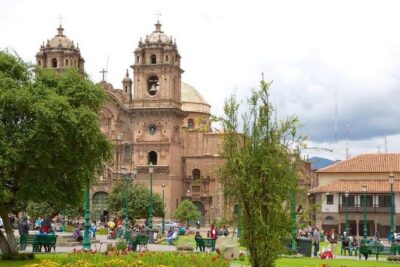
City Tour | Half-Day Tour to 4 Archaeological Sites
Read our review →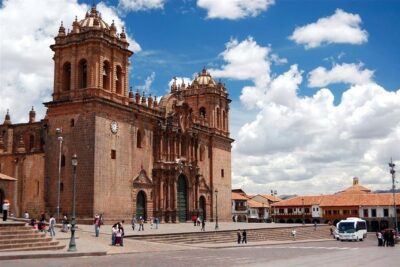
City Tour in Cusco & visit Museum South American Camelid Private.
Read our review →
Cusco City Sightseeing, San Pedro Market, Cathedral and Qorikancha Temple
Read our review →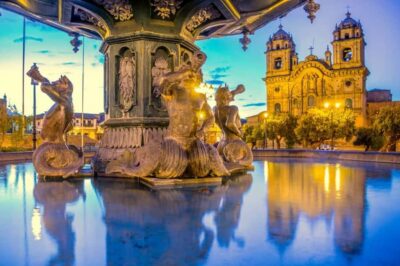
Cusco City Sightseeing and Sacsayhuaman Archeological Park Tour
Read our review →Browse the lists this tour appears in