
Reviewed · CUSCO CITY TOURS & INCA RUINS
City Tour Cusco
Cusco’s four nearby Inca sites make a strong first lesson in the city’s past. At Sacsayhuaman, you’ll see colossal stonework and wide views. At Q’enqo, Tambomachay, and Puca Pucará, the guide connects water, ritual, farming, and defense.
I like the low $15 price, which covers transport and a professional guide. I also like the chance to compare Inca construction with Cusco’s Spanish-era city center. The catch is that entrance tickets are extra, and the tour is not suitable for people with mobility impairments.
Key points
- Sacsayhuaman’s three levels reveal huge stone foundations, old towers, and broad views over Cusco.
- Q’enqo’s Puma connection brings ritual and Andean beliefs into the tour, including an interior altar.
- Tambomachay’s flowing springs show how water shaped Inca ceremony, farming, and settlement.
- Puca Pucará’s watchtower offers a look at the defensive system around the imperial city.
- Hotel pickup and five-hour transport make this a simple way to reach several sites outside central Cusco.
- Entrance tickets are not included, so budget for them before you book.
Four Inca Sites Around Cusco in One Half-Day
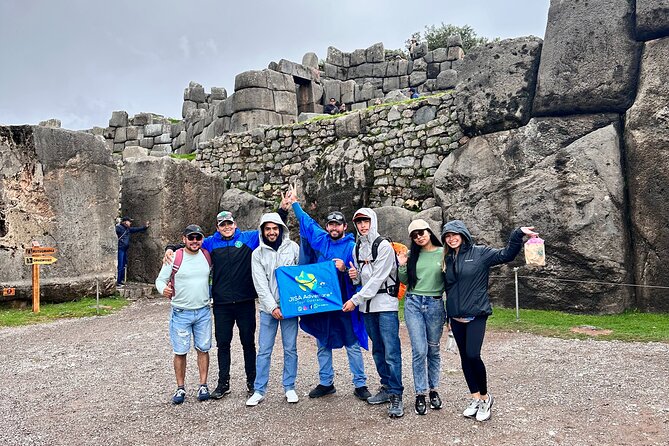
This is a practical city-side tour for seeing the major Inca sites outside Cusco without arranging separate rides. You leave the city, visit four important places, and return to the main square after roughly five hours of guided touring.
The route gives you more than a collection of stone walls. Sacsayhuaman focuses on scale and power. Q’enqo brings in ceremony and the Puma. Tambomachay centers on water. Puca Pucará shows how the Incas watched and controlled movement through the valley.
That range is the main strength of the outing. You get a quick look at several parts of Inca life rather than spending the whole morning at one site. The tradeoff is pace. Five hours is enough for an overview, not a slow archaeological study.
The tour operates in English or Spanish. A professional guide leads the visits and explains what you are seeing at each location. One verified booking received a five-star rating from Esnel of Brazil, who praised the guide as kind and well prepared, with strong knowledge across the subjects covered. No guide name is provided, so you should not expect to request a particular guide.
More City and Ruins Half-Days in Cusco:
- Cusco: Half-Day City Tour with Sacsayhuaman and Q’enco
★ 4.6 · 1,129 reviews - City Tour Cusco Qoricancha Sacsayhuaman y Tambomachay
★ 4.7 · 617 reviews - Open Bus Cusco City Tour
★ 4.5 · 219 reviews
Sacsayhuaman: Cusco’s Great Stone Fortress
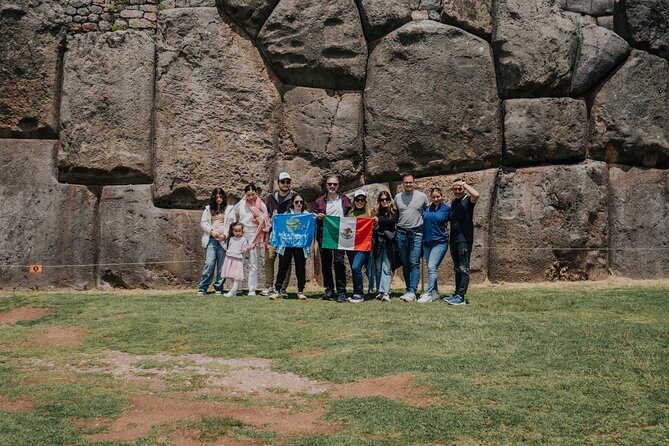
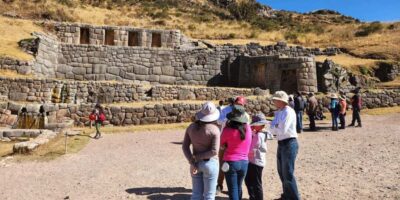
Sacsayhuaman is the visual centerpiece of the route. The site is described as a ceremonial fortress, and its huge constructions make the scale of Inca building clear at once. You’ll walk through three levels and reach the upper section, where the bases of the great towers once dominated Cusco.
The stonework is the point here. Massive blocks fit together with remarkable precision, and the setting connects the construction to the hills and open countryside around the city. Your guide can help you notice the parts a quick look might miss, especially the way the site is arranged across different levels.
This is also where the tour’s promise of Inca and Spanish architecture begins to make sense. Cusco’s central streets show the later Spanish layer, while Sacsayhuaman lets you see the power and planning of the Inca capital before comparing the two.
Allow for walking across uneven ground and sloping areas. The tour specifically says it is not suitable for people with mobility impairments, so this is not a minor footnote. If you have trouble with uneven surfaces, ask the agency for more detail before paying.
Bring your passport or identity card. Large bags and luggage are not allowed, so carry only what you need for the half-day outing.
Q’enqo and the Puma in the Stone
The next stop is Q’enqo, an Inca shrine linked with the Puma. The site contains an altar for sacrifices inside the Pachamama, or Mother Earth, and gives the tour a more ceremonial feel than Sacsayhuaman.
Q’enqo is valuable because it shifts your attention from engineering to belief. You’re not simply looking at carved stone. You’re hearing how the Incas connected sacred places, animals, the earth, and ritual practice.
This stop may feel more compact than Sacsayhuaman, but that can make the guide’s explanation even more important. Without context, a carved passage or stone chamber can seem hard to read. With a guide, you have a better chance of understanding why this particular place mattered.
The tour description identifies Q’enqo as an ancient temple and shrine, but it does not give a detailed schedule for time spent there. Expect a guided visit as part of the five-hour route rather than an extended private study.
Tambomachay: Water, Springs, and Andean Belief
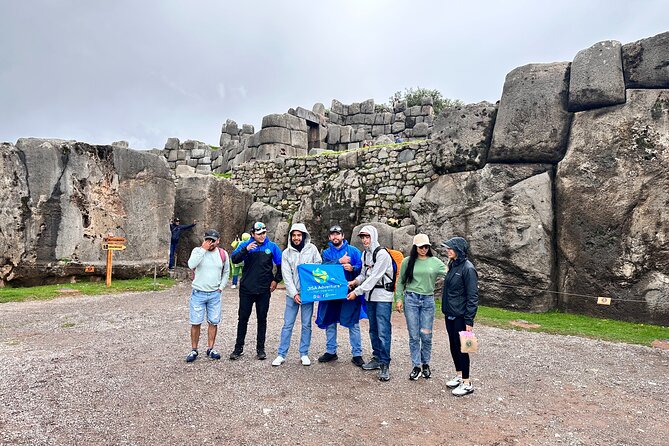
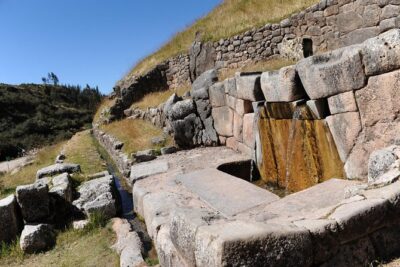
Tambomachay brings water into the story. The monument is known for architectural skill and is described as one of the pillars of the Andean view of the world. You’ll see spring water sources that still irrigate fields and terraces around the city.
I find this stop especially useful because it shows that Inca planning was not only about walls and roads. Water had practical and sacred importance. Here, the moving water helps you connect farming, terraces, settlement, and ceremony.
The springs also give the route a different mood. After the large stonework at Sacsayhuaman and the ritual setting at Q’enqo, Tambomachay offers a quieter look at the relationship between construction and nature. The site’s value is less about one giant monument and more about how the whole setting works.
Your guide can explain the water channels and their place in Andean thought. Since the tour is offered in English and Spanish, choose the language that lets you ask questions comfortably.
A few more Cusco days worth weighing up
- Cusco: City Tour | Half-Day Tour to 4 Archaeological Sites
★ 4.6 · 206 reviews - City Tour in Cusco & visit Museum South American Camelid Private.
★ 5.0 · 147 reviews - Cusco City Sightseeing, San Pedro Market, Cathedral and Qorikancha Temple
★ 4.5 · 139 reviews - Cusco: Half-Day City Tour
★ 4.2 · 129 reviews
Puca Pucará: A Watchtower Over the Valley
The last stop is Puca Pucará, a strategic watchtower overlooking the valley and the imperial city. You’ll enter the lookout area and see how its position helped control views and movement around Cusco.
This site completes the route’s story. Sacsayhuaman shows ceremonial and military scale. Q’enqo shows ritual. Tambomachay shows water and agriculture. Puca Pucará adds observation and defense.
The name is often translated as Red Fortress, but the supplied tour details focus on its role as a watchtower and strategic point. That is the useful takeaway here. You’re seeing how the Inca capital was supported by places positioned beyond the central city.
The views are part of the experience. The route repeatedly pairs ruins with the surrounding scenery, so keep your camera ready, but do not let photographs replace the guide’s explanation. The site makes more sense when you understand what it could see and why that mattered.
Why a Guide Matters on This Route
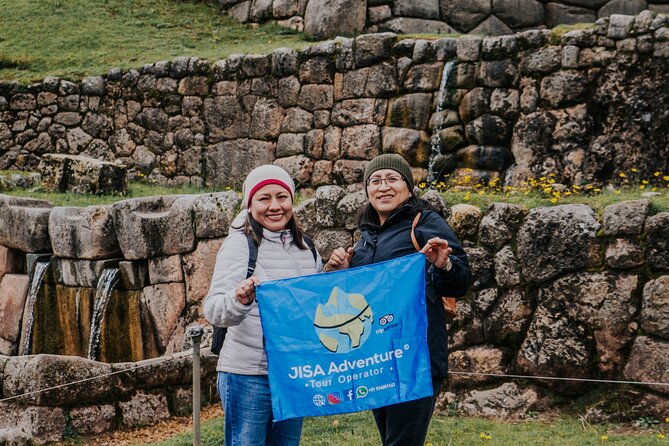
This tour depends on interpretation. The stones at Sacsayhuaman are impressive without help, but Q’enqo’s altar, Tambomachay’s water, and Puca Pucará’s lookout function require more explanation.
The guide is also useful for comparing the styles of Cusco art and construction. The stated highlights include Cusco’s Inca and Spanish architecture, along with the city’s art styles. You’ll get the most from the tour if you ask the guide to point out those contrasts rather than treating the four stops as isolated ruins.
A five-star verified booking praised the guide’s preparation, kindness, and broad subject knowledge. That is encouraging, though there is only one written comment supplied and no guide name. I would book this for structured explanations, not for a guaranteed specialist lecture on every detail.
The tour includes guided visits at the sites, tourist transportation, and agency assistance at all hours. Those inclusions matter because the four locations are outside the central square and are easier to handle by arranged transport than by trying to connect them on your own.
What the $15 Price Really Covers
At $15 per person, this is an inexpensive way to cover four major stops around Cusco. You are paying mainly for transportation, a professional guide, and the guided visits, rather than for entrance fees, meals, or a luxury vehicle.
Entrance tickets are not included. That is the biggest price detail to clarify before booking. The final cost will be higher than $15, and the tour offers no meals, drinks, snacks, or travel insurance.
Still, the price can be good value if you want a short introduction to the sites and do not need a private guide. The route saves you from arranging transport to Sacsayhuaman, Q’enqo, Tambomachay, and Puca Pucará separately.
The group size is not stated. If you care about a small group, ask before reserving. The same applies if you want to know how much time is spent at each site.
Pickup, Timing, and What to Bring
Pickup can be arranged from your hotel, with a collection schedule provided. The meeting point can also be coordinated from a neutral location, and Plaza de Armas is listed as a pickup option. The tour finishes at Cusco’s main square.
The advertised duration is five hours, while the detailed itinerary gives about five and a half hours for the Cusco visit. Treat it as a half-day outing and confirm the exact departure and return time when you book.
Bring your passport or identity card. Do not bring luggage or a large bag, since those are not allowed. A small personal bag with essentials is the sensible choice, though the tour information does not specify a packing list beyond identification.
Because mobility impairments are listed as a restriction, ask about walking conditions before booking if you have limited mobility. The tour visits several archaeological sites, and the route includes different levels and lookout areas.
The booking terms are flexible: you can reserve now and pay later, and cancellation is free up to 24 hours before the activity for a full refund. Those terms help if your Cusco schedule is still changing.
Who Will Get the Most From This Tour
I would choose this tour if you have limited time in Cusco and want a clear introduction to the surrounding Inca sites. It suits first-time visitors who prefer transport and explanations arranged in one package.
It is also a good fit if you want to understand several themes in one morning: ceremony, water, defense, architecture, and the connection between Cusco and its surrounding hills.
You may want something else if you want a slow photography outing, a private archaeological discussion, or a tour built around food and daily life in the city. Meals and drinks are not included, and the group size is not stated.
The route is less suitable for anyone who cannot manage uneven or elevated archaeological sites. Since the tour itself excludes people with mobility impairments, take that condition seriously rather than assuming the guide can alter the route.
Should You Book City Tour Cusco?
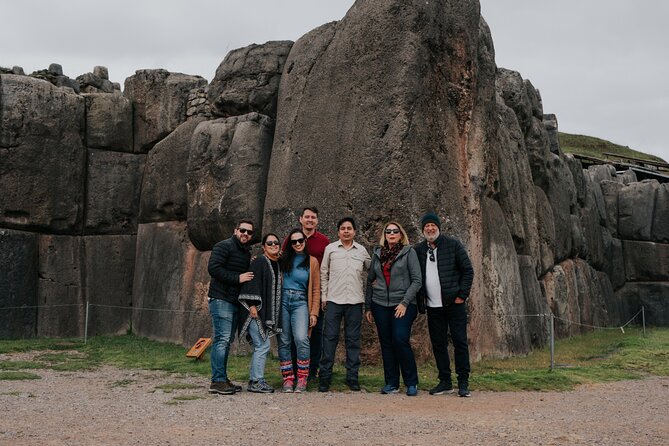
Book it if you want four major sites, one half-day, transport, and a live English or Spanish guide for $15 before entrance fees. The route gives you a useful framework for understanding Cusco’s Inca foundations, especially if you are new to the city.
I would book after confirming the entrance cost, pickup time, group size, and walking conditions. If you want a broad first look and appreciate a guide who explains what casual sightseeing can miss, this is a sensible value. If you need easy access, lots of free time, or a fully inclusive price, choose a different option.
FAQ
How long does the City Tour Cusco last?
The activity is listed as five hours. The detailed schedule describes the Cusco visit as about five and a half hours, so confirm the exact timing when booking.
Which sites does the tour visit?
The route visits Sacsayhuaman, Q’enqo, Tambomachay, and Puca Pucará.
Is transportation included?
Yes. Tourist transportation is included, along with pickup arrangements from your hotel or a coordinated neutral meeting point.
Is hotel pickup available?
Yes. Pickup from your hotel is included, and a collection schedule will be provided. Plaza de Armas is also listed as a pickup option.
Are entrance tickets included in the price?
No. Entrance tickets are not included.
Are meals and drinks included?
No. Meals, beverages, snacks, and other food items are not included.
What languages are available for the guided tour?
The live guide service is available in English and Spanish.
What should I bring?
Bring your passport or identity card. Luggage and large bags are not allowed.
Can people with mobility impairments join the tour?
The activity is not suitable for people with mobility impairments.
Just added around Cusco
- Zipline over the Sacred Valley Trip★ 5.0 · 11 reviews
- Valle Sur Cusco | half day★ 4.3 · 3 reviews
- Visit Pisac from Cusco: Private Transport★ 4.6 · 9 reviews
- Trek to Humantay Lake from Cusco★ 4.9 · 8 reviews
- Transfer from Cusco to Ollantaytambo★ 5.0 · 30 reviews
- Exclusive Huayna Picchu Tour in 1 Day from Cusco★ 5.0 · 31 reviews
- Private Tour Sacred Valley, Chinchero, Maras Moray, Ollantaytambo★ 5.0 · 29 reviews
- 5 Day – Salkantay trek to Machu Picchu – Group Service★ 4.5 · 27 reviews
Cusco City Tours & Inca Ruins, compared.
Half-Day City Tour with Sacsayhuaman and Q’enco
Read our review →
City Tour Cusco Qoricancha Sacsayhuaman y Tambomachay
Read our review →
City Tour | Half-Day Tour to 4 Archaeological Sites
Read our review →
City Tour in Cusco & visit Museum South American Camelid Private.
Read our review →
Cusco City Sightseeing, San Pedro Market, Cathedral and Qorikancha Temple
Read our review →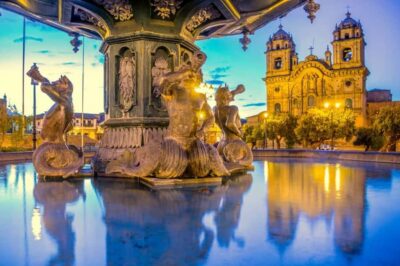
Cusco City Sightseeing and Sacsayhuaman Archeological Park Tour
Read our review →Browse the lists this tour appears in