Reviewed · TOURS
Cusco street food tour
Cusco’s best food lesson may happen under a street lamp, not at a restaurant table. This 90-minute walk takes you from the Cathedral through the city center for four street-food stops, with small tastes of emolientes, picarones, anticuchos, and other Peruvian favorites.
I like the useful introduction to foods you might otherwise pass by, and I like that the evening views are part of the experience rather than an afterthought. Alex and Pablo have both led this tour, explaining what you are eating and adding local history along the way. The main drawback is its short length: you get a broad sample, not a long meal or a deep look at each dish.
Key points at a glance
- Four food stalls in 90 minutes: Expect a compact route through central Cusco with several tasting stops.
- Classic Peruvian street foods: Samples can include emolientes, picarones, arroz con leche, mazamorra morada, ponches, and anticuchos.
- A night walk with city views: The illuminated streets and Cathedral area give the food tour a strong evening setting.
- Helpful guide-led choices: Alex and Pablo have explained unfamiliar foods and helped visitors try dishes they might have skipped.
- Spanish or English commentary: You can choose between the two listed tour languages.
- Good value for a light dinner: At $50 per person, the tasting portions may be enough to replace a meal, though the price makes most sense if you value guidance and variety.
Starting at Cusco Cathedral after dark
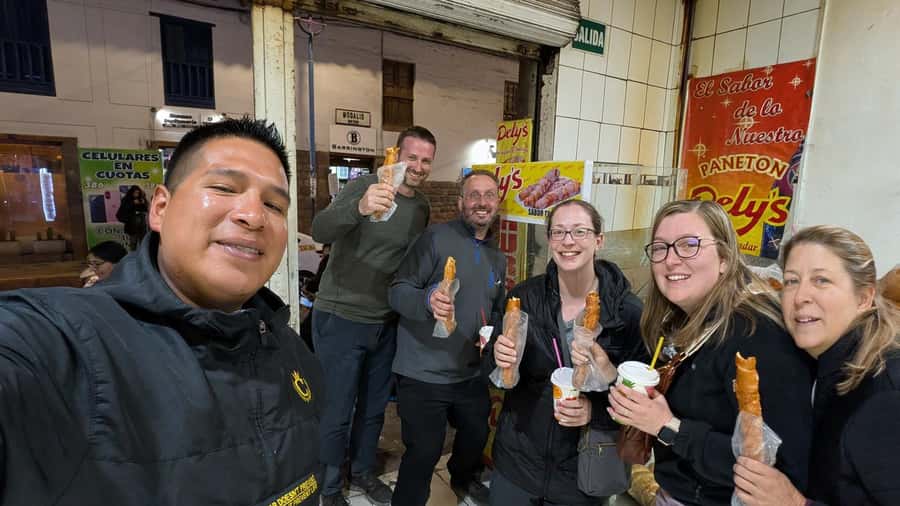
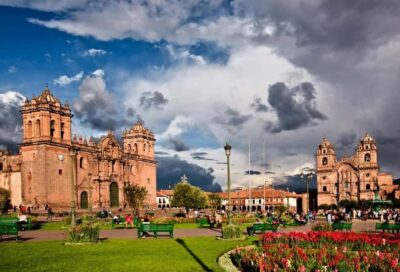
The tour begins in front of the Cusco Cathedral at the appointed time. This is a sensible meeting point, right in the city center and easy to recognize, but you should arrive ready to walk rather than expecting a seated introduction.
The first few minutes set the tone. You meet your guide, then move into the streets to look for the foods that locals buy from stalls and small vendors. This matters in Cusco, where a menu can tell you what a dish is called but not always how it fits into daily life.
At night, the city takes on a different look. The illuminated buildings and streets around the center give the walk a pleasant visual thread between tastings. You are not simply being moved from one snack to the next. The views help make the tour feel like an evening outing in Cusco.
Still, keep the format in mind. This is a walking tour with food, not a formal restaurant crawl. There is no promise of a table, a full menu, or a long stop at each place. If you prefer a slow dinner with time to sit, this will feel quick. If you want a first taste of local food without committing to a full plate, the pace is more useful.
A few more Cusco days worth weighing up
- Food and Culture Full day Tour in the Sacred Valley
★ 5.0 · 144 reviews - The 10 Tastings of Cusco With Locals: Private Food Tour
★ 4.5 · 71 reviews
Emolientes: a warm first taste of Cusco
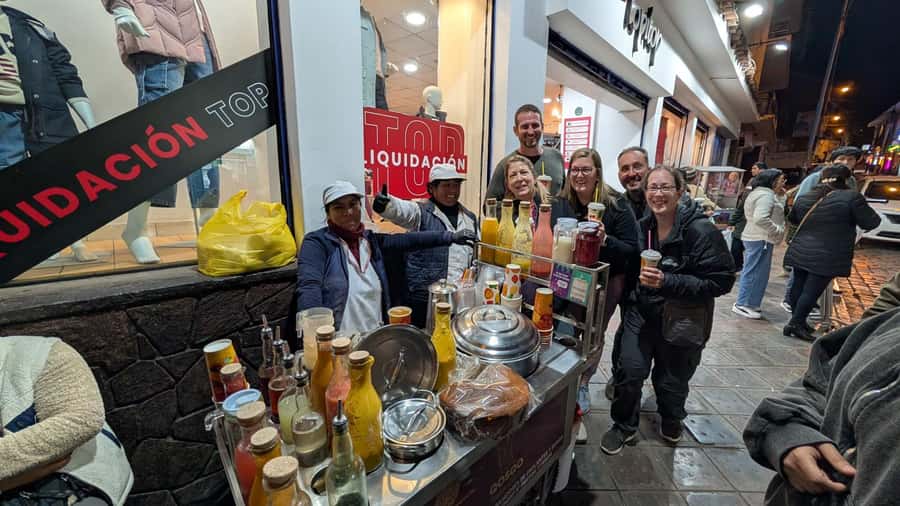
Emolientes is one of the most practical street drinks you may encounter in Peru. It is served warm and is often associated with evening street stalls. On this tour, it gives you a gentle opening before the sweeter and more substantial tastings.
The value here is not only the flavor. A guide can explain what you are drinking and how it fits into local street-food culture. That guidance removes some of the guesswork. You may have seen a steaming drink in Cusco and wondered what it was, but a short explanation gives you a reason to try it.
For you, this stop is especially useful early in your visit. The guide can introduce a food that is easy to overlook, and you get a simple reference point for the rest of the tour. The available guides, including Alex and Pablo, have been praised for explaining each item carefully and patiently.
Do not expect a tasting of emolientes alone to fill you up. It works as part of a sequence. The tour becomes more satisfying as the sweet and savory stops follow.
Picarones and Peruvian sweets
Picarones bring a different texture and mood. These ring-shaped fritters are a familiar Peruvian sweet, and their warm, fried character makes them a natural evening snack.
This is the kind of food that can be hard to judge from a name alone. Is it bread, pastry, doughnut, or something else? Your guide helps place it in context while you taste it. That small explanation is one of the tour’s strongest features, especially if you are not used to Peruvian food.
The sweet course continues with arroz con leche and mazamorra morada. Arroz con leche is a comforting rice pudding, while mazamorra morada is made from purple corn and has a distinctive color and flavor. Together, they show that Peruvian street food is not limited to grilled meat or fried snacks.
The drawback is that several sweet dishes can arrive close together. If you prefer savory food, these stops may feel less exciting than the anticuchos later in the route. On the other hand, the variety is exactly what makes the tour useful. You are not being asked to choose one unfamiliar dish from a menu. You can sample several and decide what you would order again.
Ponches and the rhythm of four stalls
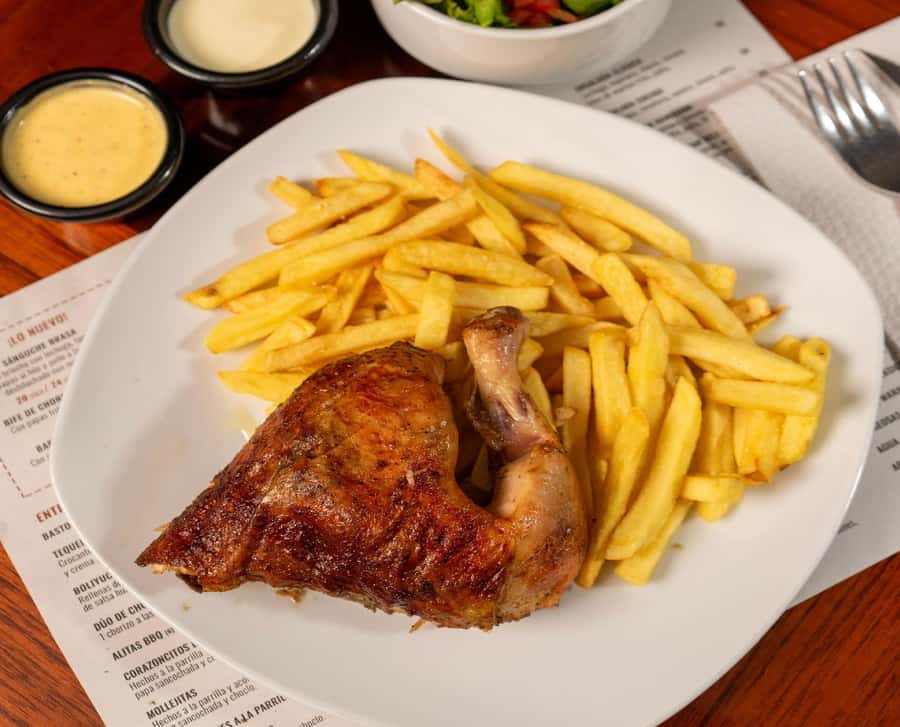
Ponches add another Peruvian drink or snack to the route. The supplied details do not specify the exact style served, so you should treat this as another guided tasting rather than arrive with a fixed idea of what will be in your cup.
The tour visits four food stalls in all. That number is important. It gives you enough variety to compare flavors, but the 90-minute duration keeps the outing compact. You are unlikely to spend long stretches waiting for the next activity.
A good guide makes the difference between a list of samples and a coherent food walk. Alex has been described as bringing the group to typical Cusco foods that might otherwise seem risky to try. Pablo has also taken a small group to extra food spots when time and group size allowed. Those details suggest that the exact route can have some flexibility, though additional stops should not be treated as guaranteed.
The four-stall format also helps with appetite. You can taste without ordering a full serving at every location. One recent experience left two people feeling they did not need another meal afterward, so the combined portions can be substantial. That will vary with the food served and your own appetite, but plan this as more than a token snack.
Same altitude, a completely different day:
- Cusco: Humantay Lake Tour with Breakfast and Buffet Lunch
★ 4.9 · 2,976 reviews - From Cusco: Sacred Valley & Maras Salt Mines Tour with Lunch
★ 4.8 · 2,227 reviews - From Cusco: Moray, Maras Salt Mines & Chinchero Weavers Tour
★ 4.8 · 1,925 reviews - From Cusco: Full-Day Group Tour of Machu Picchu
★ 4.7 · 1,767 reviews
Anticuchos bring the savory finish
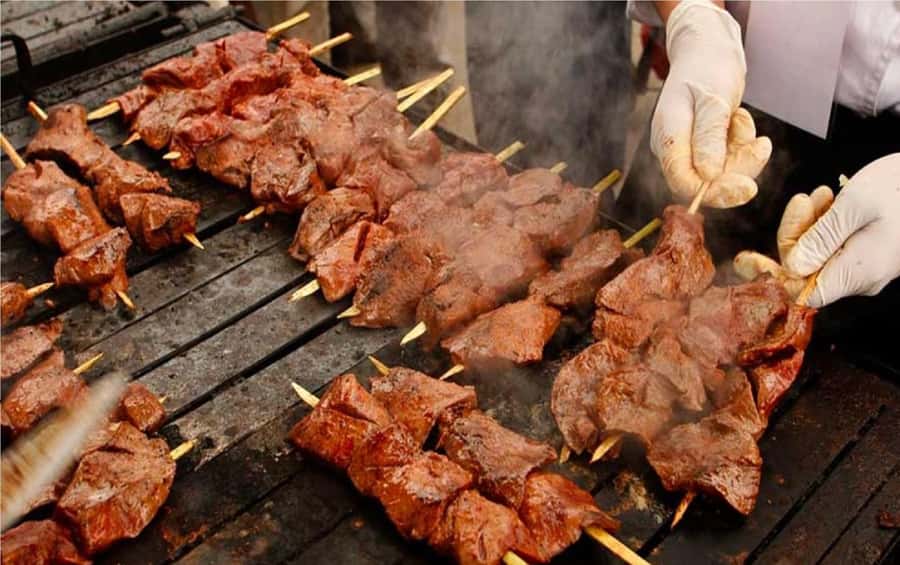
Anticuchos are the most clearly savory item named in the tour description. They are a popular Peruvian street food, commonly associated with skewered meat and grilling, and they give the route a stronger finish after the sweets and drinks.
This stop helps balance the menu. If the first half of the walk feels too dessert-heavy, anticuchos provide the smoky, savory contrast you may be looking for. The guide can also help you understand what is on the skewer and how to eat it, which is useful when you are trying a local specialty for the first time.
The food is served through a street-stall setting, so do not expect restaurant-style presentation. That is part of the point. You see how the food is offered in an everyday setting, then decide what suits you.
At the same time, you should not book this tour expecting a full exploration of every major dish in Peru. The route focuses on selected street foods. It does not promise ceviche, a complete regional menu, or a cooking lesson. Think of it as an introduction to snack culture in central Cusco.
Why the guide matters more than the food list
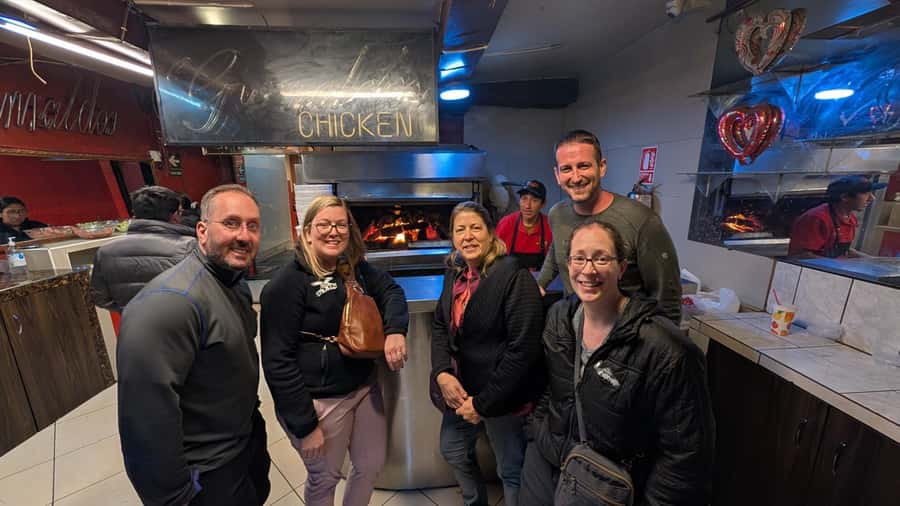
You can find many Peruvian food names online. The useful part of this tour is having someone explain what is in front of you and help you make a choice at a stall.
The English- and Spanish-speaking guides are central to the experience. Alex has been singled out for detailed explanations and patience, while Pablo has added historical context and extra food stops for a very small group. Those names are helpful, but guide assignment is not guaranteed, so book for the format rather than for one specific person.
A guide also gives you confidence when a dish is unfamiliar. One of the clearest benefits is practical: you may try foods you would have avoided on your own. That is a real advantage in a city where the best local snack is not always the one with the most obvious sign.
The guide can also turn the walk into a small lesson in Cusco. The tour description promises some history along with the tastings, and one small-group experience included extra historical information. Do not expect a full historical tour of the city, but the context helps connect the food to the place.
Is $50 per person good value?
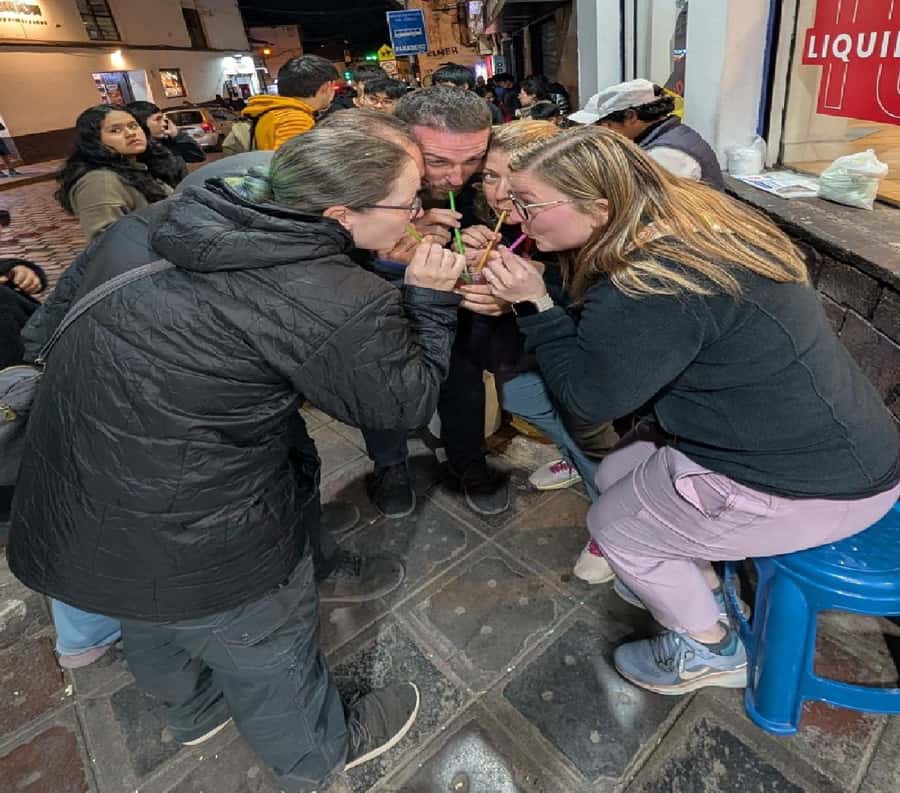
The price is $50 per person. That is not the cheapest way to buy street food in Cusco, so the value depends on what you want from the outing.
If you only want calories, you can likely spend less by buying snacks yourself. The $50 pays for more than the food. You are paying for a guide, explanations in English or Spanish, a planned route, four tasting stops, and the ease of knowing what to order.
The price makes the most sense for a first evening in Cusco, when you want an organized introduction rather than several uncertain purchases. It also works well if you enjoy food but do not want to commit to a long formal dinner.
Portions are important. This is a tasting tour, but the combined food can fill you up. That improves the value if you treat it as an early dinner. If you have a large appetite or want generous servings of one particular dish, you may still want another meal later.
The score attached to the experience is 4.4 out of 5 from nine ratings. That is a positive signal, though the small number means you should read the format carefully and match it to your expectations.
Timing, language, and practical planning
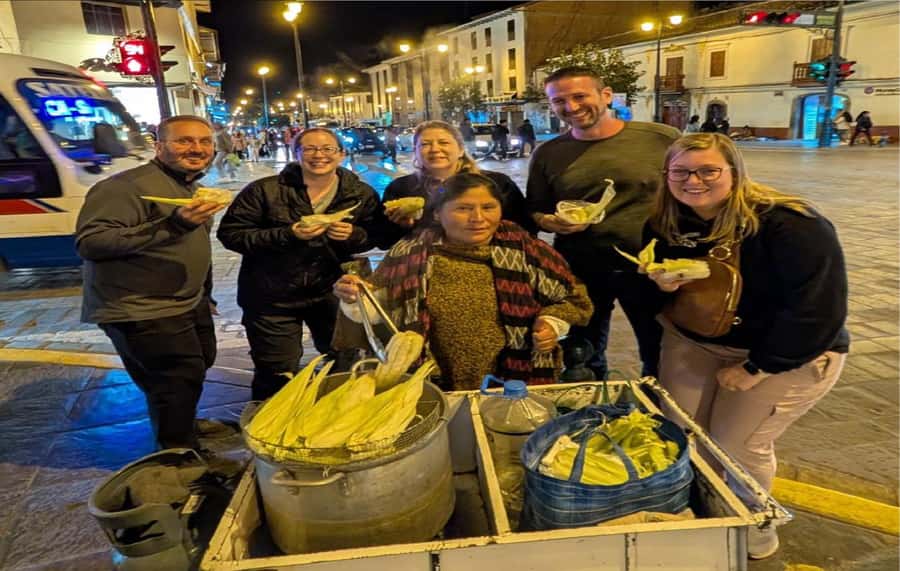
The walk lasts 90 minutes and ends in central Cusco. That makes it easy to fit into an evening without giving up an entire night.
You should wear comfortable shoes. The experience takes place on foot through city streets, and the food stops are spread across the walking route. The information provided does not specify the distance, accessibility arrangements, or group size, so ask the provider directly if those details matter to you.
English and Spanish are available. When booking, check the exact start time because several starting times may be offered depending on availability.
The tour includes the guide and tastings. Other expenses are not listed, so do not assume extra food, drinks, or purchases are covered beyond the planned samples.
Free cancellation is available up to 24 hours before the activity for a full refund. You can also reserve and pay later, which helps if your Cusco schedule is still changing.
Who will enjoy this food walk most?
I would recommend it to you if you are curious about Peruvian food but unsure where to begin. It is also a good fit if you want to see Cusco at night while doing something more active than sitting in a restaurant.
It suits people who enjoy trying several small tastes instead of ordering one familiar meal. Families and mixed groups may also find the format useful because everyone can sample a range of flavors before deciding what they like.
It is less suitable if you need a quiet, seated dinner or have strict dietary needs. The supplied information does not list vegetarian, vegan, allergy, or ingredient accommodations. Ask before booking if those concerns affect what you can eat.
The tour also may not satisfy someone looking for a long culinary class. There is no cooking instruction listed. The emphasis is on walking, tasting, and explanation.
Should you book the Cusco street food tour?
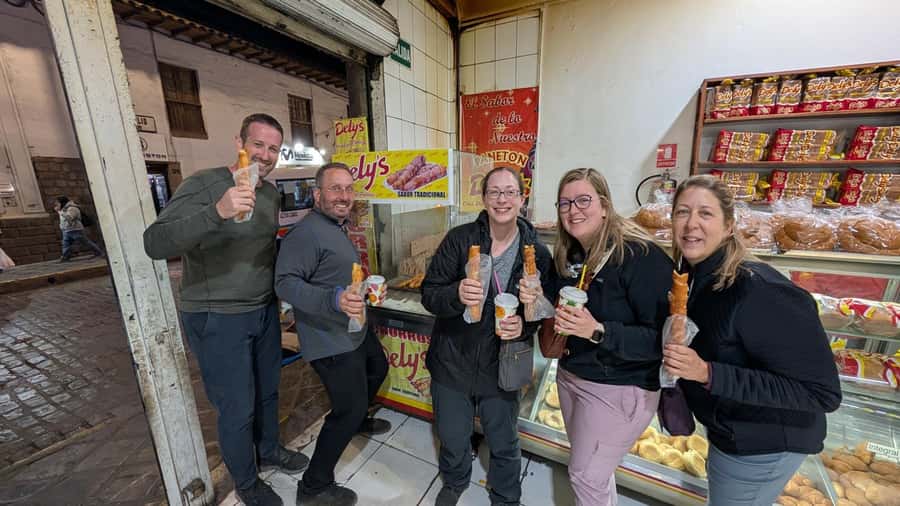
Book it if you want a short, guided introduction to local street food and a pleasant night walk through central Cusco. The strongest reasons are the variety, the patient explanations, and the chance to try foods you might otherwise pass by.
At $50, it is not a bargain snack run. It is a guided food experience, and the value depends on using that guidance. I would choose it early in a Cusco stay, when the information can help you order more confidently for the rest of your visit.
Skip it if you want a full restaurant meal, a fixed menu, or detailed information about dietary options. For everyone else, the combination of four stalls, classic sweets, warm drinks, anticuchos, and illuminated city streets makes this a compact and useful introduction to Cusco’s food scene.
FAQ
Where does the Cusco street food tour begin?
The tour begins in front of the Cusco Cathedral.
How long does the tour last?
The walking tour lasts 90 minutes.
How many food stalls does the tour visit?
The route includes four food stalls.
What foods and drinks are included?
Tastings may include emolientes, picarones, arroz con leche, mazamorra morada, ponches, and anticuchos, among other Peruvian delicacies.
What languages are available?
The live guide service is available in English and Spanish.
What is included in the price?
The $50 price per person includes the guide and the tastings.
Can I cancel the booking?
You can cancel up to 24 hours in advance for a full refund.
Just added around Cusco
- Zipline over the Sacred Valley Trip★ 5.0 · 11 reviews
- Valle Sur Cusco | half day★ 4.3 · 3 reviews
- Visit Pisac from Cusco: Private Transport★ 4.6 · 9 reviews
- Transfer from Cusco to Ollantaytambo★ 5.0 · 30 reviews
- Exclusive Huayna Picchu Tour in 1 Day from Cusco★ 5.0 · 31 reviews
- Trek to Humantay Lake from Cusco★ 4.9 · 8 reviews
- Private Tour Sacred Valley, Chinchero, Maras Moray, Ollantaytambo★ 5.0 · 29 reviews
- 5 Day – Salkantay trek to Machu Picchu – Group Service★ 4.5 · 27 reviews
Tours, compared.
Humantay Lake Tour with Breakfast and Buffet Lunch
Read our review →
Sacred Valley & Maras Salt Mines Tour with Lunch
Read our review →
Moray, Maras Salt Mines & Chinchero Weavers Tour
Read our review →
Half-Day City Tour with Sacsayhuaman and Q’enco
Read our review →
City Tour Cusco Qoricancha Sacsayhuaman y Tambomachay
Read our review →