
Reviewed · HISTORICAL TOURS
Historic/music Cusco FreeWalkingTour “free drink” Group Tour
Cusco’s best introduction may be on foot, moving from the grand Plaza de Armas to the quiet lanes of San Blas, with Inca stonework, colonial churches, local music, and a Pisco Sour along the way. I like the route because it connects famous sights with small cultural stops you could easily miss alone.
I especially like the Andean music demonstration at a local luthier and the chance to see the 12 and 13 angled stones in context. The group is planned for about 10 people, which should make it easier to hear the guide and ask questions. The main consideration is the price: the booking cost is only $2, but a tip of about 30 soles, or $10, is required for the guide service.
Key points at a glance
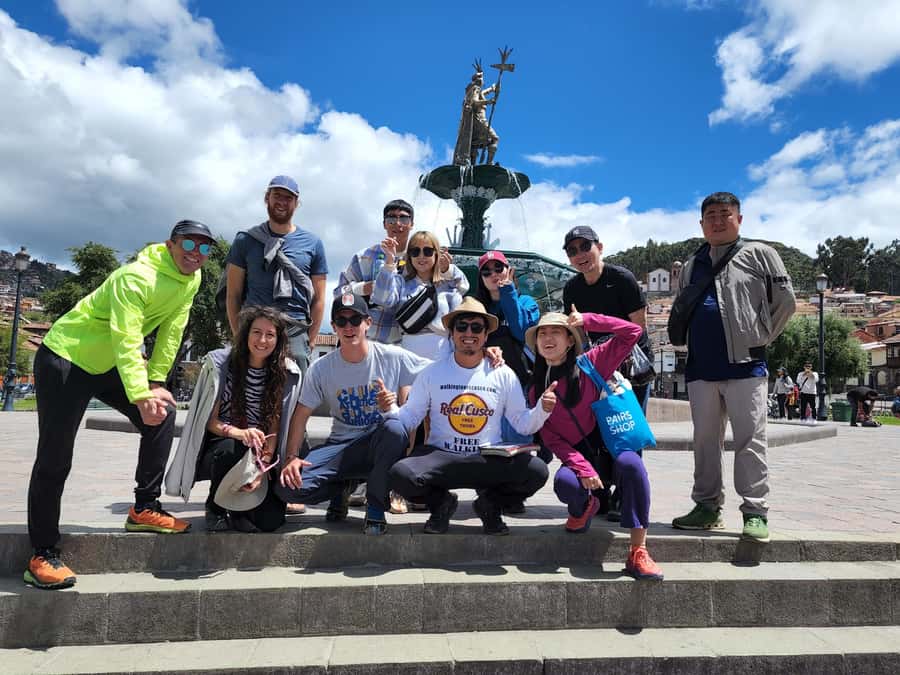
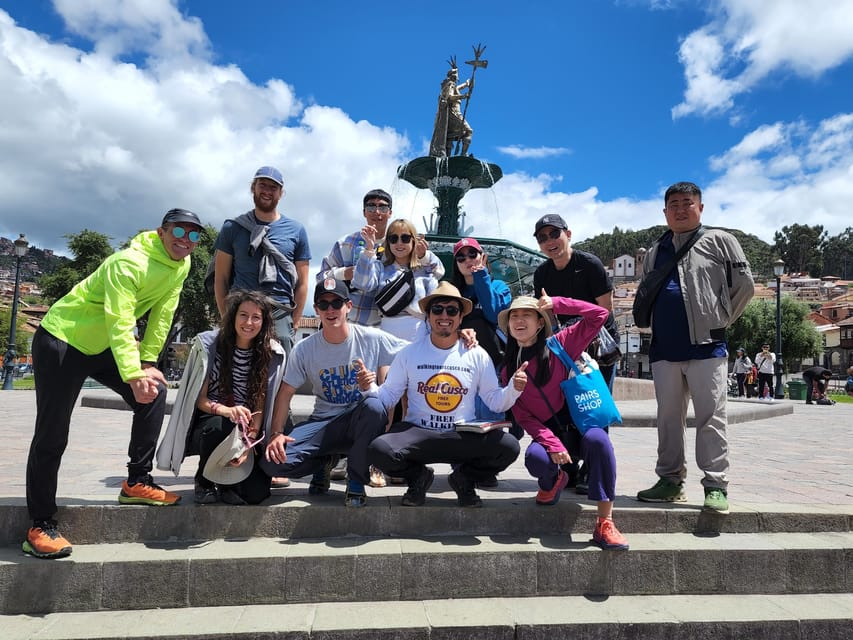
- Start at the Inca Fountain: Meet at the fountain on Cusco’s Plaza de Armas, at coordinates -13.5167681, -71.9787795.
- See Qoricancha and famous Inca stonework: The route links major monuments with details about the 12 and 13 angled stones.
- Walk through San Blas: Explore Cusco’s artistic quarter and stop at a local instrument maker.
- Hear Andean music with city views: The musical performance adds a living cultural element to the history lesson.
- Finish with a Peruvian drink: Choose a complimentary Pisco Sour or non-alcoholic Chicha Morada.
- Plan for the required tip: The expected gratuity is around 30 soles, or $10, in addition to the $2 booking price.
Why this two-hour Cusco walk works well
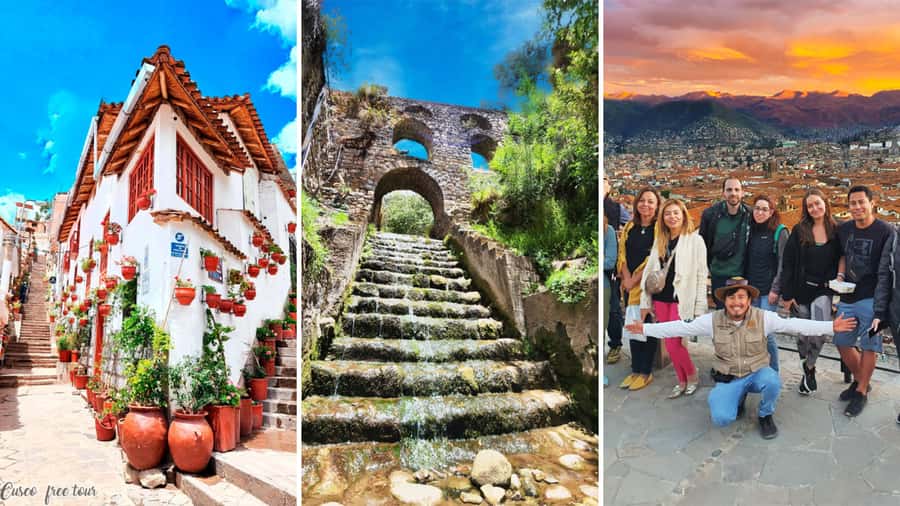
This tour covers a lot without asking you to spend half a day on a bus. You walk through the historic center, see major Inca and colonial sights, then climb into San Blas for crafts, music, and views.
I like that the route is not only a checklist of churches and ruins. The guide explains how Cusco’s Spanish colonial buildings sit on top of, or alongside, Inca foundations. That contrast gives the city its unusual look: heavy stonework below, ornate church fronts above, and narrow streets rising toward San Blas.
The tour also works well as a first activity in Cusco. One guide named Erick has been praised for mixing historical detail with humor, and the wider guide team works in English or Spanish. A two-hour walk can help you understand the city’s layout before you return to explore on your own.
The group size is listed at approximately 10 people. That is small enough to feel more personal than a large city walk, though the experience can still depend on where you stand and how clearly the guide speaks. Bring patience if the group gathers near traffic, music, or crowds.
A few more Cusco days worth weighing up
- Cusco: Historical Guided City Tour with 4 Inca Ruins
★ 4.5 · 99 reviews - Machu Picchu Private Archaeological and Historical Guided Tour
★ 5.0 · 86 reviews - 6-Day Cultural Tour to Machu Picchu
★ 5.0 · 76 reviews
Meeting the guide at the Plaza de Armas
You meet at the Inca Fountain on Cusco’s Plaza de Armas. This is a useful starting point because the square is easy to recognize and puts you right in the middle of Cusco’s main historic area.
Take a moment to look around before the walk begins. The square is framed by arcades, the Cathedral, and the Company of Jesus. These buildings represent the Spanish colonial layer of the city, while the streets nearby reveal the older Inca plan.
The guide’s opening explanation should help you read the square rather than simply photograph it. Pay attention to how the churches face the plaza, how the surrounding buildings use stone arcades, and how the city’s religious center developed over earlier foundations.
Your meeting point is specific, but arrive with the fountain location in mind rather than relying only on a general Plaza de Armas pin. The supplied coordinates are -13.5167681, -71.9787795.
The Cathedral and Company of Jesus
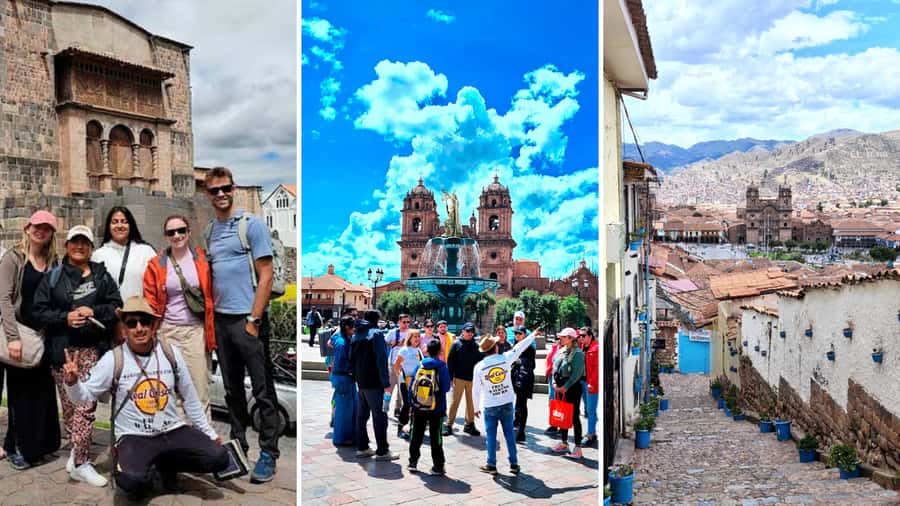
The first part of the walk focuses on two of the square’s most recognizable buildings: the Cathedral and the Company of Jesus. You may not spend long inside either one, since the experience is primarily a walking tour rather than an admission-based church tour.
Their value here is visual and historical. The Cathedral is a large, formal presence on the plaza, while the Company of Jesus is known for its ornate colonial appearance. Seeing the two together gives you a quick lesson in how Spanish religious power shaped Cusco after the conquest.
This is also where a good guide can make the difference. Dates and names are easy to forget. A clear explanation of how architecture, religion, and Inca foundations overlap is more useful because it helps you understand later stops.
If you want extended interior visits, check what is included before booking. The information provided describes visits and commentary, but it does not promise entry to every church or monument.
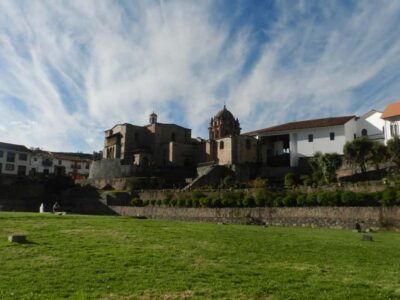
Qoricancha, the Inca Sun Temple
Qoricancha is one of the most important stops. The name is commonly translated as the Temple of the Sun, and the site is central to understanding Cusco before Spanish rule.
The guide explains its historical importance as part of the city’s Inca center. The tour does not simply point to a wall and move on. It places Qoricancha within the larger story of Cusco, where Spanish buildings were raised beside and over Inca foundations.
I find this stop especially valuable for first-time visitors because it turns scattered stone walls into part of a larger plan. The Inca masonry you see later in the streets makes more sense after you have heard why Qoricancha mattered.
The information provided does not state that entrance to the interior is included. Treat this as a guided exterior or area visit unless your booking details clearly say otherwise. If seeing the full complex inside is a priority, confirm admission separately.
Same altitude, a completely different day:
- Cusco: Humantay Lake Tour with Breakfast and Buffet Lunch
★ 4.9 · 2,976 reviews - From Cusco: Sacred Valley & Maras Salt Mines Tour with Lunch
★ 4.8 · 2,227 reviews - From Cusco: Moray, Maras Salt Mines & Chinchero Weavers Tour
★ 4.8 · 1,925 reviews - From Cusco: Full-Day Group Tour of Machu Picchu
★ 4.7 · 1,767 reviews
The 12 and 13 angled stones
Cusco’s famous stonework can seem like a collection of impressive walls until someone shows you the details. This walk points out the legendary 12 and 13 angled stones, examples of the precise cutting and fitting associated with Inca masonry.
The unusual angles are not just a good photo subject. They show how individual stones were shaped to fit tightly with their neighbors. Your guide can explain why these walls attract so much attention and how they differ from the later colonial construction around them.
Look closely rather than rushing past. The important detail is the fit between stones, not merely the size of the wall. A small group gives you a better chance of getting close enough to see the joints, though the streets can still be busy.
This is one of the tour’s strongest history stops because it teaches you how to look. Afterward, you may notice similar stonework in places you pass without a guide.
The Andean Trilogy on an ancient wall
The route also introduces the Andean Trilogy, represented by the condor, puma, and snake. These animals carry symbolic meaning in Andean culture, and the guide explains how they appear in the carved wall.
This stop adds a layer beyond architecture. The condor, puma, and snake are not random decoration. They connect the built city with Andean ideas about the world, different realms, and the relationship between people and nature.
The exact presentation may depend on the guide and the pace of the group, so listen for the explanation rather than expecting a formal museum display. The value comes from seeing the symbols in place and hearing how they fit into Cusco’s cultural story.
I like this part because it breaks up the sequence of churches and stones. You are not only studying what the city was built from. You are also considering what its images meant.
San Blas and Cusco’s artistic side
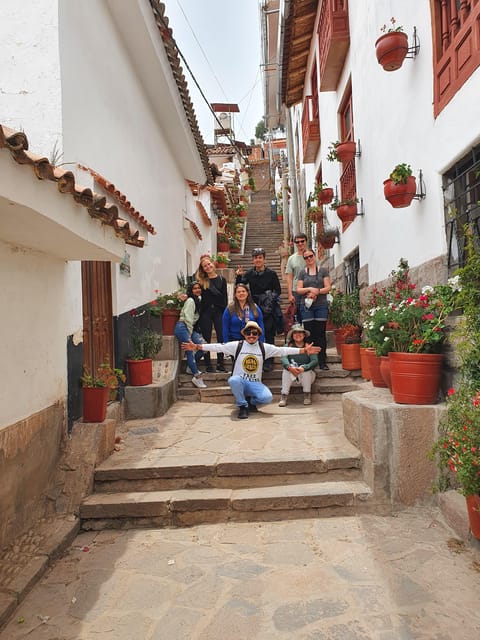
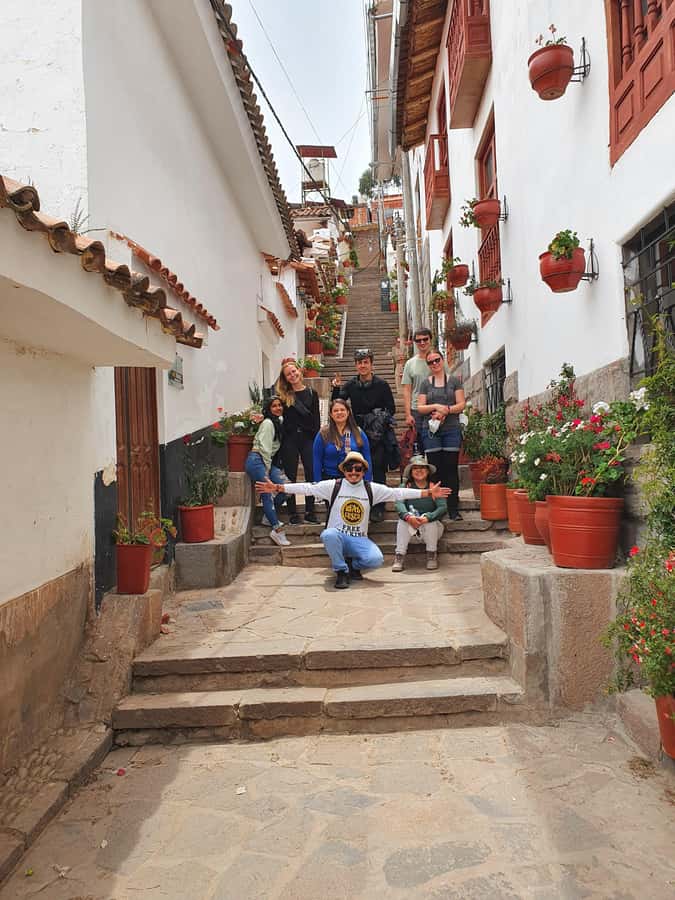
After the central sights, the walk continues into San Blas. This neighborhood is known for its artists, craftspeople, narrow streets, and elevated views over the city.
San Blas changes the mood of the tour. The Plaza de Armas feels formal and monumental. San Blas is more intimate, with small lanes and a strong connection to local art. The route gives you a chance to see a different side of Cusco without leaving the center behind.
The walk can involve slopes and uneven streets, so comfortable shoes matter. The activity is not suitable for wheelchair users, and anyone with limited mobility should consider the terrain before booking. The stated age restriction excludes people over 95, but the more practical issue for many people will be the uphill walking.
The views are another reason to welcome this section. From San Blas, you can look back across Cusco and understand the city’s bowl-like setting. Bring your camera, but keep the group moving by taking photographs during natural pauses.
A luthier, handmade instruments, and Andean music
One of the most distinctive parts of the experience is the stop with a local luthier. You see instruments being made and hear an Andean musical performance, with views over the city.
This is more than a standard explanation delivered beside a monument. The instruments provide a direct link to living craft and music. You get to see how local skill continues beyond the stone walls and colonial facades.
The musical presentation has been a favorite part for many people, particularly the chance to hear instruments that are authentically made. A German visitor described the Inca music and beautiful instruments as a memorable moment, and that makes sense: sound can explain a culture in a way that a plaque cannot.
Keep your expectations measured. This is a short stop within a two-hour walking route, not a full concert or workshop. Still, it gives the tour a personal touch that many basic city walks lack.
Seven Borreguitos Street and the final temple
The route includes 7 Borreguitos Street, presented as one of Cusco’s most picturesque streets. This is a good place for photographs and for noticing how the city’s steep lanes, stone walls, and carefully framed views work together.
The final stop is the Temple of the First Inca Ruler, Manco Capac. The stop gives the walk a clear ending, returning the focus to Cusco’s earliest Inca associations after the colonial and artistic sections of the route.
Because the tour lasts about two hours, the guide has to keep the pace moving. You will get an introduction to each place rather than a long lecture at any one site. That is a benefit if you want an overview, but a limitation if you prefer to study every monument in detail.
I would treat the route as a well-chosen orientation walk. Afterward, you can decide which places deserve a longer visit on your own.
The Pisco Sour or Chicha Morada finish
The tour ends with a choice of Pisco Sour, Peru’s national cocktail, or Chicha Morada, a popular non-alcoholic drink made from purple corn.
The drink is included as a tasting, so it adds a pleasant social finish without requiring you to find a bar afterward. If you are curious about Peruvian flavors, the Pisco Sour is the obvious choice. If you do not drink alcohol, choose Chicha Morada instead.
The phrase complimentary can make this sound like a substantial drink stop, but expect a tasting rather than a full meal or extended food experience. Water is not included, so bring your own bottle. Cusco’s altitude and the walking pace make that a sensible precaution.
The drink also helps mark the end of the tour. You finish with something local and informal after spending the morning or afternoon with monuments and history.
What the $2 price really means
The advertised booking price is $2 per person, which looks exceptionally low for a two-hour guided walk. But the required gratuity changes the calculation. You should plan for about 30 soles, or $10, for the guide service, in addition to the booking fee.
That makes the real expected cost closer to $12 per person, depending on the exchange rate. It is still reasonable for a small-group walk with a live English or Spanish guide, a local artisan visit, music, and a drink tasting.
The important point is to treat this as a tip-based tour, not a fully paid $2 excursion. Carry soles if possible, since the expected gratuity is stated in local currency as well as dollars. If your budget is tight, include the tip before deciding that this is a bargain.
I think the value is strongest for first-time visitors who want context, not for people seeking private guiding or long interior visits. The guide’s explanations are the main product.
What to bring and how to prepare
Wear comfortable shoes with good grip. The route includes central streets and San Blas lanes, and the neighborhood section may involve slopes or uneven paving.
Bring water because it is not provided. A small bottle is enough for most people, but you should plan around your own needs and the altitude of Cusco.
Keep some room in your schedule after the tour. The walk ends at the Temple of the First Inca Ruler, Manco Capac, rather than returning to the original fountain. The provided information does not give an exact return arrangement, so do not assume you will finish at the starting point.
You should also allow for normal city noise. One person had trouble hearing because the guide’s loudspeaker was not working well. That was a specific problem, not a stated feature of every tour, but it is worth standing near the guide and politely asking for repetition when needed.
Who will enjoy this Cusco walk
I would recommend it to first-time visitors, solo travelers, couples, and small groups who want a quick introduction to Cusco’s major sights. It is especially useful if you enjoy history but also want music, crafts, neighborhood streets, and a local drink.
It suits people who like a social group setting. The group size of about 10 should feel manageable, though it will not offer the privacy or flexibility of a private tour.
It is less suitable if you use a wheelchair, dislike uphill walking, need a slow pace, or want extensive time inside Qoricancha and the churches. It is also not designed for a full meal, a long music show, or a detailed archaeological study.
The strongest praise has focused on the guide’s explanations. People have found the history clear, the route more interesting than walking alone, and the local instrument demonstration a welcome surprise. That tells me the human side of the tour matters more than the low booking price.
Should you book this historic Cusco tour?
Book it if you want a compact, social introduction to Cusco that combines major sights with small cultural moments. The Qoricancha visit, Inca stonework, San Blas streets, luthier stop, Andean music, and drink tasting make it more varied than a simple plaza walk.
Go in knowing the $2 price is not the whole cost. The expected 30-sol tip is part of the deal, and water is yours to provide. Also, listen actively if the group is near traffic or the guide’s speaker is weak.
For a first day in Cusco, I think this is a good value. You get the city’s main visual themes, a few useful explanations, and several places to revisit later. If you want private attention, guaranteed interior admissions, or a very relaxed pace, choose a different format.
FAQ
Where does the tour meet?
The meeting point is the Inca Fountain on Cusco Main Square, also called Plaza de Armas. The listed coordinates are -13.5167681, -71.9787795.
How long does the walking tour last?
The tour lasts about two hours.
What languages are available?
The live guide service is available in English and Spanish.
How much does the tour cost?
The listed price is $2 per person. A gratuity of around 30 soles, or $10, for the guide service is required.
Is the guide tip included in the $2 price?
No. The expected gratuity is separate from the $2 booking price.
Is a drink included?
Yes. You can choose a complimentary Pisco Sour or Chicha Morada at the end of the tour.
Is water included?
No. You need to bring or purchase your own water.
What places does the tour visit?
The route includes Cusco’s Plaza de Armas, the Cathedral, the Company of Jesus, Qoricancha, famous 12 and 13 angled stones, the Andean Trilogy wall, San Blas, 7 Borreguitos Street, and the Temple of the First Inca Ruler, Manco Capac.
Does the tour include live music?
Yes. The route includes a visit to a local luthier and an Andean musical performance with locally made instruments.
Is the tour wheelchair accessible?
No. The experience is not suitable for wheelchair users. It is also listed as unsuitable for people over 95.
Can I cancel the booking?
Yes. You can cancel up to 24 hours in advance for a full refund.
Do I have to pay when I reserve?
No. The reserve-now, pay-later option lets you book without paying immediately.
Just added around Cusco
- Zipline over the Sacred Valley Trip★ 5.0 · 11 reviews
- Valle Sur Cusco | half day★ 4.3 · 3 reviews
- Visit Pisac from Cusco: Private Transport★ 4.6 · 9 reviews
- Transfer from Cusco to Ollantaytambo★ 5.0 · 30 reviews
- Exclusive Huayna Picchu Tour in 1 Day from Cusco★ 5.0 · 31 reviews
- Trek to Humantay Lake from Cusco★ 4.9 · 8 reviews
- Private Tour Sacred Valley, Chinchero, Maras Moray, Ollantaytambo★ 5.0 · 29 reviews
- 5 Day – Salkantay trek to Machu Picchu – Group Service★ 4.5 · 27 reviews
Historical Tours, compared.
Machu Picchu Private Archaeological and Historical Guided Tour
Read our review →
Historic Walking Tour with Pisco Sour and Music Show
Read our review →
Pisco Sour Secrets: Hands-On Mixology in Historic Cusco
Read our review →
Browse the lists this tour appears in