
Reviewed · CUSCO CITY TOURS & INCA RUINS
Horseback Riding Plus Tour to Sacsayhuaman, Quenqo, Puka Pucara and Tambomachay
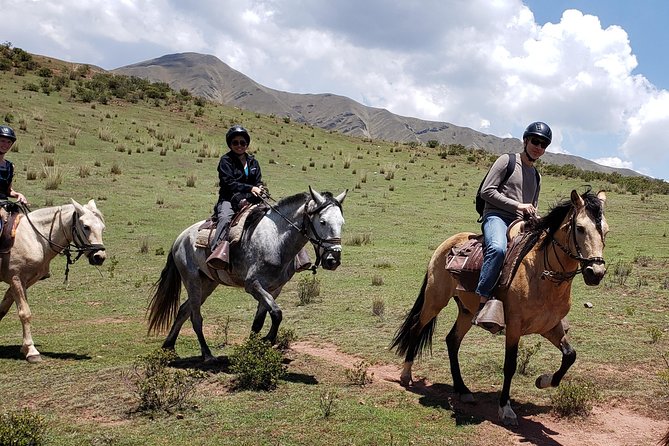
Horseback riding through the hills above Cusco gives this half-day outing its special character. You visit Sacsayhuaman, Qenqo, Puka Pukara, and Tambomachay, but the memorable part is moving between open mountain views, fields, and smaller ruins on a well-behaved Peruvian horse.
I like the mix of activity and archaeology, especially for families with older children or anyone who wants more than a van ride. I also like the strong guiding, with names including Benni, Benny, Hogler, and Jenny praised for clear explanations and patient answers.
The main thing to understand is the timing: horseback riding takes about one hour to one and a half hours, not most of the four-hour tour. You visit the major sites by car, and the archaeological entrance ticket is not included in the $95 price.
Key points to know before booking
- The horse ride is outside the main ruins: Horses do not enter the archaeological sites, helping protect the ancient ground.
- The route suits beginners: Horses are matched to your riding experience, and the group follows the pace of the least experienced rider.
- Four major sites fit into one morning or afternoon: Sacsayhuaman, Qenqo, Puka Pukara, and Tambomachay each offer a different glimpse of Inca life.
- The guide is a major part of the value: Benni, Benny, Hogler, and Jenny have all been singled out for clear, engaging explanations.
- Bring the right clothing: Wear long pants, closed rubber-soled shoes, and a rain jacket if rain is possible.
- Budget for the entrance ticket: The Cusco Tourist Ticket or archaeological entrance fee is separate from the tour price.
Why this Cusco horseback tour works
Cusco offers many ways to see its surrounding ruins. You can hire a taxi, join a bus tour, or walk between selected sites. This experience adds a short ride through the countryside, which changes the feel of the day.
You are not simply being driven from one stone complex to the next. For part of the outing, you sit in the saddle and look across the hills near the old Inca capital. The horses take you through scenery that includes open fields, mountain views, and smaller ruins near the riding route.
That combination is the real appeal. You get a guided archaeological outing, but also an active break from museums and city streets. The format is especially useful if your group includes people with different interests. One person can enjoy architecture and religion, another can enjoy horses, and children or teenagers get a more active afternoon.
The tour lasts about four hours and includes private car transport from your hotel to the riding ranch and between the archaeological sites. The group can have up to 15 people. That is small enough to keep the outing manageable, though the experience may feel less personal than a private ride with only your own group.
More Horseback Days from Cusco:
- Cusco: 3-Hour Horse Riding Tour to the Temple of the Moon
★ 5.0 · 105 reviews - Cusco: Half-Day Horseback Riding at Devil’s Balcony
★ 4.9 · 89 reviews - Horse Riding Chacan Mountain And Temple Of The Moon
★ 5.0 · 78 reviews
Sacsayhuaman, the powerful first stop
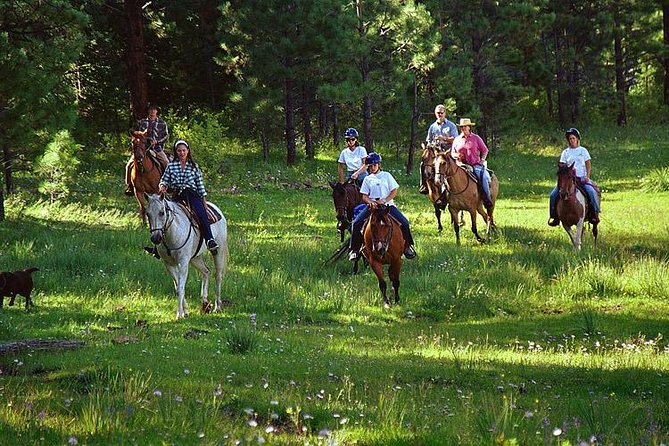
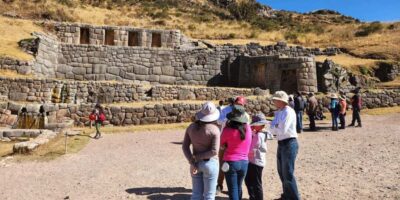
Sacsayhuaman is usually the most dramatic of the four archaeological sites. Its huge fitted stones make an immediate impression, even if you know little about Inca construction before arriving.
Your guide explains the site’s purpose, architecture, and place in Inca society. This is where a good guide matters. The strongest part of the tour is not simply seeing the walls, but understanding how the stonework, ceremonial spaces, and setting fit together.
Give yourself time to look closely at the joints between the stones. The construction is the point. You will also have broad views over Cusco and the surrounding mountains, which help explain why this high ground mattered.
Sacsayhuaman can be busy, and the walking surfaces are uneven. The tour does not involve riding through the ruins. You leave the horse at the appropriate point and explore on foot with the guide.
Puka Pukara and the road through the hills
Puka Pukara is smaller and more compact than Sacsayhuaman, but it adds an important piece to the route. Its name is commonly translated as Red Fortress, and its position near the road made it useful as a stopping and watching point.
Your guide places the site within the wider network around Cusco. That context makes the stop more worthwhile than a quick photo break. You begin to see that these places were not isolated monuments. They formed part of a carefully organized area around the Inca capital.
The ride and the archaeology are kept separate here. You travel by car to the site, walk around it, and then continue to another point for horseback riding. This arrangement may surprise you if you expect to ride from ruin to ruin, so keep your expectations clear from the start.
The vehicle transfers also make the four-hour schedule practical. Covering all four sites on horseback would take much longer and would not be appropriate inside protected archaeological areas.
Tambomachay, water and ritual
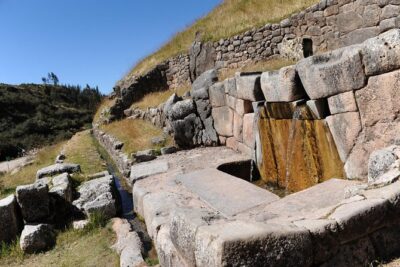
Tambomachay gives the route a different mood. Water features and carefully built channels are central to the site, and your guide discusses their practical and ceremonial importance.
This stop is valuable because it shows another side of Inca planning. Sacsayhuaman feels imposing, while Tambomachay is more closely tied to water, ritual, and the relationship between engineering and religious custom.
The site is not large, so the visit does not drag. That is a good fit for a half-day tour. You get enough explanation to understand why the place matters, then move on rather than spending too long at one small complex.
As with the other stops, you should expect some walking and uneven ground. Closed shoes with rubber soles are a sensible choice for the entire outing, not just the riding portion.
More City and Ruins Half-Days in Cusco:
- Cusco: Half-Day City Tour with Sacsayhuaman and Q’enco
★ 4.6 · 1,129 reviews - City Tour Cusco Qoricancha Sacsayhuaman y Tambomachay
★ 4.7 · 617 reviews - Open Bus Cusco City Tour
★ 4.5 · 219 reviews - Cusco: City Tour | Half-Day Tour to 4 Archaeological Sites
★ 4.6 · 206 reviews
Qenqo and the final archaeological stop
Qenqo brings the focus back to religious practice and carved stone. The site is unusual in feel, with spaces that invite questions about ceremonies and beliefs. Your guide explains the customs connected with the site and answers questions as you walk.
This is one place where a strong guide can turn a short visit into a useful lesson. The best guides on this route are praised for making explanations easy to follow, even when questions are awkwardly phrased or the subject is unfamiliar.
The order of the stops can vary. In some schedules, you visit Qenqo near the end, after the riding portion. Do not treat the published sequence as a promise of exact timing. Traffic, pickup arrangements, site conditions, and the pace of the group can affect the order.
What the horseback ride is really like
The ride is the active centerpiece, but it is not a full-day equestrian trip. Plan on roughly one hour, with some accounts describing a ride closer to one and a half hours depending on the day and schedule.
The ranch is identified as Vieja Estancia Ranch. Staff provide the saddle and safety helmet, and a muleteer helps care for the horses. You are matched with a horse according to your experience and confidence.
That matching is important for beginners. You do not need previous riding experience, and the activity is suitable for participants with little or no experience. The pace follows the least experienced rider, which helps keep the group together and gives first-time riders a calmer introduction.
More confident riders may get brief chances to let the horse move faster, but you should not book this expecting a fast or technical ride. The route is designed for a mixed group, not for advanced riding instruction.
The horses are described as well cared for and well behaved. Peruvian horses are also noted for a comfortable gait, which can make a difference when you are new to riding or have spent the morning walking on uneven ground.
You ride through mountain country, fields, and areas where smaller ruins can be seen. The scenery is a major part of the experience. At times, you may feel far from the city, even though the route remains close to Cusco.
Guides who make the difference
The archaeological sites are easier to appreciate with a guide who can connect the stones to Inca beliefs and daily life. This tour has received especially strong praise for its guiding.
Benni is described as confident with Inca history and skilled at explaining difficult ideas in clear language. Benny is also praised for making the day special, balancing cultural information with a friendly manner. Hogler is noted for his explanations of Inca archaeology, and Jenny is credited with helping create an enjoyable outing.
You are not guaranteed one particular guide, so treat these names as examples of the guiding standard associated with the experience rather than a promise. The key point is that the guide is not just there to lead you from site to site. The guide explains architecture, customs, and the purpose of each place.
That matters at Qenqo and Tambomachay, where the stones alone may not tell you much. It also matters at Sacsayhuaman, where the scale can distract from the details.
The $95 price and what it includes
At $95 per person, this is not the cheapest way to see the four sites. You are paying for private car transport, a professional guide, the ranch operation, horses, saddles, helmets, a muleteer, and water.
The price makes more sense if you value convenience and want the riding element. You do not have to arrange a separate taxi to the ranch or work out transport between the archaeological sites. The same guide can also explain the sites, rather than leaving you to read signs or hire another guide.
The important extra cost is the archaeological entrance ticket. It is not included. The operator explains that the fee is controlled by the Peruvian government and must be paid directly for access. One price reference places it around $20, or about 70 soles, but you should confirm the current amount before going.
Snacks are mentioned as part of the experience, but one account reported not receiving them. Water is included, and it is sensible to carry a little extra food if you need regular snacks or are traveling with children.
For value, compare this with the cost of arranging a car, a guide, horse riding, and site visits separately. The tour is not a bargain in the narrowest sense, but it is a reasonably efficient way to combine several services in half a day.
What to wear and bring
Cusco weather can change quickly, and the tour requires time outdoors. Wear long pants, preferably jeans or another sturdy pair, and closed shoes with rubber soles or good walking shoes.
Bring a rain jacket if the forecast shows a significant chance of rain. A jacket is useful even if the morning begins clear, since the ride takes place in the hills and the weather can shift.
Use sunscreen, even on a cloudy day. One participant regretted skipping it during an overcast outing. A hat and sunglasses can also help, but do not wear jewelry or bring valuables on the ride.
The provider lists a maximum weight of 200 pounds, or 90 kilograms. This is a firm consideration when deciding if the activity is suitable.
The guide carries a first-aid kit for emergencies. The guide is not authorized to provide medication outside the limits of first aid, so bring any personal medication you may need.
Who should book this experience
I would choose this tour for a family with teenagers, a couple that wants culture and scenery in the same outing, or a solo visitor who prefers a guide rather than organizing several stops alone.
It also suits first-time riders. The horses are selected to match ability, and the pace is set by the least experienced person. You can enjoy the scenery without needing to know how to ride before you arrive.
This is less suitable if you want a long horseback expedition. The riding portion is relatively short, and the rest of the tour involves car transfers and walking around archaeological sites.
It may also disappoint you if you expect to ride directly into Sacsayhuaman, Qenqo, Puka Pukara, or Tambomachay. Horses do not enter the ruins because their hooves could damage the ground. The horse ride and the site visits are two related but separate parts of the day.
Booking, cancellation, and group details
Confirmation is provided at booking, and the tour includes round-trip hotel transport by private car. It is near public transportation, though the included pickup makes that less important for most people.
Most participants can take part, with a minimum age of six. The maximum group size is 15 people.
You can cancel for a full refund up to 24 hours before the local start time. Cancellations or changes within 24 hours are not refunded or accepted. The activity requires good weather. If poor weather causes cancellation, you are offered another date or a full refund.
Should you book the Cusco horseback riding tour?
Book it if you want a well-organized half-day that combines four major Inca sites with a scenic, beginner-friendly ride. The strongest reasons are the guide explanations, the comfortable horses, and the chance to see the countryside around Cusco rather than spending the whole outing inside a vehicle.
Skip it if your priority is a long horseback journey, a low-cost ruins tour, or riding directly to the archaeological sites. At $95, plus the entrance ticket, it is not the cheapest choice. But for a mixed group that wants culture, mountain views, and an easy ride in one outing, it offers a useful balance.
FAQ
How long does the tour last?
The tour lasts approximately four hours.
How long is the horseback riding portion?
The ride is about one hour, though some outings may last closer to one and a half hours.
Which archaeological sites does the tour visit?
The route includes Sacsayhuaman, Qenqo, Puka Pukara, and Tambomachay.
Are the archaeological entrance fees included?
No. The Cusco Tourist Ticket or entrance fees for the archaeological sites are not included in the tour price.
Is horseback riding experience required?
No. The activity is suitable for people with little or no riding experience.
What is the minimum age?
The minimum age is six years.
Is there a weight limit?
Yes. The maximum weight is 200 pounds, or 90 kilograms.
What should I wear?
Wear long pants, closed shoes with rubber soles or walking shoes, and a rain jacket if rain is possible.
Are transport and water included?
Yes. The tour includes private car transport and mineral or natural water.
What happens if the weather is poor?
The experience requires good weather. If it is canceled because of poor weather, you can choose another date or receive a full refund.
More Horses in Cusco
- Horseback Tour in cusco to Temple of the Moon & Hidden temples
★ 5.0 · 54 reviews - Half day Horseback Riding tour around Sacsayhuaman park
★ 5.0 · 37 reviews - Cusco: Rainbow Mountain Horseback Riding Tour + lunch
★ 4.1 · 10 reviews - Rainbow mountain horseback riding tour + Buffet Lunch
★ 3.8 · 9 reviews
Just added around Cusco
- Zipline over the Sacred Valley Trip★ 5.0 · 11 reviews
- Visit Pisac from Cusco: Private Transport★ 4.6 · 9 reviews
- Valle Sur Cusco | half day★ 4.3 · 3 reviews
- Transfer from Cusco to Ollantaytambo★ 5.0 · 30 reviews
- Exclusive Huayna Picchu Tour in 1 Day from Cusco★ 5.0 · 31 reviews
- Trek to Humantay Lake from Cusco★ 4.9 · 8 reviews
- Private Tour Sacred Valley, Chinchero, Maras Moray, Ollantaytambo★ 5.0 · 29 reviews
- 5 Day – Salkantay trek to Machu Picchu – Group Service★ 4.5 · 27 reviews
Cusco City Tours & Inca Ruins, compared.
Half-Day City Tour with Sacsayhuaman and Q’enco
Read our review →
City Tour Cusco Qoricancha Sacsayhuaman y Tambomachay
Read our review →
City Tour | Half-Day Tour to 4 Archaeological Sites
Read our review →
City Tour in Cusco & visit Museum South American Camelid Private.
Read our review →
Cusco City Sightseeing, San Pedro Market, Cathedral and Qorikancha Temple
Read our review →
Cusco City Sightseeing and Sacsayhuaman Archeological Park Tour
Read our review →Browse the lists this tour appears in