
Reviewed · CUSCO CITY TOURS & INCA RUINS
Sacsayhuaman Temple, Tambomachay and Puca Pucara Half-Day Tour
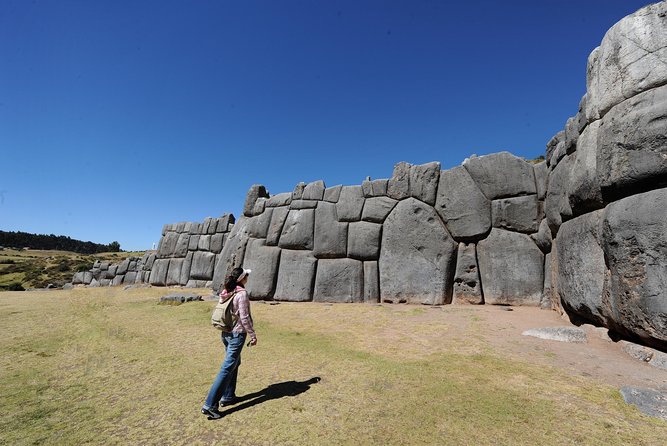
Sacsayhuaman is the reason to book this outing. Its huge, tightly fitted stones and open terraces make Inca engineering feel less like something you read about and more like something you can inspect with your own eyes. I like the early 8:00 am start, which helps you reach the main site before the worst crowds and leaves time for lunch in Cusco.
I also like the small-group format, capped at 14 people, and the easy transport between four sites. Guides such as Jose Aguilar, Ana, Yuber, Alex, and Mariné have provided lively explanations and helped with photos. The main catch is that some departures move too quickly, and an unlisted alpaca or textile-shop stop can take time from the ruins.
Four Inca sites, one useful morning
- Sacsayhuaman gets the time it deserves, with about 1 hour and 30 minutes planned for its terraces, towers, views, and enormous stonework.
- Q’enqo offers a different kind of experience, with carved rock, channels, chambers, and a ceremonial altar area that may not be accessible.
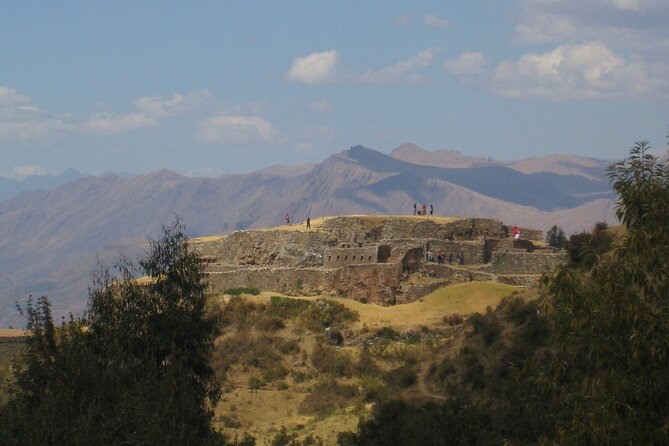
- Puca Pucara is a quick hilltop stop, where walls, water features, and lookout points explain its role near Cusco.
- Tambomachay centers on sacred water, with spring-fed channels linked to Inca ceremony and ideas of youth and good fortune.
- The 8:00 am departure matters, since Sacsayhuaman can develop long lines later in the day.
- The price is fair for convenience, but less attractive if you want long, detailed time at every site or dislike shopping stops.
Why Sacsayhuaman deserves the first look
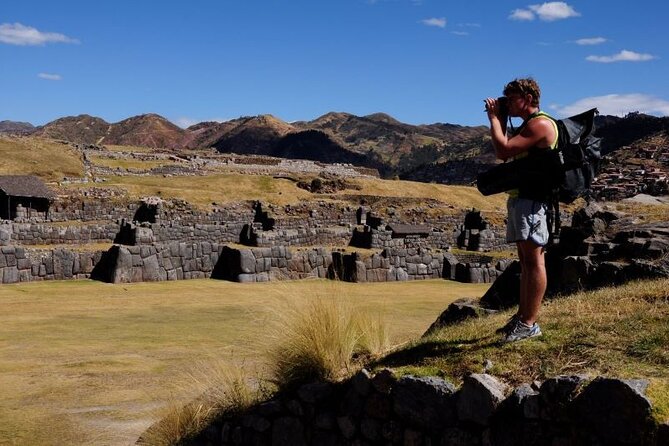
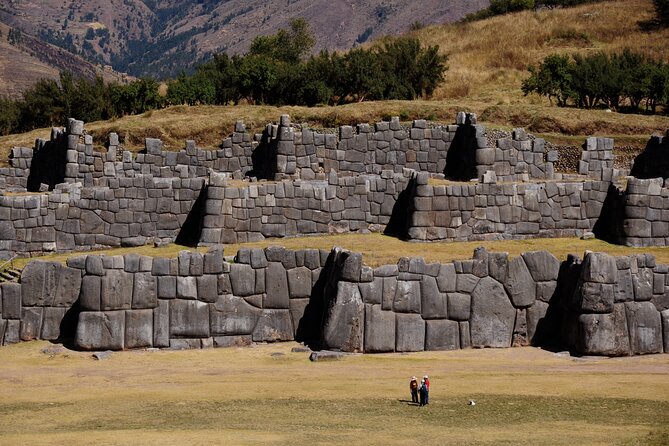
Sacsayhuaman is not just a ruin beside Cusco. It is a broad archaeological park with three great stone terraces, remnants of towers, sacred paths, and enormous blocks fitted together with remarkable precision. The scale is the point. You can look at the walls from a distance, then walk close enough to study the joints and shapes in the stone.
The site also gives you one of the clearest views back toward Cusco. That view helps explain the relationship between the city and the surrounding hills. You are not visiting an isolated monument. You are looking down on the city from a ceremonial and defensive complex that once formed part of the Inca capital.
The planned visit lasts about 90 minutes, though one well-paced outing described nearly two hours here. That is the right instinct. Sacsayhuaman is the only stop on this route that really rewards lingering. Give yourself time to photograph the stonework, listen to the explanation of the Inca world, and examine the animal forms and symbols associated with different levels of existence.
You may also see the white Cristo Blanco statue nearby. One account noted that it was roughly a 10-minute walk from the main viewpoint, though it was not part of the formal tour. Do not count on visiting it with the group, but you may be able to ask the guide if the schedule allows.
The early start is one of the tour’s strongest practical features. Sacsayhuaman can become crowded, and lines may be long during busy periods. Getting there at 8:00 am gives you a better chance of seeing the walls with room to move and fewer people in your photos.
The weak point is guide pacing. Some departures have spent too much time at a viewpoint and not enough time among the ruins. If Sacsayhuaman is your main reason for booking, tell your guide at the start that you want the full site explanation and time for photos.
More City and Ruins Half-Days in Cusco:
- Cusco: Half-Day City Tour with Sacsayhuaman and Q’enco
★ 4.6 · 1,129 reviews - City Tour Cusco Qoricancha Sacsayhuaman y Tambomachay
★ 4.7 · 617 reviews - Open Bus Cusco City Tour
★ 4.5 · 219 reviews
Q’enqo and the carved-rock ceremonies
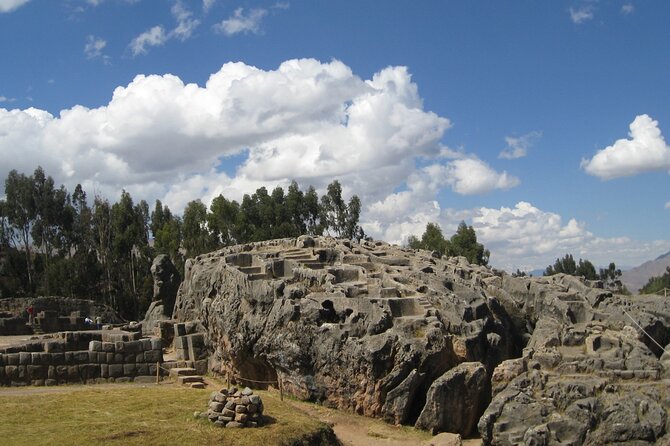
Q’enqo is smaller and more enclosed than Sacsayhuaman. Its appeal comes from the rock itself. The site includes carved surfaces, winding passages, stairways, channels, and a ceremonial area cut into the stone.
The central altar is often described in connection with sacrifices and Inca ritual practice. At present, the interior altar area may be closed for access, so the visit can focus on the upper paths, carved rock, and panoramic view. The planned stop is about 30 minutes.
That short visit makes sense if you treat Q’enqo as one piece of a larger morning. It does not offer the grand scale of Sacsayhuaman, and you can see the main features fairly quickly. Still, a good guide can explain how water, rock, enclosed chambers, and ceremony fit together.
This is where guide quality matters most. A strong guide will point out details you could easily walk past. A rushed guide may reduce the stop to a quick look at the rock and a few photographs. If you want the religious and architectural background, ask direct questions rather than waiting for a long talk.
Puca Pucara, the red fortress above Cusco
Puca Pucara means red fortress in Quechua. The site served as a military post and lookout near the approaches to Cusco and Sacsayhuaman. It also functioned as a checkpoint, helping control movement along the route.
You will see stone walls, platforms, water features, and aqueducts spread across the hilltop. Compared with Sacsayhuaman, Puca Pucara feels modest. Its value lies less in monumental stonework and more in its position and purpose.
The planned stop is about 30 minutes. That can be enough to understand the site, take photographs, and enjoy the views, but it is also the stop most likely to feel abbreviated if the schedule slips. One useful warning: an alpaca or textile-shop visit has sometimes taken time that people expected to spend at the ruins.
The site is especially good for understanding how the Inca road system was supported. Sacsayhuaman shows power and construction on a grand scale. Puca Pucara shows the practical side of maintaining control, watching roads, and protecting access to the capital.
Tambomachay and the sound of running water
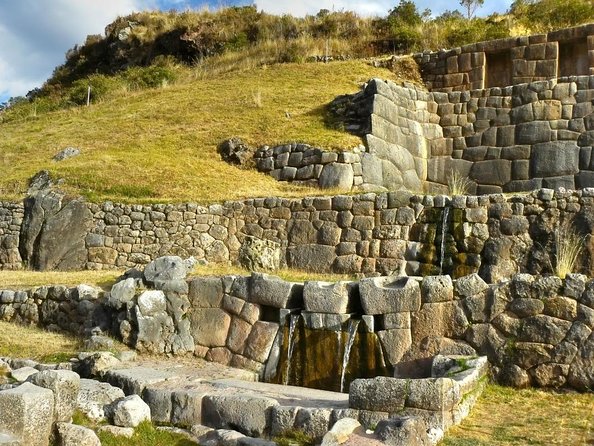
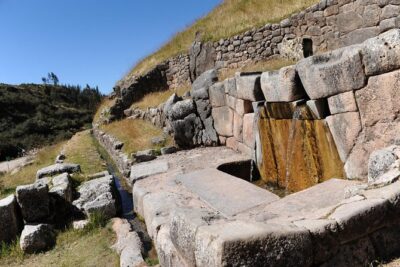
Tambomachay is built around natural springs that emerge from the mountain. Its channels and fountains are carefully arranged, and the water gives the site a quieter character than the fortress-like ruins elsewhere on the route.
The springs were sacred to the Incas and connected with ritual life, youth, luck, and the Andean view of the world. You can see how the builders shaped the stone around the water rather than treating it as a simple utility.
About 45 minutes is planned here. That is enough to look closely at the channels and hear the explanation, though the stop is still compact. The site can be slippery in wet weather because of its stone steps and paths. If you visit during the rainy season, wear shoes with a firm grip and move carefully.
The order of the sites can vary. The main description places Tambomachay early, while the detailed stop list begins with Sacsayhuaman. Either way, the minivan carries you between the sites, saving the effort and time of arranging separate taxis.
A few more Cusco days worth weighing up
- Cusco: City Tour | Half-Day Tour to 4 Archaeological Sites
★ 4.6 · 206 reviews - Cusco: Half-Day City Tour
★ 4.2 · 129 reviews - From Cusco: Moray, Maras Salt Mines & Chinchero Weavers Half-Day
★ 5.0 · 126 reviews - Cusco: Half-Day Horseback Riding at Devil’s Balcony
★ 4.9 · 89 reviews
What the guide and group size mean
This is a bilingual Spanish and English tour. The group can include up to 14 people, though one outing had eight participants and another had only one person. A smaller group usually makes it easier to hear the guide and ask questions, but the experience can still depend heavily on the individual assigned that day.
Several guides have been singled out for clear explanations, including Jose Aguilar, Ana, Yuber, Alex, Mariné, Robinson, and Henry. Their reported strengths include Inca history, Cusco culture, Quechua traditions, photography help, and a patient pace. You cannot select a particular guide from the information provided, so treat the names as examples rather than a guarantee.
Language balance can affect the pace. One guide reportedly gave extra attention to the only English-speaking person in a mostly Spanish-speaking group. That is encouraging, but it also means the tour may take longer or feel less even when the guide switches between languages.
I would ask early about the timing at Sacsayhuaman and the possibility of a shop stop. A clear request can help protect the part of the tour you care about most. If the guide is offering broad cultural stories but skipping site details, ask specifically about the battle at Sacsayhuaman, the ceremonial use of Q’enqo, or the purpose of Puca Pucara.
Transport, timing, and the real value of $69
At $69 per person, the tour offers a sensible package if you value transport, a bilingual guide, and admission to four archaeological sites. You avoid arranging several taxis and do not need to work out which roads connect the hilltop ruins. Hotel pickup and return also make the morning easy, especially on your first day in Cusco.
The duration is listed as about three hours, while several descriptions place the outing closer to four hours. Plan your morning around a three to four hour window rather than scheduling a tight connection immediately afterward. One person used it on a departure day and still had time for lunch and shopping before an evening flight, but you should leave a cushion for pickup delays and traffic.
The minivan is air-conditioned, clean, and spacious according to the information provided. Some central hotels sit on streets where vehicles cannot enter, so pickup may take place at a nearby accessible point. Confirm the exact meeting arrangement before you go.
Admission is included for the archaeological park covering all four sites. That matters because the entry package can make a self-guided visit more complicated. The tour also removes the need to queue for tickets, although arriving early remains the best defense against crowds.
For a solo visitor, the price can be good because you are not paying for a private taxi by yourself. For two or more people, compare the cost with hiring a taxi and arranging your own guide, especially if you want to set your own pace. A taxi gives you freedom, but not necessarily site interpretation or help understanding what you are seeing.
The shopping-stop problem
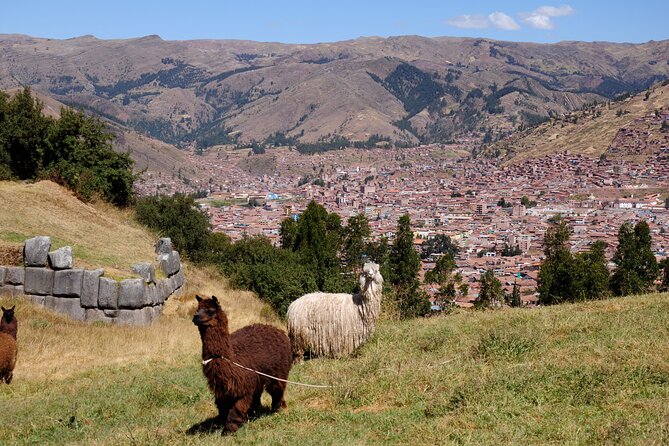
The formal description focuses on ruins, but some departures have included a stop at an alpaca or textile shop. The demonstration can explain the difference between alpaca, baby alpaca, vicuña, llama fiber, wool, and synthetics. That may be useful if you plan to buy textiles in Peru.
The drawback is pressure. Some people have found the sales approach uncomfortable and would rather spend those 20 to 30 minutes at Puca Pucara or Sacsayhuaman. A purchase can also bring payment surprises. One account described a 30 percent markup for paying by Visa at a shop, so ask about the final price and payment surcharge before buying.
You are not required to treat the shop as a highlight. If shopping is not part of your plan, say so politely and ask whether you can remain on the minivan or have extra time at the archaeological site. The operator has acknowledged complaints about unplanned shopping stops, but the safest approach is to clarify expectations before leaving Cusco.
Weather, walking, and what to bring
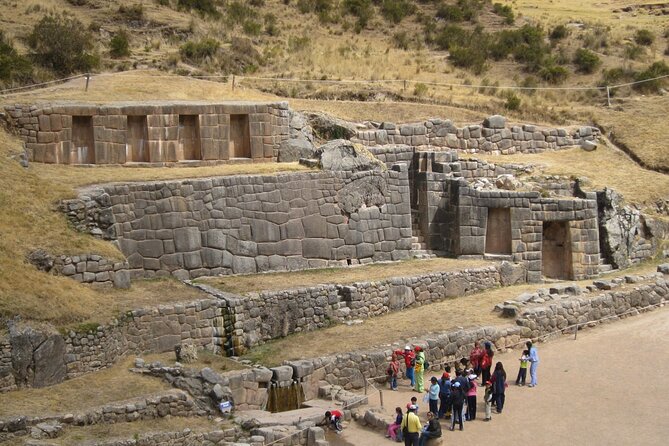
The route involves stone steps, uneven paths, and open viewpoints. Rain can make the surfaces slippery, particularly around Tambomachay. The tour is suitable for most people, but comfortable shoes and a steady pace will make the morning easier.
Cusco’s strong sun deserves respect. Bring sunscreen and a hat, even if the morning begins cool or cloudy. One person reported getting sunburned despite a bright, clear day, and the high elevation makes sun protection especially important.
A light rain layer is useful during the wet season. Rain can make the ruins feel atmospheric, but it can also shorten the time you want to spend outdoors. Your camera should be ready for wide views at Sacsayhuaman and close details in the stone channels at Q’enqo and Tambomachay.
Who should book this half-day outing
I would choose this tour if you have limited time in Cusco and want a guided introduction to the four major sites outside the city center. It is particularly useful before or after Machu Picchu, since it gives you a broader sense of Inca construction, ceremony, water management, and defense.
It also suits solo visitors who want transport and company without paying for a private tour. The small group and included return ride keep the morning simple. If you are interested in history, architecture, archaeology, and photography, Sacsayhuaman alone can justify the booking.
I would hesitate if you want every stop explained at length or dislike fixed schedules. Some departures have ended early, rushed Q’enqo and Tambomachay, or replaced ruin time with a shop visit. If you are comfortable arranging taxis and researching the sites yourself, an independent visit may give you better control.
The overall rating is 4.5 from 59 ratings, which fits the experience as described: strong sites, generally good transport, and many well-regarded guides, balanced by uneven pacing and the risk of an unwanted textile stop.
Should you book it?
Book it if you want a convenient morning, early access to Sacsayhuaman, included admissions, and a guide who can connect four very different Inca sites. Treat Sacsayhuaman as the main event, and think of Q’enqo, Puca Pucara, and Tambomachay as shorter but worthwhile additions.
Before departure, confirm the 8:00 am start, ask how much time the group will spend at Sacsayhuaman, and check whether a textile stop is planned. If those answers work for you, $69 is a reasonable price for a compact, guided introduction to the ruins around Cusco.
FAQ
What time does the tour start?
The stated start time is 8:00 am.
How long does the tour last?
The tour is described as approximately three hours, though some outings have lasted closer to four hours.
Which sites are included?
The tour includes Sacsayhuaman, Q’enqo, Puca Pucara, and Tambomachay.
Is transportation included?
Yes. Hotel pickup and drop-off are included, with travel between sites in an air-conditioned minivan. Some hotels are on streets where vehicles cannot enter, so a nearby pickup point may be needed.
Is the tour offered in English?
Yes. A live bilingual guide provides service in Spanish and English.
What is the cancellation policy?
You can cancel at least 24 hours before the local start time for a full refund. Changes or cancellations made less than 24 hours before the start are not accepted for a refund.
Just added around Cusco
- Zipline over the Sacred Valley Trip★ 5.0 · 11 reviews
- Valle Sur Cusco | half day★ 4.3 · 3 reviews
- Visit Pisac from Cusco: Private Transport★ 4.6 · 9 reviews
- Transfer from Cusco to Ollantaytambo★ 5.0 · 30 reviews
- Exclusive Huayna Picchu Tour in 1 Day from Cusco★ 5.0 · 31 reviews
- Trek to Humantay Lake from Cusco★ 4.9 · 8 reviews
- Private Tour Sacred Valley, Chinchero, Maras Moray, Ollantaytambo★ 5.0 · 29 reviews
- 5 Day – Salkantay trek to Machu Picchu – Group Service★ 4.5 · 27 reviews
Cusco City Tours & Inca Ruins, compared.
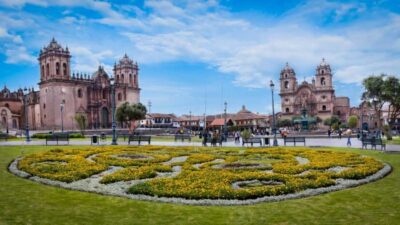
Half-Day City Tour with Sacsayhuaman and Q’enco
Read our review →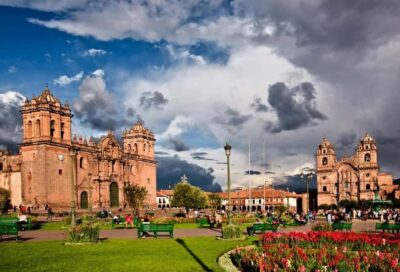
City Tour Cusco Qoricancha Sacsayhuaman y Tambomachay
Read our review →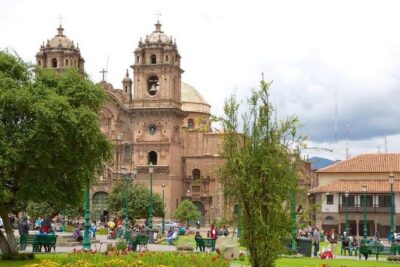
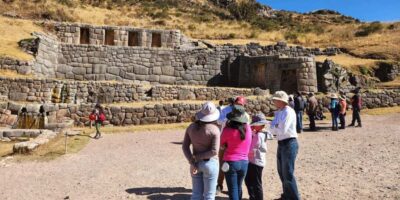
City Tour | Half-Day Tour to 4 Archaeological Sites
Read our review →
City Tour in Cusco & visit Museum South American Camelid Private.
Read our review →
Cusco City Sightseeing, San Pedro Market, Cathedral and Qorikancha Temple
Read our review →
Cusco City Sightseeing and Sacsayhuaman Archeological Park Tour
Read our review →Browse the lists this tour appears in