
Reviewed · SALKANTAY TREKS TO MACHU PICCHU
Salkantay Trek To Machu Picchu 5 Days And 4 Nights
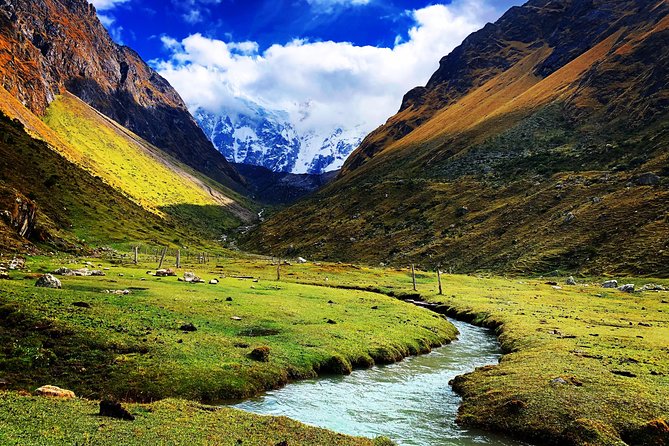
The Salkantay Trek to Machu Picchu gives you five days of sharp contrasts: icy mountain air, a turquoise lake, high-altitude passes, warm rainforest, coffee farms, and finally the stone terraces of Machu Picchu. It is a serious hike, but the crew carries the camp gear, cooks your meals, and handles the train and transport at the end.
I like the practical support, especially the horse carrying up to 8 kilograms of your belongings and the proper camp setup with mattresses, pillows, dining space, and a portable toilet. I also like the change in scenery. You are not walking through the same type of country for five days.
The main caution is the altitude and the early start. Day two reaches 15,252 feet, and the first two days are hard even for fit hikers. The 4:30 a.m. pickup, steep climbs, long descents, and cold nights require preparation.
Key points to know before booking
- The Salkantay Pass reaches 15,252 feet: Day two is the physical test of the trip, with a one-hour climb followed by long downhill sections.
- Humantay Lake starts the adventure: You reach the trailhead after a long morning drive, then hike for roughly two hours to the lake.
- The route changes dramatically: Snowy peaks give way to rainforest, waterfalls, river valleys, coffee plantations, and warmer low elevations.
- The support is unusually complete: Horses carry shared equipment, one horse carries 8 kilograms of your belongings, and cooks prepare breakfast, lunch, and dinner.
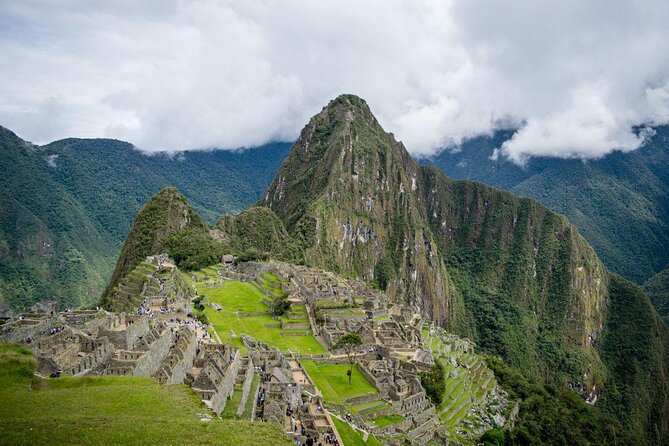
- Your first Machu Picchu view comes from Llactapata: The ruin provides a distant look at the citadel before your full visit the next morning.
- The group is limited to 16 people: That is small enough for closer attention from the bilingual guide and easier group management on the trail.
What the five-day Salkantay route feels like
This is not a casual walk with a few scenic stops. You hike for several hours each day, sleep in camps for the first three nights, and move from very high mountain country down toward the rainforest. The route is rewarding because the setting keeps changing, but that variety also means you need clothing for cold, wet, sunny, and warm conditions.
The tour begins with hotel pickup in Cusco at 4:30 a.m. A pre-departure briefing takes place at your hotel one or two days before the trek, which is important. You can confirm what goes into the duffle bag, ask about rented sleeping bags and trekking poles, and make sure your passport details are in order.
The guide team speaks English and Spanish. Christian is one of the guides associated with departures and is praised for his explanations of plants, wildlife, Inca culture, and the surrounding country. Other departures may include Eddie or Edy, Hipo, Dario, or a second guide such as Ericsson. The exact guide depends on your departure, but the format gives you a bilingual leader and support staff rather than leaving you to manage the route alone.
More Salkantay Departures from Cusco:
- Salkantay Trek Challenge – 3 Days / 2 Nights
★ 5.0 · 101 reviews - Small Group 5 Days Salkantay and Machu Picchu by Llactapata Tour
★ 5.0 · 88 reviews - Machu Picchu: 5-Day Salkantay Trek with Panoramic Train
★ 5.0 · 79 reviews
Day one: Humantay Lake and the first camp
The first morning begins with a roughly three-hour drive to Mollepata, where you stop for breakfast at a local house. You then continue for about one hour and 45 minutes to Soraypampa, the trailhead at approximately 12,467 feet.
The drive matters because it gives you your first views of the Salkantay and Humantay Mountains before you start walking. It also means you are already spending much of the morning at elevation. If you have just arrived in Cusco, this is not the moment to underestimate altitude.
At Soraypampa, wranglers load shared supplies onto horses. The kitchen and dining equipment, tents, tables, chairs, food, and other camp materials travel ahead of you. A horse also carries up to 8 kilograms of your personal belongings in a provided duffle bag.
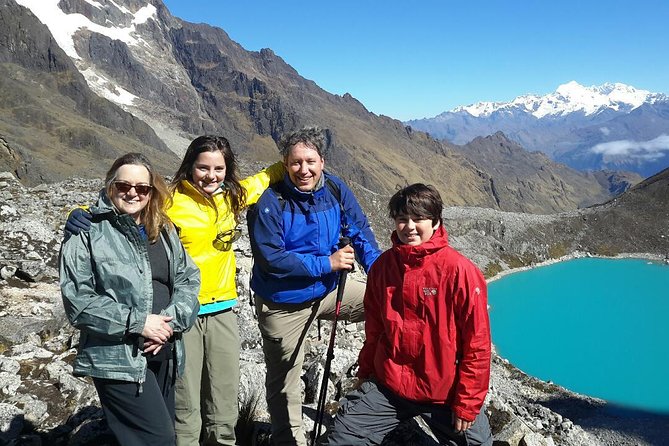
The hike to Humantay Lake takes about two hours as an excursion from the trailhead. The lake is the first major reward of the trek, set below the high Andean peaks. The path is uphill, and the combination of altitude and a short, steep route can make this opening walk feel harder than its duration suggests.
After visiting the lake, you return to the trailhead and continue toward the first camp. The supplied itinerary lists about six hours of activity for the day, including the lake excursion and onward hiking. Ask at the briefing how the walking time is arranged for your departure, since the exact camp details are not specified.
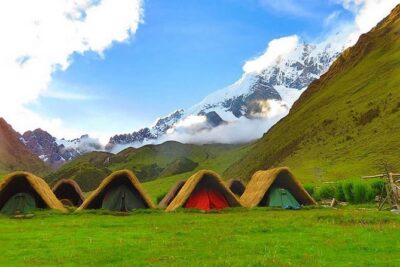
That evening, you sleep in a four-person tent shared by two people. You get a mattress and pillow, while the crew sets up a separate kitchen tent, dining tent, and toilet tent. Hot water is available for washing, and boiled and cold water is provided each morning for your bottles.
Day two: Salkantay Pass is the hard day
Day two is the trip’s main physical challenge. After breakfast, you climb for about one hour to the Salkantay Pass at 15,252 feet. At the top, the guide explains why the pass is respected in Inca culture and leads an offering to Salkantay.
That cultural moment gives the climb more meaning than simply reaching a high point. Still, you should not treat it as an easy sightseeing stop. At this altitude, your pace may slow, and cold, wind, or cloud can change the feel of the pass quickly.
From the pass, you descend for about two hours to Huayrac at 12,464 feet for lunch. After eating, you continue downhill for roughly four hours to Colpapampa, the second camp, at about 10,170 feet.
The long descent is the part many fit hikers find surprisingly demanding. Your knees and feet absorb hours of downhill movement, so trekking poles are a sensible addition. They are not included, but they can be rented. Good boots matter here, as does keeping your pace controlled rather than racing downhill.
This is the day when acclimatization pays off. You need a moderate level of physical fitness, and the high pass makes preparation more than a formality. The experience is much more manageable if you have already spent time in Cusco or another high-altitude area before starting.
Day three: Rainforest, waterfalls, and coffee
The route changes character on day three. From Colpapampa, you walk for about six hours along gentler up-and-down sections beside the Santa Teresa River. The trail passes through rainforest and includes a notable waterfall.
After the steep work of the first two days, this is a welcome change. The lower elevation brings warmer air and a different mix of plants. The river, forest, and waterfall also give you a break from the exposed mountain scenery around the pass.
You reach Lucmabamba around midday, have lunch, and spend the afternoon visiting a coffee plantation next to the campsite. This is one of the most distinctive parts of the trip because it connects the route with local farming rather than focusing only on ruins and mountain views.
The camp service is another strong point here. The chef and assistant chef prepare four breakfasts, four lunches, and four dinners during the trek, plus breakfast at the hotel on the final morning. Several accounts of the trip praise the meals, including multi-course dinners and the ability of the cooking team to adapt to dietary needs. You should still explain any dietary requirements during booking or the pre-departure meeting.
More Machu Picchu Days from Cusco:
- From Cusco: Full-Day Group Tour of Machu Picchu
★ 4.7 · 1,767 reviews - Machu Picchu Day Trip from Cusco
★ 4.5 · 1,644 reviews - Machu Picchu: Full-Day Tour from Cusco with Optional Lunch
★ 4.6 · 927 reviews - Cusco: 4-Day Inca Trail to Machu Picchu with Accommodation
★ 4.8 · 432 reviews
Day four: Llactapata and your first view of Machu Picchu
Day four starts early with breakfast and a moderate climb through rainforest. The ascent to Llactapata takes about three and a half hours and reaches approximately 8,856 feet.
Llactapata is valuable not just for its ruins, but for the view ahead. From here, you get your first distant sight of Machu Picchu. It is a fine bit of anticipation: you see the destination before reaching it, after crossing a pass, descending through forest, and walking beside rivers and farms.
The guide gives you a thorough tour of the ruin before you continue. The path then drops for about two and a half hours to Hidro, where you stop for lunch. Long descents remain a feature of this trek, so save energy for the final section rather than assuming the hardest work ended at Salkantay Pass.
At 3 p.m., you board the train to Aguas Calientes. The train is included, and you spend the fourth night at a hotel in Aguas Calientes, with double occupancy. Dinner is served at a restaurant.
This night in a hotel is a useful comfort break. After three nights of camping, you get a bed, a proper room, and a chance to organize your day pack for Machu Picchu. The trade-off is that Aguas Calientes is a stop built around access to the ruins, not a quiet mountain camp. The tour does not include lunch on this day beyond the stated trek meals, so check how your lunch arrangement works at Hidro and budget for any additional food you want.
Day five: Machu Picchu and the return to Cusco
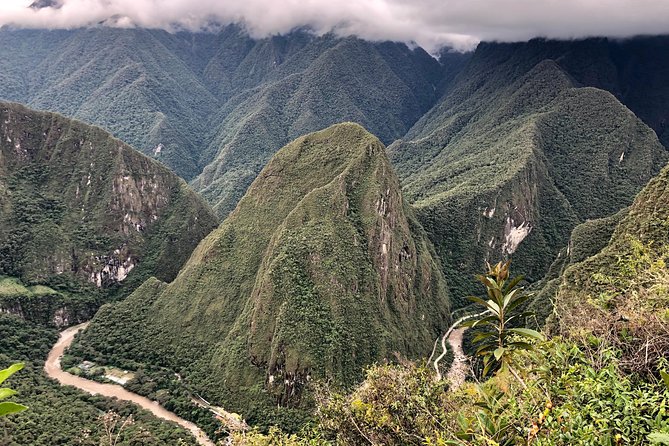
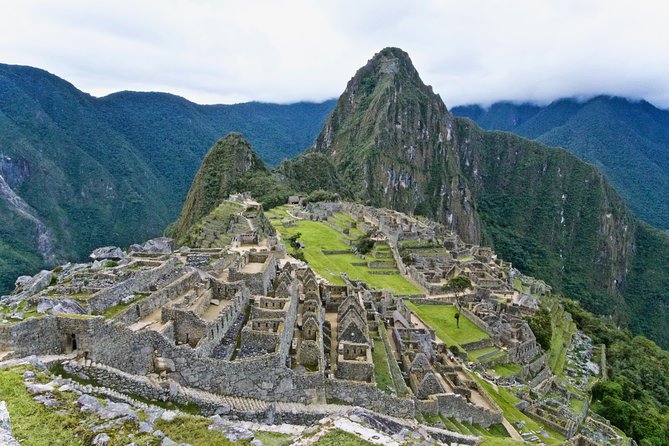
After breakfast at the hotel, you take a bus to Machu Picchu. The package includes a two-hour guided walk through the site. That gives you a useful first orientation, especially after several days of hiking, but it is not an unlimited guided visit.
If you have booked Huayna Picchu separately, the climb begins at 10 a.m. Huayna Picchu is not included in the package, so you need to arrange that option in advance if it matters to you. If you are not climbing, you have some free time at Machu Picchu before returning to Aguas Calientes.
The package does not include the round-trip bus ticket to Machu Picchu, so add that cost when comparing the total price. It also does not include lunch in Aguas Calientes on day five. These are small extras beside the full cost of a five-day trek, but they are easy to overlook.
From Aguas Calientes, you take the expedition train to either Ollantaytambo or Poroy. From there, private transport continues to Cusco. The return takes much of the day, so avoid booking a late flight from Cusco unless you have a generous time cushion.
What the $690 price really covers
At $690 per person, the price is attractive for a supported five-day route ending at Machu Picchu. You are not paying only for a guide and entry arrangements. The cost also covers camp equipment, mattresses, pillows, kitchen and dining tents, portable toilet facilities, cooks, assistant cooks, wranglers, horses, water, medical supplies, emergency oxygen, the train, private transport from Ollantaytambo, the coffee plantation visit, and a hotel night.
The food and staffing are where the value becomes clearer. A small support crew carries bulky supplies while you carry only your day gear and a limited amount of personal clothing. You also have an emergency horse available if someone needs help on the route.
You still need to pay for a sleeping bag, hiking poles if you want them, tips for the guide and crew, the Machu Picchu bus, and day five lunch. A sleeping bag can be rented, and poles can also be rented, so you do not need to bring specialist equipment from home.
The price is a good fit if you want the full route without arranging separate transport, meals, camping supplies, and train tickets. It is less suited to someone who wants an independent hike or a bare-bones budget trip.
Food, camp comfort, and medical support
The camp setup is more organized than carrying your own tent and cooking kit. Two people share a four-person tent, and the mattresses and pillows make a real difference after long hours on your feet.
You receive morning boiled and cold water for filling bottles, plus hot water for washing. A dining tent with tables and chairs gives the group a place to eat out of the elements, while the portable toilet tent provides a basic but useful facility at camp.
The cooks receive especially strong praise for multi-course meals and good food across the trek. You should keep expectations sensible: this is remote camping, not restaurant dining at altitude. Still, having an expert chef and assistant chef changes the experience considerably.
Medical support includes a kit and emergency oxygen. An emergency horse is also available. These provisions do not remove the need for travel insurance or sensible preparation, but they show that the operator has planned for the practical risks of a high-altitude trek.
Who should book this trek
I would recommend it to a reasonably fit hiker who wants Machu Picchu to feel like the end of a real journey rather than a standalone ruin visit. You should be ready for early starts, six to eight hours of walking, steep climbs, long descents, and changing temperatures.
It suits you especially well if you want help with logistics but still want a physical challenge. The group maximum of 16 is small enough for the guide to keep track of people, and the support horses and cooks let you focus on walking.
I would think twice if you have little hiking experience, have not prepared for altitude, or dislike camping. The first two days are not gentle, and even the later rainforest sections include long walking days. Families with fit older children may manage it, but the data only states that a moderate fitness level is required, so judge your group carefully.
Bring your original passport, trekking boots, warm and light layers, gloves, rain gear, sun protection, insect repellent, a headlamp, sunglasses, toiletries, a towel, and spare camera batteries. The high altitude can drain batteries faster. A book is not a bad idea either, since camps offer some spare time.
Free cancellation is available if you cancel at least 24 hours before the local start time. Within 24 hours, the payment is not refunded, and late changes are not accepted.
Should you book the Salkantay Trek?
Book this trek if you want a well-supported route with major scenery, strong camp logistics, a local coffee stop, and a full Machu Picchu visit at the end. The combination of Humantay Lake, Salkantay Pass, rainforest, Llactapata, and the train to Aguas Calientes gives you far more variety than a simple point-to-point hike.
The best reason to choose it is the balance between effort and support. You still earn the arrival at Machu Picchu, but you do not have to carry tents, food, tables, or cooking supplies. If your priority is comfort, preparation, and a demanding but organized route, the $690 price offers good value.
Skip it if you want an easy holiday, private rooms every night, or complete control over your pace. For prepared hikers who accept two hard altitude days, this is a memorable way to reach Machu Picchu.
FAQ
How long is the Salkantay Trek to Machu Picchu?
The experience lasts five days and four nights. You camp during the first three nights and stay in a hotel in Aguas Calientes on night four.
What time does the tour begin?
Hotel pickup begins at 4:30 a.m. on day one.
What is the highest point of the trek?
The Salkantay Pass is the highest point, at approximately 15,252 feet.
Is the trek suitable for beginners?
You need a moderate level of physical fitness. The first two days are difficult because of the altitude, uphill hiking, and long descents.
Is camping equipment included?
Yes. The tour provides shared tents, mattresses, pillows, a kitchen tent, a dining tent, tables, chairs, and a toilet tent with a portable toilet.
Can horses carry personal belongings?
Yes. A horse carries up to 8 kilograms of your personal belongings, packed in a provided duffle bag.
Are meals included?
Breakfast, lunch, and dinner are included during the trek as specified in the package. Breakfast is also included at the Aguas Calientes hotel on day five.
Is the sleeping bag included?
No. A sleeping bag is not included, but one can be rented from the operator.
Is Huayna Picchu included?
No. The Huayna Picchu climb is not included. If you have selected it separately, the hike begins at 10 a.m. on day five.
Is the bus to Machu Picchu included?
No. The round-trip bus ticket to Machu Picchu is not included. You should also plan for day five lunch in Aguas Calientes, which is not included.
More Hiking & Trekking in Cusco
- From Cusco: 7 Lakes Ausangate Trek with Breakfast and Lunch
★ 4.8 · 360 reviews - Cusco: Rainbow Mountain Tour and Red Valley Hike (Optional)
★ 4.7 · 149 reviews - Cusco: Full-Day Rainbow Mountain & Red Valley Trekking Tour
★ 4.5 · 121 reviews - From Cusco: Rainbow Mountain Trek
★ 4.5 · 98 reviews
More 5-Day Experiences in Cusco
- Ausangate Trek 5 Days
★ 5.0 · 74 reviews - Classic Choquequirao Trek – 5 Days / 4 Nights
★ 5.0 · 52 reviews - Ultimate Lares Trek & Inca Trail 5 days
★ 5.0 · 47 reviews - Wonderful Cusco 5-Day Tour with Entrance to Machupicchu
★ 5.0 · 46 reviews
Just added around Cusco
- Zipline over the Sacred Valley Trip★ 5.0 · 11 reviews
- Valle Sur Cusco | half day★ 4.3 · 3 reviews
- Visit Pisac from Cusco: Private Transport★ 4.6 · 9 reviews
- Trek to Humantay Lake from Cusco★ 4.9 · 8 reviews
- Transfer from Cusco to Ollantaytambo★ 5.0 · 30 reviews
- Exclusive Huayna Picchu Tour in 1 Day from Cusco★ 5.0 · 31 reviews
- Private Tour Sacred Valley, Chinchero, Maras Moray, Ollantaytambo★ 5.0 · 29 reviews
- 5 Day – Salkantay trek to Machu Picchu – Group Service★ 4.5 · 27 reviews
Salkantay Treks to Machu Picchu, compared.
Small Group 5 Days Salkantay and Machu Picchu by Llactapata Tour
Read our review →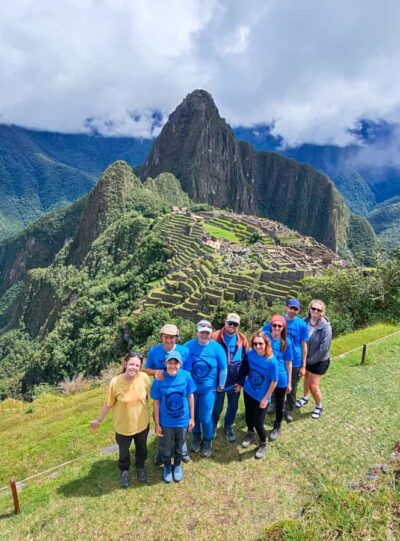
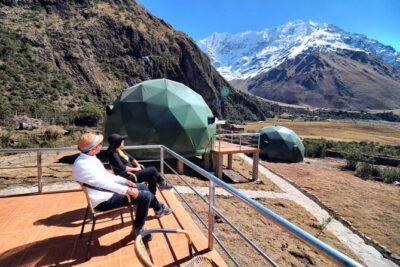
Salkantay Trek 4 Days to Machu Picchu by Glamping Sky Lodge Dome
Read our review →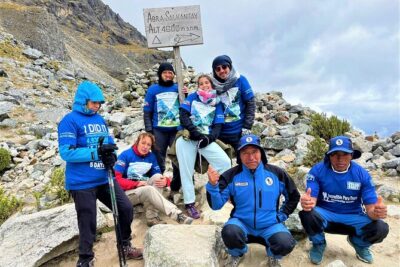
5-Day: Salkantay Trek to Machupicchu and Humantay Lake
Read our review →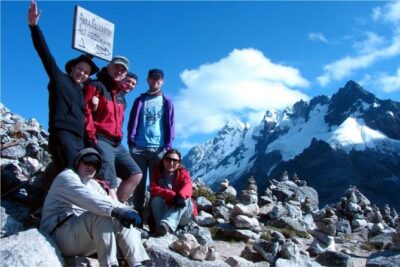
Browse the lists this tour appears in