
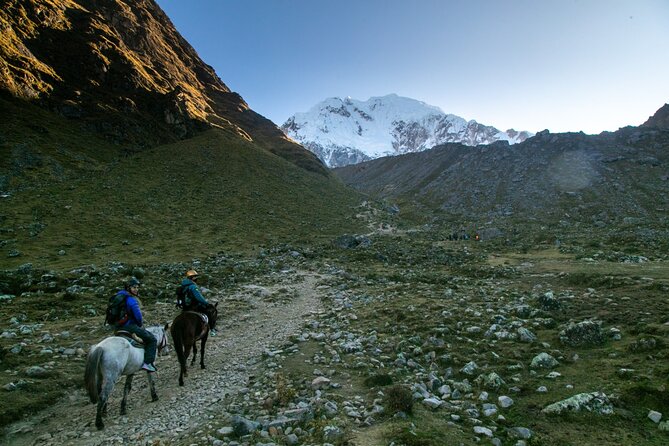
Reviewed · SALKANTAY TREKS TO MACHU PICCHU
Salkantay Trek Challenge – 3 Days / 2 Nights
The big draw here is speed: you reach Machu Picchu after only three days of hiking, crossing from icy high Andes to warm jungle. The route packs the Salkantay Pass, coffee plantations, waterfalls, the Urubamba River, and a guided visit to the Inca citadel into one hard-charging trip.
I like two things right away. First, the practical support is unusually strong: horses carry up to 5 kilograms of your gear, cooks prepare meals, and the crew carries first-aid and oxygen equipment. Second, sleeping one night at Mountain Sky View and one night in an Aguas Calientes hotel gives you both a mountain camp and a proper bed before Machu Picchu.
The trade-off is simple: this is not a gentle shortcut. The first day is long, the pass is high, sleep may be limited, and you need good fitness and at least two days in Cusco to adjust to altitude.
Key points at a glance
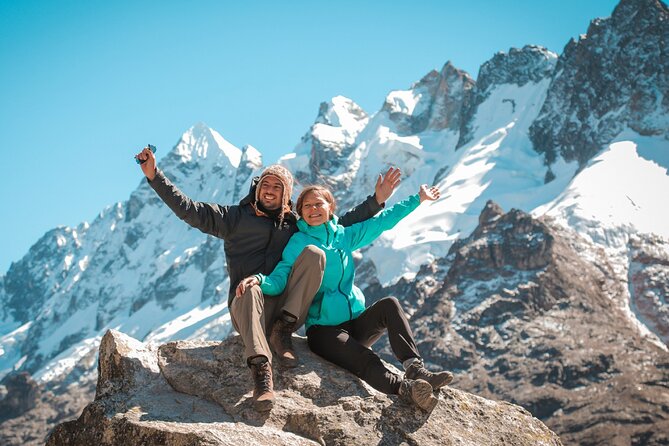
- 4,630-meter Salkantay Pass: The first day climbs to 15,190 feet, with glacier and mountain views before dropping toward the jungle.
- Three days, not five: You cover the classic highland-to-jungle route on a tight schedule and reach Machu Picchu on day three.
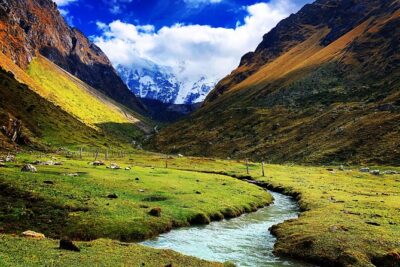
- A real mix of climates: Ice-cold mountain air gives way to waterfalls, orchids, coffee farms, and tropical forest.
- Support that matters: A horse carries up to 5 kilograms of personal gear, while cooks, porters, and a guide handle the heavy practical work.
- Small-group format: The maximum group size is 12, which helps keep the trek manageable and personal.
- Machu Picchu access is time-sensitive: Circuit 2 is planned for bookings made three months ahead, with Circuit 3 or Circuit 1 used if availability changes.
The price makes sense if you use the support
At $680 per person, this is not the cheapest way to reach Machu Picchu. It is a fairly complete package, though, and the value comes from what you do not have to arrange yourself.
The price includes private transport and transfers, the Salkantay entrance fees, Machu Picchu admission, two nights of lodging, meals, a guide, cooks, horsemen, porters, a sleeping bag, trekking poles, trail snacks, tea time, water, and the tourist-class train from Aguas Calientes to Ollantaytambo. It also includes a one-way bus up to Machu Picchu.
That matters on a three-day trek. You are not just paying for a walking route. You are paying for a team to move food, cooking equipment, camping supplies, and part of your luggage while you concentrate on walking. The horse allowance is limited to 5 kilograms, so it does not replace a proper daypack, but it takes the weight off your back for clothing and other personal items.
You still need to budget for lunch and dinner on the final day, personal hiking clothing, insurance, staff tips, the optional train from Hidroeléctrica to Aguas Calientes, and the optional bus back down from Machu Picchu. The $680 price is strongest for people who value an organized, supported trip and do not want to piece together transport and lodging on their own.
More Salkantay Departures from Cusco:
- Small Group 5 Days Salkantay and Machu Picchu by Llactapata Tour
★ 5.0 · 88 reviews - Machu Picchu: 5-Day Salkantay Trek with Panoramic Train
★ 5.0 · 79 reviews - Salkantay Trek 4 Days to Machu Picchu by Glamping Sky Lodge Dome
★ 5.0 · 68 reviews
Day one: Cusco to the high pass and down to camp
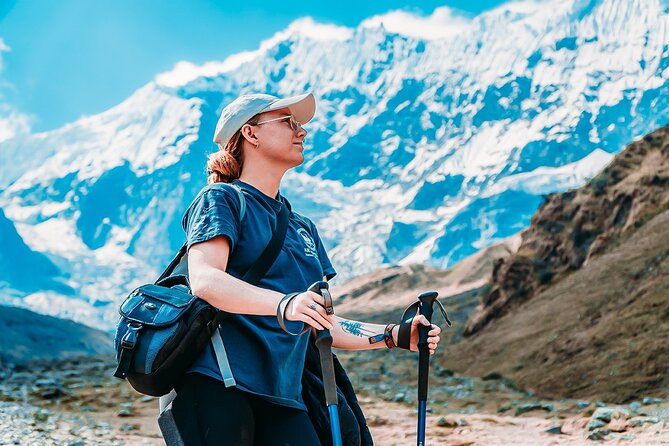
Your morning starts at about 2:30 a.m., with a stated start time of 3 a.m. That is brutally early, but it is necessary. You need to reach Soraypampa, at 3,900 meters, before beginning the main climb.
The first transfer takes you out of Cusco and into increasingly high country. At Soraypampa, you have breakfast before setting off. This is not a warm-up walk. The route quickly points toward the 7 Serpents Trail and the Salkantay Pass.
At 4,630 meters, the pass is the physical high point of the trek. The reward is the setting: massive Andean peaks, glaciers, and a sense of open space that you will not get on the lower sections. The air is thin, though, and even fit people can feel the altitude here. Walk slowly, drink often, and do not treat breakfast as optional.
The first day is listed at about 10 hours, making it the toughest part of the trip by a wide margin. After the pass, you descend to Wayracmachay for lunch, then keep going toward the high Amazon forest. The change happens quickly. Cold, exposed mountain terrain gives way to warmer air, more vegetation, and a very different kind of trail.
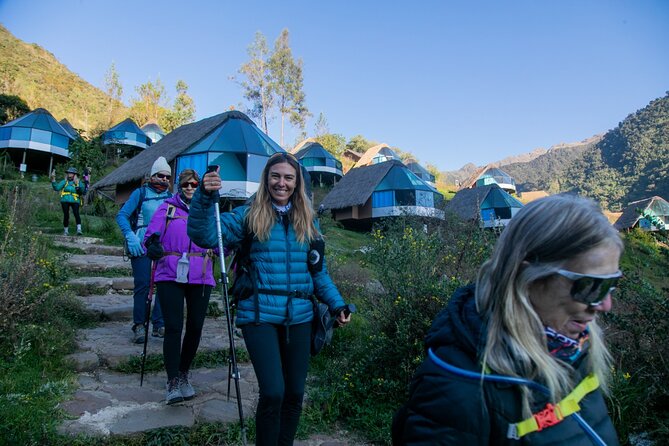
You finish at Mountain Sky View in Collpapampa, at about 2,950 meters. The camp has private camping facilities, including a dining room, kitchen, tables, and chairs. Dinner under the stars sounds pleasant, but remember that you have already spent a full day climbing and descending. This is a night for eating, drying clothes, and sleeping rather than socializing late.
Mountain Sky View gives the trek a useful pause
The first night is one of the more distinctive parts of the trip. You are not placed straight into a plain campsite after the pass. Mountain Sky View gives you a dedicated camp setting with a dining area and cooked dinner, while the lower elevation brings warmer conditions than the pass.
The exact comfort level will still be that of a mountain camp, not a city hotel. You should expect an early night and limited rest. The schedule is intense enough that the sleeping bag and warm layers supplied by the operator are useful, even though the forest climate is milder than the high pass.
The support team also changes the feel of the trek. Guides including Marco, Guido, and Cesar Quispe have been praised for keeping the group together, offering encouragement, and helping people through the pass. The guide is especially important on day one, when steady pacing can make the difference between enjoying the route and merely surviving it.
Day two: Coffee, waterfalls, and the Urubamba River
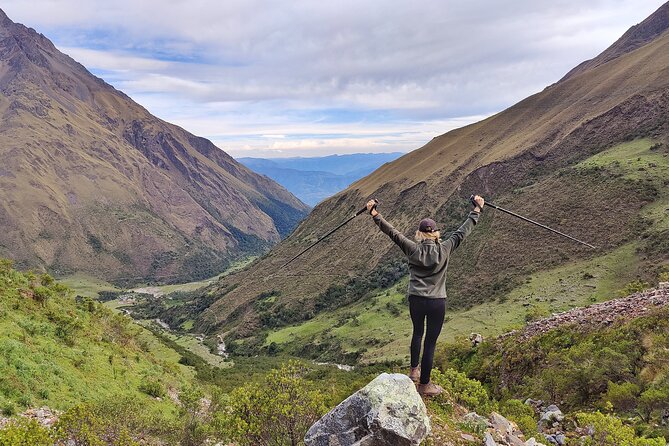
Day two begins with breakfast at camp and a more relaxed walk through the Santa Teresa Valley. The itinerary gives the first section about an hour, but the day is still active and includes several different forms of transport and walking.
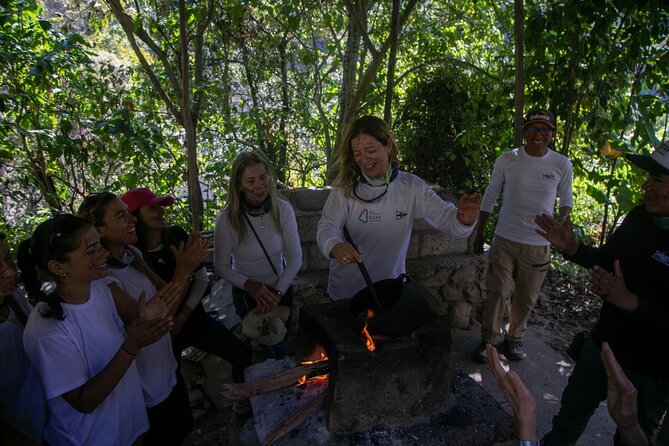
The route passes waterfalls, orchids, and coffee plantations before reaching La Playa. This is where the trip feels less like a high-altitude endurance test and more like a journey through working rural Peru. At the Lucmabamba coffee experience, you see how local coffee is made by hand and eat lunch based on local products.
That stop adds useful context to the route. You are not simply passing from one famous sight to another. You see how the warmer valleys support crops that cannot grow in the high Andes, and the coffee demonstration gives the day a local focus. If you enjoy food and agriculture, this may be one of the most memorable stops.
After lunch, you continue to Hidroeléctrica. From there, the route follows the Urubamba River through tropical forest toward Aguas Calientes. The walking time is listed at about three hours. It is much lower than the pass, but fatigue can make this stretch feel longer than the distance suggests.
There is an optional train from Hidroeléctrica to Aguas Calientes, paid directly to the train operator. That option may be worth considering if your legs are spent after day one and the morning walk. If you walk, the river route gives you more time in the forest and makes the final arrival feel earned.
You reach Aguas Calientes in the evening and sleep in a hotel. This is a major practical advantage. After a camp night and two demanding days, a hotel bed, dinner, and a chance to organize your things can make day three much easier.
A few more Cusco days worth weighing up
- Cusco : Sacred Valley & Inca Trail to Machu Picchu 3 days
★ 5.0 · 57 reviews - 3-Day Eco-Sustainable Private Tour Manu National Park
★ 4.5 · 41 reviews - Ausangate and Rainbow Mountain Trek – 3 Days / 2 Nights
★ 5.0 · 35 reviews - Living Nature from Cusco: 3 Days Manu Jungle all inclusive
★ 4.9 · 12 reviews
Day three: Machu Picchu without a rushed entrance
The final morning starts with a light breakfast before you take the bus up to Machu Picchu. The one-way ascent is included. The bus saves energy and time, which is sensible because the main goal of the day is the citadel, not another steep climb before entering it.
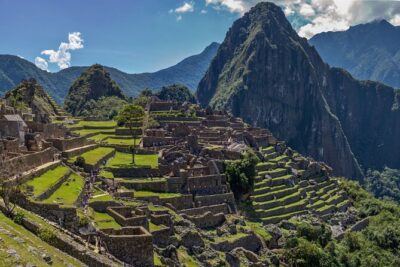
You receive about two hours with a guide inside the Historic Sanctuary of Machu Picchu. The visit covers temples, terraces, and sacred areas, with historical explanation along the way. Two hours is enough for a useful introduction, but it is not an unlimited visit. You should stay with the group and listen carefully when the guide explains the route.
Circuit availability matters. The plan is Circuit 2 for bookings made three months ahead. If that circuit is unavailable, the operator lists Circuit 3, then Circuit 1 as alternatives. These circuits do not all offer the same route, so early booking is more than a paperwork detail. It can affect what you see inside the sanctuary.
After the visit, you return to Aguas Calientes for lunch, which is not included on the final day. In the afternoon, you board a tourist-class train to Ollantaytambo, using either the Voyager or Expedition service. Private transport then takes you back to Cusco.
The return is long, and you will probably be tired. Still, the train is a pleasant way to close the trip, especially after two days on foot and a morning at Machu Picchu. Bring money for your final meal and keep your passport handy, since passport name, number, expiry date, and country are required when booking.
How hard is the Salkantay Challenge?
The first day is the key test. You climb to 4,630 meters, descend for hours, and then continue toward camp. The challenge comes from both altitude and duration, not just steepness.
The first two days can add up to roughly 32 miles depending on the route and walking pace. That figure should change how you prepare. This is not a casual scenic walk with a short stroll each afternoon. You need the stamina to keep moving after the most difficult climb is already behind you.
The tour is suitable for people with strong physical fitness. It can be manageable for someone new to multi-day trekking if that person trains and handles altitude well, but it is a poor match for a sedentary routine. A guide, horse, food team, and first-aid kit make the challenge safer and smoother. They do not remove the challenge.
Plan to arrive in Cusco at least two days early. Cusco itself sits high, and acclimatizing there gives your body a better chance of handling the pass. Carry water and snacks even though the tour provides water, tea time, and trail food. On a hard climb, you may want quick energy between scheduled stops.
What the included gear means on the trail
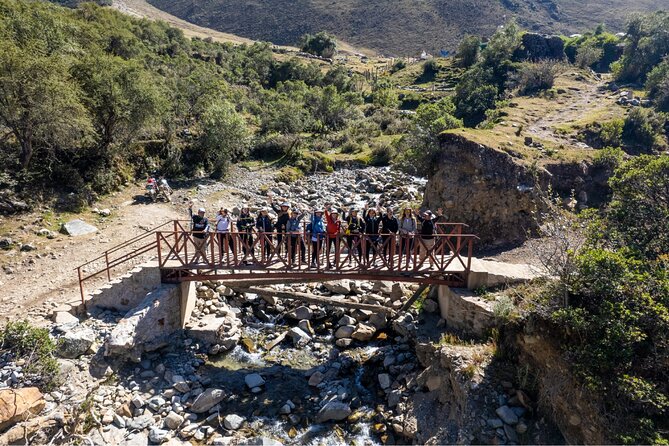
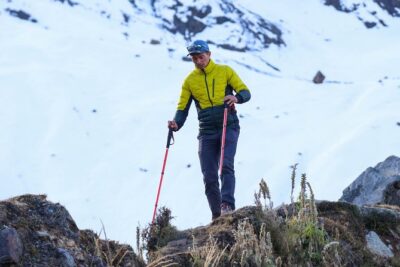
The equipment list is practical. You receive a sleeping bag, trekking poles, a rain poncho, and a cover for your backpack. The poncho and pack cover matter because conditions can change quickly between the high pass and the forest.
A horse carries up to 5 kilograms of your personal belongings in a duffel bag. Pack that small allowance carefully. Put spare clothes, toiletries, and other items you do not need during the walking day in the duffel, while keeping water, rain protection, snacks, documents, and warm layers in your daypack.
Safety support includes a first-aid kit, oxygen, walkie-talkies, and emergency satellite phones. Those supplies are reassuring on a remote mountain route. They are not a substitute for travel insurance, which the operator recommends and which you should arrange.
Vegetarian and vegan meals are available if you request them at booking. Breakfast is provided on all three mornings, with two lunches and two dinners included. The final lunch and dinner are your responsibility.
Who should book this three-day route?
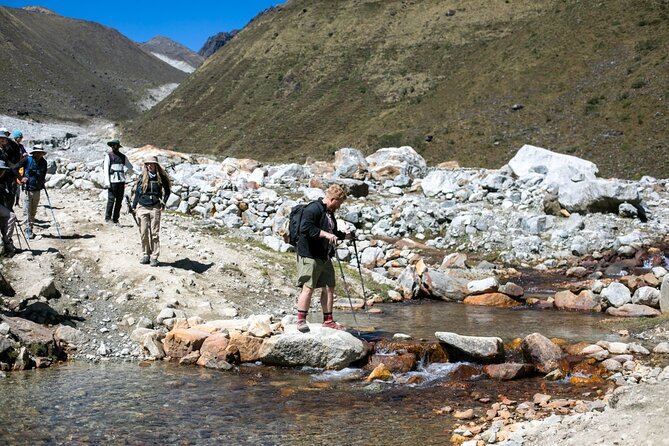
Book it if you want Machu Picchu but have limited time and want a genuine trek rather than a direct train ride. You will see major shifts in scenery and climate, and the route offers more physical challenge than a standard sightseeing itinerary.
It also suits you if you prefer a small, organized group. The maximum is 12 people, and the guide-led format means you do not have to solve every transport, meal, and lodging detail yourself.
Think twice if you dislike early starts, long walking days, basic camp conditions, or high-altitude exertion. The itinerary leaves little spare time for a slow day. If you want a more relaxed trek, a longer Salkantay route would likely suit you better, but that is not the product described here.
Book at least three months ahead if possible. Machu Picchu spaces sell quickly, and early booking improves your chance of getting Circuit 2. Confirmation is sent within 48 hours, subject to availability. The trip is non-refundable and cannot be changed for personal reasons, so check your dates, passport details, health, and insurance before paying.
Should you book the Salkantay Trek Challenge?
I would choose this tour if I wanted the full highland-to-jungle experience but could spare only three days. The strongest features are the spectacular pass crossing, the coffee and waterfall country on day two, the small group size, and the amount of practical support included in the price.
I would not book it as a first-ever fitness challenge or as a relaxed alternative to the train. The first day is serious, the altitude is real, and the final return to Cusco is tiring.
For a fit person who prepares in Cusco, packs wisely, and accepts limited sleep, this is a powerful route to Machu Picchu. The hard part is not hidden. That is exactly why the support from the guide, cooks, porters, and horse team matters so much.
FAQ
What time does the Salkantay Trek Challenge start?
Pickup in Cusco begins at about 2:30 a.m., with a stated tour start time of 3 a.m.
How high does the trek climb?
The route reaches the Salkantay Pass at 4,630 meters, or 15,190 feet.
Is accommodation included?
Yes. You spend one night at Mountain Sky View in Collpapampa and one night in a hotel in Aguas Calientes.
Is the train to Ollantaytambo included?
Yes. The tourist-class train from Aguas Calientes to Ollantaytambo is included, using the Voyager or Expedition service.
Is the bus to Machu Picchu included?
The one-way bus from Aguas Calientes to Machu Picchu is included. The return bus from Machu Picchu to Aguas Calientes is optional and paid directly to the bus operator.
What happens if poor weather cancels the tour?
You will be offered a different date or a full refund if the experience is canceled because of poor weather. If the minimum number of participants is not met, you will also be offered a different date or experience, or a full refund.
More Hiking & Trekking in Cusco
- From Cusco: 7 Lakes Ausangate Trek with Breakfast and Lunch
★ 4.8 · 360 reviews - Cusco: Rainbow Mountain Tour and Red Valley Hike (Optional)
★ 4.7 · 149 reviews - Cusco: Full-Day Rainbow Mountain & Red Valley Trekking Tour
★ 4.5 · 121 reviews - From Cusco: Rainbow Mountain Trek
★ 4.5 · 98 reviews
Just added around Cusco
- Zipline over the Sacred Valley Trip★ 5.0 · 11 reviews
- Valle Sur Cusco | half day★ 4.3 · 3 reviews
- Visit Pisac from Cusco: Private Transport★ 4.6 · 9 reviews
- Transfer from Cusco to Ollantaytambo★ 5.0 · 30 reviews
- Exclusive Huayna Picchu Tour in 1 Day from Cusco★ 5.0 · 31 reviews
- Trek to Humantay Lake from Cusco★ 4.9 · 8 reviews
- Private Tour Sacred Valley, Chinchero, Maras Moray, Ollantaytambo★ 5.0 · 29 reviews
- 5 Day – Salkantay trek to Machu Picchu – Group Service★ 4.5 · 27 reviews
Salkantay Treks to Machu Picchu, compared.
Small Group 5 Days Salkantay and Machu Picchu by Llactapata Tour
Read our review →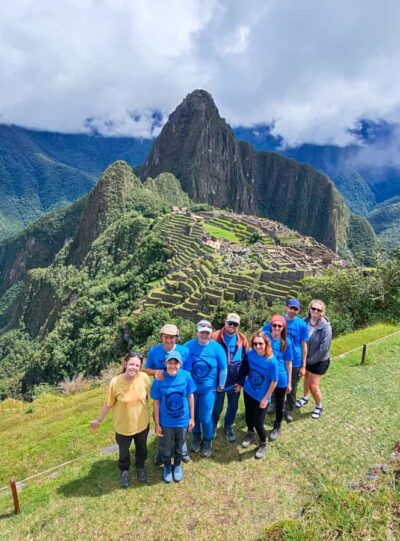
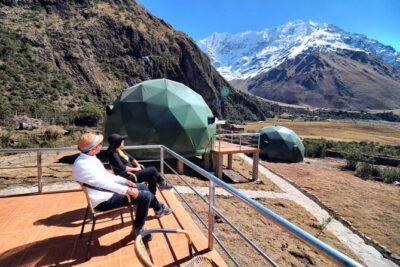
Salkantay Trek 4 Days to Machu Picchu by Glamping Sky Lodge Dome
Read our review →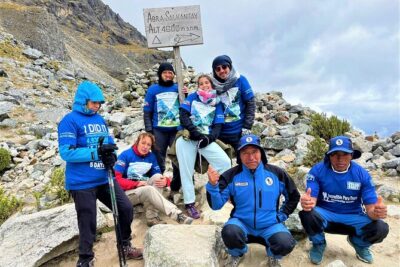
Salkantay Trek To Machu Picchu 5 Days And 4 Nights
Read our review →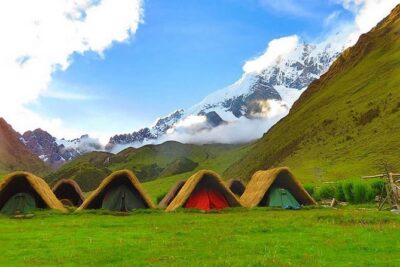
5-Day: Salkantay Trek to Machupicchu and Humantay Lake
Read our review →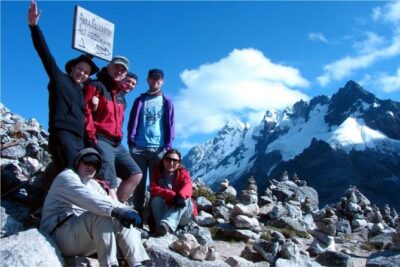
Browse the lists this tour appears in