
Reviewed · SALKANTAY TREKS TO MACHU PICCHU
Cusco: 5-Day Salkantay Ultimate Trek to Machu Picchu
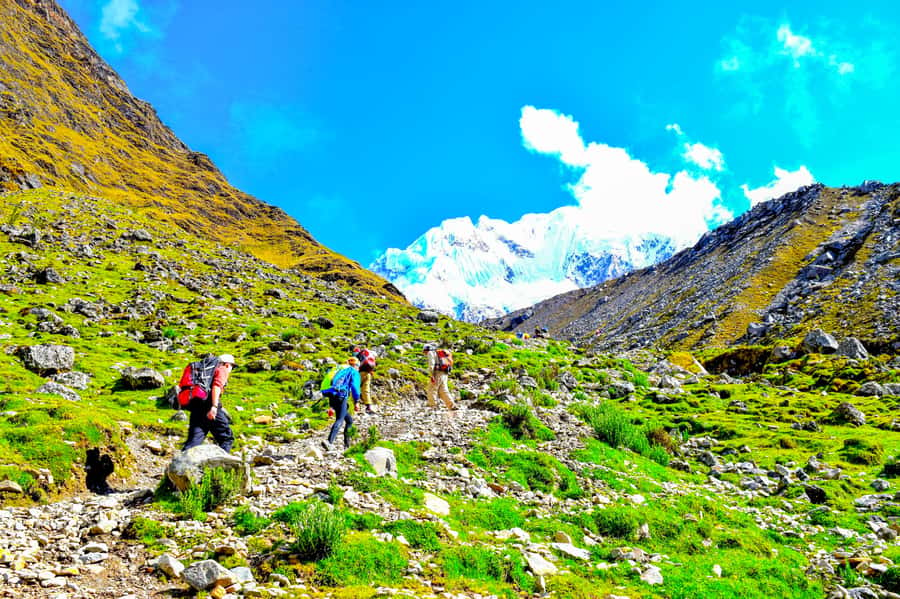
The best part of this five-day trek is the sharp change in scenery. You begin among snow-covered Andean peaks, cross the high Salkantay Pass, then descend through cloud forest and coffee country before reaching Machu Picchu. Humantay Lake and the first view of Machu Picchu from Llactapata give the route two memorable surprises.
I like that horses carry equipment and up to 7 kilograms of your personal gear, and I like the small maximum group of 10. The support team provides meals, wake-up tea, a cook, camping gear, and a hotel night in Aguas Calientes. The main catch is the altitude and physical demand. This is not a gentle walk to Machu Picchu, and Day 2 reaches 4,630 meters.
Key points to know before booking
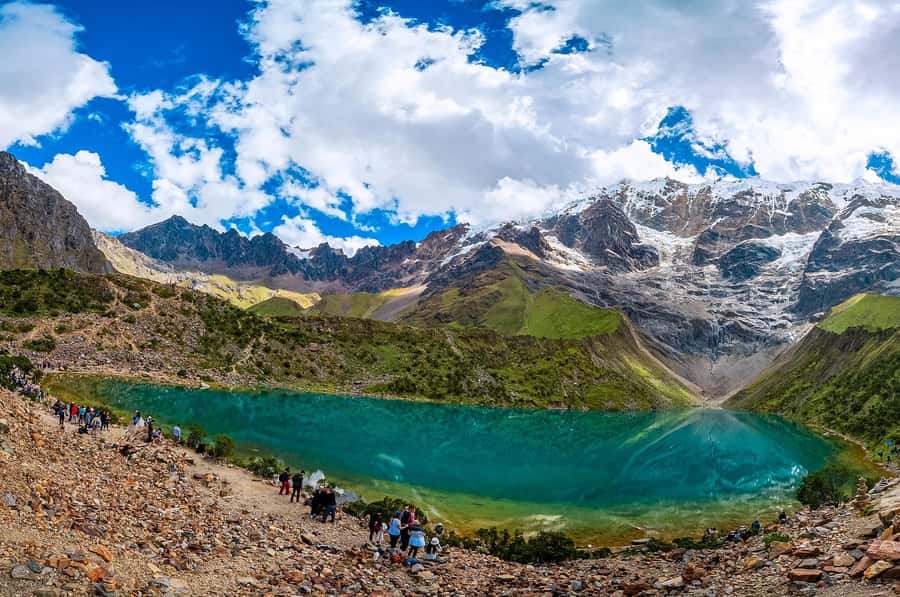
- Humantay Lake comes on Day 1: You climb to 4,200 meters for turquoise glacial water beneath the Humantay peak.
- Salkantay Pass is the hardest point: At 4,630 meters, thin air and a long descent make this a serious trekking day.
- Lucmabamba adds a local touch: You stay with a family and learn about coffee growing in the cloud forest.
- Llactapata offers an unusual first view: The Inca ruins provide a different angle toward Machu Picchu before you reach the citadel.
- Your bag allowance is useful: Horses carry equipment and 7 kilograms of your personal items, but you still need a daypack.
- The final day is well organized: A guide leads your Machu Picchu visit, followed by bus, train, and van connections back to Cusco.
From 3,800 meters to Humantay Lake
Your trek begins with pickup from a hotel in central Cusco and a pre-departure briefing one or two days before departure. At that meeting, you meet the guide and group, receive a duffle bag for the horses, and get the practical details for the route.
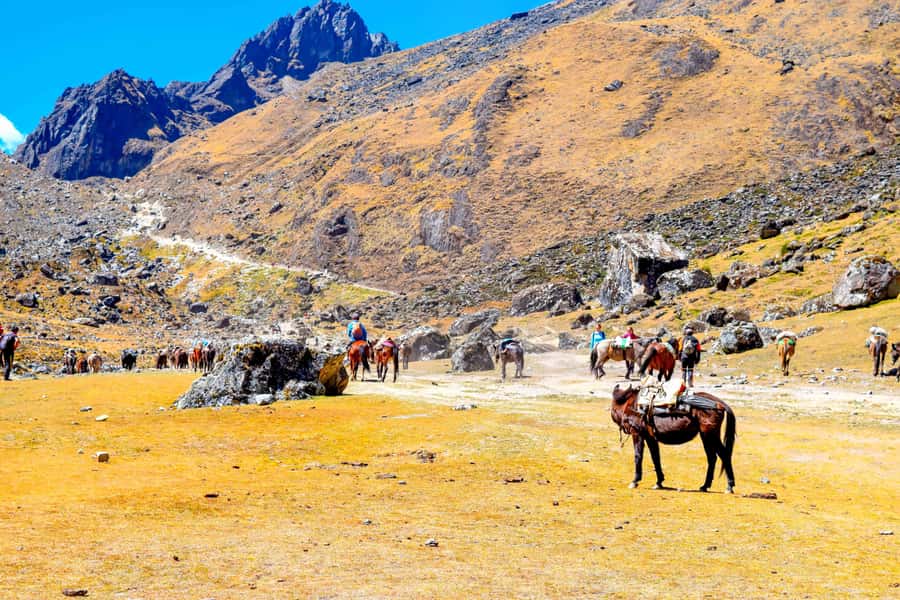
Day 1 takes you toward Soraypampa at 3,800 meters. The mountains Salkantay and Humantay dominate the views, and the air is already thin enough to make a steady pace important. You should not treat this first day as a warm-up. The altitude begins working on you immediately.
After lunch, you continue to Humantay Lake at 4,200 meters. The turquoise water sits below steep mountain slopes, making this one of the most visually striking stops on the route. The approach is uphill, and the return to camp is not free of effort, so save energy for the way back.
Breakfast on Day 1 is not included, so you need to arrange your own morning meal. Lunch, an afternoon snack, and dinner are provided once the trek is under way. Water is included after the first four hours, but you must carry your own supply at the start.
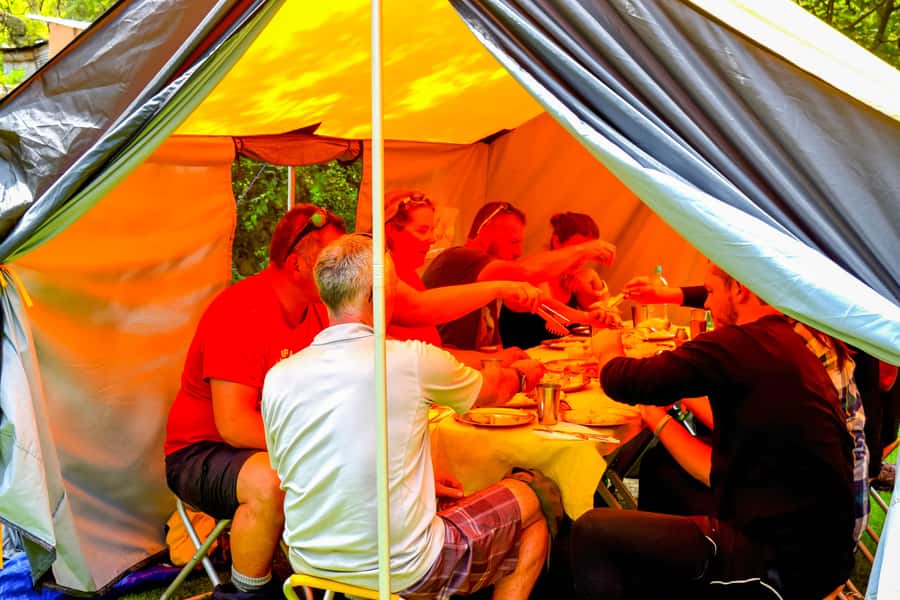
At camp, you sleep in a four-person tent shared by two trekkers. A double-thickness foam mattress, dining tent, tables, chairs, and wake-up tea are included. That support matters at this altitude, where a hot drink and a proper meal can feel like real equipment.
More Salkantay Departures from Cusco:
- Salkantay Trek Challenge – 3 Days / 2 Nights
★ 5.0 · 101 reviews - Small Group 5 Days Salkantay and Machu Picchu by Llactapata Tour
★ 5.0 · 88 reviews - Machu Picchu: 5-Day Salkantay Trek with Panoramic Train
★ 5.0 · 79 reviews
Crossing Salkantay Pass at 4,630 meters
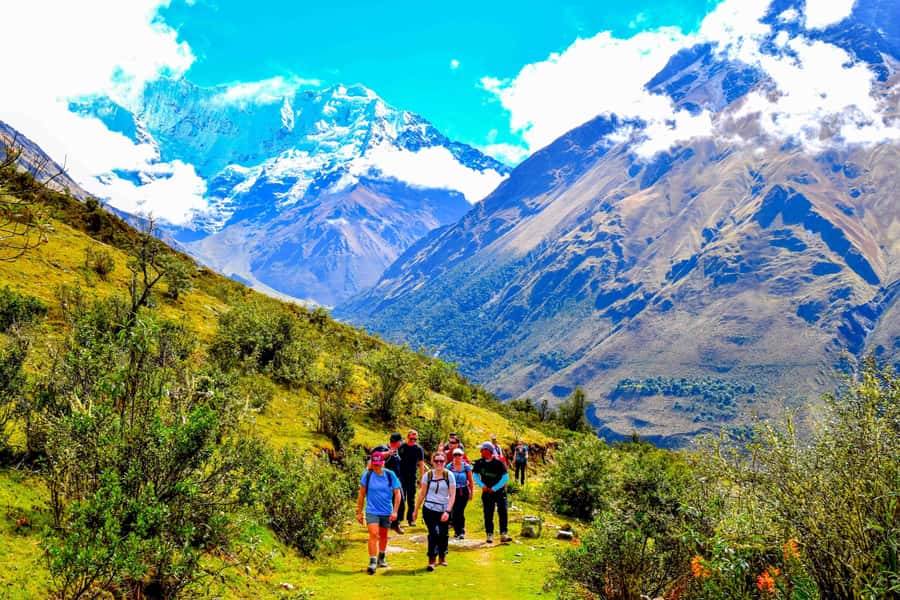
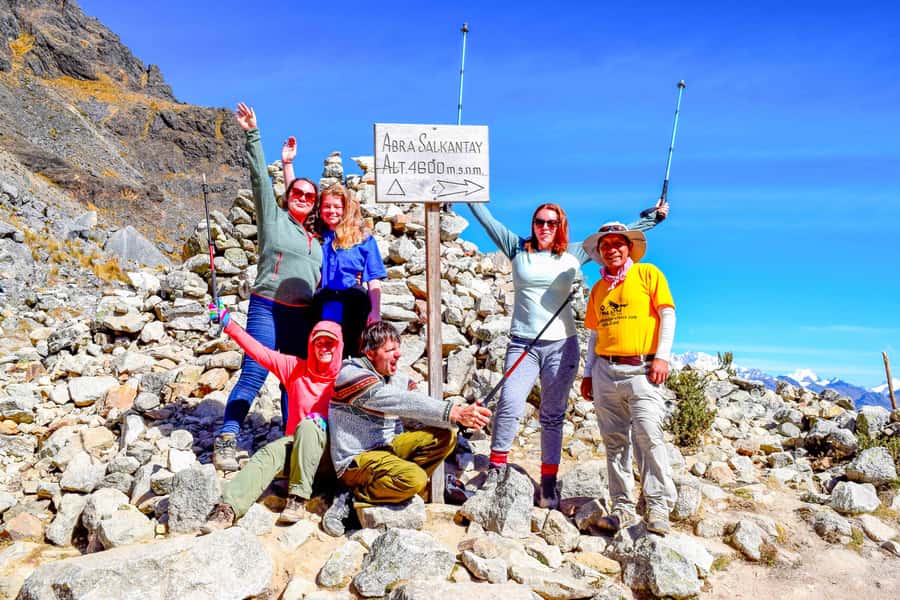
Day 2 is the physical center of the trip. You leave after breakfast and climb toward Salkantay Pass, the highest point at 4,630 meters. The route offers wide views of snow-capped peaks, sharp ridges, and valleys far below, but the thin air can slow even fit hikers.
I would judge this day by endurance, not speed. Short steps, regular water breaks, and careful pacing make more sense than trying to stay with the fastest person in the group. If you have a history of altitude sickness, this is the point to take the warning seriously. The experience is not suitable for people with altitude sickness or significant back problems.
At the pass, you have time to appreciate the high mountain setting before beginning a long descent. The scenery then changes quickly as you move toward a warmer, greener zone. That contrast is one of the trek’s strongest features: cold, bare heights in the morning and thick vegetation later in the day.
You camp again after descending into the high-altitude jungle. The staff provides dinner and your afternoon snack, and the guide remains with the group. An assistant guide is included for groups of nine or more, which is useful when the party reaches the maximum size of 10.
Cloud forest, waterfalls, and Lucmabamba coffee
On Day 3, the route continues downhill for about five hours toward Playa Sahuayaco at 2,200 meters. The change in temperature and plant life is clear. You pass waterfalls, fruit trees, and cloud forest vegetation as the trail winds through misty country.
This is a different kind of hiking from the pass. The issue is no longer only altitude. You have already spent two demanding days on foot, and the downhill walking can tire your legs in a new way. Comfortable clothes and rain gear are important because the weather changes across these zones.
In the afternoon, you reach Lucmabamba at about 2,000 meters. This is one of the most distinctive parts of the trip because you stay with a local family and learn about their coffee farm. It gives the route a human connection that a faster, more direct Machu Picchu trip would miss.
The family stay also helps explain why the Salkantay route feels varied rather than repetitive. You move from glacial water and high passes to agriculture and forest life within a few days. The accommodation remains simple, with camping and local lodging rather than a string of polished hotels.
Lucmabamba is also the starting point for the next day’s walk along an old Inca route. If you enjoy seeing how present-day rural life connects with older paths and farming traditions, this stop adds real value to the price.
Llactapata and the first sight of Machu Picchu
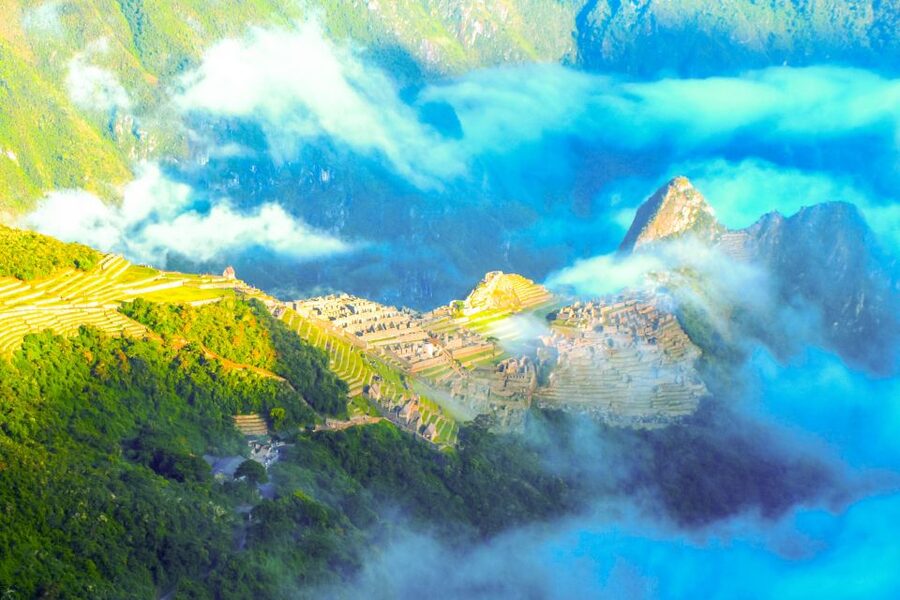
Day 4 begins with breakfast and a two-hour uphill hike to Llactapata at 2,840 meters. The trail follows an original Inca route, and the ruins are less visited than Machu Picchu itself. Their best feature is the view: you get a first look toward Machu Picchu from a less common angle.
That view changes the way you approach the main citadel. Instead of arriving at Machu Picchu with no sense of its setting, you have already seen where it lies among the surrounding mountains. Llactapata is not a substitute for Machu Picchu, but it gives the final approach more context.
From Llactapata, you descend through cloud forest to the Hydroelectric Station at 1,890 meters. The walk takes about an hour and a half. After several days of climbing and descending, this section may feel easier because the route is mostly downhill, though tired knees can make any descent demanding.
From the Hydroelectric Station, you travel to Aguas Calientes at 2,040 meters. The evening is spent in a hotel rather than a tent, a useful change before the early visit to Machu Picchu. This overnight stop also means you are not trying to complete the citadel visit and return to Cusco on the same day.
More Machu Picchu Days from Cusco:
- From Cusco: Full-Day Group Tour of Machu Picchu
★ 4.7 · 1,767 reviews - Machu Picchu Day Trip from Cusco
★ 4.5 · 1,644 reviews - Machu Picchu: Full-Day Tour from Cusco with Optional Lunch
★ 4.6 · 927 reviews - Cusco: 4-Day Inca Trail to Machu Picchu with Accommodation
★ 4.8 · 432 reviews
A guided morning inside Machu Picchu
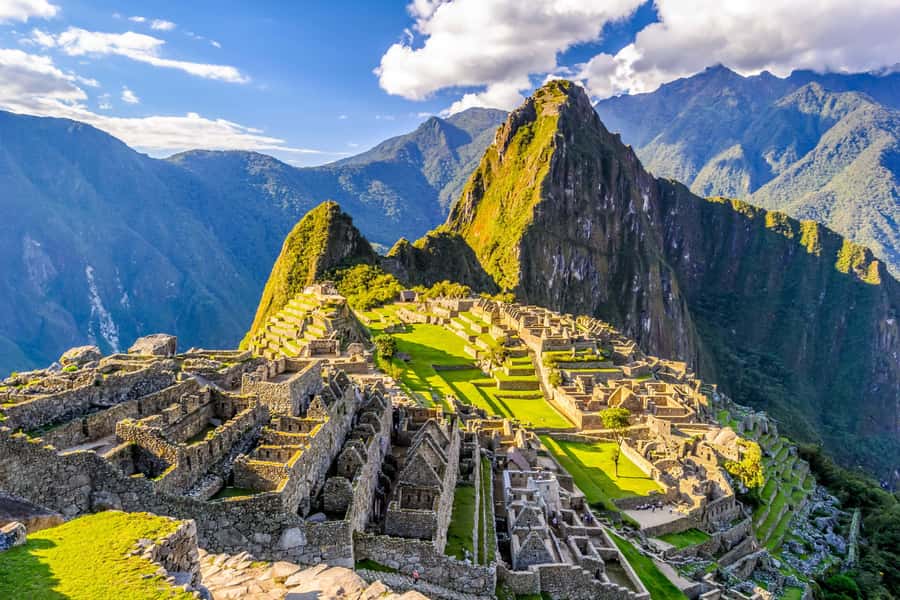
Day 5 starts with breakfast and a morning bus to Machu Picchu at 2,430 meters. Your English- or Spanish-speaking guide leads the citadel visit and explains the temples, ceremonial spaces, terraces, and storage buildings.
A guided tour is especially useful here because Machu Picchu can seem like a spectacular collection of stones if you do not understand how its areas fit together. The guide gives the site a clear shape, connecting its buildings and terraces to the purpose of the mountain settlement.
After the main tour, you may have the chance to hike Huayna Picchu or Machu Picchu Mountain. These are separate mountain hikes, not simple viewpoints inside the citadel. Huayna Picchu costs an additional US$85, so check the exact ticket arrangements before you count on adding it.
You return to Aguas Calientes for a short rest and lunch. Lunch and dinner on Day 5 are not included, so keep money available for both. In the afternoon, you take the train to Ollantaytambo, then continue by van to Cusco.
The transport sequence is long, but it saves you from retracing the entire trail on foot. The train also gives the trip a practical finish after five days of walking. You should expect to reach Cusco after the train and road transfer, though the supplied details do not give a precise arrival time.
What the $669 price covers
At $669 per person, this is not just a guide and a trail permit. The price includes pickup from a central Cusco hotel, the pre-trip briefing, professional guide, cook, horses, four nights of meals and snacks, camping equipment, hotel accommodation in Aguas Calientes, Machu Picchu entrance, and the bus up to the citadel.
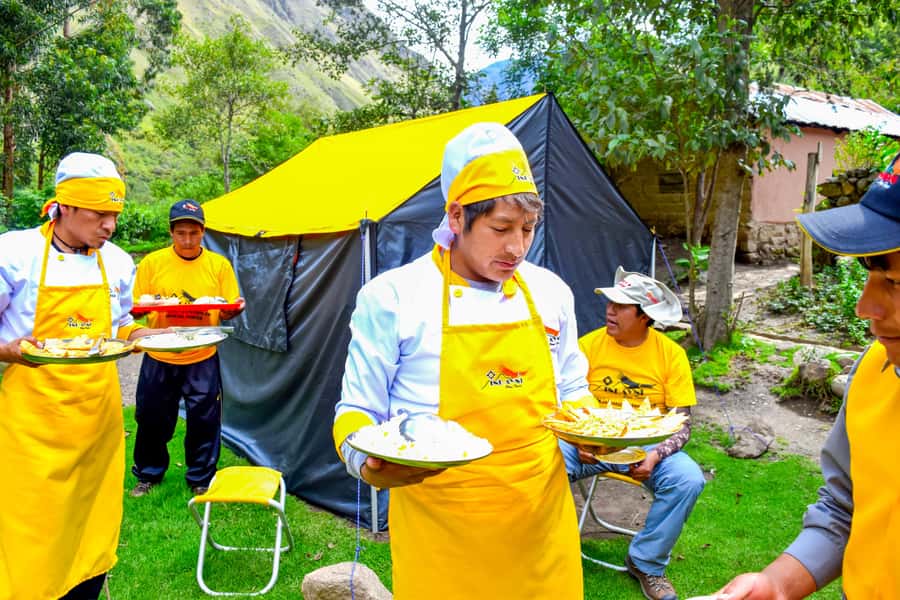
The four breakfasts, four lunches, four afternoon snacks, and four dinners cover the camping portion of the trek. Dietary requests such as vegetarian, vegan, or gluten-free meals can be arranged if you tell the operator when booking and confirm them at the briefing.
The horse support is a major value point. You still carry a daypack with water, rain gear, sunscreen, and personal essentials, but the horse team carries shared equipment and up to 7 kilograms of your belongings. That makes the long climbs more manageable than carrying all your camping gear yourself.
An oxygen bottle and first aid kit are included. They are sensible safety provisions, not a guarantee that altitude problems will be solved. Travel insurance is highly recommended, and you should bring your passport or ID card during the trek and Machu Picchu visit.
You pay extra for a sleeping bag and trekking poles if you need to hire them. The first morning’s breakfast, plus lunch and dinner on the final day, are also outside the package. Those are modest additions, but they should be part of your budget.
How demanding is this five-day route?
The short answer is: demanding. You hike at high altitude on Days 1 and 2, climb to Humantay Lake, cross a 4,630-meter pass, and then spend two more days descending and climbing through forest terrain.
The route is best for someone who is comfortable walking for several hours a day and understands that mountain weather can change quickly. You need comfortable clothing, a sun hat, sunscreen, rain gear, and a valid passport. Trekking poles can be hired and may be helpful on both steep climbs and long descents.
The operator does not recommend this trip for people over 70, people with back problems, or people with altitude sickness. That is a firm practical warning. If you are unsure about altitude, build acclimatization time into your Cusco visit before the trek rather than arriving and immediately starting uphill.
The five-star feedback emphasizes three things I would also use when judging this tour: the scenery, the guide, and the support team. One assessment describes the trek as physically and mentally difficult but worth the effort. That is a useful description, not a sales line. You get a memorable route, but you must earn it.
Is this Salkantay trek worth booking?
I would recommend this tour if you want Machu Picchu to be the finish of a real mountain journey, not a standalone sightseeing stop. The combination of Humantay Lake, Salkantay Pass, Lucmabamba coffee farming, Llactapata, and a guided citadel visit gives you much more variety than a short approach to the ruins.
Book it if you value a small group, horse support, organized meals, and a local family connection. The $669 cost is reasonable for the included transport, food, camping support, hotel, entrance, and guide services.
Choose another plan if you want a relaxed holiday, dislike camping, or are uncertain about high-altitude hiking. For the right person, this is a tough but rewarding route, with excellent scenery and strong practical support from start to finish.
FAQ
How long is the Salkantay trek to Machu Picchu?
The experience lasts five days and includes hiking, camping, a hotel night in Aguas Calientes, the Machu Picchu visit, train travel, and a van transfer back to Cusco.
What is the highest point of the trek?
The highest point is Salkantay Pass at 4,630 meters, or 15,190 feet.
Is Humantay Lake included?
Yes. The route visits Humantay Lake on Day 1 at an altitude of about 4,200 meters.
How large is the group?
The maximum group size is 10 people. The tour operates with at least two participants, and an assistant guide is included for groups of nine or more.
What accommodation is included?
You camp during the trekking portion and stay in a hotel in Aguas Calientes. Two trekkers share a four-person tent, and a foam sleeping mattress is provided.
Are meals included?
Four breakfasts, four lunches, four afternoon snacks, and four dinners are included. Breakfast on Day 1 and lunch and dinner on Day 5 are not included.
How much luggage can the horses carry?
Horses carry equipment and up to 7 kilograms of your personal items. You should still bring a daypack with essentials such as water, rain gear, sunscreen, and documents.
Is Huayna Picchu included?
No. Huayna Picchu requires an additional fee of US$85. Machu Picchu entrance and the bus to the citadel are included.
What should I bring?
Bring your passport or ID card, sun hat, sunscreen, rain gear, and comfortable clothes. A sleeping bag and trekking poles can be hired if needed.
More Hiking & Trekking in Cusco
- From Cusco: 7 Lakes Ausangate Trek with Breakfast and Lunch
★ 4.8 · 360 reviews - Cusco: Rainbow Mountain Tour and Red Valley Hike (Optional)
★ 4.7 · 149 reviews - Cusco: Full-Day Rainbow Mountain & Red Valley Trekking Tour
★ 4.5 · 121 reviews - From Cusco: Rainbow Mountain Trek
★ 4.5 · 98 reviews
More 5-Day Experiences in Cusco
- Ausangate Trek 5 Days
★ 5.0 · 74 reviews - Classic Choquequirao Trek – 5 Days / 4 Nights
★ 5.0 · 52 reviews - Ultimate Lares Trek & Inca Trail 5 days
★ 5.0 · 47 reviews - Wonderful Cusco 5-Day Tour with Entrance to Machupicchu
★ 5.0 · 46 reviews
Just added around Cusco
- Zipline over the Sacred Valley Trip★ 5.0 · 11 reviews
- Valle Sur Cusco | half day★ 4.3 · 3 reviews
- Visit Pisac from Cusco: Private Transport★ 4.6 · 9 reviews
- Transfer from Cusco to Ollantaytambo★ 5.0 · 30 reviews
- Exclusive Huayna Picchu Tour in 1 Day from Cusco★ 5.0 · 31 reviews
- Trek to Humantay Lake from Cusco★ 4.9 · 8 reviews
- Private Tour Sacred Valley, Chinchero, Maras Moray, Ollantaytambo★ 5.0 · 29 reviews
- 5 Day – Salkantay trek to Machu Picchu – Group Service★ 4.5 · 27 reviews
Salkantay Treks to Machu Picchu, compared.
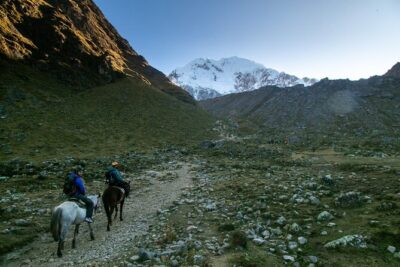
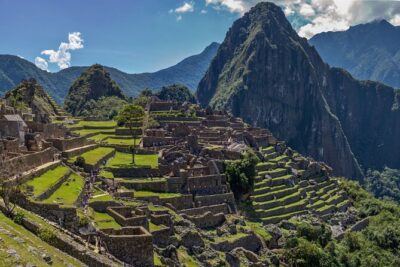
Small Group 5 Days Salkantay and Machu Picchu by Llactapata Tour
Read our review →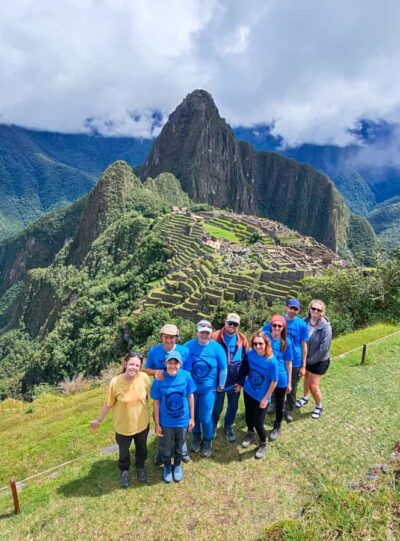
Salkantay Trek 4 Days to Machu Picchu by Glamping Sky Lodge Dome
Read our review →
Salkantay Trek To Machu Picchu 5 Days And 4 Nights
Read our review →
5-Day: Salkantay Trek to Machupicchu and Humantay Lake
Read our review →Browse the lists this tour appears in