
Reviewed · SALKANTAY TREKS TO MACHU PICCHU
5-Day Salkantay Trek to Machupicchu Sky Lodge Dome
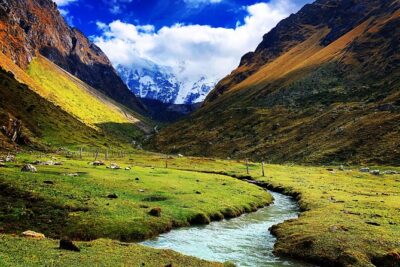
The best part of this five-day Salkantay trek is the changing scenery. You begin near glacial peaks, cross a high mountain pass, descend into coffee country, then walk beside the railway to Aguas Calientes and Machu Picchu. I like the private domes with bathrooms and hot showers, and I like that coffee harvesting, roasting, and grinding are part of the route rather than a separate tourist stop.
I also like the small group size, the included cook, and the fact that mules carry up to 7 kilos of your gear for the first part of the trek. The main caution is altitude and logistics: the pass reaches 4,650 meters, the first dome night can be very cold, and you should confirm your Machu Picchu, train, and bus arrangements before setting out.
Key points at a glance
- 4,650-meter Salkantay Pass: The toughest day brings snow-capped mountain views and thin air.
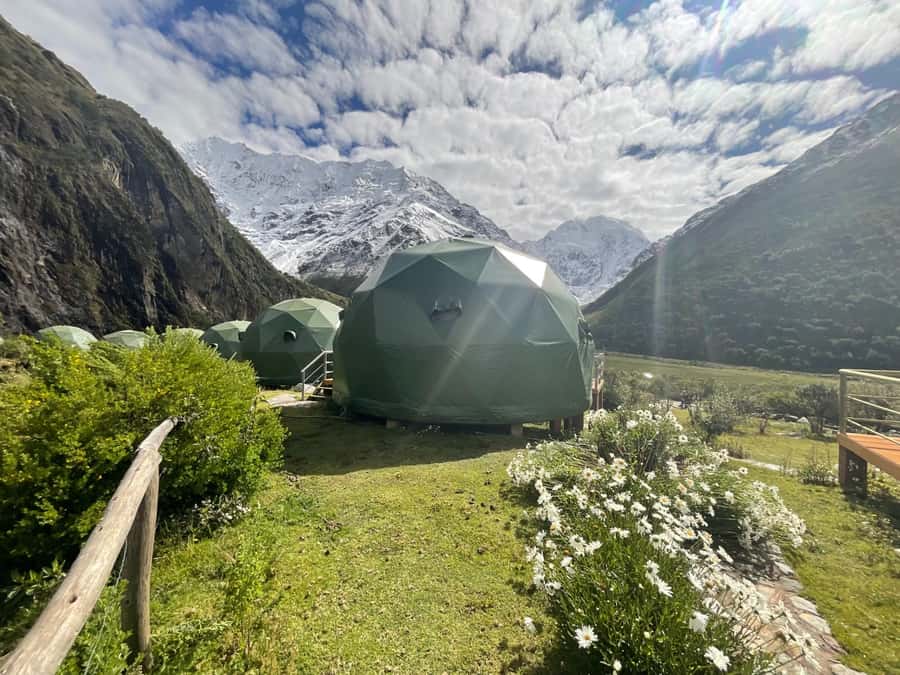
- Private domes with bathrooms: You get hot showers and private facilities at the three dome camps.
- Coffee plantation stop: At La Playa, you harvest, roast, and grind coffee as part of the trek.
- First Machu Picchu view: The walk to Llactapata offers a view toward Machu Picchu and the Urubamba Valley.
- Small groups of up to 10: A compact group makes early starts and mountain pacing easier to manage.
- Strong food and guiding: Guides including Roberto and Abel, along with cooks such as Mario and Exaltación, have received especially warm praise.
What this Salkantay route does well
At $700 per person, this is not the cheapest way to reach Machu Picchu, but it covers a lot. You get transport from Cusco to the trailhead, a bilingual guide, four breakfasts, four lunches, four dinners, four snacks, three nights in private domes, one hotel night, the Machu Picchu entrance ticket, the uphill bus, the train to Ollantaytambo, and transport back to Cusco.
That package matters because the Salkantay route involves several moving parts. You are not simply paying for a walk. You are also paying for food preparation, camp equipment, luggage support, permits, transport, and a guide who helps keep the group moving through very different terrain.
I especially like the small-group limit of 10 people. It is large enough to share the experience but small enough for the guide to notice how everyone is handling the altitude. Guides Roberto and Abel are named as particularly strong leaders, while cooks Mario and Exaltación helped make the meals a memorable part of the trip.
The tradeoff is that the days begin early and the route is physically demanding. You need to be comfortable hiking for several hours, carrying a daypack, and dealing with steep altitude changes. Arriving in Cusco at least two days early is not a minor suggestion. It gives your body time to adjust before you are asked to climb toward one of Peru’s highest trekking passes.
More Glass Pod and Glamping Nights near Cusco:
- Salkantay Trek 4 Days to Machu Picchu by Glamping Sky Lodge Dome
★ 5.0 · 68 reviews - Salkantay Trek to Machu Picchu 5D/4N or 4D/3N by glamping
★ 4.4 · 35 reviews - From Cusco: Via Ferrata and Sky Lodge Zipline
★ 5.0 · 16 reviews
Day 1: Cusco to Humantay Lagoon and the dome at Soraypampa
Your pickup takes place around 4:30 to 5:00 in the morning from a hotel inside Cusco’s monumental area. The early departure gets you onto the road before the main hiking day begins, but you should arrange your first breakfast yourself because it is not included.
After about two hours by van, you stop in Mollepata for breakfast. The group then continues by private transport for roughly 40 minutes to Challacancha, where the walk begins. This arrangement saves you from walking a long approach road and puts the focus on the mountain route.
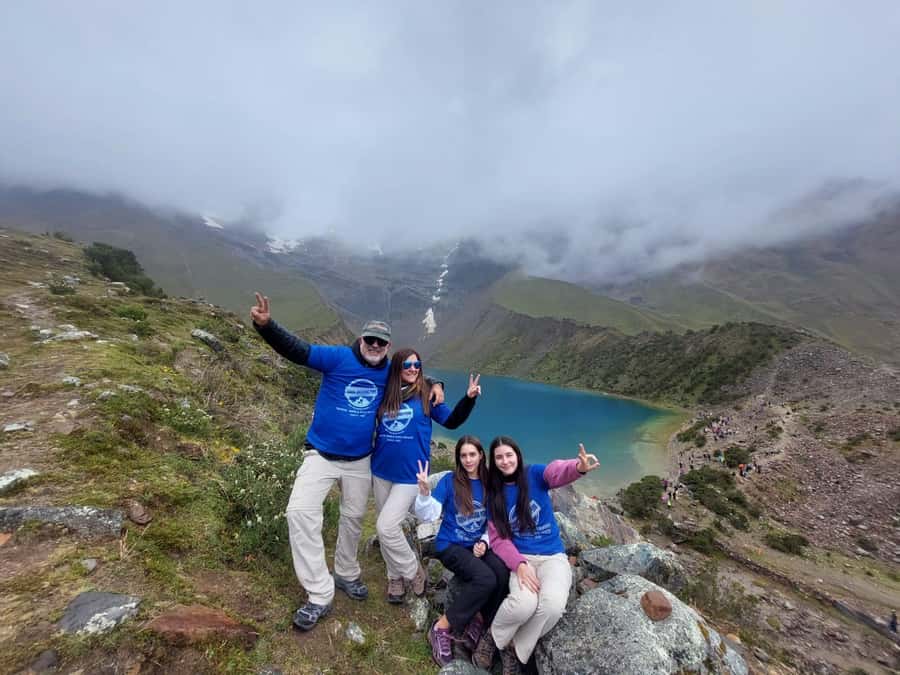
The first major sight is Humantay Lagoon. Its high setting and mountain backdrop make it one of the visual highlights of the trek. Reaching it early in the trip also gives you a quick sense of the effort ahead. The climb is not the highest point of the route, but it comes before your body has settled into the rhythm of daily hiking.
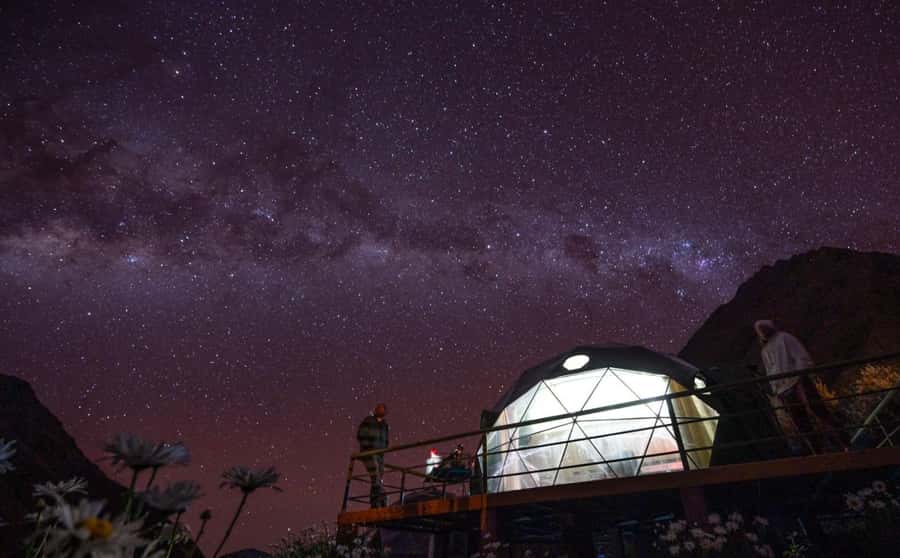
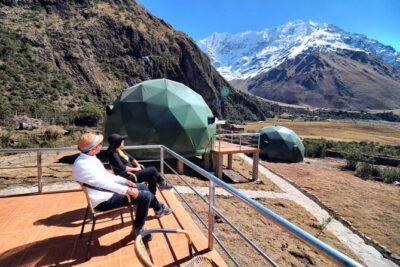
After the lagoon, you continue to Soraypampa and spend the night in a geodesic dome. The domes are one of the strongest features of this trip. Each has a private bathroom and hot shower, which is a welcome step up from basic mountain camping.
Still, do not mistake a dome for a warm hotel room. The first night can be extremely cold, particularly because Soraypampa sits high in the mountains. Bring proper warm layers, a hat, and a good sleeping bag. A sleeping bag is not included, so arrange one before departure.
The first day also includes an Andean ceremony offering to Mother Earth. It adds a cultural element to the opening of the trek without taking over the day.
Day 2: The 4,650-meter Salkantay Pass
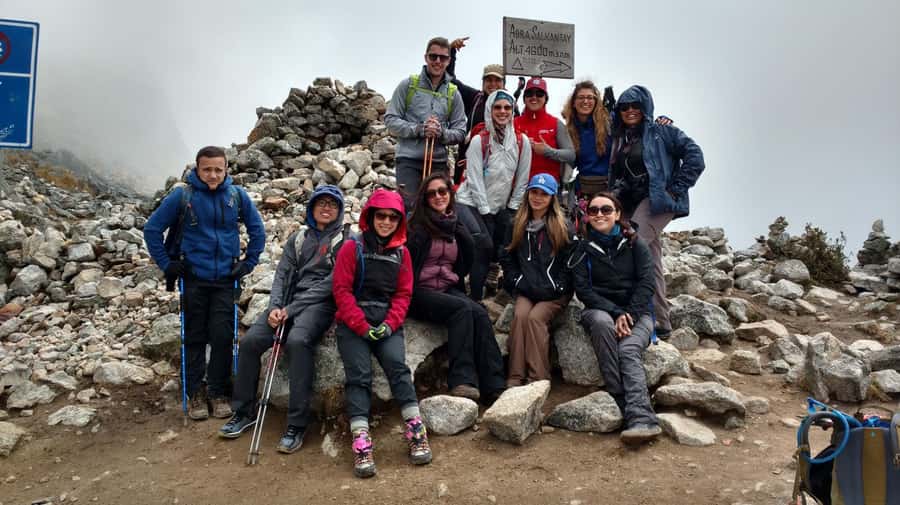
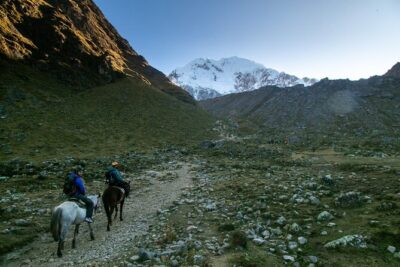
Breakfast is scheduled for about 5:30 in the morning, followed by the hardest climb of the trip. You hike toward the Salkantay Pass at 4,650 meters, or about 15,200 feet, between Salkantay Mountain and Tucarhuay.
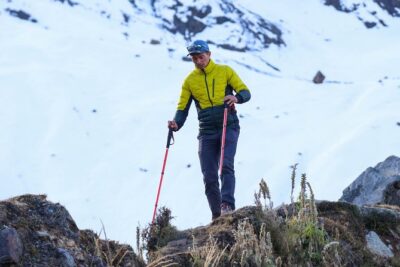
This is the day to judge your fitness honestly. The thin air can slow even strong hikers, and the route may include snow. Your guide will set the pace, but you still need to tell the guide if you feel unwell. A daypack, sunglasses, sun protection, and sturdy hiking shoes are essential.
At the pass, the reward is a broad view of two snow-capped peaks. The setting feels stark and powerful, especially after the effort of reaching it. This is the most demanding section of the itinerary, but it is also the clearest reason to choose Salkantay instead of a lower route.
From the pass, the trail continues toward Chaullay. The change in altitude begins to show in the surroundings, and the day ends at another dome camp. As on the first night, you get a private bathroom and hot shower, but mountain temperatures can still be uncomfortable after sunset.
You should think of this day as a test of preparation rather than a race. Trekking poles are not included, and many hikers will find them useful on both the ascent and the descent. The tour also excludes the first breakfast, last dinner, sleeping bag, and trekking sticks, so budget and pack for those items.
Day 3: From high mountains to coffee country
The third morning begins at about 6:30. You leave Chaullay and enter the high jungle, crossing the Lluskamayo River and several smaller streams on the way to La Playa.
The route takes about four hours of walking, with a dramatic change in climate and scenery. The cold, high mountain setting gives way to warmer forest and agricultural land. That variety is one of the trek’s main strengths. Each day feels different rather than like another version of the same mountain path.
At La Playa, the group stays in domes at a coffee plantation. This is more than an overnight stop. You take part in the coffee process by harvesting, roasting, and grinding the beans. I like this because it connects the walk to the people and crops of the region. You see how the work is done instead of simply passing fields from a vehicle.
The coffee activity also gives the day a more relaxed finish after the high pass. You still need to walk for several hours, but the schedule shifts from endurance to participation. Vegetarian and vegan meals are available at no extra charge if requested in advance.
Your duffel bag is carried for you until the third day, with a limit of 7 kilos per person. That means you can keep the main weight off your back during the hardest mountain sections. You should still carry a daypack with water, warm clothing, sun protection, personal medicine, and anything you need during the day.
More Salkantay Departures from Cusco:
- Salkantay Trek Challenge – 3 Days / 2 Nights
★ 5.0 · 101 reviews - Small Group 5 Days Salkantay and Machu Picchu by Llactapata Tour
★ 5.0 · 88 reviews - Machu Picchu: 5-Day Salkantay Trek with Panoramic Train
★ 5.0 · 79 reviews - Salkantay Trek to Machu Picchu in 4 days
★ 4.5 · 50 reviews
Day 4: Llactapata, Hydroelectric, and the railway to Aguas Calientes
Day four starts around 6:30, with an early walk toward Llactapata. The route includes part of an original Inca trail and passes through areas where local residents grow crops and gather fruit.
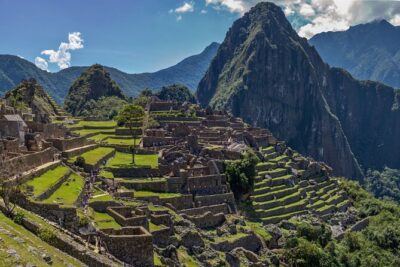
This section offers one of the most appealing views of the trip. From Llactapata, you can look across the Urubamba Valley, see Salkantay Mountain behind you, and get your first view of Machu Picchu. It is a useful visual preview before the main visit the next day.
You also have the chance to harvest various fruits along the way. The itinerary mentions coca and banana plantations near the later part of the route, giving you a closer look at the agriculture that shapes this valley.
After reaching Hydroelectric, you stop for lunch. Then you walk for about two and a half hours beside the railway tracks to Aguas Calientes. The route is not as wild or remote as the high pass, but it is a practical and memorable approach to Machu Picchu.
You spend the night in a hostel in Aguas Calientes. The accommodation is described as acceptable rather than luxurious, so set your expectations accordingly. You can visit the town’s hot springs for about 10 soles, a pleasant option after four days of hiking. That entrance fee is paid separately.
From day four onward, you need to carry your own bags. There is an option to send luggage by car from La Playa to Hydroelectric and then by train to Aguas Calientes for about 20 soles, paid directly. This can make sense if you want to arrive in town without hauling your duffel along the railway.
Day 5: Early entry to Machu Picchu
The final morning starts around 5:00. After breakfast, you take the first bus from Aguas Calientes at about 5:30, with a ride of roughly 25 minutes to Machu Picchu.
The early timing is important. It gives you the chance to see the citadel in the morning light and avoids turning the final day into a rushed transfer. Your guide provides a two-hour tour, then you have time to explore independently.
Huayna Picchu is available as an optional climb if booked ahead and if space remains. The ascent takes about 1 hour and 45 minutes to the top, at an elevation of roughly 2,720 meters. Machu Picchu Mountain is another optional choice. These climbs should not be treated as casual add-ons after four days of hiking. Check availability and make the reservation in advance.
The return train usually leaves between about 2:00 and 4:00 in the afternoon, or at 6:20 in the evening, depending on the assigned train. The ride to Ollantaytambo takes around two hours, followed by private transport back to Cusco.
This final transfer can make for a long day. Confirm your train time early, especially if you plan to add Huayna Picchu or Machu Picchu Mountain. You will need to balance exploration time with the departure schedule.
Domes, meals, and luggage support
The accommodation is a major reason to choose this tour. Private bathrooms and hot showers at the domes offer comfort that basic tent camping does not. The first night, however, can be very cold, so the private facilities do not remove the need for serious cold-weather clothing.
A cook prepares the included meals, and the package covers four breakfasts, four lunches, four dinners, and four snacks. The food has been one of the most praised parts of the operation, with Mario and Exaltación receiving special credit for their cooking.
The kitchen and dining equipment are also supplied, including a dining tent, tables, and chairs. That means you do not need to organize your own camp meals or carry cooking gear.
The luggage arrangement is helpful but not completely hands-off. Mules and horsemen carry equipment, food, and up to 7 kilos of personal luggage per person until the third day. On day four, you carry your own bags unless you pay the optional transfer fee.
Communication matters before you leave Cusco
The tour includes Machu Picchu tickets, the uphill bus, and the train to Ollantaytambo. Even so, you should confirm each item during the pre-trek briefing.
One serious communication problem has been reported in connection with a departure. At the briefing, the booking party discovered that the Machu Picchu tickets had not been clearly confirmed, and extra questions were needed about the train and bus. A guide, Roberto, helped find a solution, but the hiking plan had to be shortened by a day.
The practical lesson is simple: ask for confirmation of your Machu Picchu entry time, train departure, bus arrangements, and route before the trek begins. Do not assume that a listed inclusion means every detail has already been explained to you.
Pickup is included from hotels within Cusco’s monumental area. If your lodging is outside that zone, confirm the meeting point rather than assuming door-to-door service.
Who should book this $700 trek?
I would recommend this route to you if you want a demanding mountain trek with more comfort than traditional camping. The combination of high peaks, forest, coffee work, local agriculture, private domes, and a hotel in Aguas Calientes gives the trip a good range.
It is also a strong choice if you prefer a small group and want meals, camp equipment, luggage support, entrance tickets, and transport arranged in one package. At $700, the value is reasonable because many expensive and complicated parts of a Machu Picchu trip are already covered.
I would be cautious if you have back, heart, or mobility problems, or if you are pregnant. The activity is not suitable for those conditions according to the supplied safety information. There is also a conflict in the listing between wheelchair accessibility and the statement that the trek is not suitable for people with mobility impairments. Ask the operator for a clear answer before booking.
You should also reconsider the trip if you dislike early starts, cold nights, steep climbs, or carrying your own bag on the final trekking day. The route is rewarding, but it is not a gentle sightseeing holiday.
Should you book the Salkantay Trek?
Book it if you want the physical challenge of the Salkantay Pass and value a mix of comfort and real outdoor effort. The strongest features are the changing scenery, the well-liked food, the private dome facilities, the coffee plantation, and the small group size.
Before paying, confirm your Machu Picchu ticket, train, bus, and optional mountain reservations. Arrive in Cusco two days early, bring a sleeping bag and trekking poles, request special meals in advance, and prepare for a very cold first night.
If you do those things, this $700 package offers a well-rounded route to Machu Picchu. It asks a lot from your legs, but it gives you far more than a simple walk to an archaeological site.
FAQ
How long is the Salkantay trek to Machu Picchu?
The tour lasts five days and four nights. You spend three nights in dome camps and one night in a hotel or hostel in Aguas Calientes.
What is the highest point of the trek?
The highest point is the Salkantay Pass at 4,650 meters, or about 15,200 feet.
Is Machu Picchu admission included?
Yes. The Machu Picchu entrance ticket is included, along with the uphill bus from Aguas Calientes to Machu Picchu.
Is the train back to Cusco included?
The train from Aguas Calientes to Ollantaytambo is included. Private transport from Ollantaytambo back to Cusco is also included.
Are meals included?
The tour includes four breakfasts, four lunches, four dinners, and four snacks. Your first breakfast and final dinner are not included.
Can I request vegetarian or vegan food?
Yes. Vegetarian and vegan meals are available at no extra charge if you request them.
How much luggage can be carried for me?
Horsemen and mules carry up to 7 kilos of personal luggage per person until the third day. From day four, you carry your own luggage unless you arrange the optional transfer.
Can I climb Huayna Picchu or Machu Picchu Mountain?
Yes, either climb may be possible as an optional addition, but it must be booked in advance and depends on availability.
More 5-Day Experiences in Cusco
- Ausangate Trek 5 Days
★ 5.0 · 74 reviews - Classic Choquequirao Trek – 5 Days / 4 Nights
★ 5.0 · 52 reviews - Ultimate Lares Trek & Inca Trail 5 days
★ 5.0 · 47 reviews - Wonderful Cusco 5-Day Tour with Entrance to Machupicchu
★ 5.0 · 46 reviews
More Machu Picchu Days from Cusco
- From Cusco: Full-Day Group Tour of Machu Picchu
★ 4.7 · 1,767 reviews - Machu Picchu Day Trip from Cusco
★ 4.5 · 1,644 reviews - Machu Picchu: Full-Day Tour from Cusco with Optional Lunch
★ 4.6 · 927 reviews - Cusco: 4-Day Inca Trail to Machu Picchu with Accommodation
★ 4.8 · 432 reviews
Just added around Cusco
- Zipline over the Sacred Valley Trip★ 5.0 · 11 reviews
- Valle Sur Cusco | half day★ 4.3 · 3 reviews
- Visit Pisac from Cusco: Private Transport★ 4.6 · 9 reviews
- Transfer from Cusco to Ollantaytambo★ 5.0 · 30 reviews
- Exclusive Huayna Picchu Tour in 1 Day from Cusco★ 5.0 · 31 reviews
- Trek to Humantay Lake from Cusco★ 4.9 · 8 reviews
- Private Tour Sacred Valley, Chinchero, Maras Moray, Ollantaytambo★ 5.0 · 29 reviews
- 5 Day – Salkantay trek to Machu Picchu – Group Service★ 4.5 · 27 reviews
Salkantay Treks to Machu Picchu, compared.
Small Group 5 Days Salkantay and Machu Picchu by Llactapata Tour
Read our review →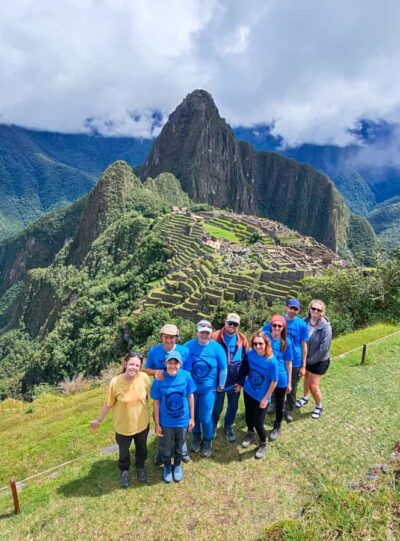
Salkantay Trek 4 Days to Machu Picchu by Glamping Sky Lodge Dome
Read our review →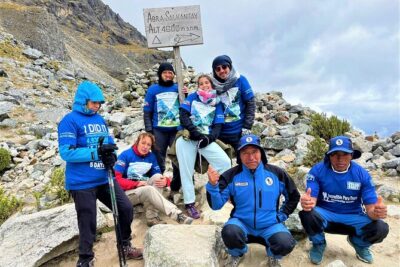
Salkantay Trek To Machu Picchu 5 Days And 4 Nights
Read our review →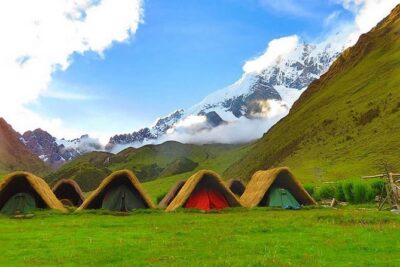
5-Day: Salkantay Trek to Machupicchu and Humantay Lake
Read our review →Browse the lists this tour appears in